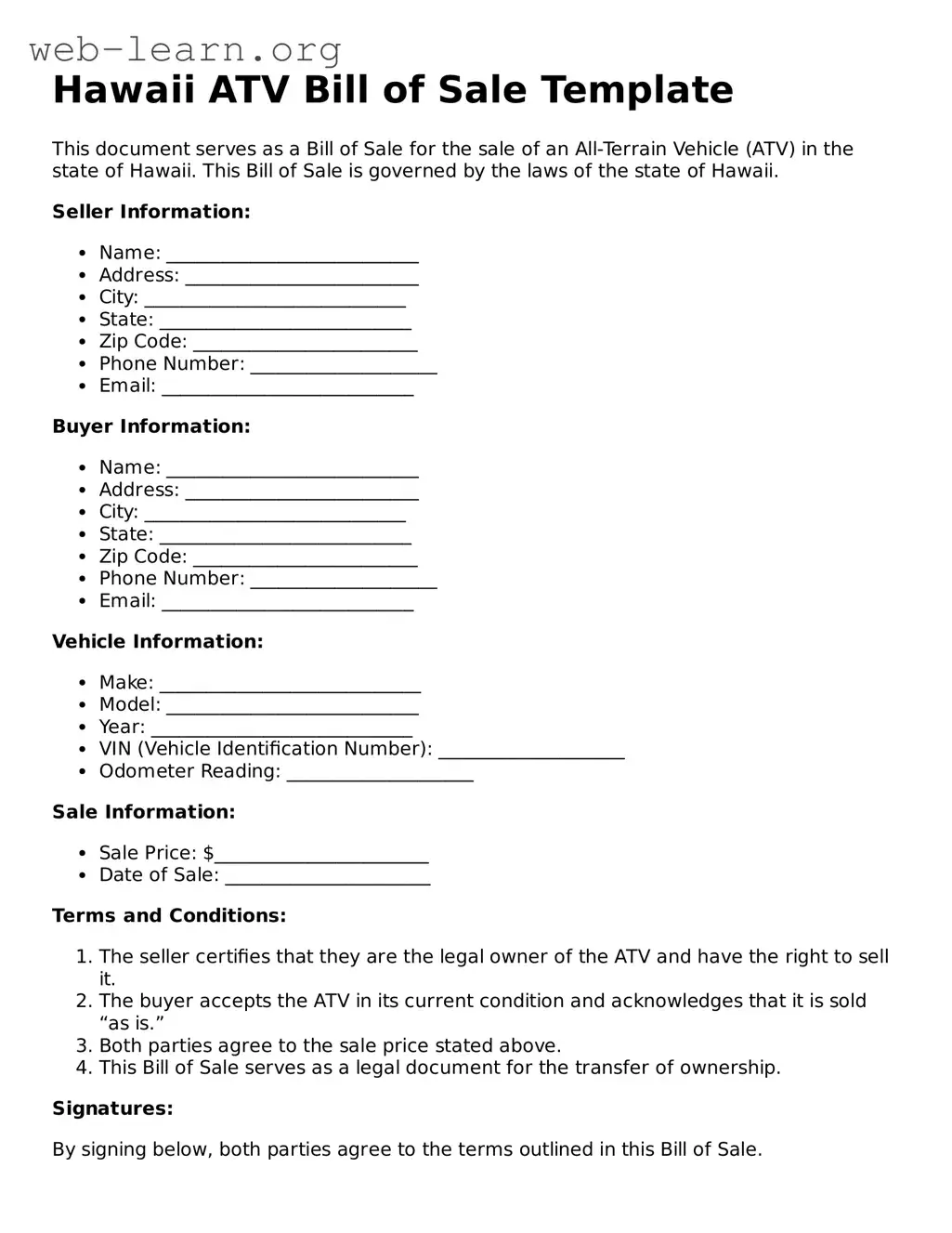
When it comes to buying or selling an ATV in Hawaii, having the right paperwork is essential to ensure a smooth transaction. The ATV Bill of Sale form serves as a crucial document that not only confirms the transfer of ownership but also protects both the buyer and the seller. This form typically includes important details such as the names and addresses of both parties, the vehicle identification number (VIN), the make and model of the ATV, and the sale price. Additionally, it may outline any warranties or conditions related to the sale, providing clarity and peace of mind. By properly completing this form, individuals can avoid potential disputes and ensure compliance with state regulations. Whether you're an experienced rider or a first-time buyer, understanding the components of the ATV Bill of Sale is key to navigating the purchasing process effectively.
Hawaii ATV Bill of Sale Template
This document serves as a Bill of Sale for the sale of an All-Terrain Vehicle (ATV) in the state of Hawaii. This Bill of Sale is governed by the laws of the state of Hawaii.
Seller Information:
Buyer Information:
Vehicle Information:
Sale Information:
Terms and Conditions:
Signatures:
By signing below, both parties agree to the terms outlined in this Bill of Sale.
Seller Signature: ___________________________ Date: ______________
Buyer Signature: ___________________________ Date: ______________
| Fact Name | Description |
|---|---|
| Purpose | The Hawaii ATV Bill of Sale form is used to document the sale and transfer of ownership of an all-terrain vehicle (ATV) in Hawaii. |
| Governing Law | The sale of ATVs in Hawaii is governed by the Hawaii Revised Statutes, specifically under Chapter 286, which addresses vehicle registration and sales. |
| Parties Involved | The form requires the names and addresses of both the seller and the buyer to ensure clear identification of the parties involved in the transaction. |
| Vehicle Information | It is essential to include specific details about the ATV, such as the make, model, year, and Vehicle Identification Number (VIN). |
| Sale Price | The document must state the sale price of the ATV, which is important for both parties and for tax purposes. |
| As-Is Condition | The form typically includes a statement indicating that the ATV is sold in "as-is" condition, meaning the buyer accepts the vehicle with all its existing faults. |
| Signatures | Both the seller and buyer must sign the form to validate the transaction and indicate their agreement to the terms outlined. |
| Witness Requirement | While not always required, having a witness sign the Bill of Sale can provide additional verification of the transaction. |
| Record Keeping | It is advisable for both parties to keep a copy of the signed Bill of Sale for their records, as it serves as proof of the transaction. |
After obtaining the Hawaii ATV Bill of Sale form, you'll need to fill it out carefully to ensure all necessary information is included. This document serves as a record of the sale and is essential for both the buyer and seller. Follow these steps to complete the form accurately.
Once you have completed the form, review it for accuracy. Make sure all necessary fields are filled out correctly. After that, both parties should retain a copy for their records. This will help avoid any future disputes regarding the sale.
What is a Hawaii ATV Bill of Sale form?
The Hawaii ATV Bill of Sale form is a legal document that records the transfer of ownership of an all-terrain vehicle (ATV) from one party to another. This form serves as proof of the transaction and includes essential details about the ATV, the buyer, and the seller.
Why do I need a Bill of Sale for my ATV?
A Bill of Sale is crucial for several reasons:
What information is required on the form?
The form should include:
Do I need to notarize the Bill of Sale?
Notarization is not required for the Bill of Sale in Hawaii. However, having it notarized can add an extra layer of authenticity and may be beneficial if disputes arise later.
Can I use a generic Bill of Sale form?
While you can use a generic Bill of Sale form, it is advisable to use a specific ATV Bill of Sale form. This ensures that all necessary details pertinent to ATV transactions are included, reducing the risk of future complications.
Is there a fee for registering my ATV after the sale?
Yes, there is typically a registration fee when you register your ATV with the state. The amount can vary based on the type of vehicle and the county in which you reside. It's important to check with your local Department of Motor Vehicles for the exact fees and requirements.
What should I do after completing the Bill of Sale?
After completing the Bill of Sale, both the buyer and seller should keep a copy for their records. The buyer should then proceed to register the ATV with the state, providing the Bill of Sale as proof of ownership. It is also wise for the seller to notify their insurance company of the sale.
Filling out the Hawaii ATV Bill of Sale form can be straightforward, but several common mistakes often occur. One frequent error is neglecting to provide complete information about the ATV. It's essential to include the make, model, year, and Vehicle Identification Number (VIN) to ensure proper identification of the vehicle.
Another common mistake is failing to include the seller's and buyer's full names and addresses. This information is crucial for establishing ownership and ensuring that both parties can be contacted if necessary. Incomplete or inaccurate names and addresses can lead to complications down the line.
Many individuals also overlook the date of the sale. This detail is important for record-keeping and may be required for registration purposes. Without a clear sale date, both parties might face difficulties in proving the transaction's legitimacy.
Some people forget to include the purchase price of the ATV. This figure not only reflects the transaction value but may also be necessary for tax purposes. Leaving this section blank can lead to confusion and potential disputes later.
Additionally, failing to sign the form is a common oversight. Both the seller and buyer must sign the document to validate the sale. Without signatures, the Bill of Sale is not legally binding, which can lead to ownership disputes.
Another mistake involves not providing any warranties or guarantees. If the seller offers any assurances about the condition of the ATV, these should be clearly stated in the form. This transparency helps manage expectations and protects both parties.
Some individuals might use incorrect or outdated forms. It's crucial to ensure that the latest version of the Hawaii ATV Bill of Sale form is being used. Using an outdated form can lead to issues with processing the sale.
Inaccurate descriptions of the ATV's condition can also create problems. It's important to be honest and thorough when describing any existing damage or mechanical issues. Misrepresenting the condition can result in disputes and potential legal issues.
People may also forget to keep a copy of the completed Bill of Sale for their records. Retaining a copy is essential for both parties, as it serves as proof of the transaction and can be referenced in the future if needed.
Lastly, neglecting to check for any local regulations or requirements regarding ATV sales can lead to complications. Each county or municipality may have specific rules that need to be followed, so it’s wise to verify these before completing the sale.
When completing a transaction involving an ATV in Hawaii, several other forms and documents may be necessary alongside the ATV Bill of Sale. These documents help ensure that the sale is legally binding and that all necessary information is recorded. Below is a list of commonly used documents in conjunction with the ATV Bill of Sale.
Having these documents prepared and organized can streamline the buying and selling process of an ATV in Hawaii. Ensuring that all necessary paperwork is completed will help protect both the buyer and seller, making for a smoother transaction.
When filling out the Hawaii ATV Bill of Sale form, it is important to follow certain guidelines to ensure the document is completed correctly. Below is a list of things to do and avoid during this process.
When it comes to the Hawaii ATV Bill of Sale form, several misconceptions can lead to confusion. Understanding these can help ensure a smoother transaction process. Here are five common misconceptions:
Being aware of these misconceptions can help buyers and sellers navigate the process more effectively. Always ensure that all necessary documentation is in order to avoid potential issues down the line.
When filling out and using the Hawaii ATV Bill of Sale form, keep the following key takeaways in mind:
Bill of Sale for Car Colorado Template - Offers a clear outline of responsibilities for both the buyer and seller.
Ct Bill of Sale - Can be customized to fit specific state requirements.
Ky Bill of Sale - Promotes accountability by requiring signatures from both the seller and buyer.
Atv Bill of Sale - Can be printed or filled out digitally.