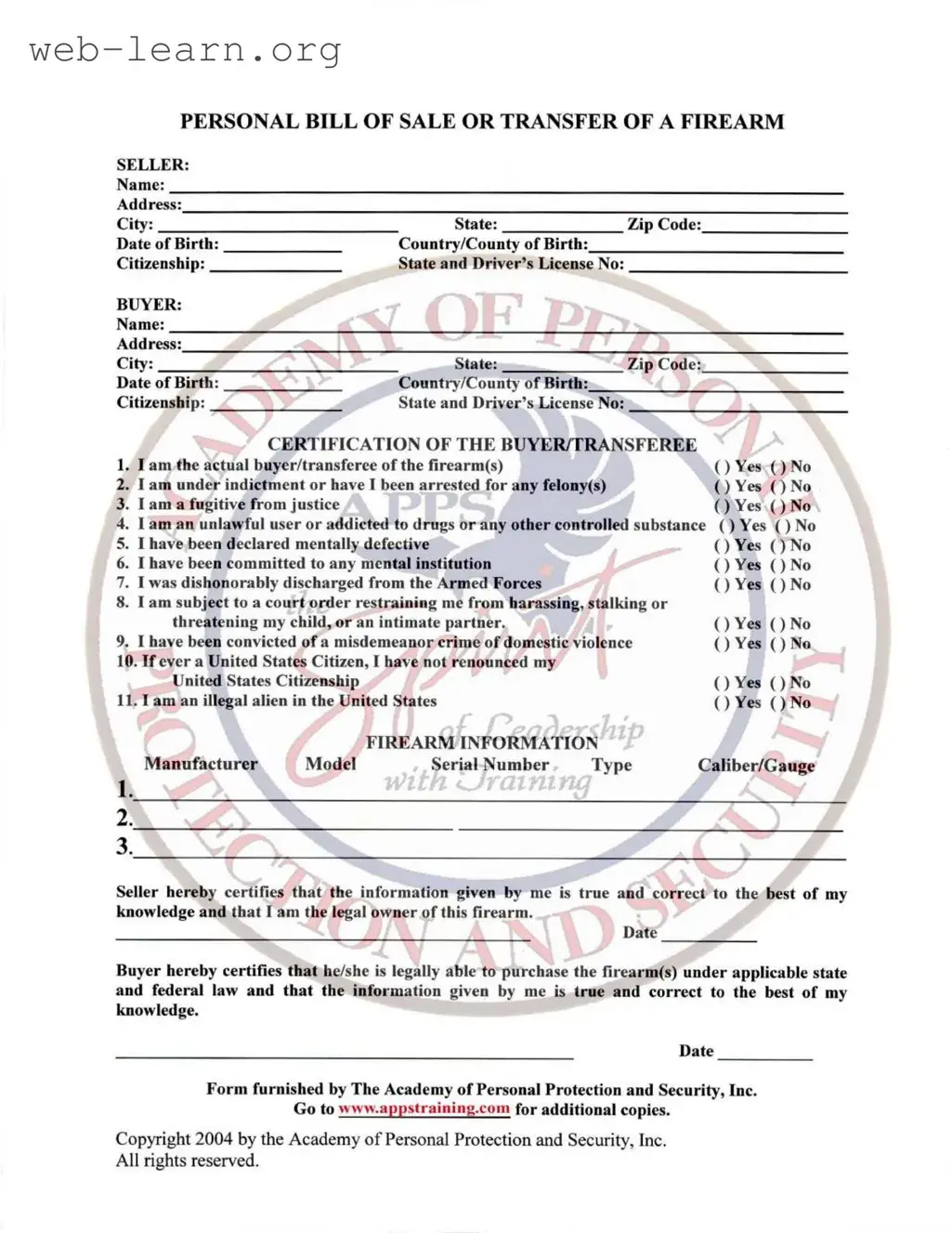
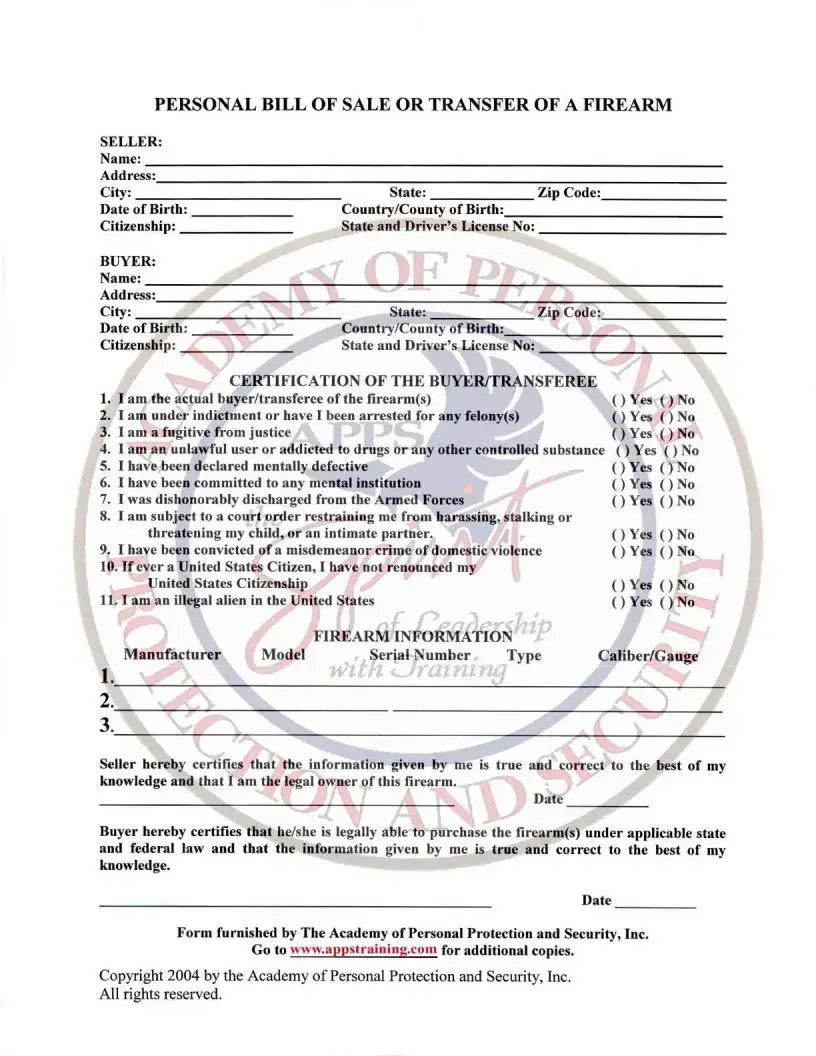
The Gun Transfer Georgia form serves as a crucial document in the process of transferring firearm ownership in the state of Georgia. This form requires both the seller and the buyer to provide essential personal information, including names, addresses, and dates of birth. Additionally, the seller must affirm their legal ownership of the firearm, while the buyer must certify their eligibility to purchase it under state and federal laws. The form includes a series of questions aimed at assessing the buyer's background, addressing potential legal disqualifications such as felony indictments, mental health issues, and domestic violence convictions. Furthermore, it requires the buyer to confirm their citizenship status and whether they are an illegal alien. Firearm details, including the manufacturer, model, and serial number, must also be documented. This comprehensive approach not only facilitates a legal transfer but also aims to promote responsible ownership and compliance with applicable regulations.
| Fact Name | Details |
|---|---|
| Purpose of the Form | The Gun Transfer Georgia form serves as a personal bill of sale or transfer of a firearm between a seller and a buyer, ensuring both parties document the transaction clearly. |
| Governing Law | This form is governed by Georgia state law, particularly O.C.G.A. § 16-11-131, which outlines the legal requirements for firearm transfers. |
| Buyer Certification | The buyer must certify their eligibility to purchase a firearm, confirming they are not prohibited due to felony convictions, mental health issues, or other disqualifying factors. |
| Seller Responsibilities | Sellers must ensure that they are the legal owners of the firearm and provide accurate information about the transaction to comply with state laws. |
| Confidentiality of Information | All personal information provided on the form is intended to be kept confidential, protecting the identities of both the seller and buyer during the transfer process. |
Filling out the Gun Transfer Georgia form is straightforward. This form is essential for documenting the transfer of a firearm between a seller and a buyer. Make sure to have all necessary information ready before you begin.
What is the purpose of the Gun Transfer Georgia form?
The Gun Transfer Georgia form serves as a record for the sale or transfer of firearms between individuals in Georgia. It ensures that both the seller and buyer have documented their agreement, including personal details and firearm information. This helps to establish a legal transfer of ownership and can be useful for both parties in case of future disputes or legal inquiries.
Who needs to fill out the Gun Transfer Georgia form?
Both the seller and the buyer must complete the form. The seller provides their information to confirm they are the legal owner of the firearm. The buyer must also provide their details and certify that they are legally allowed to purchase the firearm. This mutual documentation protects both parties and complies with state regulations.
What information is required on the form?
The form requires several key pieces of information from both the seller and the buyer, including:
Additionally, the form asks for specific details about the firearm, such as the manufacturer, model, and serial number.
What certifications does the buyer need to make?
The buyer must certify several statements regarding their legal eligibility to purchase a firearm. This includes confirming that they are not under indictment for a felony, not a fugitive from justice, and not an unlawful user of controlled substances. They must also disclose any mental health issues or prior convictions related to domestic violence.
Is the Gun Transfer Georgia form legally binding?
Yes, the Gun Transfer Georgia form is a legally binding document once both parties have signed it. By certifying the information provided, both the seller and buyer affirm their compliance with state and federal laws regarding firearm ownership and transfer. It is advisable to keep a copy of the completed form for personal records.
What should I do if I have questions about filling out the form?
If you have questions or need assistance with the form, consider reaching out to local law enforcement or a legal professional. They can provide guidance on the completion of the form and clarify any legal implications associated with firearm transfers in Georgia.
Can I use the Gun Transfer Georgia form for online transactions?
The Gun Transfer Georgia form is primarily designed for in-person transactions. If you are considering an online purchase, it is essential to ensure that the seller complies with all state and federal laws regarding firearm transfers. Always verify that the transaction is conducted legally, and consider using a licensed dealer for online purchases to facilitate the transfer process.
When filling out the Gun Transfer Georgia form, mistakes can lead to delays or even legal issues. One common error is providing incorrect or incomplete personal information. Both the seller and buyer must ensure that names, addresses, and dates of birth are accurate. Omitting details or making typographical errors can result in the form being rejected.
Another frequent mistake involves the certification section. Buyers must answer all questions honestly. Failing to disclose relevant information, such as previous felony charges or mental health issues, can have serious consequences. If a buyer indicates "No" when they should have answered "Yes," it can lead to legal repercussions and potential criminal charges.
People often overlook the importance of citizenship status. The form requires buyers to confirm their citizenship. Those who have renounced their U.S. citizenship or are illegal aliens must be particularly careful. Misrepresenting one's status can result in significant legal trouble.
Additionally, many individuals do not provide complete firearm information. The manufacturer, model, and serial number must be filled out accurately. If any of this information is missing or incorrect, the transaction may be deemed invalid.
Another mistake occurs when individuals fail to sign and date the form. Both the seller and buyer must certify that the information provided is true and correct. Without signatures, the form lacks validity and could be rejected by authorities.
Lastly, individuals sometimes neglect to keep a copy of the completed form. Retaining a copy is essential for both parties. It serves as proof of the transaction and can be helpful in case of future disputes or legal questions. Taking these steps can ensure a smoother transfer process and help avoid complications.
When transferring a firearm in Georgia, several additional forms and documents may be necessary to ensure compliance with state and federal laws. Below is a list of commonly used documents that complement the Gun Transfer Georgia form. Each document plays a unique role in the process of firearm transfer, helping to protect both the seller and the buyer.
Understanding these forms can streamline the firearm transfer process and help ensure that both parties are protected. Always consult with a legal professional if you have specific questions about your situation or the required documentation.
The Gun Transfer Georgia form is an important document for transferring firearm ownership in Georgia. Several other documents serve similar purposes in different contexts or states. Here’s a list of six documents that share similarities with the Gun Transfer Georgia form:
When filling out the Gun Transfer Georgia form, it's essential to ensure accuracy and compliance. Here are five things you should and shouldn't do:
This form is also required for transfers between individuals and dealers, ensuring compliance with state and federal regulations.
The form does not guarantee that the transfer will be approved. Background checks and other legal requirements must still be met.
Both the seller and buyer must complete their respective sections of the form to ensure all information is accurate and complete.
The form serves as a legal record of the transfer, and providing false information can lead to criminal charges.
Identification details, such as driver's license numbers, are necessary to verify the identities of both parties involved in the transfer.
Both parties should retain a copy of the completed form for their records, as it may be needed for future reference or legal purposes.
The Gun Transfer Georgia form applies to all types of firearms, including rifles and shotguns, not just handguns.
The form must be completed prior to the transfer of the firearm to ensure that all legal requirements are met at the time of the transaction.
Understanding the Gun Transfer Georgia form is essential for both sellers and buyers of firearms. Below are key takeaways to consider when filling out and using this form:
It is crucial for both parties to ensure that all information provided is accurate and complete. Misrepresentation can lead to serious legal consequences.