Homepage Blank Georgia Witness Subpoena Form
Outline

The Georgia Witness Subpoena form plays a crucial role in the legal process, ensuring that witnesses appear in court to provide testimony. This official document is issued by the court and requires the recipient to attend a specific hearing at the designated courthouse. The form includes essential details such as the names of the parties involved, the case number, and the date and time of the court appearance. It emphasizes the importance of compliance, stating that the witness must attend from day to day until the case is resolved. Additionally, the form outlines the consequences of failing to respond, which can include fines or imprisonment for contempt of court. To further facilitate the process, the form provides contact information for the Clerk of Superior Court, allowing witnesses to verify the legitimacy of the subpoena. Proper completion and service of this form are vital, as any misuse may lead to legal repercussions. Understanding the Georgia Witness Subpoena form is essential for anyone involved in the legal system, whether as a witness or a party to a case.

Sample - Georgia Witness Subpoena Form

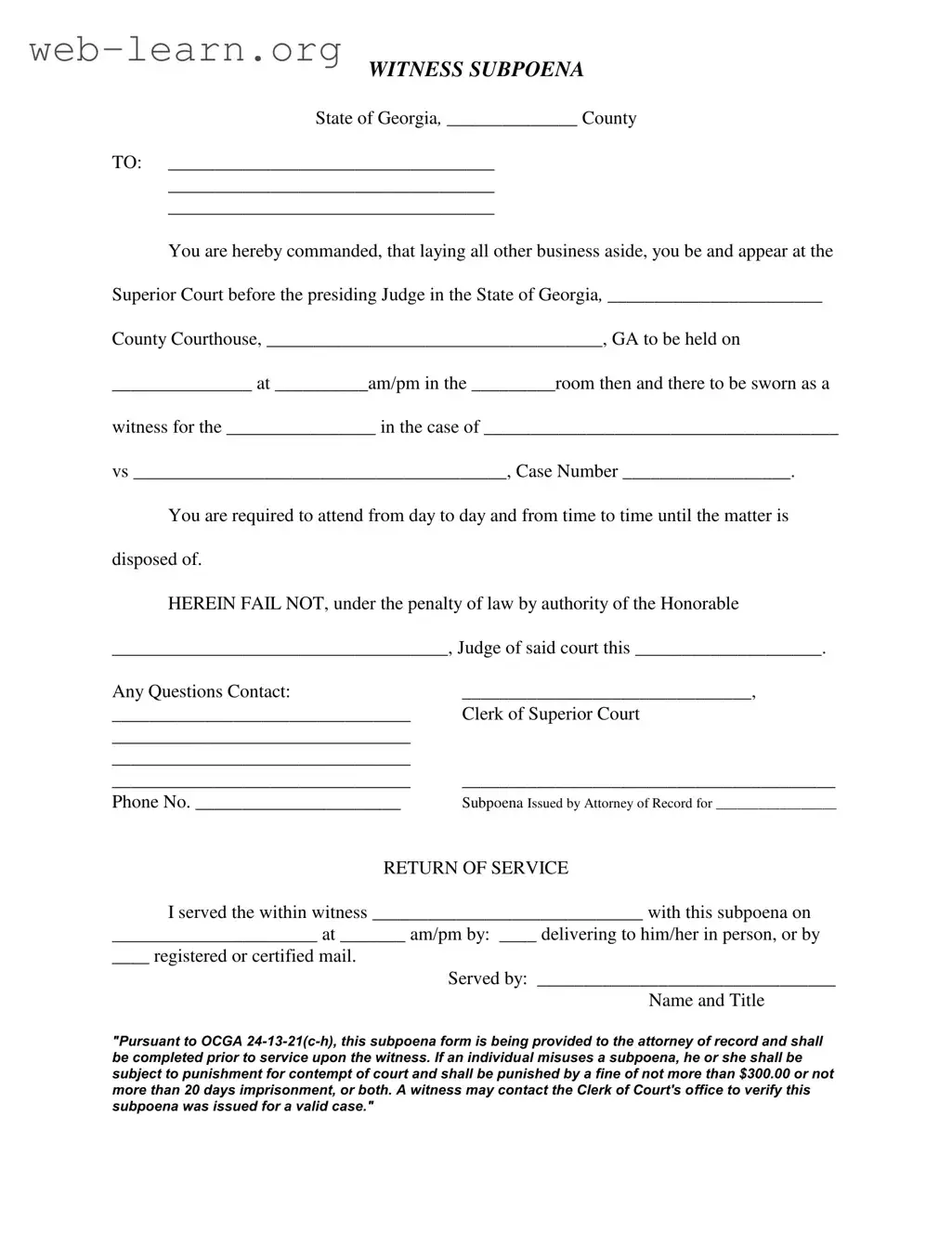
WITNESS SUBPOENA

State of Georgia, ______________ County

TO: ___________________________________

___________________________________

___________________________________

You are hereby commanded, that laying all other business aside, you be and appear at the Superior Court before the presiding Judge in the State of Georgia, _______________________

County Courthouse, ____________________________________, GA to be held on

_______________ at __________am/pm in the _________room then and there to be sworn as a

witness for the ________________ in the case of ______________________________________

vs ________________________________________, Case Number __________________.

You are required to attend from day to day and from time to time until the matter is

disposed of.

HEREIN FAIL NOT, under the penalty of law by authority of the Honorable

____________________________________, Judge of said court this ____________________.

Any Questions Contact:

_______________________________,

________________________________

Clerk of Superior Court

________________________________


________________________________


________________________________

________________________________________

Phone No. ______________________

Subpoena Issued by Attorney of Record for _________________

RETURN OF SERVICE

I served the within witness _____________________________ with this subpoena on

______________________ at _______ am/pm by: ____ delivering to him/her in person, or by

____ registered or certified mail.

Served by: ________________________________

Name and Title

"Pursuant to OCGA 24-13-21(c-h), this subpoena form is being provided to the attorney of record and shall be completed prior to service upon the witness. If an individual misuses a subpoena, he or she shall be subject to punishment for contempt of court and shall be punished by a fine of not more than $300.00 or not more than 20 days imprisonment, or both. A witness may contact the Clerk of Court's office to verify this subpoena was issued for a valid case."

Form Information

Fact Name Description
Purpose The Georgia Witness Subpoena form is used to compel a witness to appear in court to provide testimony in a legal case.
Governing Law This form is governed by the Official Code of Georgia Annotated (OCGA) § 24-13-21.
Required Information Key details must be filled out, including the witness's name, the court's location, the case title, and the date and time of the hearing.
Service of Subpoena The subpoena can be served in person or through registered or certified mail, ensuring the witness receives it properly.
Consequences of Non-Compliance If a witness fails to appear, they may face penalties, including fines or imprisonment, as outlined in the law.
Verification Witnesses can contact the Clerk of Court's office to confirm that the subpoena is valid and issued for a legitimate case.

Detailed Guide for Filling Out Georgia Witness Subpoena

Filling out the Georgia Witness Subpoena form requires careful attention to detail. This form is an important legal document that commands a witness to appear in court. To ensure that the subpoena is valid and properly executed, follow the steps outlined below.

  1. Obtain the Form: Start by acquiring a copy of the Georgia Witness Subpoena form. You can find it online or request it from the Clerk of Superior Court.
  2. Fill in the County: In the space provided, write the name of the county where the subpoena is being issued.
  3. Enter Witness Information: Fill in the name and address of the witness you are subpoenaing. Ensure that all details are accurate.
  4. Specify the Court Information: Write the name of the county courthouse where the case will be heard, including the complete address.
  5. Set the Date and Time: Indicate the date and time when the witness is required to appear in court. Be sure to specify whether it is AM or PM.
  6. Identify the Case: Provide the names of the parties involved in the case, along with the case number. This information is crucial for identifying the legal matter at hand.
  7. Judge's Name: Fill in the name of the presiding judge overseeing the case.
  8. Contact Information: Include the contact details for the Clerk of Superior Court, including the name, title, and phone number.
  9. Attorney Information: If applicable, write the name of the attorney of record who is issuing the subpoena.
  10. Return of Service Section: After serving the subpoena, fill out the Return of Service section, detailing how and when the witness was served.
  11. Signature: Finally, sign and date the form to validate it. Ensure that you have completed all sections accurately before submission.

Once the form is filled out, it should be properly served to the witness as indicated. Following these steps will help ensure compliance with legal requirements and facilitate the court process.

Obtain Answers on Georgia Witness Subpoena

  1. What is a Georgia Witness Subpoena?

    A Georgia Witness Subpoena is a legal document that orders an individual to appear in court to testify as a witness in a specific case. This document ensures that the witness is legally obligated to attend the court proceedings and provide their testimony.

  2. Who can issue a Witness Subpoena in Georgia?

    A Witness Subpoena can be issued by an attorney of record involved in the case. The attorney must complete the subpoena form before it is served to the witness. This ensures that the subpoena is valid and enforceable.

  3. What information is included in the Witness Subpoena?

    The subpoena includes several key pieces of information, such as:

    • The name of the witness being subpoenaed
    • The date and time the witness must appear in court
    • The location of the court, including the county and courthouse address
    • The case name and number
    • The name of the presiding judge
  4. What happens if a witness fails to appear?

    If a witness does not appear in court as ordered by the subpoena, they may face legal consequences. This can include being held in contempt of court, which may result in fines or imprisonment. It is crucial for witnesses to take subpoenas seriously and comply with the order.

  5. How is a Witness Subpoena served?

    A Witness Subpoena can be served in one of two ways:

    • In person, where the subpoena is handed directly to the witness
    • By registered or certified mail, ensuring that the witness receives the document

    The individual serving the subpoena must complete a return of service, documenting how and when the subpoena was delivered.

  6. Can a witness verify the validity of a subpoena?

    Yes, a witness has the right to verify the validity of the subpoena. They can contact the Clerk of Court's office to confirm that the subpoena was issued for a legitimate case. This step can provide peace of mind and clarity regarding their obligations.

  7. What are the penalties for misusing a subpoena?

    Misusing a subpoena can lead to serious consequences. Under Georgia law, an individual who misuses a subpoena may be punished for contempt of court. This can result in a fine of up to $300 or imprisonment for up to 20 days, or both.

  8. Who should a witness contact if they have questions about the subpoena?

    If a witness has questions or concerns regarding the subpoena, they should contact the Clerk of Superior Court listed on the document. The Clerk’s office can provide information and guidance about the witness's rights and responsibilities.

Common mistakes

Filling out the Georgia Witness Subpoena form can be a straightforward process, but there are common mistakes that individuals often make. One frequent error is failing to provide complete and accurate information about the witness. The form requires the full name and address of the person being subpoenaed. Omitting details or misspelling names can lead to confusion and may result in the witness not receiving the subpoena.

Another mistake is not specifying the correct court and case information. It is essential to include the exact name of the county, the courthouse, and the case number. If any of this information is incorrect, the subpoena may be considered invalid. This could prevent the witness from appearing in court, which can have serious implications for the case.

People also sometimes forget to include the date and time of the court appearance. The form clearly states when the witness is required to appear, and leaving this section blank can lead to misunderstandings. A witness must know when to show up, and any ambiguity can result in missed court dates.

Finally, a common oversight is neglecting to sign the subpoena or include the name of the issuing attorney. The signature of the attorney of record is crucial for the subpoena to be valid. Without it, the witness may question the legitimacy of the document. Each of these mistakes can create unnecessary complications, so careful attention to detail is essential when completing the form.

Documents used along the form

When dealing with legal matters in Georgia, the Witness Subpoena form is just one part of the process. Several other documents often accompany it to ensure that the legal proceedings are conducted smoothly and fairly. Below are some commonly used forms and documents that may be relevant in conjunction with the Georgia Witness Subpoena.

  • Affidavit of Service: This document serves as proof that the subpoena was delivered to the witness. It details how and when the subpoena was served, ensuring that there is a record of the witness being notified of their obligation to appear in court.
  • Notice of Hearing: This form informs all parties involved about the date, time, and location of the court hearing. It ensures that everyone is aware of the proceedings and can prepare accordingly.
  • Motion to Quash: If a witness believes that the subpoena is unreasonable or improper, they can file this motion to ask the court to nullify the subpoena. This document outlines the reasons for the request and provides the court with context to consider.
  • Witness Fee Voucher: Witnesses may be entitled to compensation for their time and travel expenses. This voucher allows them to claim these fees, ensuring they are reimbursed for their participation in the legal process.

Understanding these documents is essential for anyone involved in a legal case in Georgia. Each plays a significant role in the legal process, helping to uphold the rights of witnesses and ensure that justice is served effectively.

Similar forms

  • Subpoena Duces Tecum: This document requires a witness not only to appear but also to produce specific documents or evidence related to the case. Like the Georgia Witness Subpoena, it commands attendance but emphasizes the need for physical evidence.
  • Deposition Subpoena: Similar to the Georgia Witness Subpoena, this document compels a witness to provide testimony under oath, usually outside of the courtroom. It serves the purpose of gathering information before the trial, which can be crucial for case preparation.
  • Summons: While a summons notifies a defendant of a legal action against them, it shares a similar function of compelling attendance. Both documents are issued by the court and carry legal weight, requiring the recipient to respond or appear.
  • Notice to Produce: This document instructs a party to produce specific documents for inspection. It parallels the Georgia Witness Subpoena in its goal of gathering evidence but is directed at parties rather than witnesses.
  • Interrogatories: Although not a subpoena, interrogatories are written questions that one party sends to another, requiring answers under oath. Both documents aim to gather information, but interrogatories focus on written responses rather than live testimony.
  • Request for Admission: This document asks a party to admit or deny specific facts. Similar to the Georgia Witness Subpoena, it seeks to clarify issues before trial but does so through written statements rather than in-person appearances.
  • Court Order: A court order can mandate a person to appear or produce documents, much like a subpoena. Both documents are enforceable by law, ensuring compliance with the court's directives.
  • Civil Subpoena: This type of subpoena is issued in civil cases, similar to the Georgia Witness Subpoena. It commands a witness to testify or produce evidence, maintaining the same legal authority and requirements.
  • Criminal Subpoena: In criminal cases, this subpoena serves to compel witness testimony or evidence. It operates under similar principles as the Georgia Witness Subpoena but is specifically tailored for criminal proceedings.

Dos and Don'ts

When filling out the Georgia Witness Subpoena form, it is important to follow certain guidelines to ensure accuracy and compliance. Here are four things you should and shouldn't do:

  • Do provide complete and accurate information in all fields.
  • Do ensure the date and time of the court appearance are clearly stated.
  • Don't leave any sections blank, as this may lead to confusion or delays.
  • Don't attempt to alter or falsify any information on the form.

By adhering to these guidelines, you help maintain the integrity of the legal process and support the rights of all parties involved.

Misconceptions

Misconceptions about the Georgia Witness Subpoena form can lead to confusion and missteps. Here are ten common misunderstandings:

  • All subpoenas are the same. Many believe that all subpoenas are identical. In reality, the Georgia Witness Subpoena has specific requirements and formats that differ from other states or types of subpoenas.
  • Witnesses can ignore subpoenas. Some think they can simply disregard a subpoena. However, failing to comply can lead to legal penalties, including fines or imprisonment.
  • Subpoenas can be issued without a case. It is a misconception that subpoenas can be issued without a valid legal case. A subpoena must be connected to an ongoing legal matter.
  • Only attorneys can issue subpoenas. While attorneys typically issue subpoenas, they must be acting on behalf of a party in a legal case. The authority comes from the court.
  • Witnesses must testify even if they don’t want to. Some believe they can refuse to testify for personal reasons. In fact, witnesses are legally obligated to appear and testify unless they have a valid legal reason to decline.
  • Receiving a subpoena means you are in trouble. Many fear that being subpoenaed indicates wrongdoing. In truth, being a witness is a civic duty and does not imply guilt or involvement in a crime.
  • Subpoenas can only be served in person. A common belief is that subpoenas must be delivered in person. However, they can also be sent via registered or certified mail in certain situations.
  • You can change the date and time on a subpoena. Some think they can modify the date or time to suit their schedule. This is incorrect; any changes must be authorized by the court.
  • Subpoenas are only for criminal cases. It is a misconception that subpoenas are only relevant in criminal cases. They are also used in civil cases to compel witness testimony.
  • Once served, a subpoena cannot be challenged. Many believe that a subpoena is final and cannot be contested. However, witnesses have the right to challenge a subpoena in court if they believe it is unjust.

Understanding these misconceptions can help individuals navigate the legal process more effectively and avoid unnecessary complications.

Key takeaways

When filling out and using the Georgia Witness Subpoena form, consider the following key takeaways:

  1. Complete Information: Fill in all required fields accurately, including names, dates, and case details.
  2. Proper Court Location: Ensure the subpoena specifies the correct courthouse and judge's name.
  3. Timeliness: Issue the subpoena well in advance of the court date to ensure the witness can attend.
  4. Delivery Method: Choose between personal delivery or sending the subpoena via registered or certified mail.
  5. Return of Service: Document how and when the subpoena was served, including the name and title of the person serving it.
  6. Legal Consequences: Understand that misuse of a subpoena can lead to penalties, including fines or imprisonment.
  7. Witness Requirements: The witness must attend court from day to day until the case is resolved.
  8. Contact Information: Provide clear contact details for the Clerk of Superior Court in case the witness has questions.
  9. Verification: Witnesses can confirm the validity of the subpoena by contacting the Clerk of Court’s office.
  10. Attorney of Record: The subpoena must be issued by the attorney handling the case, ensuring its legitimacy.