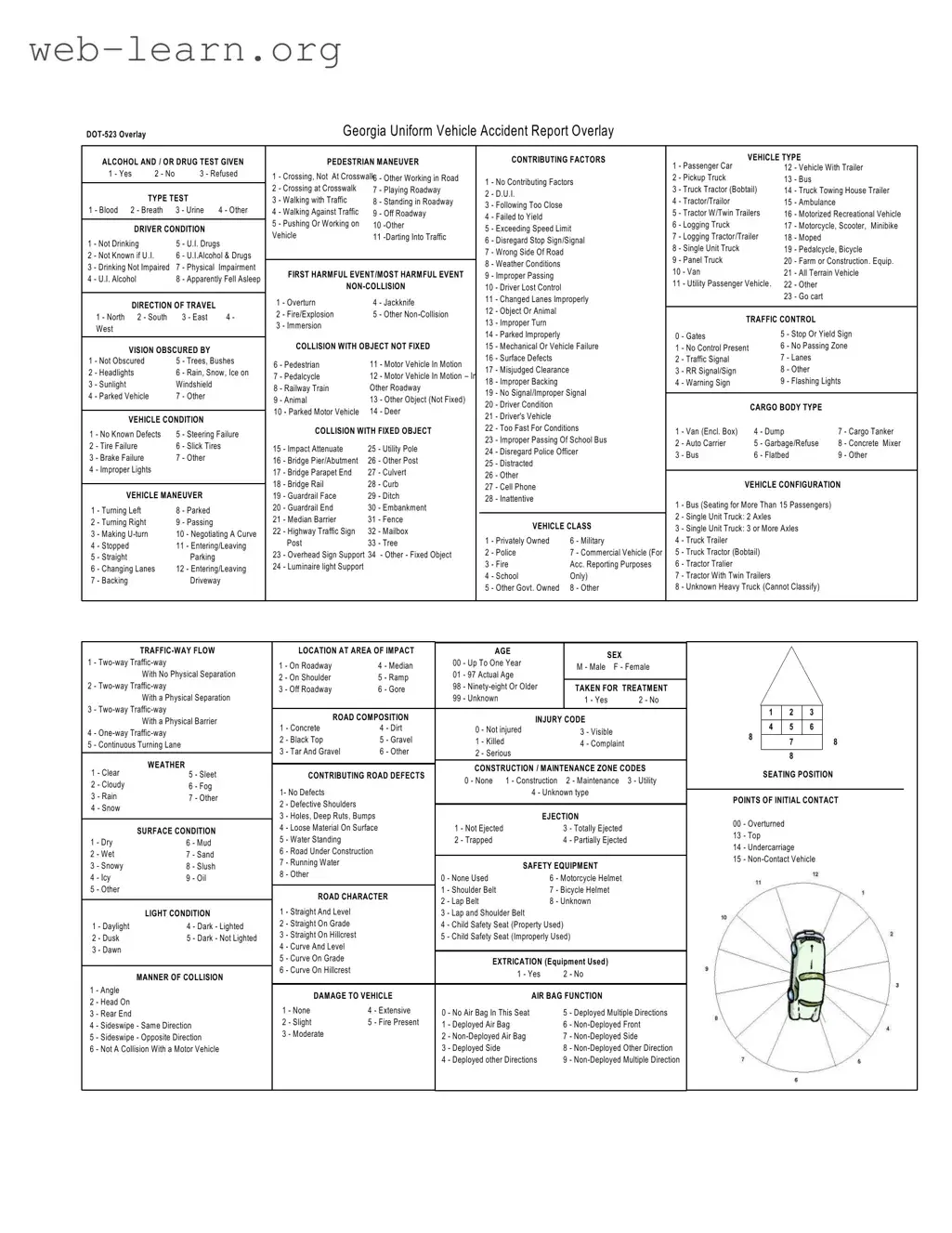
The Georgia Uniform Vehicle Accident Overlay form is a critical document utilized in the reporting of vehicle accidents across the state. This form captures essential details regarding the circumstances surrounding an accident, including the types of vehicles involved, driver conditions, and contributing factors. It allows for the documentation of specific events, such as whether alcohol or drug tests were administered and the first harmful event that occurred. The form categorizes various vehicle types, from passenger cars to motorcycles, and includes options for identifying the direction of travel and traffic control measures present at the scene. Additionally, it addresses the conditions of the roadway, weather, and visibility factors that may have influenced the incident. By systematically gathering this information, the form serves to create a comprehensive overview of the accident, facilitating better understanding and analysis for law enforcement and insurance purposes.
Georgia Uniform Vehicle Accident Report Overlay
ALCOHOL AND / OR DRUG TEST GIVEN |
|
PEDESTRIAN MANEUVER |
|
|
|
|
CONTRIBUTING FACTORS |
|
|
|
|
VEHICLE TYPE |
|
|
|
|
|||||||||
|
|
|
|
|
|
|
1 - Passenger Car |
|
|
12 - Vehicle With Trailer |
|||||||||||||||
1 - Yes |
2 - No |
3 - Refused |
|
|
|
|
|
|
|
|
|
|
|
|
|
|
|||||||||
|
1 - Crossing, Not At Crosswalk |
|
|
|
|
|
|
|
|
2 - Pickup Truck |
|
|
13 - Bus |
|
|
||||||||||
|
|
|
|
|
|
6 - Other Working in Road |
|
|
1 - No Contributing Factors |
|
|
|
|
|
|
||||||||||
|
TYPE TEST |
|
|
2 - Crossing at Crosswalk |
7 - Playing Roadway |
|
|
|
2 - D.U.I. |
|
|
|
3 - Truck Tractor (Bobtail) |
14 - Truck Towing House Trailer |
|||||||||||
|
|
|
3 - Walking with Traffic |
8 - Standing in Roadway |
|
|
|
|
|
4 - Tractor/Trailor |
|
|
|
|
|
|
|
|
|||||||
|
|
|
|
|
3 - Following Too Close |
|
|
|
|
|
15 - Ambulance |
|
|
||||||||||||
1 - Blood 2 - Breath |
3 - Urine |
4 - Other |
|
|
|
|
|
|
|
|
|
|
|
||||||||||||
|
4 - Walking Against Traffic |
9 - Off Roadway |
|
|
|
|
|
|
5 - Tractor W /Twin Trailers |
|
|
|
|
|
|
||||||||||
|
|
|
|
4 - Failed to Yield |
|
|
|
16 - Motorized Recreational Vehicle |
|||||||||||||||||
|
|
|
|
|
|
|
|
|
|
|
|
||||||||||||||
|
DRIVER CONDITION |
|
|
5 - Pushing Or Working on |
10 |
|
|
|
5 - Exceeding Speed Limit |
|
|
6 - Logging Truck |
|
|
17 - Motorcycle, Scooter, Minibike |
||||||||||
|
|
|
Vehicle |
11 |
|
|
|
|
7 - Logging Tractor/Trailer |
|
|
|
|
|
|
||||||||||
1 - Not Drinking |
5 - U.I. Drugs |
|
|
|
6 - Disregard Stop Sign /Signal |
|
|
18 - Moped |
|
|
|||||||||||||||
|
|
|
|
|
|
|
|
|
8 - Single Unit Truck |
|
|
|
|
|
|
|
|
||||||||
|
|
|
|
|
|
|
|
|
|
|
|
|
|
19 - Pedalcycle, Bicycle |
|||||||||||
2 - Not Known if U .I. |
6 - U.I.Alcohol & Drugs |
|
|
|
|
|
|
|
7 - Wrong Side Of Road |
|
|
|
|
||||||||||||
|
|
|
|
|
|
|
|
|
9 - Panel Truck |
|
|
|
|
|
|
|
|
||||||||
|
|
|
|
|
|
|
|
|
|
|
|
|
|
20 - Farm or Construction . Equip. |
|||||||||||
3 - Drinking Not Impaired |
7 - Physical |
Impairment |
|
|
|
|
|
|
|
8 - Weather Conditions |
|
|
|
|
|
||||||||||
|
|
|
|
|
|
|
|
|
|
10 - Van |
|
|
|
|
|
|
|
|
|||||||
|
FIRST HARMFUL EVENT /MOST HARMFUL EVENT |
|
|
|
|
|
|
|
|
|
21 - All Terrain Vehicle |
||||||||||||||
4 - U.I. Alcohol |
8 - Apparently Fell Asleep |
|
|
|
9 - Improper Passing |
|
|
|
|
|
|||||||||||||||
|
|
|
|
|
|
11 - Utility Passenger Vehicle . |
|
|
|
|
|
|
|||||||||||||
|
NON |
|
|
|
|
|
|
|
|
22 - Other |
|
|
|||||||||||||
|
|
|
|
|
|
|
|
10 - Driver Lost Control |
|
|
|
|
|
||||||||||||
|
|
|
|
|
|
|
|
|
|
|
|
|
|
|
|
|
|
|
|
|
|||||
|
DIRECTION OF TRAVEL |
|
|
1 - Overturn |
4 - Jackknife |
|
|
|
11 - Changed Lanes Improperly |
|
|
|
|
|
|
23 - Go cart |
|
|
|||||||
|
|
|
|
|
|
|
|
|
|
|
|
|
|
|
|
|
|
||||||||
|
|
|
2 - Fire/Explosion |
5 - Other Non |
|
|
12 - Object Or Animal |
|
|
|
|
|
|
|
|
|
|
|
|
|
|||||
1 - North |
2 - South |
3 - East |
4 - |
|
|
|
|
|
|
|
|
|
|
|
|
|
|
|
|
||||||
|
|
|
|
|
|
|
|
|
|
TRAFFIC CONTROL |
|
|
|||||||||||||
|
|
|
|
|
|
|
13 - Improper Turn |
|
|
|
|
|
|
|
|||||||||||
|
|
|
|
|
3 - Immersion |
|
|
|
|
|
|
|
|
|
|
|
|
||||||||
West |
|
|
|
|
|
|
|
|
|
|
|
|
|
|
|
|
|
|
|
|
|
|
|||
|
|
|
|
|
|
|
|
|
|
|
|
|
|
|
|
|
|
5 - Stop Or Yield Sign |
|||||||
|
|
|
|
|
|
|
|
|
|
14 - Parked Improperly |
|
|
|
0 - Gates |
|
|
|||||||||
|
|
|
|
|
|
|
|
|
|
|
|
|
|
|
|
||||||||||
|
|
|
|
|
|
|
|
|
|
|
|
|
|
|
|
||||||||||
VISION OBSCURED BY |
|
|
COLLISION WITH OBJECT NOT FIXED |
|
|
|
15 - Mechanical Or Vehicle Failure |
|
|
1 - No Control Present |
6 - No Passing Zone |
||||||||||||||
|
|
|
|
|
|
|
|
16 - Surface Defects |
|
|
|
|
|
|
|
7 - Lanes |
|
|
|||||||
1 - Not Obscured |
5 - Trees, Bushes |
|
6 - Pedestrian |
11 - Motor Vehicle In Motion |
|
|
|
|
|
2 - Traffic Signal |
|
|
|
|
|||||||||||
2 - Headlights |
6 - Rain, Snow, Ice on |
|
|
|
17 - Misjudged Clearance |
|
|
3 - RR Signal/Sign |
|
|
8 - Other |
|
|
|
|
||||||||||
|
7 - Pedalcycle |
12 - Motor Vehicle In Motion – |
In |
|
|
|
|
|
|
|
|
|
|||||||||||||
|
|
18 - Improper Backing |
|
|
|
4 - Warning Sign |
|
|
9 - Flashing Lights |
||||||||||||||||
3 - Sunlight |
|
Windshield |
|
|
8 - Railway Train |
Other Roadway |
|
|
|
|
|
|
|
|
|||||||||||
4 - Parked Vehicle |
7 - Other |
|
|
|
|
|
19 - No Signal/Improper Signal |
|
|
|
|
|
|
|
|
|
|
|
|
||||||
|
|
9 - Animal |
13 - Other Object (Not Fixed) |
|
|
|
|
|
|
|
|
|
|
|
|
|
|
||||||||
|
|
|
|
|
|
|
|
|
|
|
|
|
|
|
|
|
|
|
|||||||
|
|
|
|
|
|
|
20 - Driver Condition |
|
|
|
|
|
CARGO BODY TYPE |
|
|
||||||||||
|
|
|
|
|
10 - Parked Motor Vehicle |
14 - Deer |
|
|
|
|
|
|
|
|
|
|
|||||||||
VEHICLE CONDITION |
|
|
|
|
|
21 - Driver's Vehicle |
|
|
|
|
|
|
|
||||||||||||
|
|
|
|
|
|
|
|
|
|
|
|
|
|
|
|
|
|
||||||||
|
|
|
|
|
|
|
|
|
|
|
|
|
|
|
|
|
|
|
|
|
|||||
|
|
|
|
|
|
|
|
|
|
|
|
|
|
|
|
|
|
|
|
|
|
|
|||
1 - No Known Defects |
5 - Steering Failure |
|
COLLISION WITH FIXED OBJECT |
|
|
|
22 - Too Fast For Conditions |
|
|
1 - Van (Encl. Box) |
4 - Dump |
|
|
7 - Cargo Tanker |
|||||||||||
|
|
|
|
|
|
|
|
|
|
|
|||||||||||||||
|
|
|
|
|
|
|
23 - Improper Passing Of School Bus |
|
|
|
|
|
|
|
|
|
|
|
|
||||||
2 - Tire Failure |
6 - Slick Tires |
|
|
|
|
|
|
|
|
|
2 - Auto Carrier |
5 - Garbage/Refuse |
8 - Concrete Mixer |
||||||||||||
|
15 - Impact Attenuate |
25 - Utility Pole |
|
|
|
|
|
|
|
|
|||||||||||||||
|
|
|
|
24 - Disregard Police Officer |
|
|
|
|
|
|
|
|
|
|
|
|
|||||||||
|
|
|
|
|
|
|
|
|
|
3 - Bus |
6 - Flatbed |
|
|
9 - Other |
|||||||||||
3 - Brake Failure |
7 - Other |
|
|
|
|
|
|
|
|
|
|
|
|
||||||||||||
|
|
16 - Bridge Pier/Abutment |
26 - Other Post |
|
|
|
|
|
|
|
|
|
|
||||||||||||
|
|
|
|
|
25 - Distracted |
|
|
|
|
|
|
|
|
|
|
|
|
|
|||||||
|
|
|
|
|
|
|
|
|
|
|
|
|
|
|
|
|
|
|
|
|
|||||
4 - Improper Lights |
|
|
|
|
|
|
|
|
|
|
|
|
|
|
|
|
|
|
|
|
|
|
|||
|
|
|
17 - Bridge Parapet End |
27 - Culvert |
|
|
|
26 - Other |
|
|
|
|
|
|
|
|
|
|
|
|
|
||||
|
|
|
|
|
|
|
|
|
|
|
|
|
|
|
|
|
|
|
|
|
|||||
|
|
|
|
|
|
|
|
|
|
|
|
|
|
|
|
|
|
|
|
|
|
|
|
||
|
|
|
|
|
18 - Bridge Rail |
28 - Curb |
|
|
|
27 - Cell Phone |
|
|
|
|
|
VEHICLE CONFIGURATION |
|||||||||
|
|
|
|
|
|
|
|
|
|
|
|
||||||||||||||
|
|
|
|
|
|
|
|
|
|
|
|
|
|
|
|
|
|
|
|
|
|
|
|
||
VEHICLE MANEUVER |
|
|
19 - Guardrail Face |
29 - Ditch |
|
|
|
28 - Inattentive |
|
|
|
|
|
|
|
|
|
|
|
|
|
||||
|
|
|
|
|
|
|
|
|
|
|
|
|
|
1 - Bus (Seating for More Than 15 Passengers) |
|
|
|||||||||
1 - Turning Left |
8 - Parked |
|
|
20 - Guardrail End |
30 - Embankment |
|
|
|
|
|
|
|
|
|
|
||||||||||
|
|
|
|
|
|
|
|
|
|
|
|
|
|
|
|
|
|
|
|
||||||
2 - Turning Right |
9 - Passing |
|
|
21 - Median Barrier |
31 - Fence |
|
|
|
|
|
|
|
|
2 - Single Unit Truck: 2 Axles |
|
|
|
|
|
|
|||||
|
|
|
|
|
|
VEHICLE CLASS |
|
|
|
|
|
|
|
|
|
|
|
|
|||||||
|
|
|
|
|
|
|
|
|
|
|
3 - Single Unit Truck: 3 or More Axles |
|
|
|
|
||||||||||
3 - Making |
10 - Negotiating A Curve |
|
22 - Highway Traffic Sign |
32 - Mailbox |
|
|
|
|
|
|
|
|
|
|
|||||||||||
|
|
|
|
|
|
|
|
|
|
|
|
|
|||||||||||||
|
|
|
|
|
|
|
|
|
|
|
|
|
|
|
|
|
|
|
|||||||
|
|
|
|
|
|
|
1 - Privately Owned |
6 - Military |
|
|
4 - Truck Trailer |
|
|
|
|
|
|
|
|
||||||
4 - Stopped |
|
11 - Entering/Leaving |
|
Post |
33 - Tree |
|
|
|
|
|
|
|
|
|
|
|
|
|
|||||||
|
|
|
|
|
|
|
|
2 - Police |
7 - Commercial Vehicle (For |
|
5 - Truck Tractor (Bobtail) |
|
|
|
|
|
|
||||||||
5 - Straight |
|
Parking |
|
|
23 - Overhead Sign Support 34 - Other - Fixed Object |
|
|
|
|
|
|
|
|
|
|||||||||||
|
|
|
|
|
|
|
|
|
3 - Fire |
Acc. Reporting Purposes |
|
6 - Tractor Tralier |
|
|
|
|
|
|
|
|
|||||
6 - Changing Lanes |
12 - Entering/Leaving |
|
24 - Luminaire light Support |
|
|
|
|
|
|
|
|
|
|
|
|
|
|
||||||||
|
|
|
|
|
|
|
|
|
|
|
|
|
|
|
|
|
|
|
|
|
|||||
|
|
|
|
|
|
|
4 - School |
Only) |
|
|
7 - Tractor With Twin Trailers |
|
|
|
|
|
|
||||||||
7 - Backing |
|
Driveway |
|
|
|
|
|
|
|
|
|
|
|
|
|
|
|
||||||||
|
|
|
|
|
|
|
|
5 - Other Govt. Owned |
8 - Other |
|
|
8 - Unknown Heavy Truck (Cannot Classify) |
|
|
|||||||||||
|
|
|
|
|
|
|
|
|
|
|
|
|
|
|
|||||||||||
|
|
|
|
|
|
|
|
|
|
|
|
|
|
|
|
|
|
|
|
|
|
|
|||
|
|
|
|
|
|
|
|
|
|
|
|
|
|
|
|
|
|
|
|
|
|
|
|||
|
TRAFFIC |
|
|
LOCATION AT AREA OF IMPACT |
|
|
|
|
AGE |
SEX |
|
|
|
|
|
|
|
|
|
|
|
|
|||
1 - |
|
|
|
|
|
|
00 - Up To One Year |
|
|
|
|
|
|
|
|
|
|
|
|
||||||
|
|
|
1 - On Roadway |
4 - Median |
|
M - Male F - Female |
|
|
|
|
|
|
|
|
|
|
|||||||||
|
With No Physical Separation |
|
|
01 - 97 Actual Age |
|
|
|
|
|
|
|
|
|
|
|||||||||||
|
|
2 - On Shoulder |
5 - Ramp |
|
|
|
|
|
|
|
|
|
|
|
|
|
|
||||||||
2 - |
|
|
|
3 - Off Roadway |
6 - Gore |
|
98 - |
TAKEN FOR TREATMENT |
|
|
|
|
|
|
|
|
|
|
|||||||
|
With a Physical Separation |
|
|
|
|
99 - Unknown |
|
1 - Yes |
2 - No |
|
|
|
|
|
|
|
|
|
|
||||||
3 - |
|
|
|
ROAD COMPOSITION |
|
|
|
|
|
INJURY CODE |
|
|
|
|
|
1 |
2 |
|
3 |
|
|
|
|||
|
|
|
|
|
|
|
|
|
|
|
|
|
|
|
|
|
|
|
|||||||
|
With a Physical Barrier |
|
|
|
|
|
|
|
|
|
|
|
|
|
|
|
|
|
|
|
|||||
|
|
|
|
|
|
|
|
|
|
|
4 |
5 |
|
6 |
|
|
|
||||||||
|
|
|
1 - Concrete |
4 - Dirt |
|
|
|
|
|
|
|
|
|
|
|
|
|
|
|||||||
4 - |
|
|
|
|
|
|
0 - Not injured |
3 - Visible |
|
|
|
|
|
|
|
|
|
||||||||
|
|
|
2 - Black Top |
5 - Gravel |
|
|
|
|
|
|
|
8 |
|
|
|
|
|
|
|
||||||
5 - Continuous Turning Lane |
|
|
|
|
|
1 - Killed |
|
4 - Complaint |
|
|
|
|
|
7 |
|
|
8 |
|
|
||||||
|
|
|
|
|
|
|
|
|
|
|
|
|
|
|
|
||||||||||
|
|
3 - Tar And Gravel |
6 - Other |
|
|
|
|
|
|
|
|
|
|
|
|
|
|
||||||||
|
|
|
|
|
|
|
|
2 - Serious |
|
|
|
|
|
|
|
8 |
|
|
|
|
|
||||
|
|
|
|
|
|
|
|
|
|
|
|
|
|
|
|
|
|
|
|
||||||
1 - Clear |
WEATHER |
|
|
|
|
|
|
CONSTRUCTION / MAINTENANCE ZONE CODES |
|
|
|
SEATING POSITION |
|
|
|||||||||||
|
|
|
|
|
|
|
|
|
|
|
|||||||||||||||
|
5 - Sleet |
|
|
CONTRIBUTING ROAD DEFECTS |
|
|
|
|
|
|
|
||||||||||||||
|
|
|
|
0 - None |
1 - Construction |
2 - Maintenance |
3 - Utility |
|
|
|
|
|
|||||||||||||
2 - Cloudy |
|
6 - Fog |
|
|
|
|
|
|
|
|
|
|
|
|
|
|
|
||||||||
|
|
|
1- No Defects |
|
|
|
|
|
|
4 - Unknown type |
|
|
|
|
|
|
|
|
|
|
|
|
|||
3 - Rain |
|
7 - Other |
|
|
|
|
|
|
|
|
|
|
|
POINTS OF INITIAL CONTACT |
|||||||||||
|
|
|
2 - Defective Shoulders |
|
|
|
|
|
|
|
|
|
|
|
|||||||||||
4 - Snow |
|
|
|
|
|
|
|
|
|
|
|
|
|
|
|
|
|
|
|
|
|
|
|
|
|
|
|
|
|
3 - Holes, Deep Ruts , Bumps |
|
|
|
|
|
|
|
|
|
|
|
|
|
|
|
|
|
|
|
||
|
|
|
|
|
|
|
|
|
|
EJECTION |
|
|
|
00 - Overturned |
|
|
|
|
|||||||
|
|
|
|
|
|
|
|
|
|
|
|
|
|
|
|
|
|||||||||
|
SURFACE CONDITION |
|
|
4 - Loose Material On Surface |
|
1 - Not Ejected |
|
3 - Totally Ejected |
|
|
|
|
|
|
|
||||||||||
|
|
|
|
|
|
|
|
13 - Top |
|
|
|
|
|
|
|||||||||||
|
|
|
|
|
|
|
|
|
|
|
|
|
|
|
|
|
|
|
|
|
|||||
1 - Dry |
|
6 - Mud |
|
|
5 - Water Standing |
|
|
2 - Trapped |
|
4 - Partially Ejected |
|
|
|
|
|
|
|
|
|
||||||
|
|
|
|
|
|
|
|
|
14 - Undercarriage |
|
|
|
|
||||||||||||
|
|
|
6 - Road Under Construction |
|
|
|
|
|
|
|
|
|
|
|
|
|
|
||||||||
2 - Wet |
|
7 - Sand |
|
|
|
|
|
|
|
|
|
|
|
|
|
|
|
|
|||||||
|
|
|
|
|
|
|
|
|
|
|
|
|
15 - |
|
|
||||||||||
|
|
|
7 - Running Water |
|
|
|
|
|
|
|
|
|
|
|
|
|
|||||||||
3 - Snowy |
|
8 - Slush |
|
|
|
|
|
|
|
|
SAFETY EQUIPMENT |
|
|
|
|
|
|||||||||
|
|
|
|
|
|
|
|
|
|
|
|
|
|
|
|
|
|
|
|
|
|||||
|
|
|
8 - Other |
|
|
|
|
|
|
|
|
|
|
|
|
|
|
|
|
|
|
||||
4 - Icy |
|
9 - Oil |
|
|
|
|
0 - None Used |
6 - Motorcycle Helmet |
|
|
|
|
|
|
|
|
|
|
|
|
|||||
|
|
|
|
|
|
|
|
|
|
|
|
|
|
|
|
|
|
||||||||
5 - Other |
|
|
|
|
ROAD CHARACTER |
|
1 - Shoulder Belt |
7 - Bicycle Helmet |
|
|
|
|
|
|
|
|
|
|
|
|
|||||
|
|
|
|
|
|
2 - Lap Belt |
|
8 - Unknown |
|
|
|
|
|
|
|
|
|
|
|
|
|||||
|
|
|
|
|
|
|
|
|
|
|
|
|
|
|
|
|
|
|
|||||||
|
|
|
|
|
|
|
|
|
|
|
|
|
|
|
|
|
|
|
|
|
|||||
|
LIGHT CONDITION |
|
|
1 - Straight And Level |
|
|
3 - Lap and Shoulder Belt |
|
|
|
|
|
|
|
|
|
|
|
|
|
|||||
1 - Daylight |
|
4 - Dark - Lighted |
|
2 - Straight On Grade |
|
|
4 - Child Safety Seat (Property Used) |
|
|
|
|
|
|
|
|
|
|
|
|
|
|||||
2 - Dusk |
|
5 - Dark - Not Lighted |
|
3 - Straight On Hillcrest |
|
|
5 - Child Safety Seat (Improperly Used) |
|
|
|
|
|
|
|
|
|
|
|
|
||||||
3 - Dawn |
|
|
|
|
4 - Curve And Level |
|
|
|
|
|
|
|
|
|
|
|
|
|
|
|
|
|
|
|
|
|
|
|
|
|
5 - Curve On Grade |
|
|
|
|
|
EXTRICATION (Equipment Used ) |
|
|
|
|
|
|
|
|
|
|
|
|
||
|
MANNER OF COLLISION |
|
6 - Curve On Hillcrest |
|
|
|
|
|
|
1 - Yes |
2 - No |
|
|
|
|
|
|
|
|
|
|
|
|
||
|
|
|
|
|
|
|
|
|
|
|
|
|
|
|
|
|
|
|
|
|
|||||
|
|
|
|
|
|
|
|
|
|
|
|
|
|
|
|
|
|
|
|
|
|
|
|||
1 - Angle |
|
|
|
|
DAMAGE TO VEHICLE |
|
|
|
|
|
AIR BAG FUNCTION |
|
|
|
|
|
|
|
|
|
|
|
|
||
2 - Head On |
|
|
|
|
|
|
|
|
|
|
|
|
|
|
|
|
|
|
|
|
|
||||
|
|
|
|
|
|
|
|
|
|
|
|
|
|
|
|
|
|
|
|
|
|
|
|
|
|
3 - Rear End |
|
|
|
|
1 - None |
4 - Extensive |
|
0 - No Air Bag In This Seat |
5 - Deployed Multiple Directions |
|
|
|
|
|
|
|
|
|
|
||||||
4 - Sideswipe - Same Direction |
|
|
2 - Slight |
5 - Fire Present |
|
1 - Deployed Air Bag |
6 - |
|
|
|
|
|
|
|
|
|
|
||||||||
|
|
|
|
|
|
|
|
|
|
|
|
|
|
|
|||||||||||
5 - Sideswipe - Opposite Direction |
|
|
3 - Moderate |
|
|
2 - Non |
7 - |
|
|
|
|
|
|
|
|
|
|
||||||||
6 - Not A Collision With a Motor Vehicle |
|
|
|
|
3 - Deployed Side |
|
8 - |
|
|
|
|
|
|
|
|
|
|
||||||||
|
|
|
|
|
|
|
|
4 - Deployed other Directions |
9 - |
|
|
|
|
|
|
|
|
|
|||||||
|
|
|
|
|
|
|
|
|
|
|
|
|
|
|
|
|
|
|
|
|
|
|
|
|
|
| Fact Name | Details |
|---|---|
| Form Title | Georgia Uniform Vehicle Accident Report Overlay (DOT-523) |
| Governing Law | O.C.G.A. § 40-6-273, which mandates the reporting of vehicle accidents. |
| Purpose | This form is used to document details of vehicle accidents in Georgia. |
| Alcohol and Drug Testing | It includes options to indicate if a test was given for alcohol or drugs. |
| Contributing Factors | Drivers can specify factors contributing to the accident, such as speeding or distraction. |
| Vehicle Types | The form categorizes various vehicle types, including passenger cars and motorcycles. |
| Driver Condition | Conditions such as impairment or distraction can be recorded for the driver. |
| Weather Conditions | Weather at the time of the accident is documented, including rain or fog. |
| Injury Codes | The form includes codes to classify injuries sustained in the accident. |
| Safety Equipment | It allows for the indication of safety equipment used, such as seat belts or helmets. |
Filling out the Georgia Uniform Vehicle Accident Overlay form requires attention to detail to ensure all relevant information is accurately captured. This form is essential for documenting the specifics of a vehicle accident and will be used for reporting purposes.
The Georgia Uniform Vehicle Accident Overlay form is a document used to collect and report information about vehicle accidents in the state of Georgia. This form is essential for law enforcement officers and insurance companies as it provides a standardized way to record details about the accident, including the vehicles involved, the conditions at the time of the accident, and any contributing factors.
The form captures a wide range of information, such as:
The responsibility for completing the Georgia Uniform Vehicle Accident Overlay form typically falls on law enforcement officers who respond to the scene of an accident. They gather information from the drivers, witnesses, and the scene itself to ensure that all relevant details are accurately recorded. However, drivers involved in the accident should also keep their own records for insurance purposes.
The information collected in the Georgia Uniform Vehicle Accident Overlay form serves several purposes. It is used by law enforcement to analyze traffic accidents, identify trends, and improve road safety. Insurance companies rely on the data to process claims and determine liability. Additionally, the form can be used in legal proceedings if disputes arise regarding the accident.
The Georgia Uniform Vehicle Accident Overlay form can typically be obtained from local law enforcement agencies, such as police departments or sheriff's offices. Additionally, it may be available on the official Georgia Department of Transportation website or through legal resources that provide accident reporting forms. It’s important to ensure you are using the most current version of the form for accurate reporting.
Completing the Georgia Uniform Vehicle Accident Overlay form can be a straightforward process, but many individuals make common mistakes that can lead to complications later on. Understanding these pitfalls can help ensure accurate reporting and potentially aid in any subsequent legal or insurance matters.
One frequent error is failing to provide complete information about the involved vehicles. Each vehicle must be properly classified, yet some individuals neglect to select the correct vehicle type. For instance, if a pickup truck is involved, it should be marked accordingly rather than defaulting to a passenger car. Inaccurate classifications can lead to misunderstandings about the severity and nature of the accident.
Another mistake involves overlooking the section regarding driver condition. Many people either forget to check the box that indicates whether the driver was under the influence of alcohol or drugs or fail to provide accurate details about their condition. This information is crucial for law enforcement and insurance companies when assessing liability and determining the circumstances surrounding the accident.
Additionally, individuals often misinterpret the contributing factors section. It is essential to select all applicable factors that may have contributed to the accident. For instance, if a driver was speeding and also failed to yield, both factors should be indicated. Omitting relevant details can skew the assessment of fault and may affect insurance claims.
People also tend to neglect the section on the first harmful event. This part of the form is vital in identifying how the accident unfolded. Failing to accurately describe the initial incident can lead to confusion and miscommunication later in the claims process.
Moreover, many individuals do not pay close attention to the area of impact. Accurately reporting where the collision occurred is essential for investigators. If the impact location is incorrectly noted, it may hinder the investigation and affect the determination of liability.
Another common error is providing vague descriptions of the weather and road conditions. Specific details about visibility, surface conditions, and weather can significantly influence the understanding of the accident. For instance, stating that the road was wet due to rain is more informative than simply marking "bad weather."
Additionally, people often fail to document the presence of traffic control devices. Noting whether traffic signals or signs were present can provide clarity regarding the circumstances of the accident. Omitting this information can lead to misunderstandings about whether the drivers involved were following the rules of the road.
Lastly, individuals sometimes forget to include the names and contact information of witnesses. Witness accounts can be invaluable in establishing the facts of the case. Without this information, it may become challenging to corroborate the details of the accident later on.
By being aware of these common mistakes, individuals can take steps to ensure their completion of the Georgia Uniform Vehicle Accident Overlay form is accurate and thorough. This diligence can ultimately aid in a smoother claims process and provide a clearer picture of the accident's circumstances.
When involved in a vehicle accident in Georgia, several forms and documents may accompany the Georgia Uniform Vehicle Accident Overlay form. Each of these documents serves a specific purpose in the accident reporting and claims process.
Understanding these documents can help streamline the process after an accident. Having the right forms ready can make a significant difference in resolving claims efficiently.
The Georgia Uniform Vehicle Accident Overlay form is essential for documenting vehicle accidents in the state. Several other documents serve similar purposes, each with specific details that complement the information gathered in this form. Below is a list of six documents that share similarities with the Georgia Uniform Vehicle Accident Overlay form:
Each of these documents plays a critical role in the aftermath of a vehicle accident, ensuring that all relevant information is captured and utilized effectively for legal and insurance purposes.
When filling out the Georgia Uniform Vehicle Accident Overlay form, it’s essential to approach the task with care and attention to detail. Here are some important dos and don’ts to keep in mind:
Understanding the Georgia Uniform Vehicle Accident Overlay form can be challenging, and several misconceptions often arise. Here are four common misunderstandings about this important document:
Being aware of these misconceptions can help individuals navigate the aftermath of a vehicle accident more effectively. Understanding the purpose and requirements of the Georgia Uniform Vehicle Accident Overlay form is crucial for proper documentation and legal compliance.
The Georgia Uniform Vehicle Accident Overlay form is crucial for documenting vehicle accidents. It provides a structured way to report details, which can be essential for insurance claims and legal proceedings.
Accurate completion of the form is vital. Each section, from driver condition to weather conditions, must be filled out carefully to ensure all relevant information is captured.
Understanding the various options available on the form is important. For instance, the sections on vehicle type and contributing factors help clarify the circumstances surrounding the accident.
Make sure to indicate whether an alcohol or drug test was given. This can significantly impact the outcome of any legal or insurance claims related to the accident.
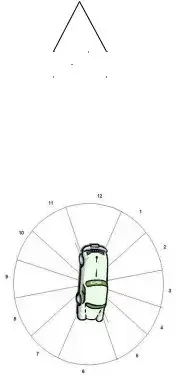
Pay attention to the area of impact and points of initial contact. These details can help reconstruct the accident and may be critical in determining liability.
Finally, keep a copy of the completed form. Having a record of the information provided can be beneficial for future reference and in case of disputes.