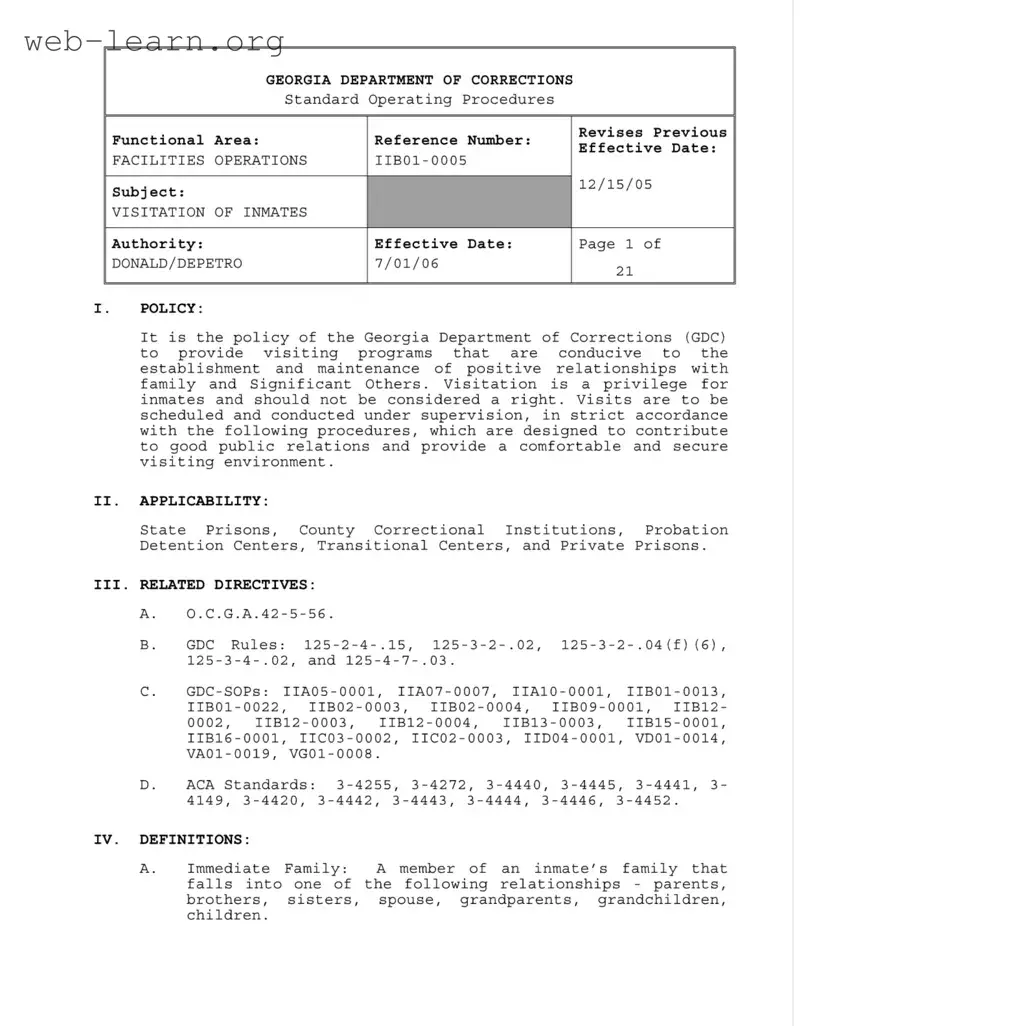
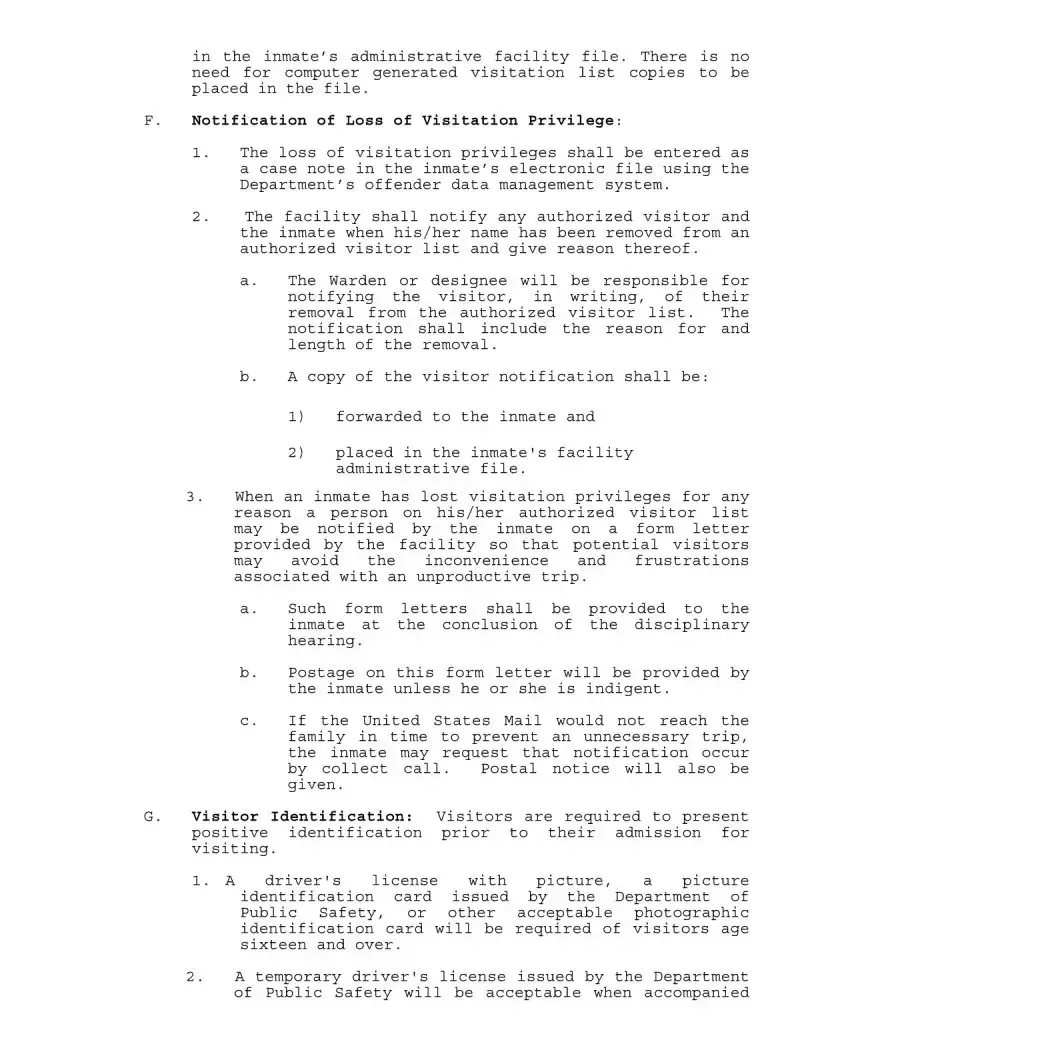
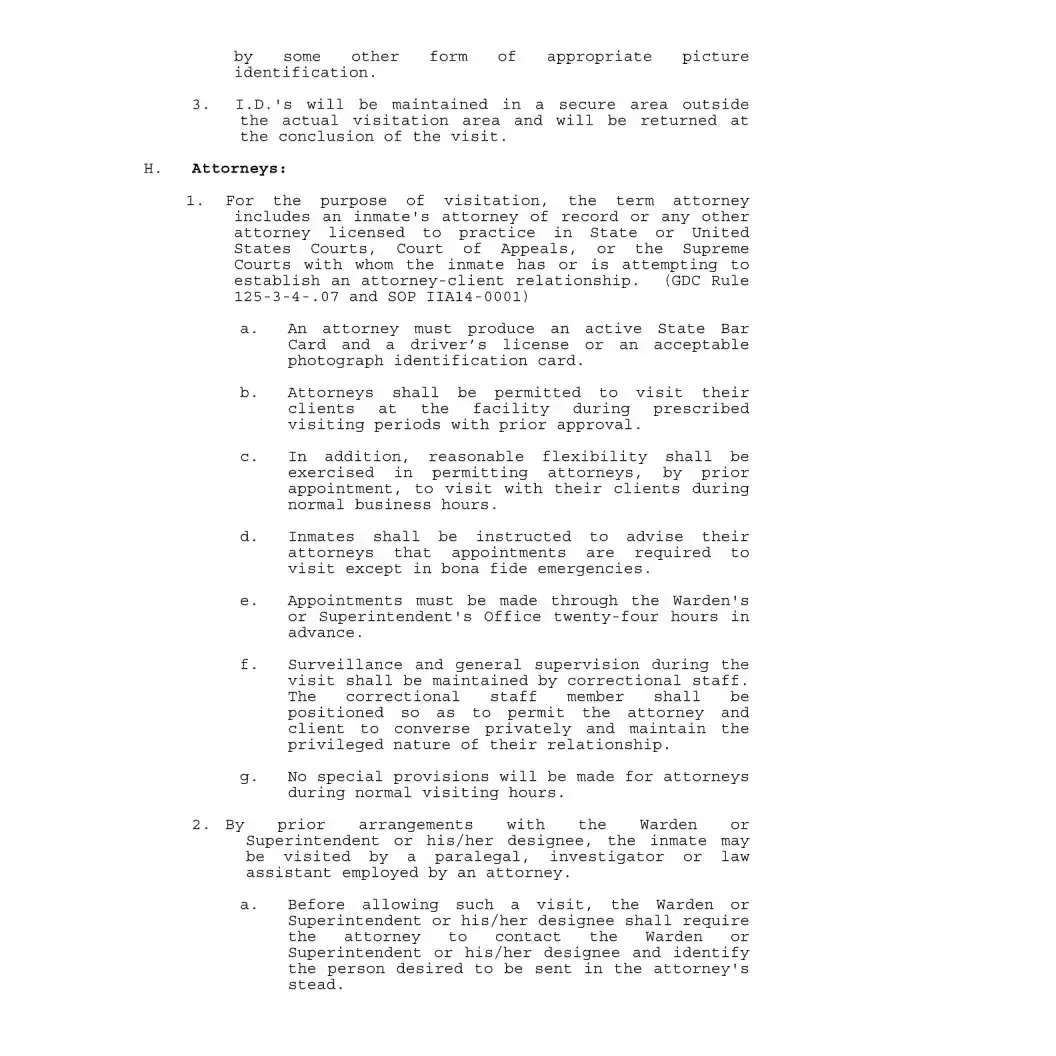
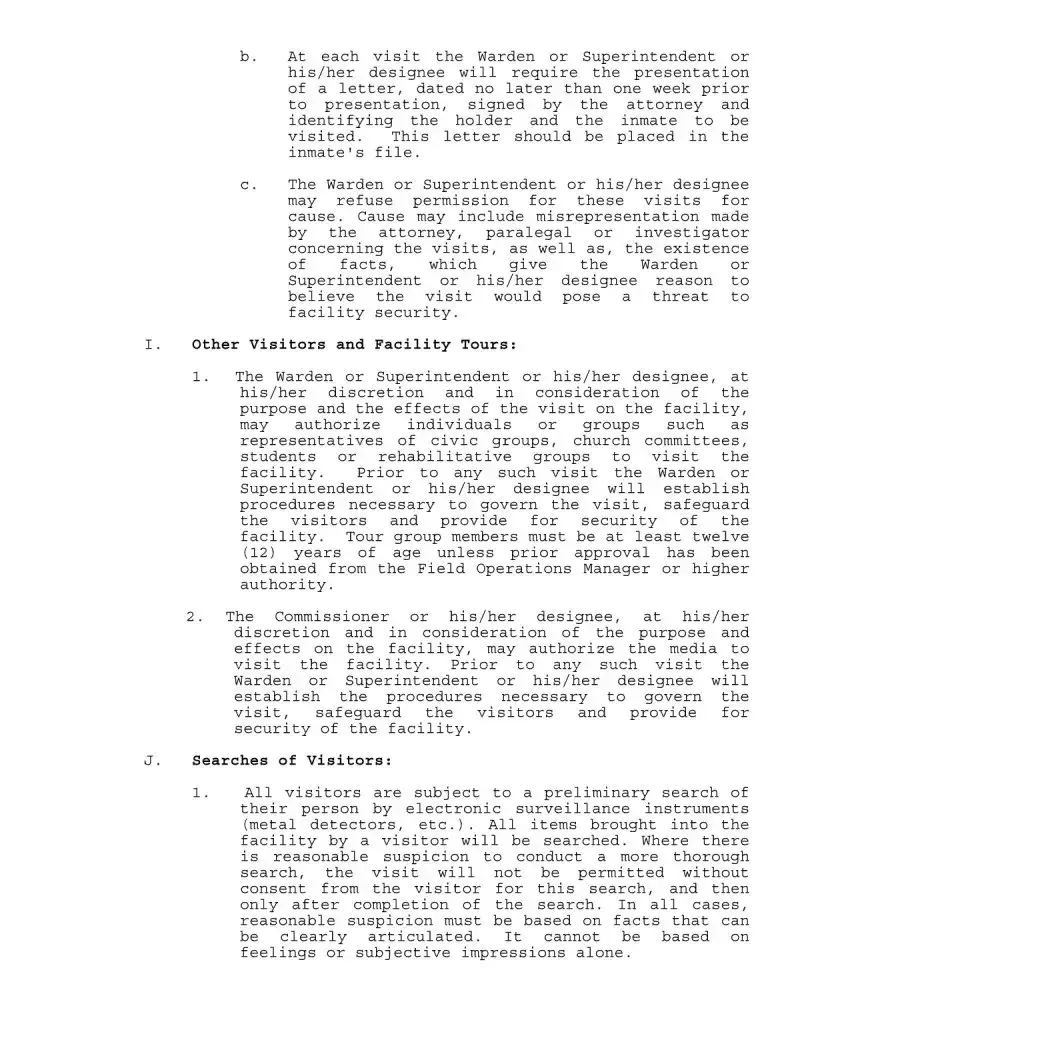
The Georgia Standard Operating Procedures (SOP) form outlines essential guidelines for inmate visitation within various correctional facilities across the state. This document, issued by the Georgia Department of Corrections, emphasizes the importance of fostering positive relationships between inmates and their families or significant others. It specifies that visitation is a privilege, not a right, and establishes procedures to ensure a secure and comfortable environment for all parties involved. The SOP applies to a range of facilities, including state prisons, county correctional institutions, and private prisons, and it references relevant legal directives and standards. Additionally, it provides definitions for key terms such as immediate family, extended family, and significant relationship visitors, helping to clarify who may be permitted to visit inmates. The document also includes procedural details regarding the visitation schedule, the maintenance of visiting areas, and the protocols for managing visits during the diagnostic process. By adhering to these guidelines, the Georgia Department of Corrections aims to maintain public safety while supporting the rehabilitation of inmates through meaningful family connections.
| Fact Name | Fact Description |
|---|---|
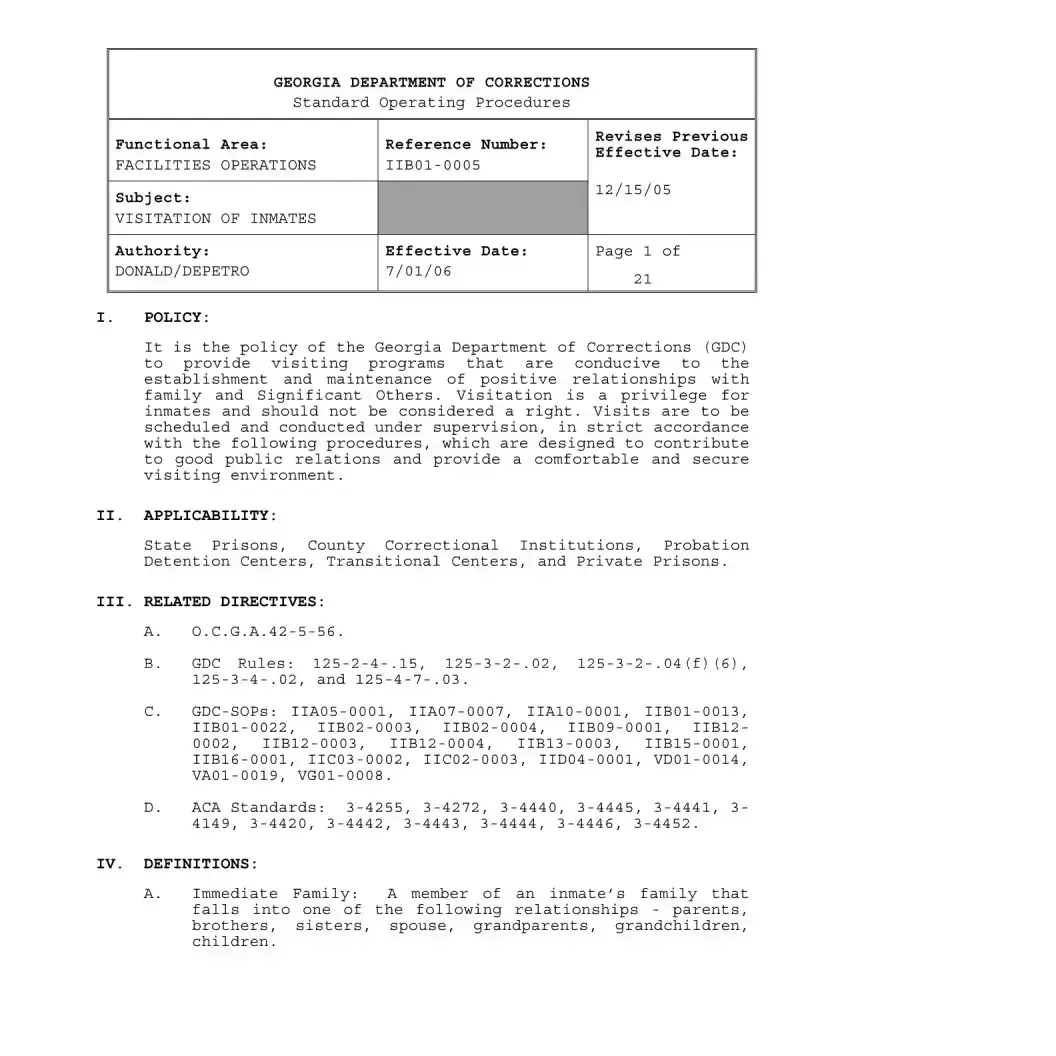
| Policy Overview | The Georgia Department of Corrections (GDC) establishes visitation policies to support positive relationships between inmates and their families or significant others. |
| Visitation Privilege | Visitation is a privilege granted to inmates, not a right, and is subject to specific procedures and supervision. |
| Applicable Facilities | The visitation policies apply to state prisons, county correctional institutions, probation detention centers, transitional centers, and private prisons. |
| Governing Law | The policies are governed by O.C.G.A. § 42-5-56 and GDC Rules including 125-2-4-.15 and others. |
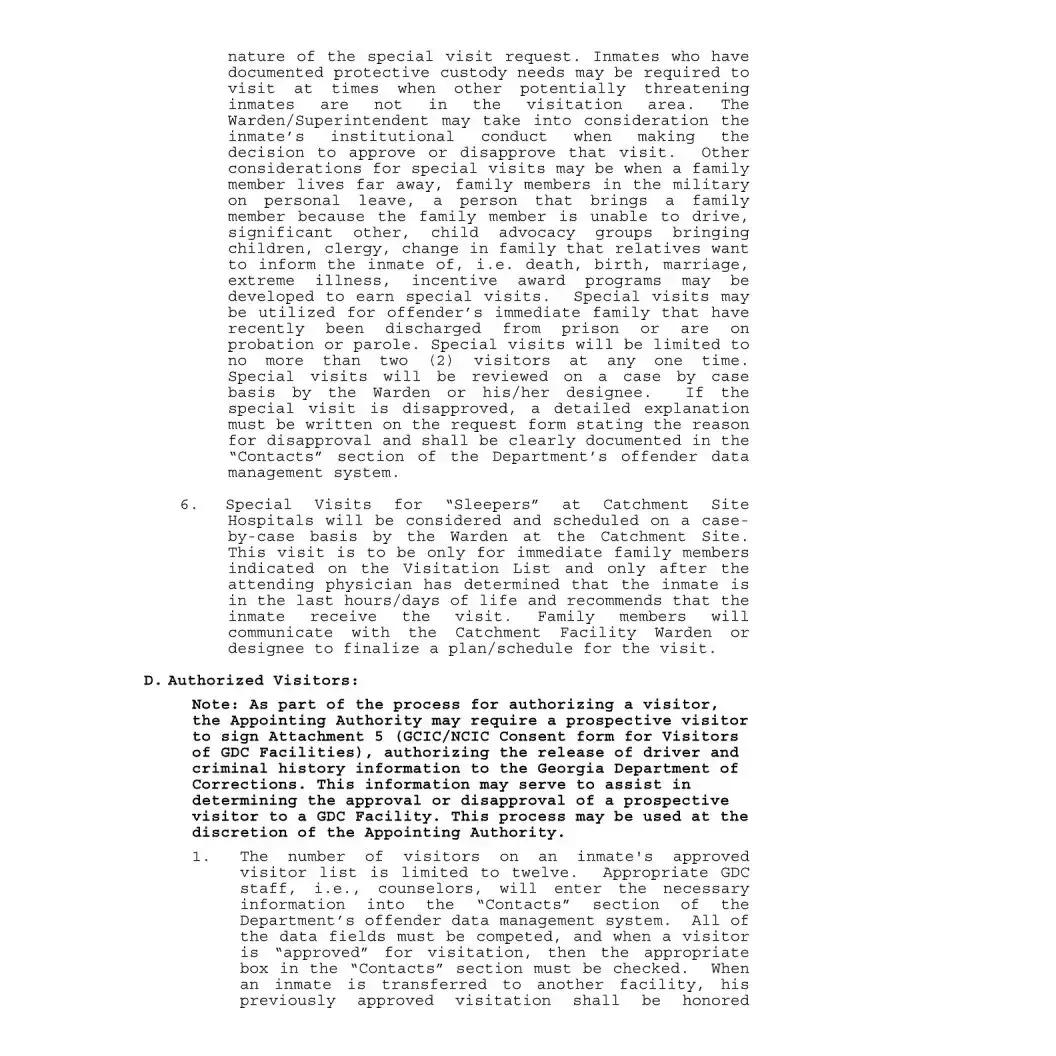
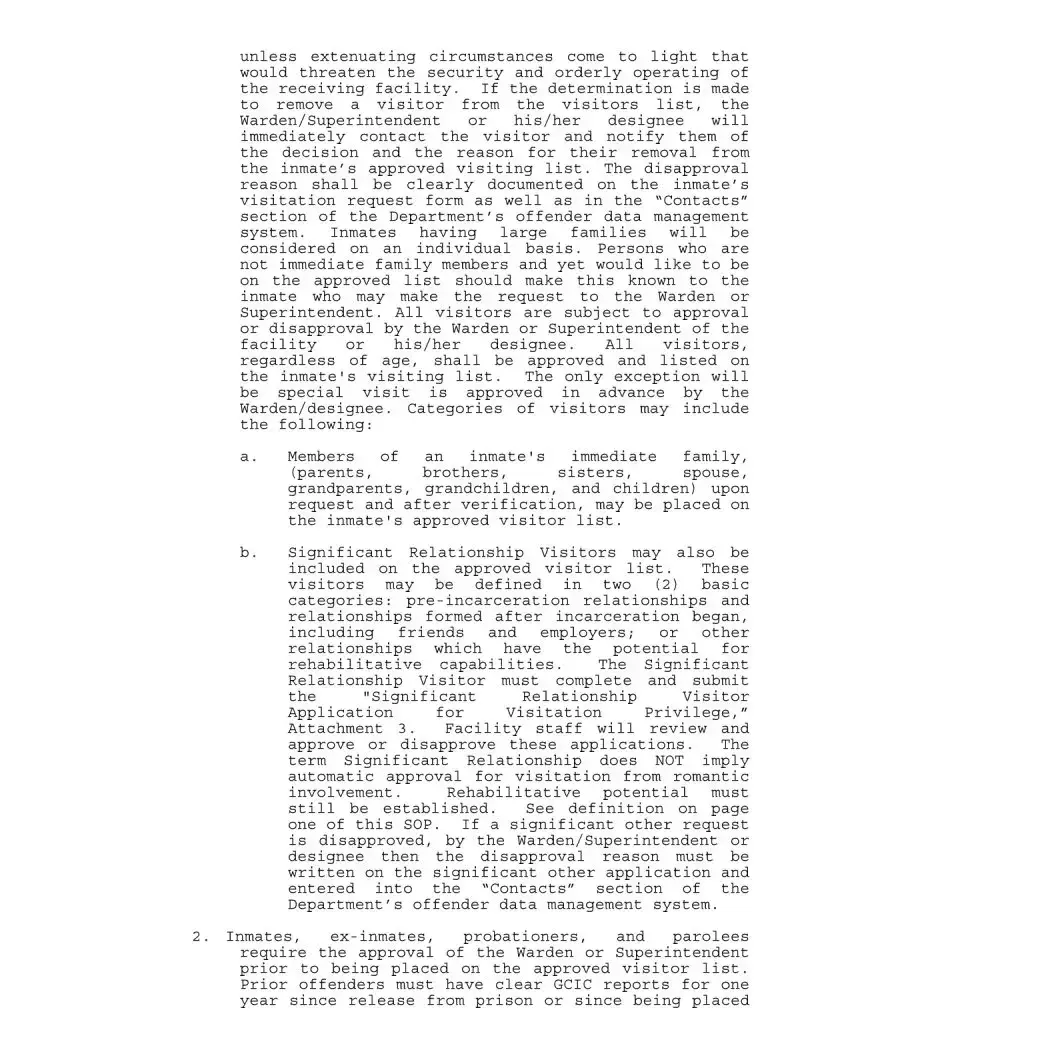
| Immediate Family Definition | Immediate family includes parents, siblings, spouse, grandparents, grandchildren, and children of the inmate. |
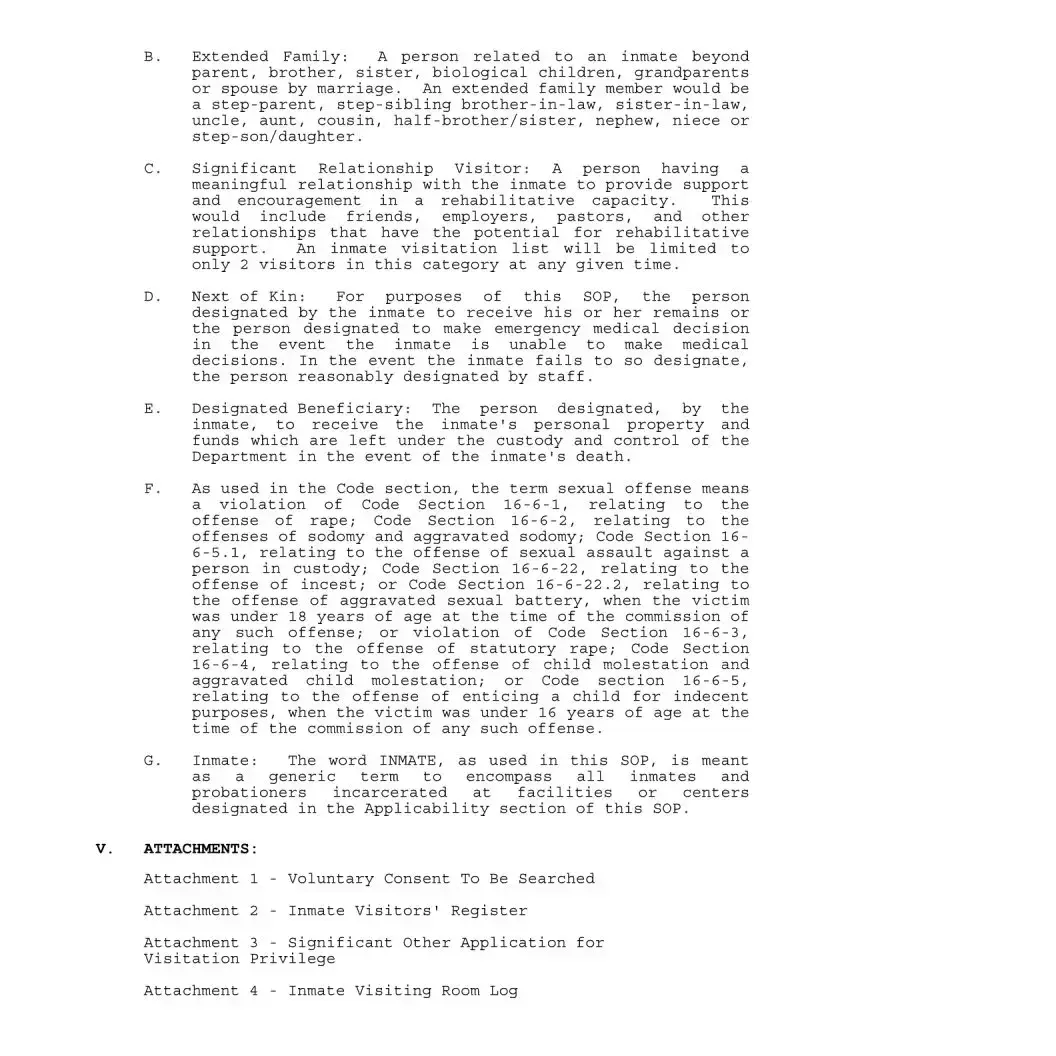
| Extended Family Definition | Extended family encompasses relationships beyond immediate family, such as step-parents, aunts, uncles, and cousins. |
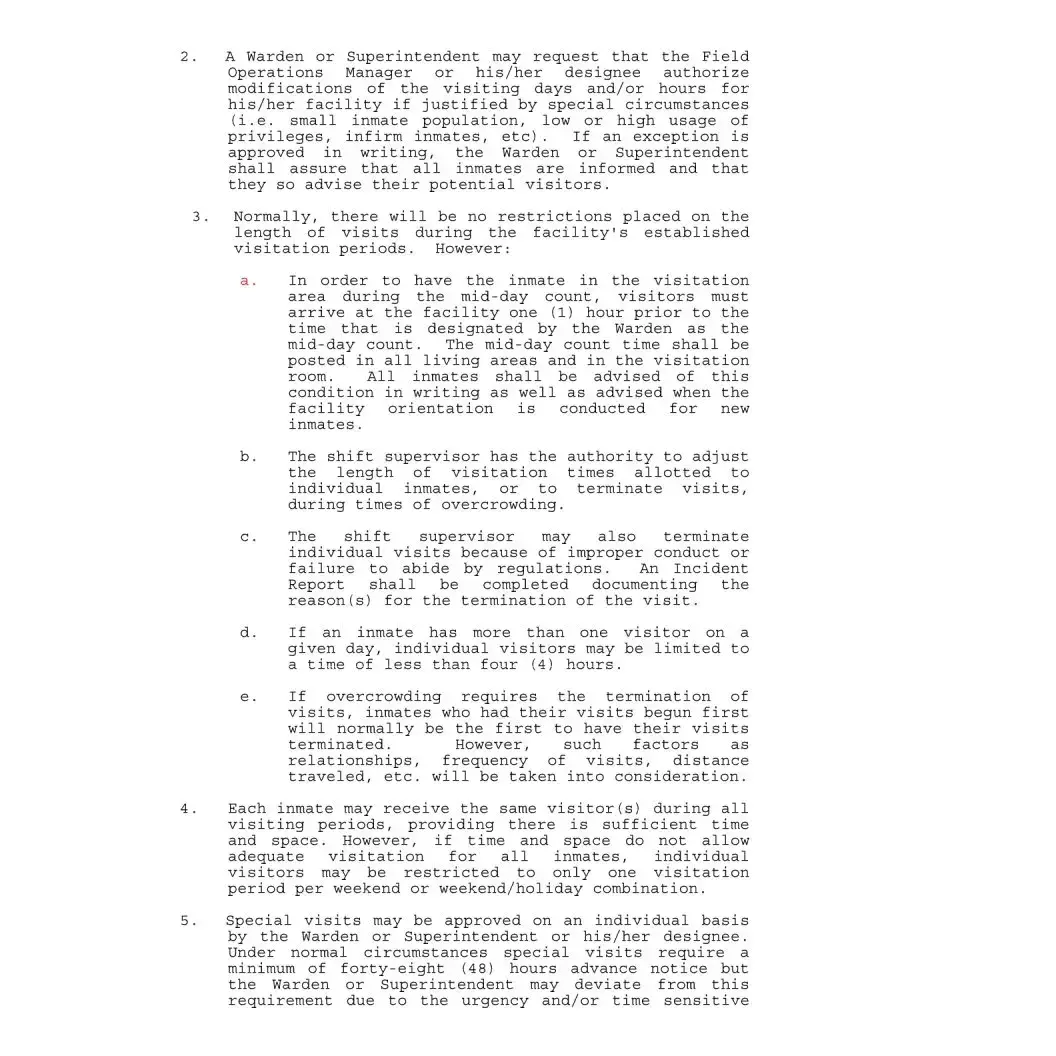
| Significant Relationship Visitors | Visitors with significant relationships to inmates can provide support and encouragement but are limited to two at a time. |
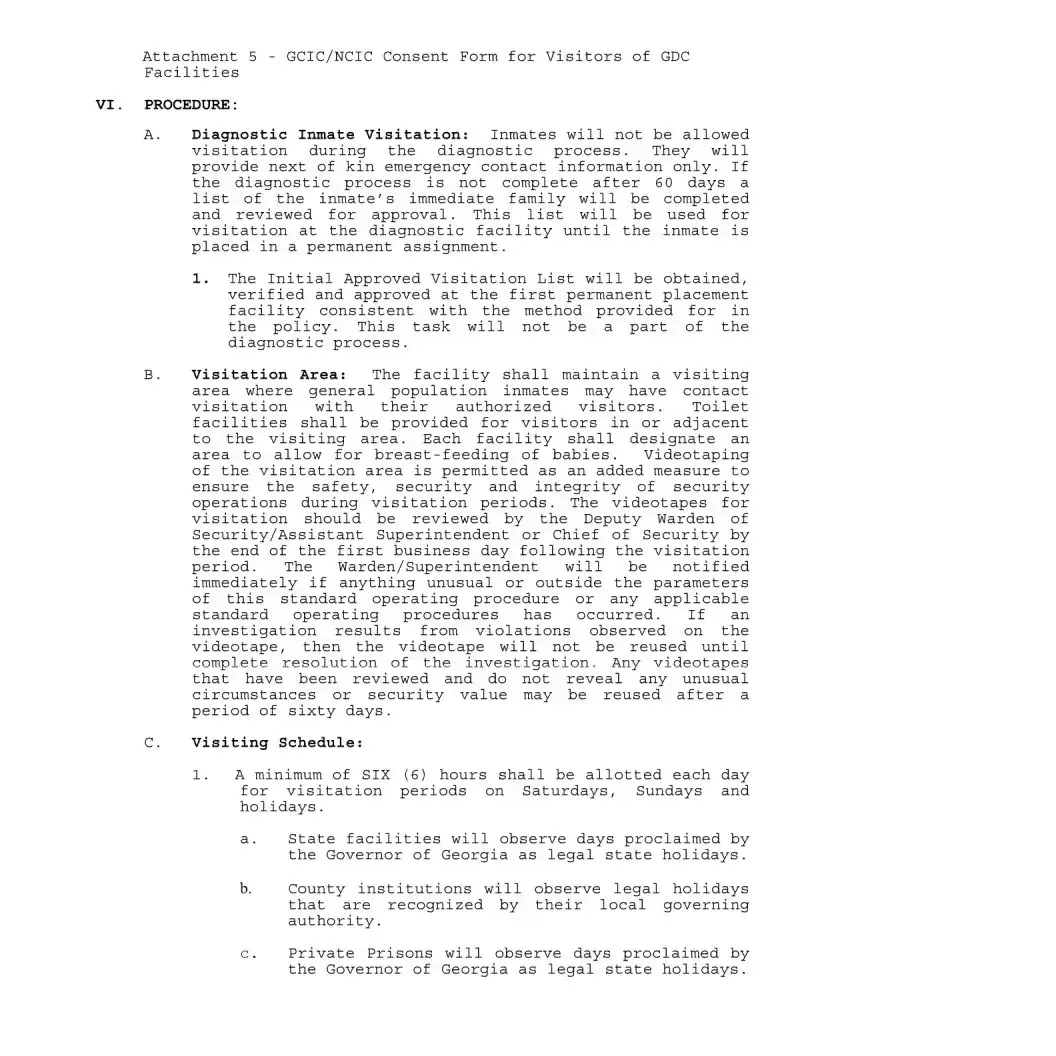
| Diagnostic Visitation Restrictions | Inmates undergoing diagnostic processes are not allowed visitation until the process is complete, which may take up to 60 days. |
| Visitation Area Requirements | Facilities must maintain designated visiting areas with necessary amenities, including toilet facilities and areas for breastfeeding. |
| Visitation Schedule | A minimum of six hours of visitation is provided on weekends and holidays, with flexibility based on facility needs. |
The Georgia SOP form outlines the procedures related to inmate visitation. Completing this form accurately is crucial for ensuring that visitation privileges are granted in accordance with state regulations. Below are the steps to fill out the form properly.
What is the purpose of the Georgia SOP form?
The Georgia SOP form establishes guidelines for inmate visitation within the Georgia Department of Corrections. It aims to foster positive relationships between inmates and their families or significant others, recognizing that visitation is a privilege, not a right.
Who is allowed to visit inmates?
Visitors can include immediate family members, extended family, and significant relationship visitors. Immediate family includes parents, siblings, and children, while extended family covers a broader range, such as aunts, uncles, and cousins. Significant relationship visitors are those who provide support and encouragement to the inmate.
Are there any restrictions on the number of visitors?
Yes, inmates can have only two significant relationship visitors at any given time. This limitation helps maintain a manageable and secure visiting environment.
What is the visitation schedule?
Visitation periods typically last a minimum of six hours on Saturdays, Sundays, and legal holidays. Specific hours may vary by facility, and adjustments can be made by the Warden or Superintendent under special circumstances.
Can inmates receive visitors during the diagnostic process?
No, inmates are not allowed visitation during the diagnostic phase. They can provide emergency contact information for their next of kin instead. After 60 days, a list of immediate family members will be compiled for potential visitation once the inmate is assigned to a permanent facility.
What facilities are available for visitors during visitation?
Each facility maintains a designated visiting area equipped with toilet facilities. Additionally, areas for breastfeeding babies are provided. The visitation area is monitored for safety and security, with videotaping allowed to ensure compliance with procedures.
How are visitation lists created and approved?
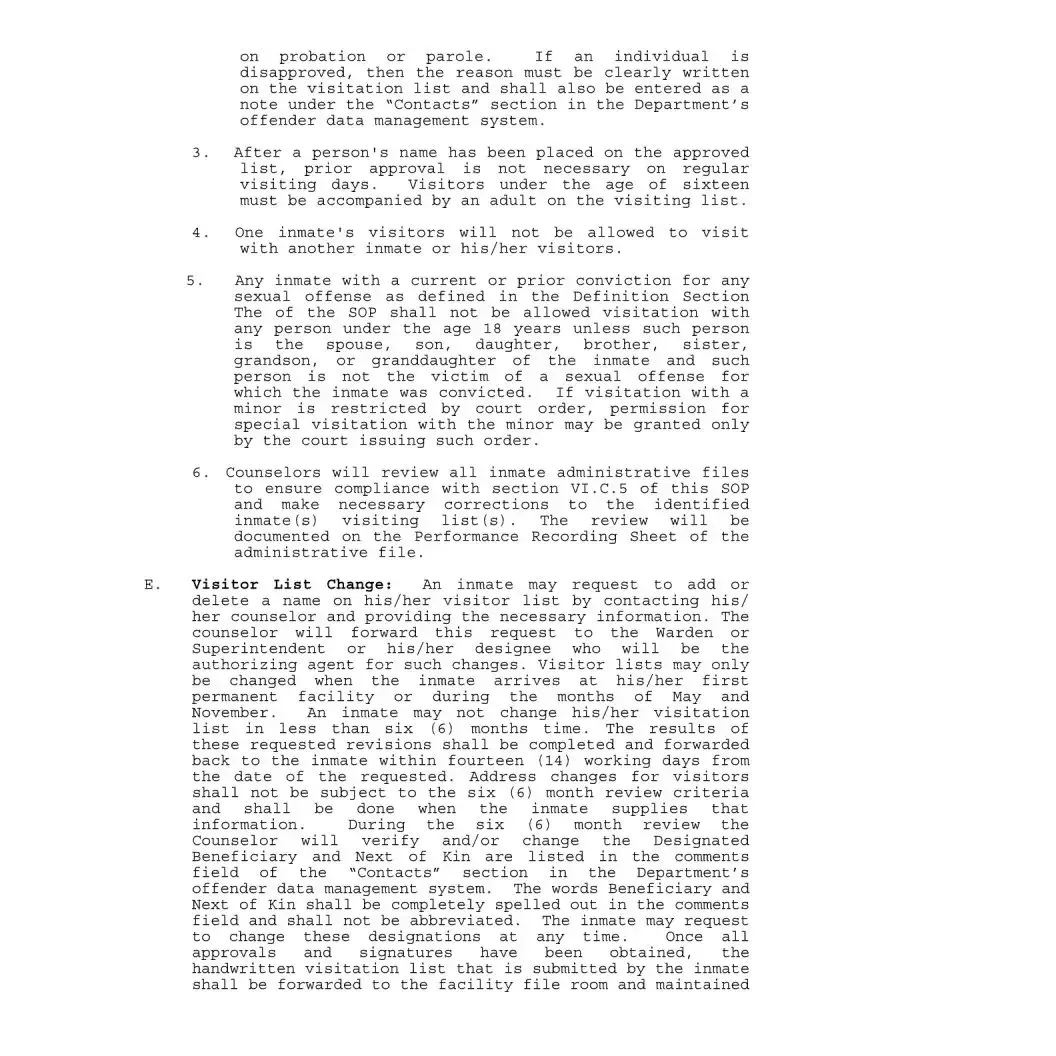
The initial visitation list is created during the diagnostic process but requires verification and approval at the first permanent placement facility. This ensures that only authorized visitors are permitted to see the inmate.
What happens if there are unusual occurrences during visitation?
If any unusual activities are recorded on the videotape during visitation, the Warden or Superintendent will be notified immediately. Investigations may follow, and the videotape will not be reused until the investigation is resolved.
What is the role of the Next of Kin?
The Next of Kin is designated by the inmate to make emergency medical decisions or to receive the inmate's remains if necessary. If the inmate has not designated someone, staff will appoint a reasonable person for this role.
How are holiday visitation days determined?
State facilities follow holidays proclaimed by the Governor of Georgia. County institutions observe legal holidays recognized by their local governing authorities, while private prisons also adhere to state holidays.
Filling out the Georgia SOP form can be a straightforward process, but mistakes often occur. One common error is not providing complete information. Inmates or their visitors may leave sections blank, thinking they are optional. However, every section is important for processing the visitation request.
Another mistake is failing to follow the specific guidelines for visitor eligibility. Some individuals may mistakenly include friends or extended family members who do not meet the criteria. It is crucial to understand the definitions of immediate family and significant relationship visitors as outlined in the SOP.
People sometimes forget to sign the form. A signature is necessary to validate the information provided. Without it, the form may be considered incomplete, leading to delays or denial of visitation privileges.
Inaccurate personal information is another frequent issue. Visitors may enter incorrect names or identification numbers. This can create confusion and complicate the approval process. Double-checking all details before submission can help avoid this mistake.
Some individuals neglect to keep copies of the submitted forms. Keeping a copy is essential for tracking the status of the application. If there are questions or issues later, having a record can simplify communication with the facility.
Timing can also be a problem. Submitting the form too close to the desired visitation date may not allow enough time for processing. It is wise to submit the form well in advance to ensure all requirements are met.
Another common oversight is not following up after submission. People may assume that once the form is submitted, everything will be taken care of. Checking in with the facility can provide peace of mind and ensure that the process is moving forward.
Some visitors may also misunderstand the visitation schedule. Not being aware of the specific days and hours can lead to missed opportunities for visitation. It is important to review the facility's schedule and plan accordingly.
Lastly, individuals may fail to prepare for the visitation itself. This includes understanding what items are allowed and what to expect during the visit. Being informed can help ensure a smooth and enjoyable experience for both the inmate and the visitor.
The Georgia Standard Operating Procedures (SOP) form is a critical document for managing inmate visitation in correctional facilities. Alongside the SOP, several other forms and documents are commonly used to ensure compliance and maintain order. Here’s a brief overview of those documents.
These documents work together to create a structured and secure visitation process within Georgia's correctional facilities. They help maintain safety while allowing inmates to connect with their families and support systems.
When filling out the Georgia SOP form, it’s essential to follow specific guidelines to ensure a smooth process. Here’s a list of things to do and avoid:
By adhering to these guidelines, you can help ensure that the visitation process is efficient and effective. Remember, clear communication and attention to detail are key.
This is incorrect. The SOP explicitly states that visitation is a privilege for inmates, not a right. Inmates must adhere to specific procedures to schedule visits.
Not all family members qualify for visitation. The SOP defines immediate and extended family and limits the number of significant relationship visitors to two at any given time.
During the diagnostic phase, visitation is prohibited. Inmates are only permitted to provide emergency contact information for their next of kin.
The SOP limits the number of significant relationship visitors to two. This is designed to streamline the visitation process and maintain security.
All visits must be conducted under supervision to ensure safety and security within the facility. This includes monitoring the visitation area through videotaping.
Visitation hours can vary. Facilities may observe different legal holidays and can modify visiting days or hours based on special circumstances.
The SOP mandates that each facility designate an area for breastfeeding to accommodate visitors with infants, ensuring their comfort and privacy during visits.
Videotapes must be reviewed by security personnel and can only be reused after sixty days if no unusual circumstances are noted. This policy helps maintain the integrity of security operations.
Understanding the Georgia SOP Form for Inmate Visitation is crucial for ensuring compliance and facilitating smooth visitation processes. Here are five key takeaways: