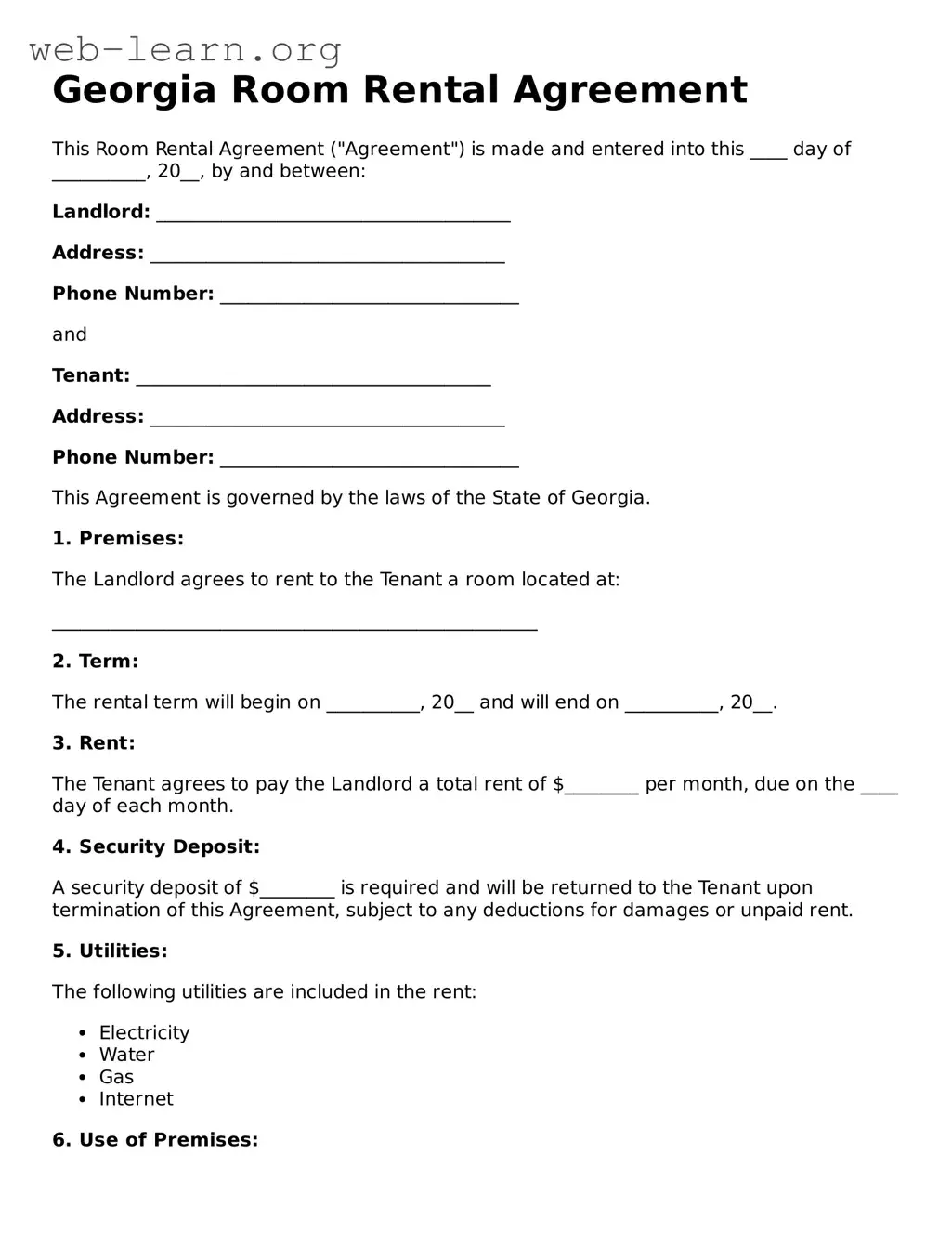
The Georgia Room Rental Agreement form serves as a crucial document for both landlords and tenants, outlining the terms of renting a room within a property. This agreement covers essential aspects such as the rental amount, payment schedule, and the duration of the rental period. It also addresses responsibilities regarding utilities, maintenance, and any restrictions on property use. Tenants and landlords alike must understand their rights and obligations as detailed in the agreement. Key provisions often include security deposits, notice periods for termination, and rules regarding guests. Clear communication of these terms helps prevent disputes and ensures a smooth rental experience for both parties.
Georgia Room Rental Agreement
This Room Rental Agreement ("Agreement") is made and entered into this ____ day of __________, 20__, by and between:
Landlord: ______________________________________
Address: ______________________________________
Phone Number: ________________________________
and
Tenant: ______________________________________
Address: ______________________________________
Phone Number: ________________________________
This Agreement is governed by the laws of the State of Georgia.
1. Premises:
The Landlord agrees to rent to the Tenant a room located at:
____________________________________________________
2. Term:
The rental term will begin on __________, 20__ and will end on __________, 20__.
3. Rent:
The Tenant agrees to pay the Landlord a total rent of $________ per month, due on the ____ day of each month.
4. Security Deposit:
A security deposit of $________ is required and will be returned to the Tenant upon termination of this Agreement, subject to any deductions for damages or unpaid rent.
5. Utilities:
The following utilities are included in the rent:
6. Use of Premises:
The Tenant agrees to use the premises solely for residential purposes. No illegal activities or commercial enterprises are permitted.
7. Maintenance and Repairs:
The Tenant shall keep the premises clean and in good condition. Any repairs needed must be reported to the Landlord promptly.
8. Termination:
Either party may terminate this Agreement by providing written notice of ____ days to the other party.
9. Governing Law:
This Agreement shall be governed by the laws of the State of Georgia.
IN WITNESS WHEREOF, the parties have executed this Room Rental Agreement as of the date first above written.
Landlord Signature: ___________________________
Date: ______________________________________
Tenant Signature: ____________________________
Date: ______________________________________
| Fact Name | Description |
|---|---|
| Purpose | The Georgia Room Rental Agreement form is used to outline the terms and conditions of renting a room in Georgia. |
| Governing Law | This agreement is governed by the laws of the State of Georgia. |
| Parties Involved | The agreement typically involves a landlord and a tenant, clearly identifying both parties. |
| Rental Amount | The form specifies the rental amount due, including any security deposit requirements. |
| Duration of Lease | The agreement outlines the length of the rental period, whether it is month-to-month or for a fixed term. |
| Responsibilities | It details the responsibilities of both the landlord and the tenant, including maintenance and repair obligations. |
| Termination Conditions | The form includes conditions under which either party may terminate the agreement. |
| Signatures | Both parties must sign the agreement to make it legally binding. |
Filling out the Georgia Room Rental Agreement form is an important step for both landlords and tenants to ensure a clear understanding of the rental terms. By following these steps, you can complete the form accurately and efficiently, paving the way for a smooth rental experience.
Once the form is completed, make copies for all parties involved. This ensures that everyone has a record of the agreement, which is essential for future reference. Keeping clear documentation helps prevent misunderstandings and supports a positive landlord-tenant relationship.
What is a Georgia Room Rental Agreement?
A Georgia Room Rental Agreement is a legal document that outlines the terms and conditions under which a landlord rents a room to a tenant in the state of Georgia. This agreement serves to protect both parties by clearly defining their rights and responsibilities. It typically includes details such as the rental amount, duration of the lease, security deposit requirements, and rules regarding property use.
What should be included in the agreement?
When creating a Room Rental Agreement in Georgia, several key components should be included:
How is the rental amount determined?
The rental amount for a room in Georgia can vary widely based on several factors. These include the location of the property, the size of the room, and the amenities offered. It’s essential for landlords to conduct market research to ensure the rental price is competitive. Tenants should also compare similar room rentals in the area to ensure they are paying a fair price.
Can the agreement be modified after signing?
Yes, a Georgia Room Rental Agreement can be modified after it has been signed, but both the landlord and tenant must agree to any changes. It’s advisable to document any amendments in writing and have both parties sign the revised agreement. This helps to avoid misunderstandings and ensures that both parties are on the same page regarding the terms of the rental.
What happens if a tenant wants to terminate the agreement early?
If a tenant wishes to terminate the Room Rental Agreement before the agreed-upon end date, they should refer to the terms outlined in the agreement. Most agreements include a notice period that the tenant must provide to the landlord, often ranging from 30 to 60 days. If a tenant fails to provide the required notice, they may be liable for additional rent or forfeiture of their security deposit, depending on the terms of the agreement.
Filling out the Georgia Room Rental Agreement form can be straightforward, but many people make common mistakes that can lead to confusion or legal issues. One frequent error is neglecting to provide accurate personal information. Tenants often forget to include their full names or current addresses, which can complicate communication and verification processes.
Another common mistake is failing to specify the rental term clearly. The agreement should indicate whether the rental is for a month, several months, or longer. Without this information, both parties may have different expectations regarding the duration of the rental.
Additionally, people sometimes overlook the need to include the rental amount. It is essential to state the monthly rent clearly and any additional fees that may apply. This oversight can lead to disputes later on, especially if the tenant believes the rent is lower than what was agreed upon.
Inaccurate dates are another prevalent issue. Many individuals forget to check that the start and end dates of the rental period are correct. This can create confusion about when the tenant is expected to move in or out, leading to potential conflicts.
Moreover, tenants often fail to read and understand the terms regarding security deposits. The agreement should outline the amount required, the conditions for its return, and any deductions that may be made. Not addressing these details can result in misunderstandings when the rental period ends.
Another mistake involves neglecting to include the landlord's contact information. It is crucial for tenants to have a way to reach their landlord in case of emergencies or maintenance issues. Without this information, tenants may feel isolated and unsupported.
Some individuals also forget to review the pet policy. If pets are allowed, the agreement should specify any associated fees or restrictions. Failing to address this can lead to disagreements if a tenant brings a pet without prior approval.
Misunderstanding the maintenance responsibilities is another common error. The agreement should clearly outline who is responsible for repairs and upkeep during the rental period. If this is not specified, it can lead to frustration and disputes between landlords and tenants.
People may also neglect to sign and date the agreement. An unsigned contract is not legally binding, which means that the terms discussed may not be enforceable. This can leave both parties vulnerable to misunderstandings.
Lastly, individuals sometimes fail to keep a copy of the signed agreement. It is important for both parties to retain a copy for their records. Without it, proving the terms of the rental agreement can become difficult if disputes arise.
When renting a room in Georgia, several documents complement the Room Rental Agreement. Each of these forms serves a specific purpose, ensuring that both parties are protected and that the rental process runs smoothly. Below is a list of commonly used documents.
These documents, when used alongside the Georgia Room Rental Agreement, help clarify the rental process and protect the interests of both landlords and tenants. Understanding each form's purpose can lead to a smoother rental experience.
Lease Agreement: A lease agreement outlines the terms and conditions for renting a property, similar to a room rental agreement. Both documents specify the duration of the rental, payment details, and responsibilities of the tenant and landlord.
Rental Application: A rental application is often required before signing a room rental agreement. It gathers personal information and financial history to assess the suitability of a potential tenant.
Sublease Agreement: A sublease agreement allows a tenant to rent out their space to another person. Like a room rental agreement, it includes terms regarding rent, duration, and responsibilities, but it is specifically for a tenant who wants to share their rental.
Roommate Agreement: A roommate agreement is similar in that it outlines the expectations and responsibilities of individuals sharing a living space. It covers issues such as rent payment, shared utilities, and house rules, much like a room rental agreement.
Property Management Agreement: This document is between a property owner and a management company. It details the management company's responsibilities in handling rental properties, similar to how a room rental agreement outlines the landlord's responsibilities to the tenant.
Tenancy Agreement: A tenancy agreement is another term for a rental agreement that specifies the rights and obligations of both the landlord and tenant. It encompasses many of the same elements found in a room rental agreement, such as payment terms and property maintenance.
When filling out the Georgia Room Rental Agreement form, it is important to follow certain guidelines to ensure accuracy and compliance. Here are some key points to consider:
By adhering to these guidelines, you can help ensure a smooth rental process and avoid potential misunderstandings.
Many people have misunderstandings about the Georgia Room Rental Agreement form. Here are four common misconceptions:
Some believe that this agreement is only applicable for long-term rentals. However, it can be used for both short-term and long-term rentals. The form is flexible and can accommodate various rental durations.
Another misconception is that the agreement can be valid without signatures. In reality, both the landlord and tenant must sign the document for it to be legally binding. Signatures confirm that both parties agree to the terms outlined in the agreement.
Some individuals think that the form addresses every possible issue related to renting a room. While it includes essential terms, it may not cover every scenario. Additional agreements or discussions may be necessary for specific concerns.
Lastly, many assume that the Georgia Room Rental Agreement is a standard form that suits every situation. In truth, landlords and tenants can customize the agreement to fit their unique needs. Tailoring the document ensures it meets the specific requirements of both parties.
When filling out and using the Georgia Room Rental Agreement form, there are several important points to consider. Here are key takeaways to ensure a smooth process:
By following these guidelines, both landlords and tenants can create a clear and enforceable rental agreement.
Free California Rental Agreement - Includes provisions for emergency repairs and tenant notification procedures.
Roommate Lease - The document may require the tenant to obtain renter's insurance.