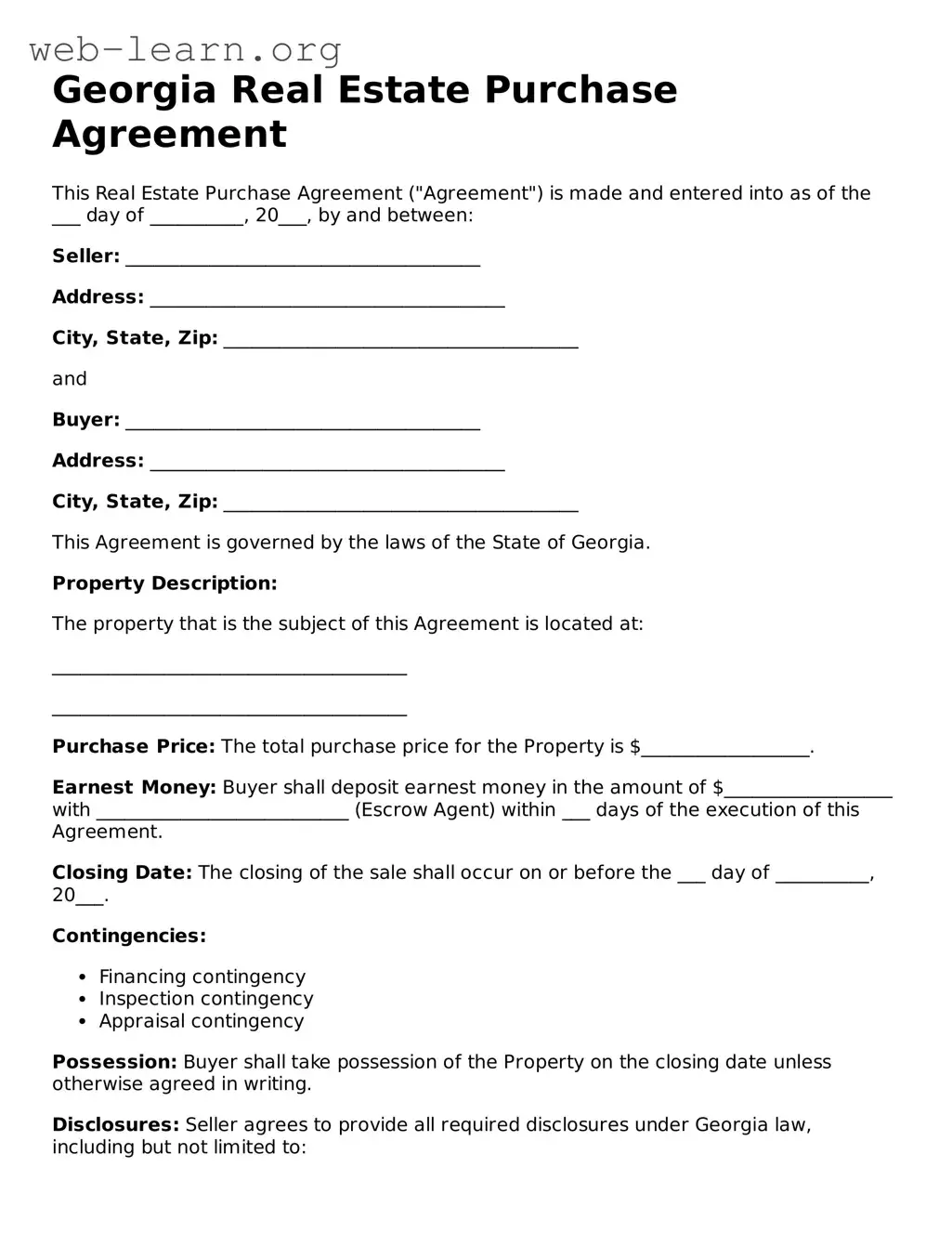
The Georgia Real Estate Purchase Agreement form serves as a vital document in the process of buying and selling property within the state. This comprehensive agreement outlines the terms and conditions agreed upon by both the buyer and the seller, ensuring clarity and mutual understanding throughout the transaction. Key components of the form include the purchase price, earnest money deposit, and financing details, which are essential for establishing the financial framework of the sale. Additionally, it addresses contingencies, such as inspections and appraisals, which protect the interests of both parties. The agreement also specifies the closing date and any included fixtures or personal property, thereby minimizing potential disputes. By detailing these elements, the Georgia Real Estate Purchase Agreement not only facilitates a smoother transaction but also fosters a sense of trust and transparency between the involved parties.
Georgia Real Estate Purchase Agreement
This Real Estate Purchase Agreement ("Agreement") is made and entered into as of the ___ day of __________, 20___, by and between:
Seller: ______________________________________
Address: ______________________________________
City, State, Zip: ______________________________________
and
Buyer: ______________________________________
Address: ______________________________________
City, State, Zip: ______________________________________
This Agreement is governed by the laws of the State of Georgia.
Property Description:
The property that is the subject of this Agreement is located at:
______________________________________
______________________________________
Purchase Price: The total purchase price for the Property is $__________________.
Earnest Money: Buyer shall deposit earnest money in the amount of $__________________ with ___________________________ (Escrow Agent) within ___ days of the execution of this Agreement.
Closing Date: The closing of the sale shall occur on or before the ___ day of __________, 20___.
Contingencies:
Possession: Buyer shall take possession of the Property on the closing date unless otherwise agreed in writing.
Disclosures: Seller agrees to provide all required disclosures under Georgia law, including but not limited to:
Default: If either party fails to perform their obligations under this Agreement, the non-defaulting party may pursue all remedies available under Georgia law.
Governing Law: This Agreement shall be governed by and construed in accordance with the laws of the State of Georgia.
IN WITNESS WHEREOF, the parties have executed this Agreement as of the date first above written.
Seller's Signature: ____________________________
Date: ____________________________
Buyer's Signature: ____________________________
Date: ____________________________
| Fact Name | Description |
|---|---|
| Governing Law | The Georgia Real Estate Purchase Agreement is governed by the laws of the State of Georgia. |
| Purpose | This form is used to outline the terms and conditions of a real estate transaction between a buyer and a seller. |
| Essential Elements | The agreement typically includes details such as the purchase price, property description, and closing date. |
| Contingencies | Common contingencies may include financing, inspection, and appraisal conditions that must be satisfied. |
| Signatures Required | Both the buyer and seller must sign the agreement for it to be legally binding. |
| Disclosure Obligations | Georgia law requires sellers to disclose known material defects affecting the property. |
Once you have the Georgia Real Estate Purchase Agreement form in front of you, the next steps involve carefully filling out the necessary information. This process is crucial for ensuring all parties involved are clear on the terms of the agreement. Follow these steps to complete the form accurately.
With these steps completed, the form is ready for review and signatures from all parties involved. Make sure to keep a copy for your records.
What is the Georgia Real Estate Purchase Agreement?
The Georgia Real Estate Purchase Agreement is a legal document used to outline the terms and conditions of a real estate transaction in the state of Georgia. It serves as a binding contract between the buyer and seller, detailing the property being sold, the purchase price, and any contingencies or conditions that must be met for the sale to proceed.
Who typically uses this agreement?
This agreement is commonly used by individuals or entities involved in the sale or purchase of residential or commercial properties in Georgia. Real estate agents, brokers, and attorneys often assist their clients in preparing and reviewing the document to ensure compliance with state laws.
What key elements are included in the agreement?
The agreement includes several important components, such as:
What are contingencies, and why are they important?
Contingencies are conditions that must be met for the sale to proceed. They protect both the buyer and seller by allowing them to back out of the agreement without penalty if specific conditions are not fulfilled. Common contingencies include home inspections, appraisal results, and financing approval.
How is the purchase price determined?
The purchase price is typically negotiated between the buyer and seller. Factors influencing the price may include the property's market value, condition, location, and comparable sales in the area. A real estate agent can provide valuable insights to help determine a fair price.
What happens if one party wants to back out of the agreement?
If one party wishes to withdraw from the agreement, they must review the terms outlined in the contract. If the withdrawal occurs before any contingencies are met, it may be possible without penalties. However, if the withdrawal happens after contingencies have been satisfied, the withdrawing party could face legal consequences or forfeiture of the earnest money deposit.
Is it necessary to have a lawyer review the agreement?
While it is not legally required to have a lawyer review the Georgia Real Estate Purchase Agreement, it is highly recommended. An attorney can help ensure that the document complies with state laws, protect the interests of the parties involved, and clarify any legal terms or obligations.
What should I do if I have questions about the agreement?
If questions arise regarding the Georgia Real Estate Purchase Agreement, it is advisable to consult with a qualified real estate professional or attorney. They can provide guidance, clarify terms, and address any specific concerns related to the transaction.
Filling out the Georgia Real Estate Purchase Agreement can be a straightforward process, but many people make common mistakes that can lead to complications. One frequent error is failing to provide complete and accurate information. Buyers and sellers sometimes overlook crucial details, such as the property address or the legal description. This can create confusion and delay the transaction.
Another common mistake is not including all necessary contingencies. Contingencies protect both parties by outlining specific conditions that must be met before the sale can proceed. Without these clauses, buyers may find themselves committed to a purchase without the ability to back out if certain conditions are not satisfied.
People often forget to specify the earnest money amount. This deposit shows the buyer's commitment to the purchase. If the amount is left blank or is too low, it may raise concerns for the seller. Additionally, not defining the closing date can lead to misunderstandings. Both parties should agree on a specific date to avoid confusion later on.
Misunderstanding the financing terms is another issue. Buyers sometimes select vague financing options, which can lead to complications during the closing process. Clear terms regarding how the buyer plans to finance the purchase are essential for a smooth transaction.
Another mistake is neglecting to review the entire agreement before signing. It's crucial for both parties to read through the document carefully. This helps identify any errors or unclear language that could cause problems down the line.
Lastly, people may forget to include their signatures or the date on the agreement. This simple oversight can render the contract invalid. Ensuring that all required signatures are present is vital for the agreement to be legally binding.
By avoiding these common mistakes, buyers and sellers can navigate the Georgia Real Estate Purchase Agreement process more effectively. Careful attention to detail and clear communication between parties can lead to a smoother transaction.
When engaging in a real estate transaction in Georgia, several important documents accompany the Real Estate Purchase Agreement. Each document plays a crucial role in ensuring that all parties understand their rights and obligations. Below is a list of commonly used forms that may be required during the process.
Each of these documents serves a specific purpose and is integral to the real estate transaction process in Georgia. Ensuring that all necessary forms are completed accurately can help facilitate a smooth closing and protect the interests of all parties involved.
When filling out the Georgia Real Estate Purchase Agreement form, it's important to approach the process carefully. Here are some guidelines to consider:
Understanding the Georgia Real Estate Purchase Agreement (REPA) is crucial for anyone involved in buying or selling property in Georgia. However, several misconceptions can lead to confusion. Here’s a list of ten common misconceptions about the Georgia REPA, along with clarifications to help navigate the process more effectively.
By dispelling these misconceptions, buyers and sellers can approach the Georgia Real Estate Purchase Agreement with a clearer understanding, leading to a smoother transaction process.
When filling out and using the Georgia Real Estate Purchase Agreement form, several key points should be considered to ensure clarity and legality. Below are important takeaways:
Residential Purchase Agreement - Buyers should be aware of any deadlines mentioned in the agreement.
For Sale by Owner Purchase Agreement Pdf Michigan - It is important for both parties to keep copies of the signed agreement for their records.
Agreement of Sale Hawaii - A legal document outlining the terms of a real estate transaction.