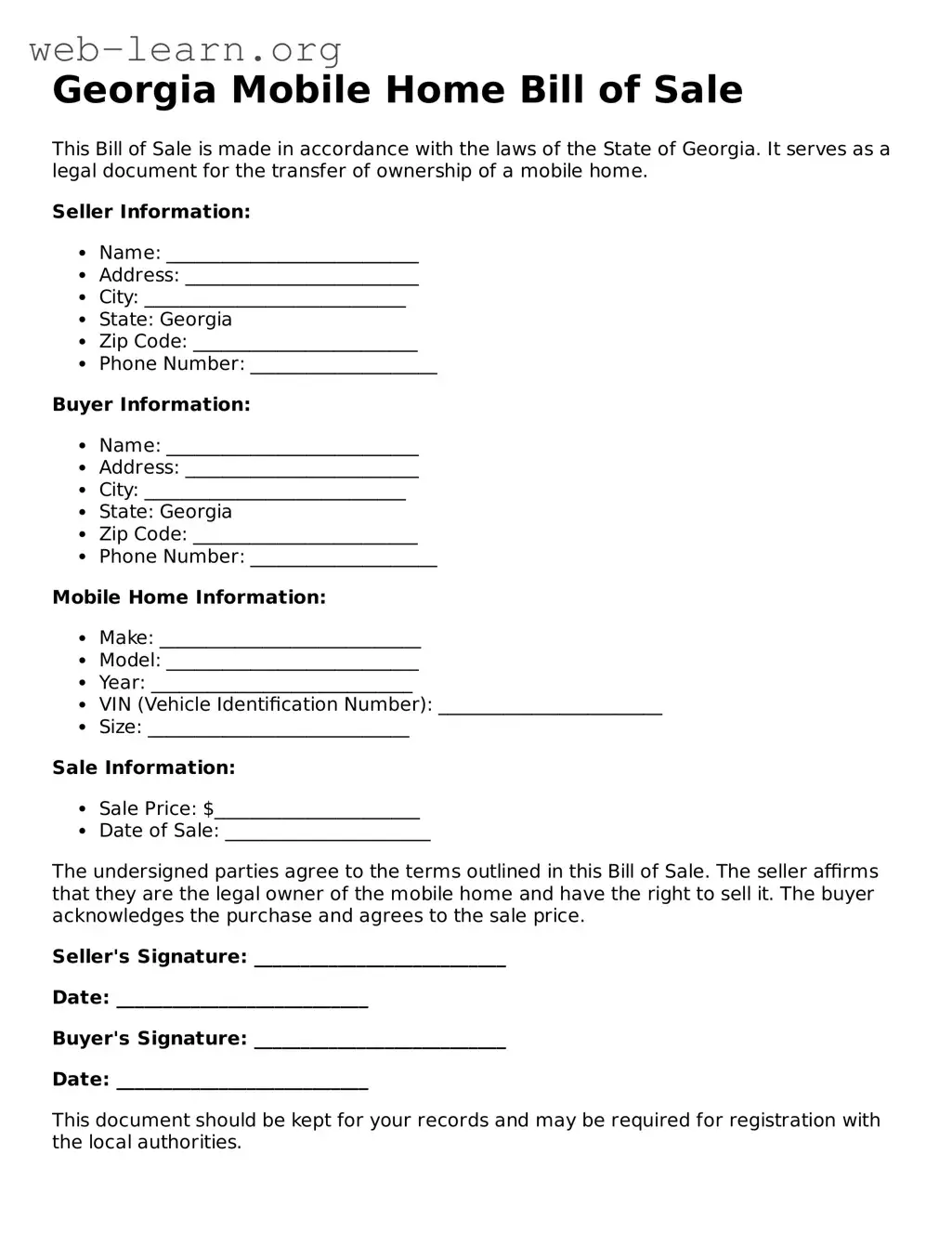
The Georgia Mobile Home Bill of Sale form is an essential document for anyone involved in the buying or selling of a mobile home in the state. This form serves multiple purposes, including providing proof of ownership transfer and documenting the details of the transaction. Key components of the form typically include the names and addresses of both the seller and buyer, a description of the mobile home, including its make, model, and identification number, as well as the purchase price and payment terms. Additionally, the form may require the seller's signature, affirming that they have the legal right to sell the mobile home. Properly completing this form is crucial, as it helps to ensure that the transaction is legally binding and protects the interests of both parties involved. Understanding the significance of this document can streamline the process and prevent potential disputes down the line.
Georgia Mobile Home Bill of Sale
This Bill of Sale is made in accordance with the laws of the State of Georgia. It serves as a legal document for the transfer of ownership of a mobile home.
Seller Information:
Buyer Information:
Mobile Home Information:
Sale Information:
The undersigned parties agree to the terms outlined in this Bill of Sale. The seller affirms that they are the legal owner of the mobile home and have the right to sell it. The buyer acknowledges the purchase and agrees to the sale price.
Seller's Signature: ___________________________
Date: ___________________________
Buyer's Signature: ___________________________
Date: ___________________________
This document should be kept for your records and may be required for registration with the local authorities.
| Fact Name | Description |
|---|---|
| Purpose | The Georgia Mobile Home Bill of Sale form is used to document the transfer of ownership of a mobile home from one party to another. |
| Governing Laws | This form is governed by the laws of the State of Georgia, specifically under O.C.G.A. § 44-2-20 and related statutes. |
| Required Information | Essential details include the names and addresses of the buyer and seller, the mobile home’s identification number, and the sale price. |
| Signatures | Both the buyer and seller must sign the form to validate the transaction, ensuring that both parties agree to the terms outlined. |
After completing the Georgia Mobile Home Bill of Sale form, the next step involves ensuring that all parties involved in the transaction have copies for their records. This form serves as a legal document that outlines the details of the sale and may be required for future reference or registration purposes.
What is a Mobile Home Bill of Sale in Georgia?
A Mobile Home Bill of Sale is a legal document that serves as proof of the sale and transfer of ownership of a mobile home from one party to another. This form includes essential information such as the names of the buyer and seller, the mobile home's details, and the sale price. It is crucial for both parties to have this document to establish clear ownership and protect their rights.
Is a Mobile Home Bill of Sale required in Georgia?
While a Mobile Home Bill of Sale is not legally required to sell a mobile home in Georgia, it is highly recommended. This document provides a written record of the transaction, which can be useful in case of disputes or for future reference. Additionally, if the mobile home is registered with the state, a bill of sale may be necessary for the registration process.
What information is needed to complete the Mobile Home Bill of Sale?
To complete the Mobile Home Bill of Sale, you will need to provide the following information:
Can a Mobile Home Bill of Sale be handwritten?
Yes, a Mobile Home Bill of Sale can be handwritten as long as it contains all the necessary information and is signed by both parties. However, using a printed template or form may help ensure that all required details are included and can make the document look more professional.
Do I need to have the Mobile Home Bill of Sale notarized?
Notarization is not required for a Mobile Home Bill of Sale in Georgia. However, having the document notarized can add an extra layer of legitimacy to the transaction. It can also help prevent disputes by providing a verified record of the signatures involved in the sale.
What should I do with the Mobile Home Bill of Sale after completing it?
After completing the Mobile Home Bill of Sale, both the buyer and seller should keep a copy for their records. The seller may also need to submit the bill of sale to the local Department of Motor Vehicles (DMV) or other relevant authorities to officially transfer ownership and update registration records.
What if there are liens on the mobile home?
If there are existing liens on the mobile home, it is essential to address these before completing the sale. A lien indicates that a creditor has a legal claim on the property due to unpaid debts. The seller should resolve any outstanding liens, or the buyer should be aware of them, as they may affect ownership rights.
Can I use a Mobile Home Bill of Sale from another state?
Using a Mobile Home Bill of Sale from another state is not advisable, as each state may have different requirements and legal language. It is best to use a form specifically designed for Georgia to ensure compliance with local laws and regulations regarding mobile home transactions.
Filling out the Georgia Mobile Home Bill of Sale form can seem straightforward, but many individuals make common mistakes that can lead to complications. One frequent error is not providing complete information about the mobile home. The form requires specific details such as the make, model, year, and Vehicle Identification Number (VIN). Omitting any of this information can result in delays or issues with registration.
Another common mistake is failing to sign the document. Both the seller and buyer must sign the Bill of Sale for it to be valid. Without these signatures, the transaction may not be legally recognized. It’s important to double-check that both parties have signed before submitting the form.
Inaccurate dates can also create problems. When filling out the form, ensure that the date of the sale is correct. This date is crucial for establishing ownership and can affect tax obligations. An incorrect date may lead to confusion or disputes down the line.
Additionally, many people overlook the importance of including the sale price. The Bill of Sale must state the amount paid for the mobile home. This information is necessary for tax purposes and helps establish a clear record of the transaction. Leaving this section blank or providing an incorrect amount can complicate matters later.
Lastly, individuals often neglect to keep a copy of the completed form. After signing and submitting the Bill of Sale, it’s wise to retain a copy for personal records. This document serves as proof of the transaction and can be invaluable if any questions arise in the future.
When dealing with the sale or purchase of a mobile home in Georgia, several other forms and documents may be necessary to ensure a smooth transaction. Each document serves a specific purpose and helps protect the interests of both the buyer and the seller. Below is a list of important documents often used alongside the Georgia Mobile Home Bill of Sale.
Having these documents ready can streamline the process and help avoid potential disputes. It is crucial to ensure that all paperwork is completed accurately and in a timely manner for a successful transaction.
The Mobile Home Bill of Sale form is similar to several other documents that serve the purpose of transferring ownership or providing proof of transactions. Here are nine documents that share similarities:
When filling out the Georgia Mobile Home Bill of Sale form, it is important to follow certain guidelines to ensure accuracy and legality. Here are seven things you should and shouldn't do:
The Georgia Mobile Home Bill of Sale form is an important document for anyone buying or selling a mobile home in the state. However, several misconceptions exist about its purpose and requirements. Here are four common misunderstandings:
This is incorrect. The Bill of Sale is required for both new and used mobile homes. It serves as proof of ownership transfer, regardless of the home's age.
While having a notary can add an extra layer of verification, it is not a legal requirement for the Bill of Sale in Georgia. The signatures of both the buyer and seller are sufficient.
This is misleading. The Bill of Sale does not need to be filed with any state agency right away. However, it is essential for the buyer to keep it for their records and for future registration purposes.
This is false. The Bill of Sale requires detailed information about the mobile home, including its make, model, year, and Vehicle Identification Number (VIN). Incomplete information can lead to issues with ownership verification.
When dealing with the Georgia Mobile Home Bill of Sale form, it's important to understand the key elements involved in the process. Here are some essential takeaways to keep in mind:
Understanding these key points can help ensure a smooth transaction when buying or selling a mobile home in Georgia.
Free Printable Bill of Sale for Mobile Home - The form can also include information about any liens or encumbrances on the mobile home.
Printable Simple Mobile Home Purchase Agreement - It can also be used to document any agreed-upon repairs or improvements.