In Georgia, a lease agreement serves as a vital document that outlines the terms and conditions between landlords and tenants. This agreement typically includes essential details such as the rental amount, duration of the lease, and responsibilities for maintenance and repairs. It also specifies the security deposit required, the notice period for termination, and any rules regarding pets or alterations to the property. By clearly defining the rights and obligations of both parties, the lease agreement helps prevent misunderstandings and disputes. Additionally, it may address issues like late fees, utilities, and the process for renewing or terminating the lease. Understanding these key aspects is crucial for anyone entering into a rental arrangement in Georgia, ensuring a smoother and more transparent leasing experience.
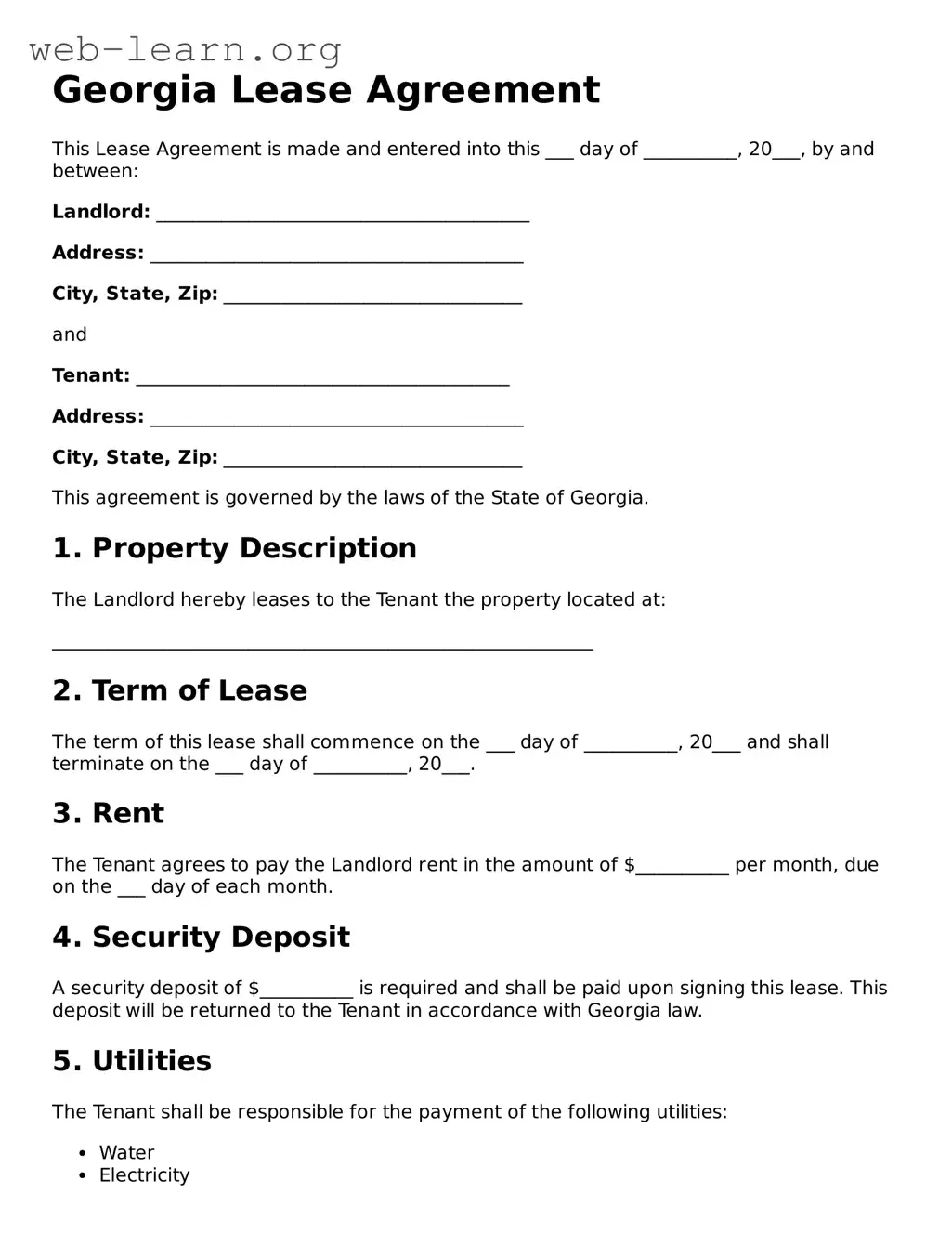
Georgia Lease Agreement
This Lease Agreement is made and entered into this ___ day of __________, 20___, by and between:
Landlord: ________________________________________
Address: ________________________________________
City, State, Zip: ________________________________
and
Tenant: ________________________________________
Address: ________________________________________
City, State, Zip: ________________________________
This agreement is governed by the laws of the State of Georgia.
1. Property Description
The Landlord hereby leases to the Tenant the property located at:
__________________________________________________________
2. Term of Lease
The term of this lease shall commence on the ___ day of __________, 20___ and shall terminate on the ___ day of __________, 20___.
3. Rent
The Tenant agrees to pay the Landlord rent in the amount of $__________ per month, due on the ___ day of each month.
4. Security Deposit
A security deposit of $__________ is required and shall be paid upon signing this lease. This deposit will be returned to the Tenant in accordance with Georgia law.
5. Utilities
The Tenant shall be responsible for the payment of the following utilities:
6. Maintenance and Repairs
The Tenant agrees to keep the property in good condition and promptly notify the Landlord of any needed repairs.
7. Termination
Either party may terminate this lease by providing written notice at least ___ days prior to the intended termination date.
8. Governing Law
This agreement shall be governed by the laws of the State of Georgia.
9. Signatures
In witness whereof, the parties hereto have executed this Lease Agreement as of the day and year first above written.
Landlord Signature: _______________________________
Date: ___________________________________________
Tenant Signature: ________________________________
Date: ___________________________________________
| Fact Name | Description |
|---|---|
| Governing Law | The Georgia Lease Agreement is governed by the Official Code of Georgia Annotated (O.C.G.A.) Title 44, Chapter 7. |
| Duration | Lease agreements can be for a fixed term or a month-to-month arrangement, providing flexibility for both landlords and tenants. |
| Security Deposit | Landlords may require a security deposit, which cannot exceed one month's rent unless otherwise agreed upon. |
| Disclosure Requirements | Landlords must disclose specific information, including lead-based paint hazards in properties built before 1978. |
| Termination Notice | For month-to-month leases, a written notice of at least 30 days is required for termination by either party. |
Completing the Georgia Lease Agreement form is a straightforward process that requires attention to detail. By following the steps outlined below, you can ensure that all necessary information is accurately provided, setting a solid foundation for your lease arrangement.
Once the form is filled out, both the landlord and tenant should keep a copy for their records. This document serves as a binding agreement, so it’s essential to ensure that all details are correct and mutually understood.
What is a Georgia Lease Agreement?
A Georgia Lease Agreement is a legal document that outlines the terms and conditions under which a landlord rents property to a tenant in the state of Georgia. This agreement covers important aspects such as rental amount, duration of the lease, and responsibilities of both parties.
What are the key components of a Georgia Lease Agreement?
Key components typically include:
Is a Georgia Lease Agreement required to be in writing?
While oral agreements can be valid, having a written lease is strongly recommended. A written lease provides clear evidence of the terms agreed upon and helps prevent misunderstandings between the landlord and tenant.
How long can a lease last in Georgia?
In Georgia, lease agreements can vary in duration. They can be short-term (month-to-month) or long-term (yearly or multi-year). The specific length should be stated in the lease agreement.
What happens if the tenant does not pay rent?
If a tenant fails to pay rent, the landlord has the right to initiate eviction proceedings. The lease agreement should outline the process for late payments and any associated fees.
Can a landlord enter the rental property without notice?
Generally, a landlord must provide reasonable notice before entering the rental property, except in emergencies. The lease should specify the notice period required for non-emergency situations.
Are there any restrictions on security deposits in Georgia?
Yes, Georgia law limits the amount a landlord can charge for a security deposit. Typically, it cannot exceed one month's rent for residential leases. The lease agreement should specify the amount and conditions for its return.
What should a tenant do if they want to terminate the lease early?
If a tenant wishes to terminate the lease early, they should review the lease agreement for any early termination clauses. Communicating with the landlord is also important, as there may be penalties or conditions to fulfill.
Can a lease be renewed?
Yes, leases can often be renewed. The lease agreement should include provisions for renewal, including any changes in terms or rent. Both parties must agree to the renewal for it to be valid.
When filling out the Georgia Lease Agreement form, many individuals inadvertently make mistakes that can lead to misunderstandings or legal complications. One common error is failing to provide accurate tenant information. This includes not using full legal names or omitting essential details such as contact information. It’s crucial to ensure that all parties involved are correctly identified, as this can affect the enforceability of the lease.
Another frequent mistake involves overlooking the lease term. Some people may not specify the start and end dates clearly, which can create confusion later. A well-defined lease term helps both landlords and tenants understand their rights and responsibilities during that period. Leaving this information vague can lead to disputes about when the lease actually begins or ends.
Additionally, individuals often neglect to read the entire agreement before signing. This oversight can result in agreeing to terms that are not fully understood. For instance, there may be clauses related to maintenance responsibilities or penalties for late payments. Taking the time to review the lease in its entirety can prevent future disagreements and ensure that both parties are on the same page.
Lastly, some people forget to document any pre-existing conditions of the rental property. Failing to note issues like water damage or broken appliances can lead to disputes over security deposits when the lease ends. It’s advisable to take photographs and include these details in the lease agreement. This simple step can protect tenants and landlords alike from potential conflicts.
When entering into a lease agreement in Georgia, several other forms and documents may be necessary to ensure clarity and protect the interests of both landlords and tenants. Here’s a list of commonly used documents that often accompany the Georgia Lease Agreement.
Each of these documents plays a vital role in the leasing process. They help establish clear expectations and protect the rights of both landlords and tenants. By ensuring that all necessary forms are completed and understood, you can foster a positive rental experience.
When filling out the Georgia Lease Agreement form, it is important to follow certain guidelines to ensure accuracy and compliance. Below is a list of things you should and shouldn't do.
When it comes to the Georgia Lease Agreement form, several misconceptions can lead to confusion for both landlords and tenants. Here’s a list of common misunderstandings, along with clarifications to help you navigate the process more smoothly.
Understanding these misconceptions can help both landlords and tenants navigate their agreements more effectively. Always take the time to read your lease thoroughly and consult with a professional if you have questions.
Here are some key takeaways about filling out and using the Georgia Lease Agreement form:
Always keep a copy of the signed lease for your records. This can be useful for future reference.
Arkansas Lease Agreement - Details any included furnishings or appliances in the lease.
Lease of Agreement - It can outline the process for returning the security deposit.
Lease Agreement Colorado - Landlords can use the Lease Agreement to specify property access rules for maintenance.