The Georgia Deed form serves as a crucial legal document in real estate transactions, facilitating the transfer of property ownership from one party to another. This form outlines essential details, including the names of the grantor and grantee, a description of the property being transferred, and the consideration, or payment, involved in the transaction. It is important for both parties to understand the implications of this document, as it not only signifies the transfer of rights but also protects the interests of those involved. The form must be properly executed, which typically requires signatures and notarization to ensure its validity. Additionally, the Georgia Deed form may vary depending on the type of transfer, such as a warranty deed or a quitclaim deed, each serving different purposes and offering varying levels of protection to the parties. Understanding these aspects is vital for anyone engaging in real estate transactions in Georgia, as the accuracy and completeness of the deed can significantly impact future ownership rights and responsibilities.
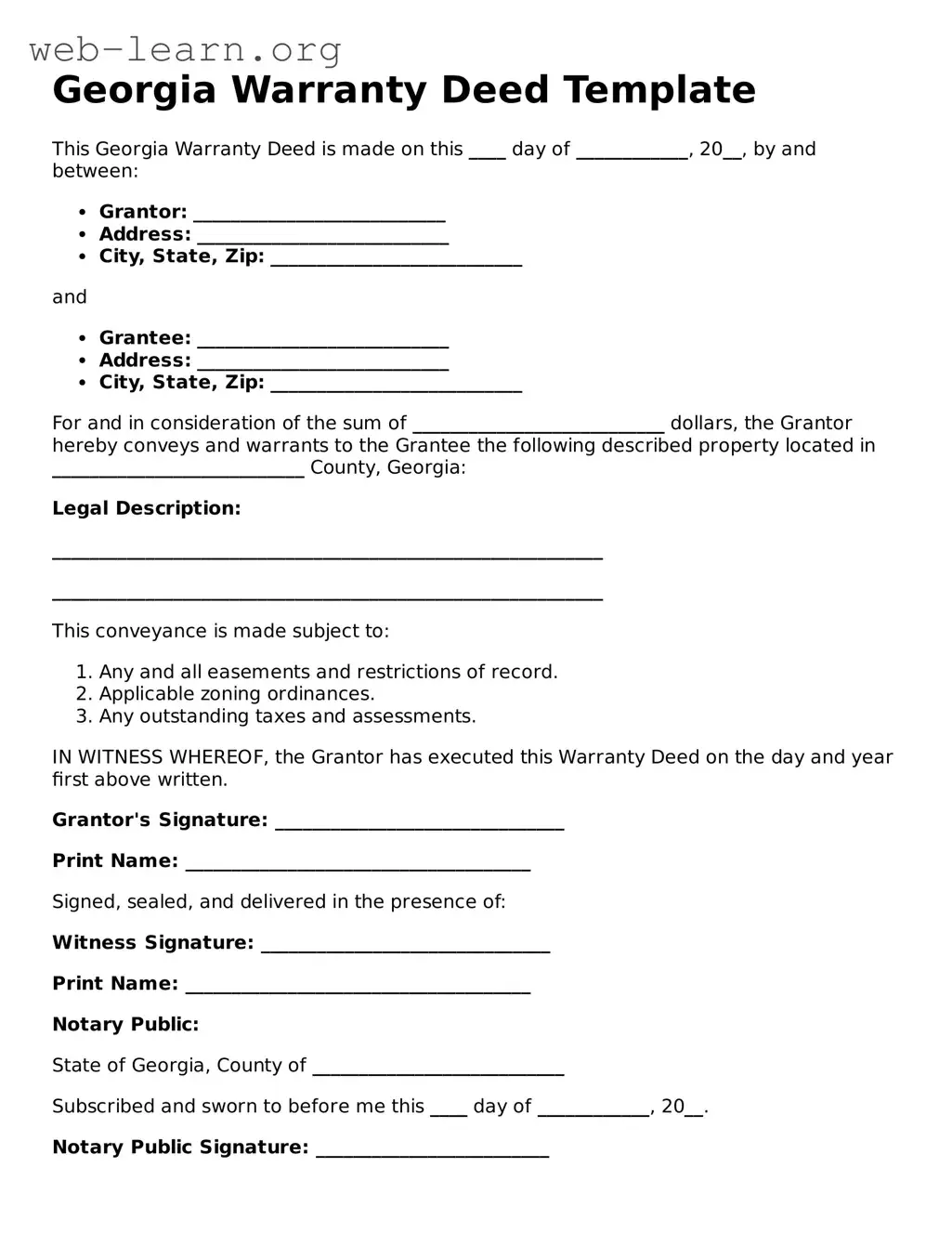
Georgia Warranty Deed Template
This Georgia Warranty Deed is made on this ____ day of ____________, 20__, by and between:
and
For and in consideration of the sum of ___________________________ dollars, the Grantor hereby conveys and warrants to the Grantee the following described property located in ___________________________ County, Georgia:
Legal Description:
___________________________________________________________
___________________________________________________________
This conveyance is made subject to:
IN WITNESS WHEREOF, the Grantor has executed this Warranty Deed on the day and year first above written.
Grantor's Signature: _______________________________
Print Name: _____________________________________
Signed, sealed, and delivered in the presence of:
Witness Signature: _______________________________
Print Name: _____________________________________
Notary Public:
State of Georgia, County of ___________________________
Subscribed and sworn to before me this ____ day of ____________, 20__.
Notary Public Signature: _________________________
My Commission Expires: ________________________
| Fact Name | Description |
|---|---|
| Governing Law | The Georgia Deed form is governed by the Official Code of Georgia Annotated (O.C.G.A.) § 44-2-1. |
| Types of Deeds | Common types of deeds in Georgia include Warranty Deeds, Quitclaim Deeds, and Special Warranty Deeds. |
| Signature Requirement | All parties involved in the transfer of property must sign the deed for it to be valid. |
| Notarization | The deed must be notarized to be legally binding and enforceable. |
| Recording | To protect the interests of the grantee, the deed should be recorded in the county where the property is located. |
| Legal Description | A complete legal description of the property must be included in the deed to avoid ambiguity. |
| Consideration | The deed should state the consideration, or payment, made for the property transfer. |
| Grantee and Grantor Information | Full names and addresses of both the grantor (seller) and grantee (buyer) must be clearly stated. |
| Exemptions | Some transfers, such as those between spouses or family members, may be exempt from certain fees. |
| Tax Implications | Property transfers may have tax implications, including transfer taxes that need to be considered. |
Once the Georgia Deed form is filled out correctly, it should be submitted to the appropriate county office for recording. This step is crucial, as it ensures the legal recognition of the transaction. Following the completion of the form, it is advisable to keep a copy for personal records.
What is a Georgia Deed form?
A Georgia Deed form is a legal document used to transfer ownership of real property in the state of Georgia. It outlines the details of the transaction, including the names of the parties involved, a description of the property, and any conditions or covenants associated with the transfer.
What types of deeds are available in Georgia?
There are several types of deeds in Georgia, including:
Who needs to sign the Georgia Deed form?
The Georgia Deed form must be signed by the grantor, who is the person transferring the property. Depending on the type of deed, the grantee, or the person receiving the property, may also need to sign. In some cases, witnesses or a notary public may be required to validate the document.
Is a notary public required for a Georgia Deed?
Yes, a notary public is required to witness the signing of the Georgia Deed form. This helps ensure that the identities of the signers are verified and that the document is executed properly.
How is a Georgia Deed form filed?
Once the deed has been signed and notarized, it must be filed with the appropriate county clerk's office where the property is located. This process officially records the transfer of ownership and makes it a matter of public record.
What information is needed to complete the Georgia Deed form?
To complete the Georgia Deed form, you will need:
Are there any fees associated with filing a Georgia Deed?
Yes, there are typically fees associated with filing a Georgia Deed. These fees can vary by county and may include recording fees and transfer taxes. It is advisable to check with the local county clerk’s office for the exact amounts.
What happens if the Georgia Deed form is not filed?
If the Georgia Deed form is not filed, the transfer of ownership may not be legally recognized. This can lead to disputes over property rights and issues with future sales or financing. Therefore, it is important to file the deed promptly after execution.
Can I use a Georgia Deed form for any type of property?
Generally, a Georgia Deed form can be used for various types of real property, including residential homes, commercial properties, and vacant land. However, specific circumstances or restrictions may apply, so it is advisable to consult with a legal professional if there are any uncertainties.
Where can I obtain a Georgia Deed form?
Georgia Deed forms can be obtained from various sources, including:
It is important to ensure that the form is up-to-date and complies with Georgia state laws.
When completing the Georgia Deed form, individuals often encounter several common mistakes that can lead to complications or delays in the property transfer process. One frequent error is failing to include all necessary parties in the deed. It is essential to list both the grantor and grantee accurately. Omitting a co-owner or incorrectly spelling a name can result in legal disputes or even invalidate the deed.
Another mistake involves the description of the property. Many people neglect to provide a complete and precise legal description of the property being transferred. This description should include the lot number, block number, or any other identifying information. A vague or incomplete description can create confusion and may lead to challenges in the future regarding property boundaries.
Additionally, individuals often overlook the requirement for signatures. The deed must be signed by the grantor, and in some cases, witnesses may also be necessary. Failing to obtain the proper signatures can render the deed ineffective, causing delays in the transfer process. It is crucial to ensure that all required parties sign the document in the appropriate places.
Another common error is not properly notarizing the deed. In Georgia, the deed must be acknowledged by a notary public to be valid. Skipping this step can lead to problems when attempting to record the deed with the county clerk. Proper notarization confirms the identities of the signers and their willingness to execute the deed.
Moreover, individuals may neglect to check for existing liens or encumbrances on the property before completing the deed. If there are outstanding debts or claims against the property, the new owner could inherit these issues. It is advisable to conduct a title search to ensure that the property is free of any legal complications before transferring ownership.
Finally, failing to record the deed with the appropriate county office is a significant oversight. Recording the deed provides public notice of the property transfer and protects the new owner's rights. Without proper recording, the new owner may face difficulties in asserting their ownership in the future. It is essential to submit the deed to the county clerk’s office promptly after execution.
When completing a property transaction in Georgia, several documents may accompany the Georgia Deed form. Each document serves a specific purpose in ensuring the legality and clarity of the transfer. Below are some commonly used forms and documents.
These documents work together with the Georgia Deed form to facilitate a smooth property transaction. Ensuring that all necessary forms are completed accurately can help prevent future disputes and legal issues.
The Deed form serves as a vital document in various transactions, particularly in real estate. Several other documents share similarities with the Deed form in terms of purpose and legal significance. Below is a list of eight such documents, highlighting their similarities.
When filling out the Georgia Deed form, it is crucial to approach the task with care and attention to detail. Here are nine important considerations to keep in mind:
By following these guidelines, you can help ensure that your Georgia Deed form is filled out correctly and efficiently, thereby safeguarding your property rights and interests.
When it comes to real estate transactions in Georgia, understanding the deed form is crucial. Unfortunately, several misconceptions can lead to confusion and potentially costly mistakes. Here are five common misconceptions about the Georgia Deed form:
All Deeds Are the Same: Many people believe that all deed forms are interchangeable. In reality, there are different types of deeds, such as warranty deeds and quitclaim deeds, each serving distinct purposes. Understanding the differences can help you choose the right one for your situation.
You Don’t Need a Lawyer: Some individuals think that they can handle the deed process without legal assistance. While it’s possible to fill out the forms yourself, having a lawyer review your documents can prevent mistakes and ensure compliance with state laws.
Deeds Are Only for Selling Property: A common belief is that deeds are only necessary during the sale of a property. However, deeds are also used for gifting property, transferring ownership, or even changing the names on the title.
Once Signed, a Deed Cannot Be Changed: Many people think that once a deed is signed and recorded, it cannot be altered. While it is true that changing a deed can be complicated, it is not impossible. In certain situations, you may be able to amend or create a new deed to correct errors or update ownership.
Recording a Deed Is Optional: Some believe that recording a deed is not necessary. However, failing to record your deed can lead to disputes over property ownership and may affect your ability to sell or refinance in the future. Always ensure your deed is recorded to protect your interests.
Understanding these misconceptions can save you time, money, and stress. Always take the time to educate yourself about the deed process and consider seeking professional guidance to navigate the complexities of real estate transactions in Georgia.
When filling out and using the Georgia Deed form, there are several important considerations to keep in mind. Here are key takeaways that can help ensure the process goes smoothly:
Quit Claim Deed Broward County - Different types include warranty deeds and quitclaim deeds.
Kentucky Warranty Deed Form - It’s important to ensure that the deed is accurate to avoid future disputes.
Arizona Deed Forms - It serves to inform the public about changes in property ownership.