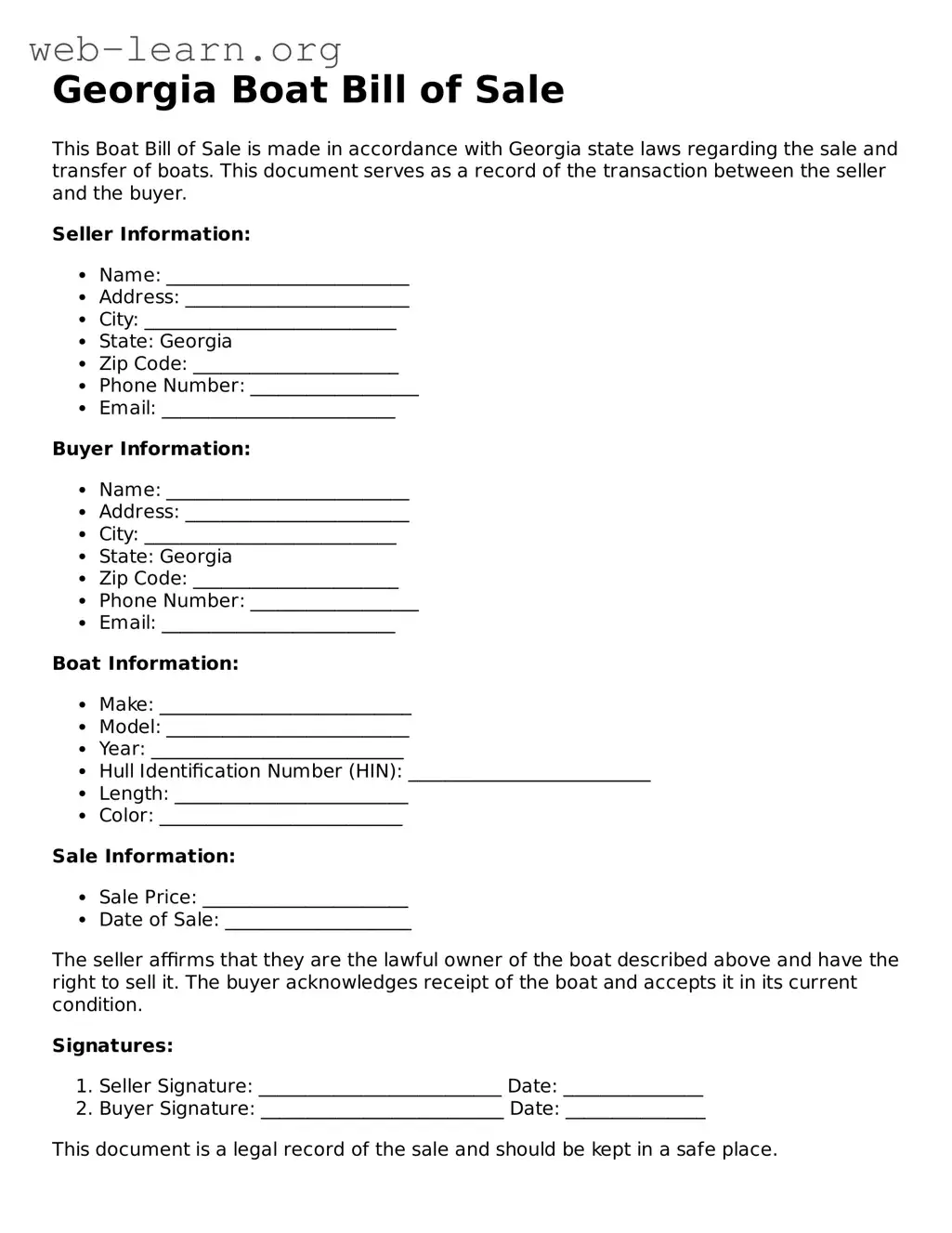
When it comes to buying or selling a boat in Georgia, having the right documentation is crucial for a smooth transaction. One essential document that every boat owner should be familiar with is the Boat Bill of Sale form. This form serves as a legal record of the sale, outlining key details such as the buyer's and seller's names, the boat's make, model, year, and hull identification number. Additionally, it typically includes the sale price and the date of the transaction, providing both parties with a clear understanding of the agreement. The Boat Bill of Sale not only protects the interests of both the buyer and the seller but also serves as proof of ownership, which is vital for registering the boat with the state. By ensuring that this form is accurately completed and signed, individuals can avoid potential disputes and legal issues down the line. Understanding the significance of this document can empower boat enthusiasts to navigate the buying and selling process with confidence.
Georgia Boat Bill of Sale
This Boat Bill of Sale is made in accordance with Georgia state laws regarding the sale and transfer of boats. This document serves as a record of the transaction between the seller and the buyer.
Seller Information:
Buyer Information:
Boat Information:
Sale Information:
The seller affirms that they are the lawful owner of the boat described above and have the right to sell it. The buyer acknowledges receipt of the boat and accepts it in its current condition.
Signatures:
This document is a legal record of the sale and should be kept in a safe place.
| Fact Name | Description |
|---|---|
| Purpose | The Georgia Boat Bill of Sale form is used to document the sale and transfer of ownership of a boat between a seller and a buyer. |
| Governing Law | This form is governed by the laws of the State of Georgia, specifically under the Georgia Code Title 52, Chapter 7, which pertains to watercraft and boating regulations. |
| Required Information | Essential details include the names and addresses of both the buyer and seller, the boat's make, model, year, and hull identification number (HIN). |
| Notarization | Although notarization is not mandatory, it is highly recommended to add an extra layer of authenticity to the transaction. |
| Sales Tax | Sales tax may be applicable on the purchase price of the boat, and the buyer is responsible for paying this tax when registering the boat. |
| Record Keeping | Both parties should retain a copy of the Bill of Sale for their records, as it serves as proof of ownership transfer. |
| Condition of the Boat | It is advisable to include a statement regarding the condition of the boat, whether sold "as-is" or with warranties, to clarify expectations. |
| Delivery Date | The form should specify the date of delivery to confirm when the buyer officially takes possession of the boat. |
| Legal Implications | Filling out the form accurately is crucial, as it can prevent disputes regarding ownership and liability in the future. |
Filling out the Georgia Boat Bill of Sale form is an important step in transferring ownership of a boat. Once completed, this document will serve as proof of the transaction between the buyer and seller. It’s essential to ensure all information is accurate to avoid any future complications.
What is a Georgia Boat Bill of Sale?
A Georgia Boat Bill of Sale is a legal document that serves as proof of the transfer of ownership of a boat from one person to another. This form includes important details about the transaction, such as the names and addresses of both the buyer and seller, a description of the boat, and the sale price. Having this document is crucial for both parties, as it protects their rights and helps establish clear ownership.
Why do I need a Boat Bill of Sale in Georgia?
In Georgia, a Boat Bill of Sale is necessary for several reasons:
Having this form completed and signed can make the process smoother and more secure for both the buyer and seller.
What information is required on the Boat Bill of Sale?
The Boat Bill of Sale should include:
Ensuring all this information is accurately filled out will help avoid any complications in the future.
Do I need to have the Boat Bill of Sale notarized?
In Georgia, notarization of the Boat Bill of Sale is not required. However, having the document notarized can add an extra layer of security and credibility to the transaction. A notary public verifies the identities of both parties and ensures that they are signing the document willingly. While it may not be mandatory, it can be beneficial, especially for larger transactions.
Where can I obtain a Georgia Boat Bill of Sale form?
You can find a Georgia Boat Bill of Sale form through various sources:
Make sure to choose a reliable source to ensure that the form meets all legal requirements for your transaction.
Filling out the Georgia Boat Bill of Sale form can seem straightforward, but many people make common mistakes that can lead to complications. One of the most frequent errors is failing to include all required information. Sellers and buyers must ensure that names, addresses, and boat details are complete and accurate. Missing even a small piece of information can create issues down the line.
Another common mistake is not providing the correct boat identification number (VIN). The VIN is crucial for identifying the boat and proving ownership. If this number is incorrect or omitted, it could result in delays when registering the boat with the state.
People often forget to include the sale price. This detail is important for both parties. It not only helps in establishing the value of the transaction but also plays a role in tax assessments. Leaving this out can lead to misunderstandings and potential legal issues.
Many individuals overlook the importance of signatures. Both the seller and buyer must sign the form for it to be valid. Without these signatures, the document may not hold up in legal situations, leaving one party vulnerable.
Another mistake is not dating the document. The date of the sale is essential for record-keeping and can affect the transfer of ownership. Failing to include this information can complicate future transactions or registrations.
Some people neglect to make copies of the completed Bill of Sale. Keeping a copy for personal records is wise. This serves as proof of the transaction should any disputes arise later.
Using incorrect or outdated forms is another pitfall. It's crucial to ensure that you are using the most current version of the Georgia Boat Bill of Sale. Using an old form could lead to unnecessary complications.
People sometimes rush through the process, leading to mistakes. Taking the time to carefully review the form before submitting it can prevent errors. A thorough check can save time and stress in the long run.
Finally, some individuals fail to understand the importance of notarization. While not always required, having the Bill of Sale notarized can add an extra layer of protection for both parties involved. It can help verify identities and provide additional legal standing if disputes arise.
When buying or selling a boat in Georgia, several documents may accompany the Boat Bill of Sale to ensure a smooth transaction. Each of these forms serves a specific purpose and can help protect both the buyer and the seller.
Having the right forms and documents can streamline the process of buying or selling a boat in Georgia. Each document plays a role in ensuring that both parties are protected and that the transaction is legally sound.
When filling out the Georgia Boat Bill of Sale form, it’s essential to follow certain guidelines to ensure the process goes smoothly. Below is a list of things you should and shouldn't do.
By following these guidelines, you can help ensure that your boat sale transaction in Georgia is legally sound and free from complications.
Understanding the Georgia Boat Bill of Sale form is crucial for anyone involved in buying or selling a boat. However, there are several misconceptions that can lead to confusion. Here are six common misconceptions:
Many people believe that a Bill of Sale is optional. In Georgia, it is highly recommended to have this document to provide proof of ownership and protect both the buyer and seller.
Some think that a handshake or verbal agreement is enough to finalize the sale. However, without a written Bill of Sale, it can be difficult to resolve disputes that may arise later.
Both the buyer and seller must sign the document for it to be valid. This ensures that both parties acknowledge the transaction and its terms.
Each state has its own requirements for a Bill of Sale. The Georgia Boat Bill of Sale form has specific details that must be included, such as vessel identification numbers and the sale price.
While signing the Bill of Sale is an important step, the buyer should also ensure that the boat is properly registered and that any required taxes are paid.
In Georgia, notarization is not required for the Bill of Sale to be valid. However, having it notarized can add an extra layer of security and authenticity to the transaction.
Being aware of these misconceptions can help ensure a smoother transaction when buying or selling a boat in Georgia.
When filling out and using the Georgia Boat Bill of Sale form, keep the following key takeaways in mind:
Dmv Ct Bill of Sale - Some states may require a Boat Bill of Sale to complete the registration process.
Boat Bill of Sale Colorado - The Boat Bill of Sale can help clarify any agreements made verbally during the sale process.
Do You Need a Bill of Sale in Idaho - A Boat Bill of Sale can help streamline the process of transferring boat licenses and permits.