A Garage Lease Agreement is a crucial document for anyone looking to rent or lease a garage space. This form outlines the terms and conditions agreed upon by both the landlord and the tenant. Key aspects of the agreement include the duration of the lease, the rental payment amount, and the responsibilities of each party regarding maintenance and repairs. Additionally, it specifies the permitted use of the garage, which can range from vehicle storage to other permissible activities. The agreement also addresses issues such as security deposits, late payment penalties, and termination clauses. By clearly defining these elements, the Garage Lease Agreement helps to protect the interests of both the landlord and the tenant, ensuring a mutual understanding of expectations and obligations throughout the lease term.
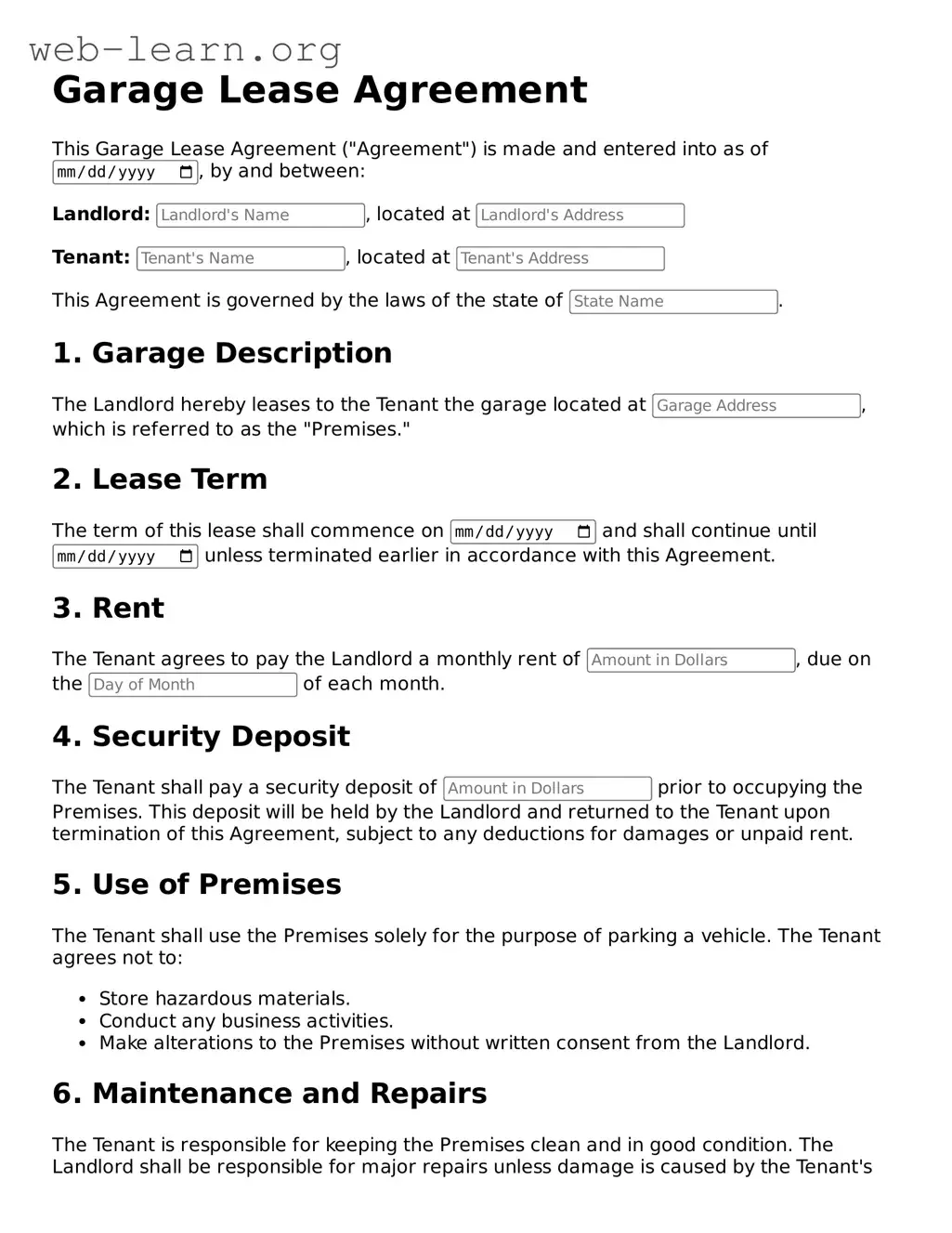
Garage Lease Agreement
This Garage Lease Agreement ("Agreement") is made and entered into as of , by and between:
Landlord: , located at
Tenant: , located at
This Agreement is governed by the laws of the state of .
1. Garage Description
The Landlord hereby leases to the Tenant the garage located at , which is referred to as the "Premises."
2. Lease Term
The term of this lease shall commence on and shall continue until unless terminated earlier in accordance with this Agreement.
3. Rent
The Tenant agrees to pay the Landlord a monthly rent of , due on the of each month.
4. Security Deposit
The Tenant shall pay a security deposit of prior to occupying the Premises. This deposit will be held by the Landlord and returned to the Tenant upon termination of this Agreement, subject to any deductions for damages or unpaid rent.
5. Use of Premises
The Tenant shall use the Premises solely for the purpose of parking a vehicle. The Tenant agrees not to:
6. Maintenance and Repairs
The Tenant is responsible for keeping the Premises clean and in good condition. The Landlord shall be responsible for major repairs unless damage is caused by the Tenant's negligence.
7. Termination
Either party may terminate this Agreement by providing written notice of days to the other party.
8. Governing Law
This Agreement shall be governed by and construed in accordance with the laws of the state of .
9. Signatures
By signing below, both parties agree to the terms and conditions outlined in this Agreement.
Landlord Signature: ____________________________ Date: ___________
Tenant Signature: ____________________________ Date: ___________
| Fact Name | Description |
|---|---|
| Definition | A Garage Lease Agreement is a contract between a landlord and a tenant for the rental of a garage space. |
| Parties Involved | The agreement typically involves two parties: the lessor (landlord) and the lessee (tenant). |
| Duration | The lease specifies the duration of the rental period, which can be short-term or long-term. |
| Payment Terms | It outlines the payment terms, including the amount due, payment frequency, and acceptable payment methods. |
| State-Specific Forms | Each state may have its own specific requirements for Garage Lease Agreements. For example, California governs these agreements under California Civil Code. |
| Security Deposit | Many agreements require a security deposit to cover potential damages or unpaid rent. |
| Termination Clause | The lease often includes a termination clause, detailing how either party can end the agreement. |
Filling out the Garage Lease Agreement form is a straightforward process. By following these steps, you can ensure that all necessary information is provided clearly and accurately. Once completed, this form will help establish the terms of the lease, making it easier for both the landlord and tenant to understand their responsibilities.
What is a Garage Lease Agreement?
A Garage Lease Agreement is a legal document that outlines the terms under which one party (the lessor) rents out a garage space to another party (the lessee). This agreement specifies the rental amount, duration of the lease, and responsibilities of both parties.
What should be included in a Garage Lease Agreement?
The agreement should include:
How long does a Garage Lease Agreement typically last?
The duration of a Garage Lease Agreement can vary. It can be a month-to-month lease or a fixed-term lease lasting several months or years. Both parties should agree on the duration before signing the agreement.
Can I sublease the garage space?
Subleasing the garage space is generally subject to the terms outlined in the lease agreement. If subleasing is allowed, the agreement should specify any conditions. If not, the lessee must obtain written consent from the lessor before subleasing.
What happens if I miss a payment?
If a payment is missed, the terms of the lease agreement will dictate the consequences. This may include late fees, a grace period, or even termination of the lease. It is important to communicate with the lessor promptly if a payment cannot be made on time.
Can the lease agreement be terminated early?
Yes, but early termination typically requires adherence to specific conditions outlined in the lease agreement. This may involve providing a written notice within a specified timeframe. Both parties should review these conditions carefully.
What if the garage needs repairs?
Responsibility for repairs should be clearly defined in the lease agreement. Generally, the lessor is responsible for maintaining the structural integrity of the garage, while the lessee may be responsible for minor repairs or maintenance. Clarifying these responsibilities upfront can prevent disputes.
Is a Garage Lease Agreement legally binding?
Yes, once both parties sign the Garage Lease Agreement, it becomes a legally binding contract. This means that both parties are obligated to adhere to the terms outlined in the agreement. If either party fails to comply, the other party may have legal recourse.
Filling out a Garage Lease Agreement can seem straightforward, but many people make mistakes that can lead to confusion or even legal issues down the line. One common error is failing to provide accurate personal information. It's essential to include the correct names and addresses of both the lessor and lessee. Missing or incorrect details can create complications if disputes arise.
Another mistake is neglecting to specify the lease term. A clear start and end date is crucial. Without this information, both parties may have different interpretations of the agreement's duration, leading to misunderstandings and potential conflicts.
Some individuals overlook the importance of detailing the rental amount and payment schedule. It's vital to state how much rent is due, when it's due, and acceptable payment methods. Ambiguities in these areas can lead to disputes over late fees or payment expectations.
Additionally, many people fail to address maintenance responsibilities. Who is responsible for upkeep and repairs? This should be clearly outlined in the agreement. Without this clarity, issues may arise, resulting in frustration and potential financial burdens for one party.
Another common error is not including terms for terminating the lease. It's important to specify how either party can end the agreement. This might include notice periods or conditions that warrant termination. Omitting these details can leave both parties in a precarious position if circumstances change.
Some individuals also forget to include a clause about liability and insurance. This is especially important in garage leases where property damage or personal injury could occur. Clearly stating who is liable in different situations can help protect both parties.
Moreover, not addressing the use of the garage can lead to problems. Is it for vehicle storage only, or can it be used for other purposes? Clearly defining acceptable uses can prevent disputes over what is permissible in the space.
Finally, many people neglect to read the entire agreement before signing. This can lead to unintended consequences if terms are misunderstood. Taking the time to review every detail ensures that both parties are on the same page and helps avoid future conflicts.
A Garage Lease Agreement is a crucial document for both landlords and tenants, outlining the terms and conditions for renting a garage space. However, several other forms and documents often accompany this agreement to ensure clarity and compliance. Here’s a list of commonly used documents that can enhance the leasing process.
Incorporating these documents alongside the Garage Lease Agreement can streamline the leasing process and help maintain clear communication between landlords and tenants. Each document serves a specific purpose, ensuring both parties understand their rights and responsibilities throughout the lease term.
When filling out a Garage Lease Agreement form, it is important to follow certain guidelines to ensure clarity and compliance. Below are nine key dos and don’ts to consider:
When it comes to a Garage Lease Agreement, many people have misunderstandings that can lead to confusion or even legal issues. Here are seven common misconceptions:
In reality, garage leases can vary significantly based on location, terms, and specific agreements made between the landlord and tenant. Each lease should be tailored to the situation.
While verbal agreements can be legally binding, they often lead to misunderstandings. A written lease provides clarity and protects both parties.
Both parties can negotiate terms before signing. If changes are needed, they should be documented in writing to avoid disputes later.
Many landlords require a security deposit to cover potential damages or unpaid rent. This should be clearly outlined in the lease.
While it may not be legally required, having insurance can protect tenants from loss or damage to their belongings stored in the garage.
Proper notice is crucial for ending a lease. Both parties should understand the required notice period to avoid unexpected charges or legal issues.
Garage leases can be short-term or long-term, depending on the needs of the tenant and the landlord. Flexibility exists in lease terms.
Understanding these misconceptions can help both landlords and tenants navigate the leasing process more effectively and avoid potential pitfalls.
When filling out a Garage Lease Agreement form, it's important to keep several key points in mind. Here are some essential takeaways to ensure a smooth process:
By paying attention to these key points, you can ensure that your Garage Lease Agreement is clear, fair, and legally sound.
Hunting Lease Agreement Pdf - The agreement may stipulate the types of game that can be hunted on the land.
Written Notice of Not Renewing Lease - It helps to avoid confusion regarding lease expiration dates.