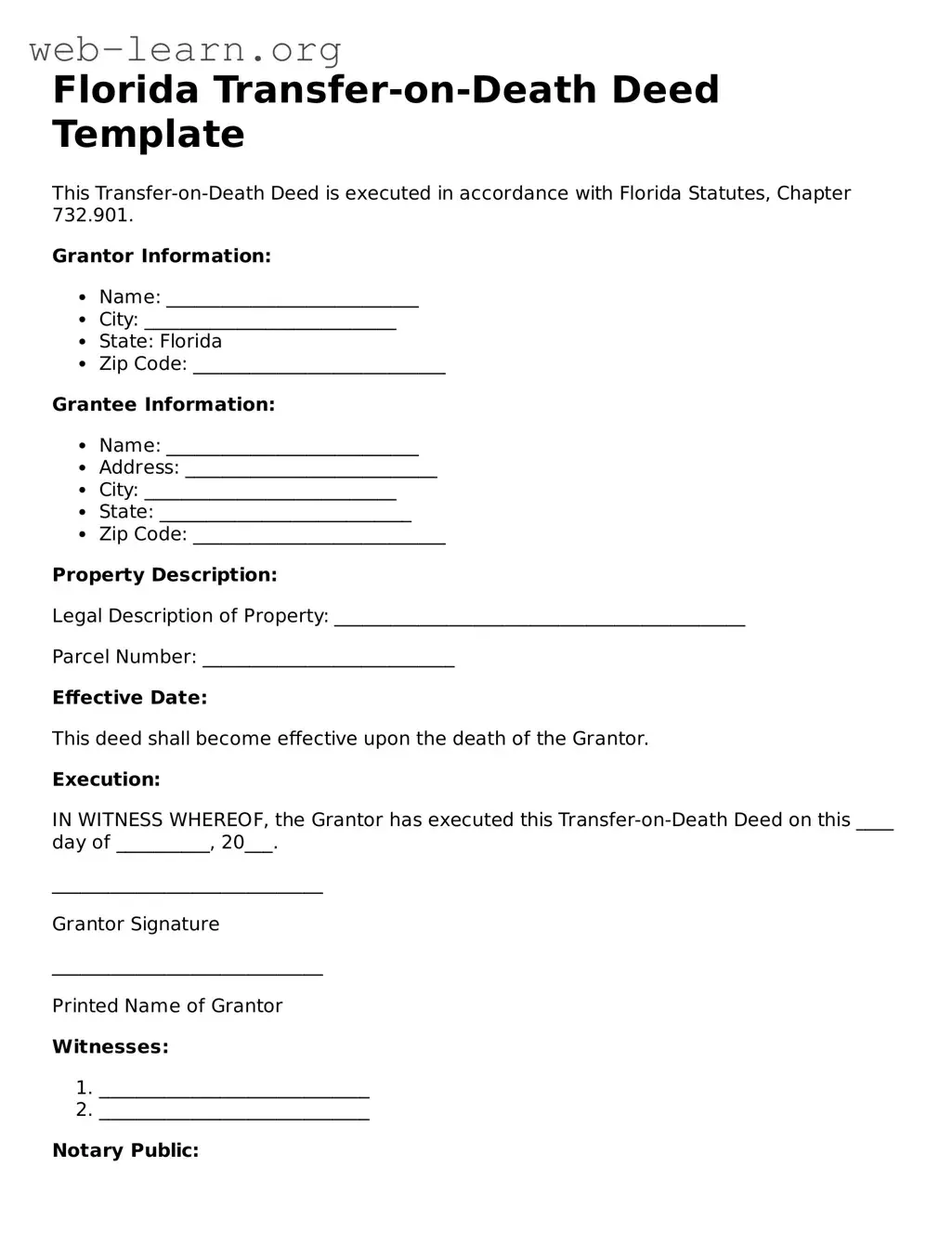
The Florida Transfer-on-Death Deed (TODD) form serves as a valuable tool for property owners seeking to streamline the transfer of real estate upon their passing. This legal document allows individuals to designate one or more beneficiaries who will inherit their property without the need for probate, simplifying the process and potentially saving time and money for loved ones. By completing and recording a TODD, property owners can retain full control of their property during their lifetime, ensuring that they can sell, mortgage, or otherwise manage their assets as they see fit. Importantly, the deed becomes effective only upon the owner's death, at which point the designated beneficiaries gain ownership automatically. This mechanism not only provides peace of mind but also helps to avoid the complexities often associated with traditional inheritance methods. Understanding the implications and requirements of the Florida Transfer-on-Death Deed form is essential for anyone considering this option, as it can play a crucial role in estate planning and asset management.
Florida Transfer-on-Death Deed Template
This Transfer-on-Death Deed is executed in accordance with Florida Statutes, Chapter 732.901.
Grantor Information:
Grantee Information:
Property Description:
Legal Description of Property: ____________________________________________
Parcel Number: ___________________________
Effective Date:
This deed shall become effective upon the death of the Grantor.
Execution:
IN WITNESS WHEREOF, the Grantor has executed this Transfer-on-Death Deed on this ____ day of __________, 20___.
_____________________________
Grantor Signature
_____________________________
Printed Name of Grantor
Witnesses:
Notary Public:
State of Florida
County of ___________________________
Subscribed and sworn to before me this ____ day of __________, 20___.
_____________________________
Notary Public Signature
My Commission Expires: _______________
| Fact Name | Description |
|---|---|
| Definition | A Transfer-on-Death Deed allows property owners to transfer real estate to beneficiaries upon their death without going through probate. |
| Governing Law | The Florida Transfer-on-Death Deed is governed by Florida Statutes, specifically Chapter 732.4015. |
| Eligibility | Any individual who owns real estate in Florida can create a Transfer-on-Death Deed. |
| Revocability | The deed can be revoked or changed at any time during the property owner's lifetime. |
| Filing Requirements | The deed must be signed by the property owner and recorded in the county where the property is located. |
| Beneficiary Designation | Property owners can designate multiple beneficiaries, and they can specify how the property will be divided among them. |
| Tax Implications | Transferring property via a Transfer-on-Death Deed does not trigger gift taxes, but beneficiaries may be responsible for property taxes once they inherit the property. |
| Impact on Creditors | Creditors may still have claims against the estate, and the property may be subject to claims until all debts are settled. |
| Limitations | This deed cannot be used for certain types of property, such as timeshares or properties held in a trust. |
Once you have the Florida Transfer-on-Death Deed form ready, it's important to complete it accurately. This ensures that your property will be transferred according to your wishes without unnecessary complications. Follow these steps to fill out the form correctly.
After completing these steps, keep a copy of the recorded deed for your records. Ensure that your beneficiaries are aware of the deed and its implications. This proactive approach can save time and stress for your loved ones in the future.
What is a Transfer-on-Death Deed in Florida?
A Transfer-on-Death Deed (TODD) is a legal document that allows property owners in Florida to transfer their real estate to designated beneficiaries upon their death. This deed enables the owner to maintain control of the property during their lifetime while ensuring a smooth transition of ownership after they pass away.
Who can use a Transfer-on-Death Deed?
Any individual who owns real estate in Florida can utilize a Transfer-on-Death Deed. This includes homeowners, landowners, and individuals holding property in their name. However, it is important to ensure that the property is not subject to any liens or other legal issues that could complicate the transfer.
How do I create a Transfer-on-Death Deed?
To create a TODD, you need to fill out the appropriate form, which includes details about the property, the owner's information, and the beneficiaries' names. After completing the form, it must be signed in front of a notary public and recorded with the county clerk where the property is located. This ensures that the deed is legally recognized and enforceable.
Can I change or revoke a Transfer-on-Death Deed?
Yes, you can change or revoke a TODD at any time while you are alive. To do this, you must create a new deed that either updates the beneficiaries or explicitly revokes the previous deed. The new deed must also be signed, notarized, and recorded to be valid.
What happens if I don't name a beneficiary?
If you do not name a beneficiary in the Transfer-on-Death Deed, the property will not be transferred according to the deed. Instead, it will be handled according to your will or, if there is no will, through the state's intestacy laws. This could lead to complications and delays in transferring the property.
Are there any tax implications with a Transfer-on-Death Deed?
Generally, there are no immediate tax implications for transferring property via a TODD. The property is not considered part of your estate for tax purposes until your death. However, beneficiaries may be subject to property taxes or capital gains taxes when they sell the property after inheriting it. It is wise to consult a tax professional for personalized advice.
What types of property can be transferred using a Transfer-on-Death Deed?
A Transfer-on-Death Deed can be used to transfer various types of real estate, including residential homes, vacant land, and commercial properties. However, it cannot be used for personal property like vehicles or bank accounts. Always ensure the property is eligible for transfer under this deed.
Filling out a Transfer-on-Death (TOD) Deed form in Florida can be a straightforward process, but several common mistakes can lead to complications down the line. One frequent error is failing to include all necessary parties. When designating beneficiaries, it’s essential to list each individual’s full name and ensure that their relationship to the property owner is clear. Omitting a beneficiary or providing incorrect names can create confusion and potentially invalidate the deed.
Another common mistake involves the incorrect description of the property. The deed must accurately describe the property being transferred, including the legal description. Relying solely on a street address can lead to ambiguities, especially if there are multiple properties with similar names. Always refer to the official property records to ensure accuracy.
People often overlook the importance of signing the deed properly. In Florida, the property owner must sign the deed in the presence of two witnesses. Neglecting to have witnesses present during the signing can render the deed invalid. Additionally, the witnesses must also sign the document; their signatures are a crucial part of the process.
Another mistake is failing to record the deed with the county clerk’s office. After completing the TOD deed, it is not enough to simply sign it. To ensure that the deed is legally recognized, it must be filed with the appropriate county office. This step is vital to protect the property from claims by creditors or disputes among potential heirs.
Some individuals mistakenly believe that a TOD deed can be revoked or changed easily. While it is possible to revoke a TOD deed, it must be done formally, following specific procedures. Simply crossing out a name or making handwritten changes can lead to disputes about the validity of the deed.
Misunderstanding the implications of a TOD deed can also lead to problems. A common misconception is that the property is immediately transferred upon the owner's death. In reality, the property remains in the owner's name until death occurs, and the beneficiaries do not have any rights to the property until that time. This misunderstanding can lead to disputes among family members.
Another mistake involves not considering tax implications. While a TOD deed allows for the transfer of property outside of probate, it does not exempt the property from estate taxes. Property owners should consult with a tax professional to understand how the transfer may impact their estate tax obligations.
Finally, individuals often fail to keep their TOD deed updated. Life changes such as marriage, divorce, or the birth of a child can affect beneficiary designations. Regularly reviewing and updating the deed ensures that it reflects the current wishes of the property owner and prevents potential disputes in the future.
The Florida Transfer-on-Death Deed form allows property owners to designate beneficiaries who will receive their property upon their death, avoiding probate. When utilizing this form, several other documents may be necessary to ensure a smooth transfer of assets and proper estate planning. Below is a list of commonly used forms and documents that complement the Transfer-on-Death Deed.
Using these documents in conjunction with the Florida Transfer-on-Death Deed can facilitate a more comprehensive estate plan. Each form plays a vital role in ensuring that your wishes are honored and that your loved ones are cared for after your passing.
When filling out the Florida Transfer-on-Death Deed form, it’s important to follow specific guidelines to ensure the document is valid and meets your intentions. Here is a list of things you should and shouldn't do:
The Florida Transfer-on-Death Deed (TODD) is a legal instrument that allows property owners to transfer real estate to beneficiaries upon their death without going through probate. However, several misconceptions about this deed exist. Below are six common misconceptions along with explanations.
Filling out and using the Florida Transfer-on-Death Deed form can be a straightforward process if you keep these key takeaways in mind:
Hawaii Transfer on Death Deed Form - Beneficiaries can take possession of the property without the hassle of probate court.
Transfer on Death Deed Kansas - This deed can be a cost-effective way to manage property transfers.
Petition for Possession Louisiana - The deed can be tailored to include specific conditions for the transfer of the property.