Homepage Blank Florida Traffic Crash Report Form
Outline

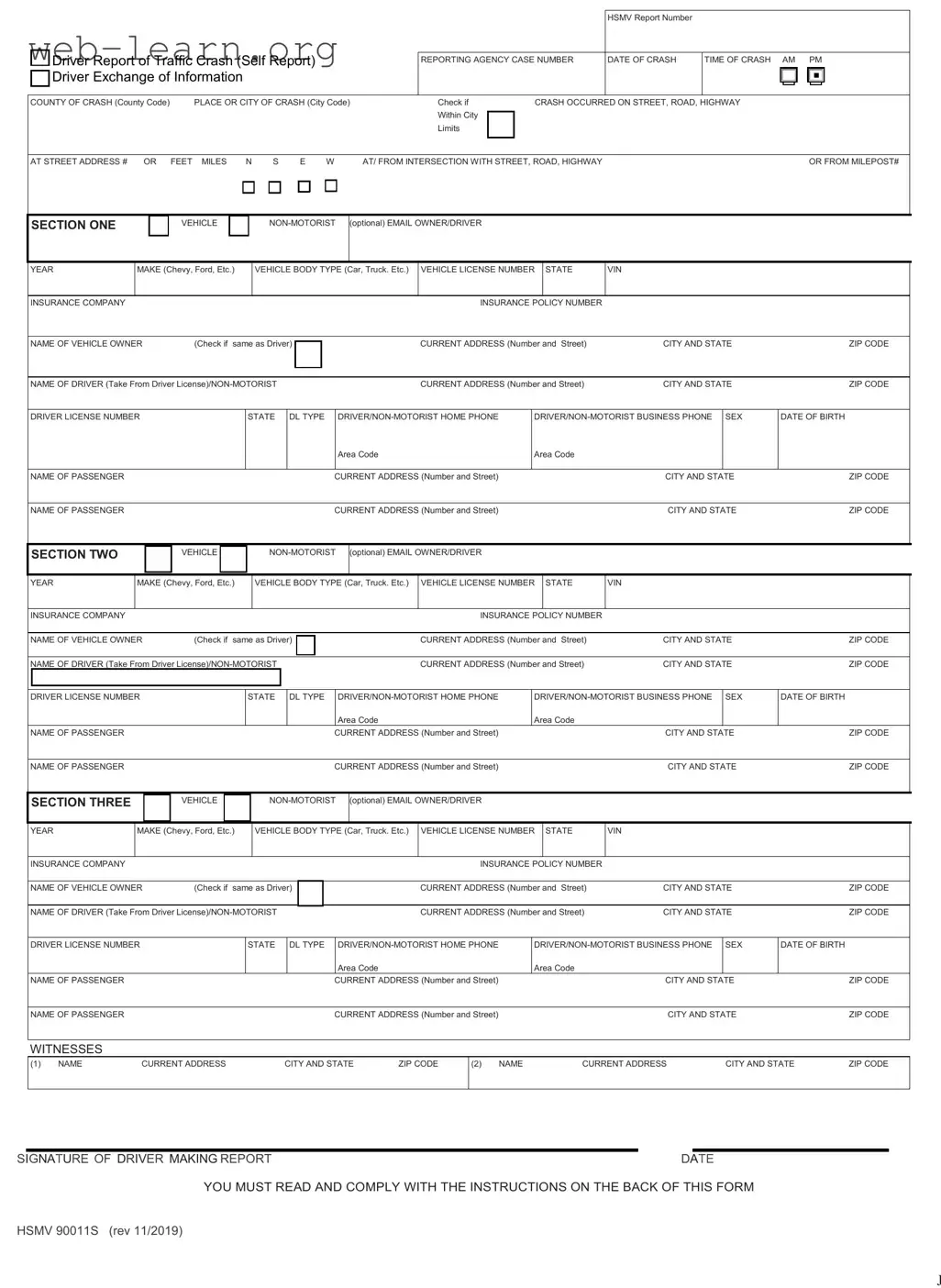
When a traffic crash occurs in Florida, it’s essential for drivers to report the incident accurately and promptly. The Florida Traffic Crash Report form serves as a vital tool in this process, ensuring that all necessary information is documented. This form captures critical details such as the date and time of the crash, the location, and the parties involved, including drivers, passengers, and witnesses. Each section of the form is designed to gather comprehensive data about the vehicles, including their make, model, and insurance information. Additionally, it requests personal information from the drivers, such as their names, addresses, and contact numbers, which helps in facilitating communication and follow-ups. The form also emphasizes the importance of compliance with state laws, requiring drivers to submit their reports within a specific timeframe. By understanding the components of this form, individuals can navigate the reporting process more effectively and ensure that they fulfill their legal obligations after a traffic incident.


Sample - Florida Traffic Crash Report Form

Driver Report of Traffic Crash (Self Report)
Driver Exchange of Information
HSMV Report Number
REPORTING AGENCY CASE NUMBER DATE OF CRASH TIME OF CRASH AM PM
COUNTY OF CRASH (Count
y Code) PLACE OR CITY OF CRASH (City Code) Check if
Within City
Limits
CRASH OCCURRED ON STREET, ROAD, HIGHWAY
AT STREET
AD
DRESS #
OR
FEET
MILES N
S
E
W
AT/ FROM INTERSECTIO
N WIT
H STREET,
ROAD, HIGHWAY
OR FROM MILEPOST#
SECTION ONE
VEHICLE NON-MOTORIST
(optional) EMAIL OWNER/DRIVER
YEAR MAKE (Chevy, Ford, Etc.) VEHICLE BODY TYPE (Car, Truck. Etc.) VEHICLE LICENSE NUMBER STATE VIN
INSURANCE COMPANY INSURANCE POLICY NUMBER
NAME OF VEHICL
E OWNER (Check if same as Driver) CURRENT ADDRESS (Number and Street) CITY AND STATE ZIP CODE
NAME OF DRIVER (Take From Driver License)/NON-MOTORIST CURRENT ADDRESS (Number and Street) CITY AND STATE ZIP CODE
DRIVER LICENSE NUMBER
STATE
DL TYPE
DRIVER/NON-MOTORIST HOME PHONE
Area Code
DRIVER/NON-MOTORIST BUSINESS PHONE
Area Code
SEX
DATE OF BIRTH
NAME OF PASSENGER CURRENT ADDRESS (Number and Stre
et) CITY AND STATE ZIP CODE
NAME OF PASSENGER CURRENT ADDRESS (Num
ber and Stre
et) CITY AND STATE ZIP CODE
SECTION TWO
(optional) EMAIL OWNER/DRIVER
YEAR MAKE (Chevy, Ford, Etc.) VEHICLE BODY TYPE (Car, Truck. Etc.) VEHICLE LICENSE NUMBER STATE VIN
INSURANCE COMPANY INSURANCE POLICY NUMBER
NAME OF VEH
ICLE OWNER (Check if same as Driver) CURRENT ADDRESS (Number and St
reet) CITY AND S
TATE ZIP CODE
NAM
E OF DRIVER (Take From Driver License)/NON-MOTORIST CURRENT ADDRESS (Number and St
reet) CITY AND STAT
E ZIP CODE
DRIVER LICENSE NUMBER
STATE
DL TYPE
DRIVER/NON-MOTORIST HOME PHONE
Area Code
DRIVER/NON-MOTORIST BUSINESS PHONE
Area Code
SEX
DATE OF BIRTH
NAME OF PASSENGER CURRENT ADDRESS (Number and Street) CITY AND STATE ZIP CODE
NAME OF PASSENGER CURRENT ADDRESS (Numbe
r and Street
) CITY AND STATE ZIP CODE
SECTION THREE
VEHICLE NON-MOTORIST
(optional) EMAIL OWNER/DRIVER
YEAR
MAKE (Chevy, Ford, Etc.)
VEHICLE BODY TYPE (Car, Truck. Etc.)
VEHICLE LICENSE NUMBER
STATE
VIN
INSURANCE COMPANY INSURANCE POLICY NUMBER
NAME OF VEHICLE OWNER (Check if same as Dri
ver) CURRENT ADDRESS (Numbe
r and Street) CITY AND STAT
E ZIP CODE
NAME OF DRI
VER (Take From Driver License)/NON-MOTORIST CURRENT ADDRESS (
Number and Street) CITY AND STATE ZIP CODE
DRIVER LICENSE NUMBER STATE DL TYPE
DRIVER/NON-MOTORIST HOME PHONE
Area Code
DRIVER/NON-MOTORIST BUSINESS PHONE
Area Code
SEX DATE OF BIRTH
NAME OF PASSENGER
CURRENT
ADDRESS (Nu
mber and Street) CITY AND STATE ZIP CODE
N
AME O
F PASSENGER CURRENT ADDRESS
(Number and Street) CITY AND STATE ZIP CODE
WITNESSES
(1) NAME CURRENT ADDRESS CITY AND STATE ZIP CODE (2) NAME CURRENT ADDRESS CITY AND STATE ZIP CODE
SIGNATURE OF DRIVER MAKING REPORT DATE
YOU MUST READ AND COMPLY WITH THE INSTRUCTIONS ON THE BACK OF THIS FORM
J
HSMV 90011S (rev 11/2019)
IF YOU WERE TOLD TO COMPLETE AND FORWARD THIS REPORT TO THE DEPARTMENT, PLEASE REFER TO THE
FOLLOWING INSTRUCTIONS AND EXAMPLE:
HSMV Report Number
Driver Report of Traffic Crash (Self Report)
Driver Exchange of Information
REPORTING AGENCY CASE NUMBER DATE OF CRASH
01-01-10
TIME OF CRASH AM PM
11:30
COUNTY OF CRASH (County Code) PLACE OR CITY OF CRASH (City Code) Check if CRASH OCCURRED ON STREET, ROAD, HIGHWAY
PINELLAS (04) ST. PETERSBURG (64) Within City 2ND STREET SOUTH
Limits
AT STREET ADDRESS # OR FEET MILES N S E W AT/ FROM INTERSECTION WITH STREET, ROAD, HIGHWAY OR FROM MILEPOST#
0 U.S. 19
SECTION ONE
(optional) EMAIL OWNER/DRIVER
YEAR
80
MAKE (Chevy, Ford, Etc.)
FORD
VEHICLE BODY TYPE (Car, Truck. Etc.)
CAR
VEHICLE LICENSE NUMBER
ABC-123
STATE
FL
VIN
INSURANCE COMPANY INSURANCE POLICY NUMBER
INSURANCE COMPANY OF FL I.C.F. 120000
NAME OF VEHICLE OWNER (Check if same as Driver) CURRENT ADDRESS (Number and Street) CITY AND STATE ZIP CODE
JOHN DOE 1111 FIRST STREET NORTH PETERSBURG, FL 33731
NAME OF DRIVER (Take From Driver License)/NON-MOTORIST CURRENT ADDRESS (Number and Street) CITY AND STATE ZIP CODE
BILL DOE SAME AS OWNER
DRIVER LICENSE NUMBER
D 561345706000
STATE
FL
DL TYPE DRIVER/NON-MOTORIST HOME PHONE
DRIVER/NON-MOTORIST BUSINESS PHONE
SEX
M
DATE OF BIRTH
01-01-70
NAME OF PASSENGER CURRENT ADDRESS (Number and Street) CITY AND STATE ZIP CODE
SALLEY DOE SAME AS OWNER
NAME OF PASSENGER CURRENT ADDRESS (Number and Street) CITY AND STATE ZIP CODE
Effective July 1, 2012, Section 316.066(1)(e),Florida Statute, requires that "The driver of a vehicle that was in any manner
involved in a crash resulting in damage to a vehicle or other property which does not require a law enforcement report shall,
within 10 days after the crash, submit a written report of the crash to the department. The report shall be submitted on a form
approved by the department."
Keep a copy of this report for your records and for insurance purposes.
Sign the report at the bottom of the front page.
Submit this via email to [email protected], OR;
Mail this report to: Florida Highway Safety & Motor Vehicles
Self Report Crash Team
2900 Apalachee Pkwy, MS 28
Tallahassee, Florida 32399
Please use this space for comments and for listing any witnesses and/or additional passengers, stating which vehicle the passenger was in.
For additional vehicles or other involved parties, please add additional front pages for this Driver Report of Traffic Crash.

Form Information

Fact Name Details
Purpose The Florida Traffic Crash Report form is used for reporting traffic crashes that do not require a law enforcement report.
Governing Law Section 316.066(1)(e) of the Florida Statutes mandates the submission of this report within 10 days of the crash.
Submission Methods Reports can be submitted via email or mailed to the Florida Highway Safety & Motor Vehicles.
Required Information Drivers must provide details such as the date, time, and location of the crash, along with vehicle and personal information.
Witness Information The form allows for the inclusion of witness details, which can be crucial for insurance claims and legal purposes.
Signature Requirement Drivers must sign the report at the bottom of the front page to validate the submission.
Record Keeping It is advised to keep a copy of the report for personal records and insurance purposes.

Detailed Guide for Filling Out Florida Traffic Crash Report

Completing the Florida Traffic Crash Report form is an important step after being involved in a traffic incident. This form gathers essential information about the crash, the vehicles involved, and the people present. Once the form is filled out, it needs to be submitted to the appropriate authorities for record-keeping and insurance purposes.

  1. Obtain the Form: Download the Florida Traffic Crash Report form from the Florida Highway Safety and Motor Vehicles website or acquire a physical copy.
  2. Fill in the Reporting Information: At the top of the form, enter the HSMV report number, reporting agency case number, date of the crash, time of the crash (AM or PM), county of the crash, and the place or city where the crash occurred.
  3. Specify Crash Location: Indicate whether the crash occurred on a street, road, or highway and check if it was within city limits. Provide the street address or distance from an intersection.
  4. Complete Vehicle and Driver Information: In Section One, fill in details for the first vehicle involved, including the year, make, body type, license number, VIN, and insurance information. Include the name and address of the vehicle owner and driver, along with their driver’s license number and contact information.
  5. Add Passenger Details: List the names and addresses of any passengers in the vehicle.
  6. Repeat for Additional Vehicles: If there were more vehicles involved, complete Sections Two and Three with the same information for each vehicle and its driver.
  7. Document Witnesses: Provide the names and addresses of any witnesses to the crash in the designated area.
  8. Sign and Date the Report: At the bottom of the form, sign your name and date it to certify that the information provided is accurate.
  9. Keep a Copy: Make a copy of the completed report for your records and for your insurance company.
  10. Submit the Report: Send the report via email to [email protected] or mail it to the Florida Highway Safety & Motor Vehicles at the specified address.

Obtain Answers on Florida Traffic Crash Report

  1. What is the purpose of the Florida Traffic Crash Report form?

    The Florida Traffic Crash Report form is used by drivers involved in traffic accidents to report details about the incident. This report is necessary when a crash results in damage to vehicles or property but does not require a law enforcement report. It helps ensure that the Florida Department of Highway Safety and Motor Vehicles (DHSMV) receives accurate information for record-keeping and insurance purposes.

  2. Who is required to complete the form?

    According to Florida law, any driver involved in a crash that causes damage to a vehicle or property must complete this form within 10 days of the incident. This requirement applies only if a law enforcement report is not generated for the crash.

  3. How do I submit the completed form?

    You can submit the completed Florida Traffic Crash Report form in one of two ways:

    • Email the report to [email protected].
    • Mail the report to the following address:
      • Florida Highway Safety & Motor Vehicles
      • Self Report Crash Team
      • 2900 Apalachee Pkwy, MS 28
      • Tallahassee, Florida 32399
  4. What information is required on the form?

    The form requires various details, including:

    • Date and time of the crash
    • County and city where the crash occurred
    • Information about the vehicles involved, including make, model, and license plate numbers
    • Driver and vehicle owner information
    • Names and addresses of any passengers or witnesses
  5. Do I need to keep a copy of the report?

    Yes, it is important to keep a copy of the completed report for your records and for insurance purposes. This documentation may be required for any claims or legal matters that arise from the crash.

  6. What if there are additional vehicles or passengers involved?

    If there are additional vehicles or passengers involved in the crash, you can add extra front pages to the report. Make sure to include all relevant information for each vehicle and passenger to ensure complete documentation.

  7. What should I do if I have questions while filling out the form?

    If you have questions while completing the Florida Traffic Crash Report form, it is advisable to consult the instructions provided on the back of the form. Additionally, you may contact the Florida DHSMV for further assistance.

Common mistakes

Filling out the Florida Traffic Crash Report form can be tricky. Many people make common mistakes that can lead to delays or issues down the line. Here are seven mistakes to avoid.

One frequent error is leaving out important details. For example, people often forget to include the date and time of the crash. This information is crucial for record-keeping and insurance claims. Always double-check that these fields are filled in correctly.

Another mistake is not providing accurate contact information. Some individuals list incorrect phone numbers or addresses. This can make it difficult for insurance companies or law enforcement to reach you if needed. Ensure that all contact details are current and correct.

Many individuals also overlook the section for witnesses. Not including witness information can weaken your case if disputes arise later. If someone saw the accident, their testimony could be valuable. Always take a moment to gather and record witness details.

People sometimes fail to sign the report. A signature is required to validate the information provided. Without it, the report may not be accepted. Make sure to sign and date the form before submission.

Another common error is providing incomplete vehicle information. This includes the make, model, and license plate number. Missing or incorrect vehicle details can lead to complications with insurance claims. Take care to fill out this section thoroughly.

Some individuals neglect to keep a copy of the report for their records. This can be a problem if questions arise later. Always retain a copy for your files. It’s helpful for insurance purposes and can serve as proof of your report.

Lastly, many people do not follow submission guidelines. Whether you choose to email or mail the report, make sure to follow the instructions carefully. Missing these steps can delay processing and create unnecessary headaches.

Documents used along the form

When dealing with a traffic accident in Florida, several forms and documents may accompany the Florida Traffic Crash Report. These documents help ensure that all necessary information is accurately recorded and shared among involved parties, insurance companies, and law enforcement. Below is a list of commonly used forms alongside the Florida Traffic Crash Report.

  • Driver Report of Traffic Crash (Self Report): This form allows drivers involved in a crash to report the incident to the Florida Department of Highway Safety and Motor Vehicles. It must be submitted within 10 days if no law enforcement report is made.
  • Driver Exchange of Information: This form facilitates the exchange of contact and insurance details between drivers involved in a crash. It helps establish accountability and assists in insurance claims.
  • Insurance Claim Form: This document is submitted to an insurance company to initiate a claim for damages or injuries resulting from a traffic accident. It requires details about the incident and involved parties.
  • Police Report: If law enforcement is called to the scene, they may create a report documenting the crash. This report often includes witness statements and can be crucial for insurance claims and legal matters.
  • Witness Statements: Statements from individuals who witnessed the crash can provide additional perspectives on the incident. These statements can support claims and legal actions.
  • Medical Report: If injuries occurred, medical reports detailing treatment and injuries may be necessary for insurance claims and potential legal proceedings.
  • Vehicle Damage Assessment: This document outlines the extent of damage to vehicles involved in the crash. It is often prepared by a mechanic or insurance adjuster.
  • Release of Liability Form: This form can be signed by parties involved in the crash, indicating that they agree not to hold each other responsible for damages or injuries.
  • Settlement Agreement: If parties reach a settlement regarding damages or injuries, this document formalizes the agreement and outlines the terms.
  • Traffic Citation: If a driver receives a ticket for a traffic violation related to the crash, this document will provide details of the violation and any penalties incurred.

Understanding these forms and documents can significantly ease the process following a traffic accident. They play a vital role in ensuring that all parties have the necessary information to resolve issues efficiently and effectively.

Similar forms

  • Accident Report Form: Similar to the Florida Traffic Crash Report, this form is used to document the details of an accident. It typically includes information about the parties involved, vehicles, and circumstances surrounding the incident. Both forms aim to provide a comprehensive overview for insurance and legal purposes.

  • Insurance Claim Form: This document is essential for filing a claim with an insurance company following a traffic accident. Like the Traffic Crash Report, it requires detailed information about the incident, including the parties involved and damages incurred, to facilitate the claims process.

  • Police Report: When law enforcement is involved in an accident, they create a police report. This report contains similar information to the Traffic Crash Report, such as the time and location of the accident, parties involved, and witness statements, serving as an official record.

  • Driver's Accident Report: This self-reporting document allows drivers to provide their account of an accident. It is akin to the Florida Traffic Crash Report in that it captures personal details, vehicle information, and the narrative of the incident, helping to establish liability.

  • Vehicle Damage Report: This form focuses on the specifics of vehicle damage resulting from an accident. It aligns with the Traffic Crash Report by documenting the extent of damage, which can be critical for insurance assessments and claims.

  • Witness Statement Form: Witnesses to an accident often provide statements that detail what they observed. This form complements the Traffic Crash Report by gathering additional perspectives that may clarify the events leading to the crash.

  • Medical Report: In cases where injuries occur, a medical report may be generated. This document shares similarities with the Traffic Crash Report in that it outlines the injuries sustained and treatment received, which can be vital for insurance claims and legal actions.

  • Traffic Violation Report: If a traffic violation contributed to the accident, this report may be filed. It includes details about the violation, much like the Traffic Crash Report, and can impact liability and insurance outcomes.

Dos and Don'ts

When filling out the Florida Traffic Crash Report form, it is essential to approach the task with care and attention to detail. Here are some important dos and don'ts to consider:

  • Do provide accurate information about the crash, including the date, time, and location.
  • Do include all relevant details about the vehicles involved, such as make, model, and license plate numbers.
  • Do list all passengers and witnesses, ensuring their information is complete and correct.
  • Do sign the report at the bottom of the front page to validate your submission.
  • Don't omit any required information, as this could delay processing or lead to complications.
  • Don't submit the report late; it must be filed within 10 days of the crash.

By following these guidelines, you can help ensure that your report is processed smoothly and efficiently. Your attention to detail can make a significant difference in resolving any issues related to the crash.

Misconceptions

  • Misconception 1: The Florida Traffic Crash Report is only for serious accidents.
  • This report is required for any crash that causes damage to a vehicle or property, even if it seems minor.

  • Misconception 2: Only law enforcement can fill out this report.
  • Drivers involved in the crash can complete the report themselves if no law enforcement report is required.

  • Misconception 3: You have unlimited time to submit the report.
  • The law states that the report must be submitted within 10 days after the crash.

  • Misconception 4: You don’t need to keep a copy of the report.
  • It’s important to keep a copy for your records and for insurance purposes.

  • Misconception 5: The report is only for the driver’s information.
  • The report also includes information about passengers, witnesses, and the vehicles involved.

  • Misconception 6: You can only submit the report by mail.
  • You can also email the report to the designated address for quicker processing.

  • Misconception 7: You don’t need to sign the report.
  • A signature is required at the bottom of the front page to validate the report.

  • Misconception 8: The report is not necessary if the crash happened on private property.
  • The report is still necessary if there is damage to vehicles or property, regardless of the location.

  • Misconception 9: You can skip providing witness information.
  • Including witness information can help clarify the events of the crash.

  • Misconception 10: You can only use the form once.
  • If there are multiple vehicles or parties involved, you can add additional front pages to the report.

Key takeaways

  • Complete the Report Promptly: If you were involved in a crash that doesn’t require a law enforcement report, submit your report within 10 days.
  • Provide Accurate Information: Fill in all sections with correct details about the crash, including the date, time, and location.
  • Include All Involved Parties: List all drivers, passengers, and witnesses. Their information is crucial for clarity.
  • Use Clear Descriptions: When describing the crash, be as specific as possible. This helps in understanding what happened.
  • Sign the Report: Don’t forget to sign the report at the bottom of the front page. This validates your submission.
  • Keep a Copy: Always retain a copy of the report for your records and for any insurance claims.
  • Submit via Email or Mail: You can send your report by email or mail it to the designated address provided in the instructions.
  • Follow Up if Necessary: If you don’t receive confirmation of your report, consider following up to ensure it was received.