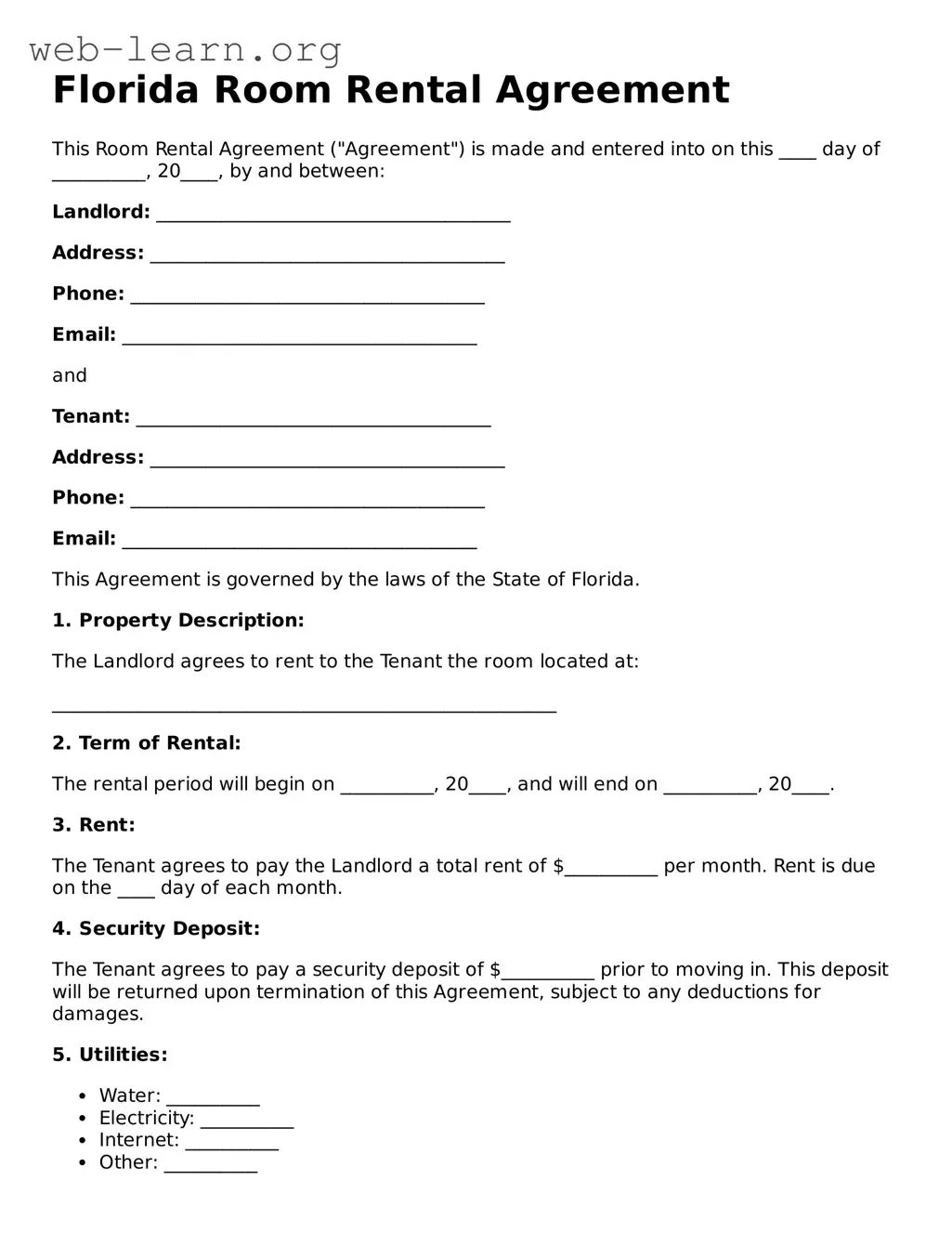
When renting a room in Florida, having a clear and comprehensive Room Rental Agreement is essential for both landlords and tenants. This agreement serves as a legal document that outlines the rights and responsibilities of each party, ensuring a smooth rental experience. Key aspects of the form include details about the rental property, such as its address and description, as well as the rental term, which specifies the duration of the lease. Additionally, the agreement addresses financial obligations, including the monthly rent amount, security deposit requirements, and any late fees that may apply. Important clauses regarding maintenance responsibilities, rules for property use, and procedures for terminating the agreement are also included. By clearly defining these elements, the Room Rental Agreement helps to prevent misunderstandings and fosters a respectful landlord-tenant relationship.
Florida Room Rental Agreement
This Room Rental Agreement ("Agreement") is made and entered into on this ____ day of __________, 20____, by and between:
Landlord: ______________________________________
Address: ______________________________________
Phone: ______________________________________
Email: ______________________________________
and
Tenant: ______________________________________
Address: ______________________________________
Phone: ______________________________________
Email: ______________________________________
This Agreement is governed by the laws of the State of Florida.
1. Property Description:
The Landlord agrees to rent to the Tenant the room located at:
______________________________________________________
2. Term of Rental:
The rental period will begin on __________, 20____, and will end on __________, 20____.
3. Rent:
The Tenant agrees to pay the Landlord a total rent of $__________ per month. Rent is due on the ____ day of each month.
4. Security Deposit:
The Tenant agrees to pay a security deposit of $__________ prior to moving in. This deposit will be returned upon termination of this Agreement, subject to any deductions for damages.
5. Utilities:
6. Use of Property:
The Tenant agrees to use the room solely for residential purposes and will not engage in any unlawful activities.
7. Maintenance and Repairs:
The Tenant will maintain the room in good condition and promptly report any needed repairs to the Landlord.
8. Termination:
Either party may terminate this Agreement by providing a written notice of ____ days.
9. Governing Law:
This Agreement shall be governed by the laws of the State of Florida.
10. Signatures:
By signing below, both parties agree to the terms outlined in this Agreement.
Landlord Signature: ___________________________ Date: ____________
Tenant Signature: ___________________________ Date: ____________
| Fact Name | Description |
|---|---|
| Purpose | The Florida Room Rental Agreement outlines the terms for renting a room in a residential property. |
| Governing Law | This agreement is governed by Florida state law, specifically Florida Statutes Chapter 83. |
| Parties Involved | The agreement includes the landlord and the tenant, clearly identifying both parties. |
| Rental Terms | It specifies the rental amount, payment due dates, and acceptable payment methods. |
| Duration | The agreement outlines the length of the rental period, including start and end dates. |
| Security Deposit | A section addresses the security deposit amount, conditions for its return, and any deductions. |
| Termination Clause | The document includes terms under which either party can terminate the agreement. |
Filling out the Florida Room Rental Agreement form is an important step in securing a rental space. Careful attention to detail will help ensure that all necessary information is accurately provided. Follow the steps below to complete the form correctly.
A Florida Room Rental Agreement is a legal document that outlines the terms and conditions under which a room is rented. This agreement serves to protect both the landlord and the tenant by clearly defining responsibilities, payment terms, and other essential details related to the rental arrangement.
The agreement should include several important elements:
The rental amount is typically determined by various factors, including the location of the property, the size and condition of the room, and current market rates. It is advisable for landlords to conduct research on comparable rentals in the area to set a competitive and fair price.
If a tenant fails to pay rent by the due date, the landlord may have the right to charge late fees as specified in the agreement. Additionally, the landlord may initiate eviction proceedings if the tenant continues to default on payments. It is essential for both parties to understand the consequences outlined in the agreement.
Yes, the agreement can be modified, but both the landlord and tenant must agree to the changes. It is advisable to document any modifications in writing and have both parties sign the updated agreement to ensure clarity and enforceability.
If a tenant encounters issues with the rental property, such as maintenance problems or safety concerns, they should promptly communicate these issues to the landlord. Most agreements include a clause outlining the procedure for reporting problems. Timely reporting can help resolve issues efficiently and maintain a positive landlord-tenant relationship.
Filling out the Florida Room Rental Agreement form can seem straightforward, but many people make common mistakes that could lead to misunderstandings or disputes later on. One frequent error is failing to include all required information. Each section of the form is important, and leaving out details like the rental amount or the rental period can create confusion.
Another mistake is not reading the entire agreement before signing. It’s crucial to understand what you are agreeing to, including any rules or obligations. Skipping this step might result in unexpected responsibilities, like maintenance duties or restrictions on guests.
People often forget to date the agreement. A date is essential for establishing when the rental period begins. Without it, both parties may have different interpretations of when the lease is effective, leading to potential disputes.
Some individuals also overlook the importance of signatures. Both the landlord and tenant must sign the agreement for it to be legally binding. An unsigned document may not hold up in court if issues arise later.
Another common error is not keeping a copy of the signed agreement. After filling out and signing the form, it’s wise to make copies for both parties. This ensures that everyone has access to the same information and can refer back to the agreement if necessary.
People sometimes make assumptions about verbal agreements. Relying on what was discussed verbally can lead to misunderstandings. It’s best to have everything documented in writing to avoid any confusion.
Lastly, failing to clarify any unclear terms can lead to issues down the line. If there are sections of the agreement that seem ambiguous, ask questions before signing. Clear communication helps prevent conflicts and ensures that both parties are on the same page.
When renting a room in Florida, several documents may accompany the Room Rental Agreement to ensure clarity and protect the rights of both parties. Understanding these forms can help streamline the rental process and provide essential protections.
Utilizing these documents alongside the Room Rental Agreement can foster a smoother rental experience. They help establish clear expectations and protect both landlords and tenants throughout the rental process.
When filling out the Florida Room Rental Agreement form, it's important to approach the task with care. Here’s a list of things you should and shouldn’t do to ensure a smooth process.
By following these guidelines, you can help ensure that your experience with the Room Rental Agreement is positive and hassle-free.
When dealing with the Florida Room Rental Agreement form, several misconceptions can arise. Understanding these misconceptions can help both renters and landlords navigate the rental process more smoothly. Here are seven common misunderstandings:
This is not true. Each rental agreement can be tailored to fit the specific needs of the landlord and tenant. Differences in terms, conditions, and rules can vary significantly from one agreement to another.
Many people believe that a verbal agreement is enough to establish a rental contract. However, having a written agreement provides clarity and legal protection for both parties.
Both landlords and tenants should fully understand the terms of the rental agreement. Each party has rights and responsibilities that must be acknowledged and respected.
While some landlords may choose not to require a deposit, many do. A deposit is often a standard practice to protect the property and ensure that any potential damages are covered.
While most fees should be clearly outlined in the agreement, some additional charges may arise later. It is important for tenants to ask questions and clarify any uncertainties before signing.
Changes to the rental agreement typically require mutual consent. Both parties must agree to any modifications, and these changes should be documented in writing.
Many people think that once they sign the agreement, they cannot negotiate any terms. In reality, negotiations can occur before signing and may even be revisited if both parties agree.
By addressing these misconceptions, both renters and landlords can foster a more transparent and fair rental relationship. Always take the time to read and understand the rental agreement fully before signing.
When filling out and using the Florida Room Rental Agreement form, several important aspects should be considered. Below are key takeaways to ensure a smooth process.
Room Lease Template - It can help prevent misunderstandings by clearly stating expectations.
Room Rental Agreement Arizona - The document may state the conditions for renewing the lease.
Renting Room Lease Agreement - It outlines the notice period required for terminating the rental agreement.