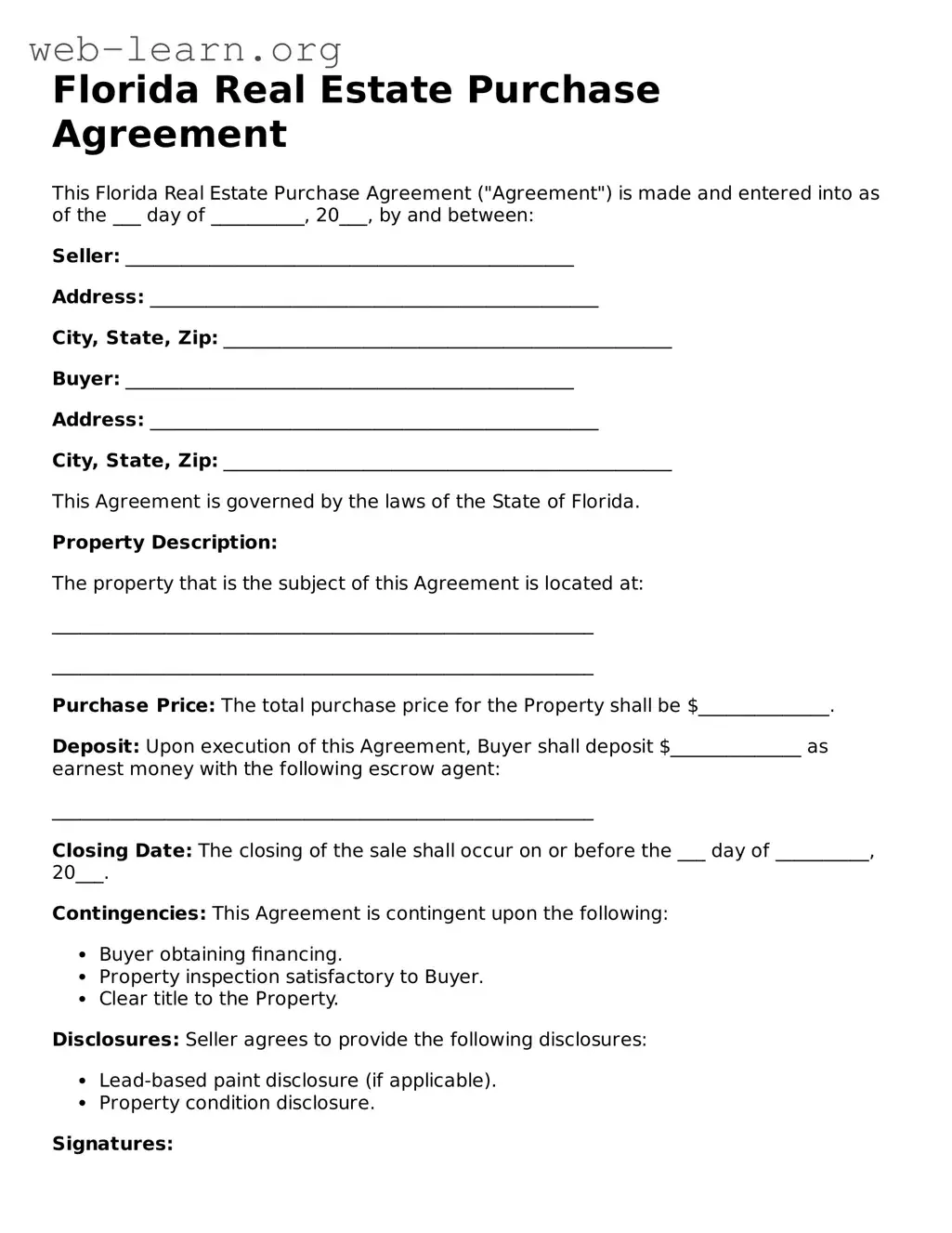
The Florida Real Estate Purchase Agreement is a crucial document that serves as the foundation for any real estate transaction in the state. This form outlines the terms and conditions under which a buyer agrees to purchase a property from a seller. Key components of the agreement include the purchase price, earnest money deposit, and closing date, all of which establish the financial framework for the sale. Additionally, the form addresses contingencies that may affect the transaction, such as financing, inspections, and the sale of the buyer's current home. It also specifies the responsibilities of both parties, ensuring that buyers and sellers understand their obligations throughout the process. With provisions for disclosures, warranties, and potential remedies in case of disputes, this agreement provides a comprehensive structure that protects the interests of all involved. By adhering to the guidelines set forth in this form, both buyers and sellers can navigate the complexities of real estate transactions with greater confidence and clarity.
Florida Real Estate Purchase Agreement
This Florida Real Estate Purchase Agreement ("Agreement") is made and entered into as of the ___ day of __________, 20___, by and between:
Seller: ________________________________________________
Address: ________________________________________________
City, State, Zip: ________________________________________________
Buyer: ________________________________________________
Address: ________________________________________________
City, State, Zip: ________________________________________________
This Agreement is governed by the laws of the State of Florida.
Property Description:
The property that is the subject of this Agreement is located at:
__________________________________________________________
__________________________________________________________
Purchase Price: The total purchase price for the Property shall be $______________.
Deposit: Upon execution of this Agreement, Buyer shall deposit $______________ as earnest money with the following escrow agent:
__________________________________________________________
Closing Date: The closing of the sale shall occur on or before the ___ day of __________, 20___.
Contingencies: This Agreement is contingent upon the following:
Disclosures: Seller agrees to provide the following disclosures:
Signatures:
In witness whereof, the parties have executed this Agreement as of the date first above written.
Seller Signature: _______________________________ Date: _______________
Buyer Signature: _______________________________ Date: _______________
| Fact Name | Details |
|---|---|
| Purpose | The Florida Real Estate Purchase Agreement is designed to outline the terms and conditions under which a buyer agrees to purchase real estate from a seller. |
| Key Components | This agreement typically includes details such as the purchase price, closing date, contingencies, and the legal description of the property. |
| Governing Law | The agreement is governed by the laws of the State of Florida, ensuring that all transactions comply with state regulations. |
| Importance of Signatures | Both parties must sign the agreement for it to be legally binding, reflecting their mutual consent to the terms laid out in the document. |
Once you have your Florida Real Estate Purchase Agreement form in hand, it's time to fill it out carefully. This document will outline the terms of your real estate transaction. Ensuring that all sections are completed accurately is crucial for a smooth process ahead.
What is the Florida Real Estate Purchase Agreement?
The Florida Real Estate Purchase Agreement is a legal document used to outline the terms and conditions under which a property is bought and sold in Florida. This agreement details the obligations of both the buyer and the seller, including the purchase price, financing terms, contingencies, and closing dates. It serves as a binding contract once both parties sign it, ensuring that everyone understands their rights and responsibilities throughout the transaction.
What key elements should be included in the agreement?
Several essential components should be present in the Florida Real Estate Purchase Agreement:
Can the agreement be modified after it is signed?
Yes, the Florida Real Estate Purchase Agreement can be modified after it is signed, but both parties must agree to any changes. It's important to document any amendments in writing and have both parties sign them. This ensures clarity and prevents misunderstandings later on. Verbal agreements are generally not enforceable, so written documentation is crucial.
What happens if one party does not fulfill their obligations?
If one party fails to meet their obligations as outlined in the Florida Real Estate Purchase Agreement, the other party may have legal recourse. The non-breaching party can seek to enforce the agreement, which may involve pursuing damages or specific performance (forcing the other party to fulfill their obligations). It’s advisable to consult with a legal professional to understand the options available and the best course of action in such situations.
Completing the Florida Real Estate Purchase Agreement form is a critical step in the home-buying process. However, many individuals make common mistakes that can lead to complications down the road. Awareness of these pitfalls can help ensure a smoother transaction.
One frequent error is incomplete information. Buyers often neglect to fill out all required fields, such as the buyer's and seller's full names or the property address. Omitting essential details can delay the closing process or even jeopardize the agreement. It is vital to double-check that every section is filled out accurately.
Another mistake involves the misunderstanding of contingencies. Buyers may not fully grasp the implications of contingencies such as financing or inspection. Failing to specify these conditions can lead to misunderstandings later. Clear communication about what is expected can prevent frustration and potential disputes.
Many individuals also overlook the importance of dates. Missing deadlines for contingencies, such as the inspection period or financing approval, can result in losing the right to back out of the deal. It is crucial to keep track of all important dates and ensure they are clearly stated in the agreement.
Additionally, buyers sometimes neglect to consult professionals before signing the agreement. Relying solely on personal research or advice from friends can lead to mistakes. Engaging with a real estate agent or attorney can provide valuable insights and help navigate complex terms, ensuring that the buyer's interests are protected.
Lastly, failing to review the terms thoroughly can lead to unexpected surprises. Buyers may skim through the document without fully understanding the implications of specific clauses. Taking the time to read and comprehend each section can prevent future disputes and ensure that all parties are on the same page.
When entering into a real estate transaction in Florida, several key documents often accompany the Florida Real Estate Purchase Agreement. Each of these forms serves a specific purpose and helps ensure a smooth transaction. Below is a list of commonly used documents.
Understanding these documents can help facilitate a successful real estate transaction. Each form plays a vital role in protecting the interests of both buyers and sellers throughout the process.
The Real Estate Purchase Agreement (REPA) is a crucial document in real estate transactions. It shares similarities with several other legal documents, each serving specific purposes in property dealings. Below are eight documents that are similar to the REPA, along with a brief explanation of their similarities:
Understanding these documents can enhance awareness of the real estate process, ensuring a smoother transaction for all parties involved.
When filling out the Florida Real Estate Purchase Agreement form, it is crucial to approach the task with care and attention to detail. Below is a list of important do's and don'ts to consider.
By following these guidelines, you can help ensure a smoother transaction process. Attention to detail can make a significant difference in the outcome of your real estate dealings.
Understanding the Florida Real Estate Purchase Agreement form is crucial for anyone involved in real estate transactions in the state. However, several misconceptions can lead to confusion. Below are ten common misconceptions about this form, along with clarifications.
By clarifying these misconceptions, buyers and sellers can approach the Florida Real Estate Purchase Agreement with a better understanding, leading to smoother transactions.
When filling out and using the Florida Real Estate Purchase Agreement form, keep these key takeaways in mind:
By following these takeaways, you can navigate the Florida Real Estate Purchase Agreement more effectively.
For Sale by Owner Purchase Agreement Pdf Michigan - Real estate purchase agreements can vary significantly by state, reflecting local laws and customs.
Agreement of Sale Hawaii - Includes a section on how to handle changes in the buyer's financial situation.
Contract of Sale Real Estate - The agreement may include timelines for various stages of the transaction.