In Florida, a prenuptial agreement serves as a vital tool for couples planning to marry, allowing them to outline their financial rights and responsibilities before entering into matrimony. This legally binding document can address various important aspects, including the division of property, spousal support, and the management of debts. Couples can specify how assets acquired during the marriage will be treated, ensuring clarity and reducing potential conflicts in the event of a divorce. Additionally, a well-crafted prenuptial agreement can protect family inheritances and business interests, providing peace of mind for both parties. It is essential for individuals to approach this agreement with transparency and mutual consent, as both partners must fully disclose their financial situations for the agreement to be enforceable. By understanding the major components and implications of a prenuptial agreement, couples can make informed decisions that support their future together.
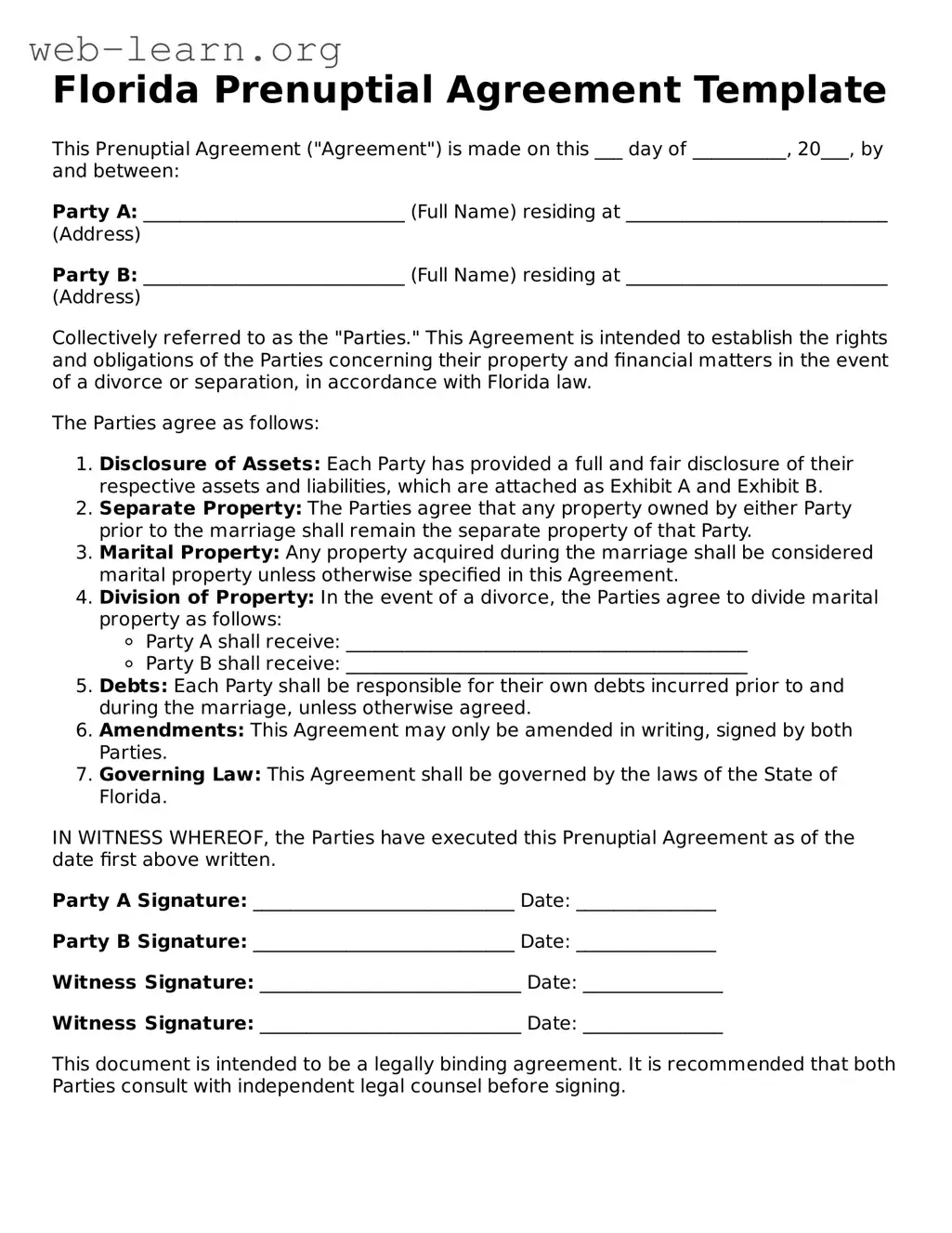
Florida Prenuptial Agreement Template
This Prenuptial Agreement ("Agreement") is made on this ___ day of __________, 20___, by and between:
Party A: ____________________________ (Full Name) residing at ____________________________ (Address)
Party B: ____________________________ (Full Name) residing at ____________________________ (Address)
Collectively referred to as the "Parties." This Agreement is intended to establish the rights and obligations of the Parties concerning their property and financial matters in the event of a divorce or separation, in accordance with Florida law.
The Parties agree as follows:
IN WITNESS WHEREOF, the Parties have executed this Prenuptial Agreement as of the date first above written.
Party A Signature: ____________________________ Date: _______________
Party B Signature: ____________________________ Date: _______________
Witness Signature: ____________________________ Date: _______________
Witness Signature: ____________________________ Date: _______________
This document is intended to be a legally binding agreement. It is recommended that both Parties consult with independent legal counsel before signing.
| Fact Name | Description |
|---|---|
| Definition | A prenuptial agreement in Florida is a contract entered into by two individuals before marriage, outlining the division of assets and responsibilities in the event of divorce or separation. |
| Governing Laws | Florida Statutes Chapter 61 governs prenuptial agreements, specifically Section 61.079, which details the enforceability and requirements of such agreements. |
| Requirements | For a prenuptial agreement to be valid in Florida, it must be in writing and signed by both parties. Full disclosure of assets and liabilities is also recommended. |
| Enforceability | Florida courts will enforce a prenuptial agreement unless it is found to be unconscionable or was entered into under duress, fraud, or without proper disclosure. |
| Modification | A prenuptial agreement can be modified or revoked after marriage, provided that any changes are made in writing and signed by both parties. |
Filling out a Florida Prenuptial Agreement form is a straightforward process that requires careful attention to detail. Once you have gathered the necessary information, you can proceed to fill out the form. Follow the steps below to ensure that you complete the form accurately.
After completing the form, consider consulting with a legal professional to ensure that everything is in order. This step can provide additional peace of mind and help address any questions you may have.
A prenuptial agreement, often referred to as a "prenup," is a legal contract entered into by two individuals before they get married. In Florida, this agreement outlines how assets and debts will be divided in the event of a divorce or separation. It can also address issues such as spousal support and inheritance rights.
For a prenuptial agreement to be valid in Florida, it must meet certain criteria:
Additionally, it is advisable for each party to have independent legal representation to ensure that their interests are protected.
Yes, a prenuptial agreement can be modified or revoked after marriage. To do this, both parties must agree to the changes and sign a new written document. It is important to follow the same formalities as the original agreement to ensure the modifications are enforceable.
If a couple does not have a prenuptial agreement in Florida, the state’s laws regarding the division of property and debts will apply in the event of a divorce. This means that assets acquired during the marriage will typically be considered marital property and divided equitably. Without a prenup, couples may have less control over how their assets are distributed.
Filling out a Florida Prenuptial Agreement form can be a straightforward process, but many individuals make common mistakes that can lead to complications down the line. One of the most frequent errors is failing to fully disclose assets and debts. Transparency is crucial in any prenuptial agreement. If one party withholds information about their financial situation, it could render the agreement unenforceable. Always ensure that both parties provide a complete and honest account of their finances.
Another mistake often seen is neglecting to seek independent legal advice. Both parties should have their own attorneys review the agreement. This helps ensure that everyone understands their rights and obligations. Without this step, one party may feel pressured into signing an agreement that does not serve their best interests.
Additionally, people sometimes overlook the importance of including specific terms regarding property division and spousal support. A prenuptial agreement should clearly outline how assets will be divided in the event of a divorce. Vague language can lead to misunderstandings and disputes later. Clearly defined terms help prevent confusion and protect both parties.
Timing is also a critical factor. Some individuals make the mistake of waiting until just before the wedding to finalize their prenuptial agreement. This can create a sense of urgency that may lead to rushed decisions or inadequate review. It’s advisable to start discussions and drafting well in advance of the wedding date to allow ample time for consideration and negotiation.
Finally, ignoring state laws and requirements can jeopardize the validity of the agreement. Florida has specific regulations governing prenuptial agreements, including the need for both parties to sign the document voluntarily. Failing to adhere to these legal standards can result in the agreement being challenged in court. Always ensure that the agreement complies with Florida law to safeguard its enforceability.
A Florida Prenuptial Agreement is an important document for couples planning to marry. It outlines how assets and debts will be handled in the event of divorce or separation. Along with this agreement, several other forms and documents may be beneficial to consider. Each serves a unique purpose in ensuring clarity and protection for both parties.
Considering these documents alongside a Florida Prenuptial Agreement can provide a comprehensive approach to financial and personal planning. Each form plays a vital role in protecting individual interests and ensuring clarity in relationships.
When preparing to fill out a Florida Prenuptial Agreement form, it’s essential to approach the task with care and consideration. Here’s a list of things you should and shouldn't do to ensure the process goes smoothly.
Following these guidelines will help create a fair and enforceable prenuptial agreement that protects both parties' interests.
Understanding prenuptial agreements is crucial for couples considering marriage in Florida. Here are five common misconceptions about the Florida Prenuptial Agreement form:
This is a widespread belief, but prenuptial agreements can benefit anyone. They help clarify financial responsibilities and protect individual assets, regardless of wealth.
Many people think that prenuptial agreements are set in stone. However, couples can modify their agreements at any time with mutual consent and proper documentation.
This misconception is false. As long as the agreement is fair, voluntarily signed, and meets legal requirements, it is enforceable in Florida courts.
While financial issues are a primary focus, prenuptial agreements can also address other aspects, such as property division and debt responsibility.
Many believe that signing a prenuptial agreement signals a lack of commitment. In reality, it can demonstrate a proactive approach to managing finances and protecting both parties.
Filling out and using the Florida Prenuptial Agreement form is a significant step for couples considering marriage. Here are some key takeaways to keep in mind:
Colorado Prenup - A prenuptial agreement can serve as a tool for financial education and planning.
Louisiana Prenup - This document can clarify expectations regarding financial contributions to the household.
California Prenup - This form can help couples establish a financial roadmap for their future together.