When it comes to managing your affairs in Florida, the Power of Attorney (POA) form serves as a crucial tool that grants someone you trust the authority to act on your behalf. This legal document can cover a wide range of responsibilities, from handling financial matters to making medical decisions, depending on how it is structured. In Florida, you can create a durable Power of Attorney, which remains effective even if you become incapacitated, or a limited Power of Attorney, which grants specific powers for a designated period. Understanding the nuances of this form is essential, as it not only allows you to choose your agent but also outlines the scope of their authority. Properly executed, a Florida Power of Attorney can provide peace of mind, ensuring that your wishes are respected and your affairs are managed according to your preferences. Whether you are planning for the future or need immediate assistance, knowing how to navigate the Power of Attorney form can empower you to make informed decisions about your legal and financial well-being.
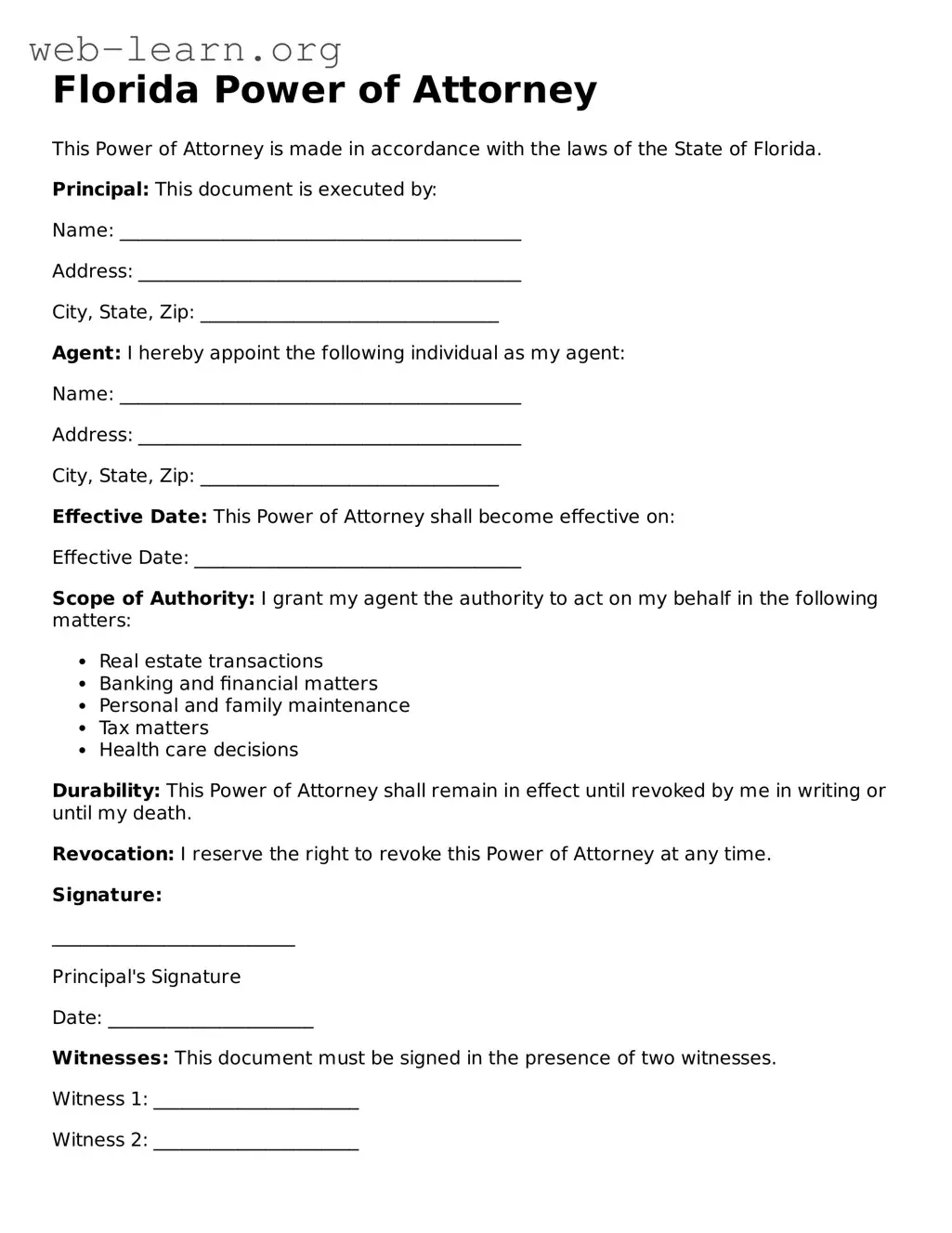
Florida Power of Attorney
This Power of Attorney is made in accordance with the laws of the State of Florida.
Principal: This document is executed by:
Name: ___________________________________________
Address: _________________________________________
City, State, Zip: ________________________________
Agent: I hereby appoint the following individual as my agent:
Name: ___________________________________________
Address: _________________________________________
City, State, Zip: ________________________________
Effective Date: This Power of Attorney shall become effective on:
Effective Date: ___________________________________
Scope of Authority: I grant my agent the authority to act on my behalf in the following matters:
Durability: This Power of Attorney shall remain in effect until revoked by me in writing or until my death.
Revocation: I reserve the right to revoke this Power of Attorney at any time.
Signature:
__________________________
Principal's Signature
Date: ______________________
Witnesses: This document must be signed in the presence of two witnesses.
Witness 1: ______________________
Witness 2: ______________________
Notary Acknowledgment:
State of Florida
County of ______________________
On this _____ day of __________, 20__, before me, a Notary Public, personally appeared:
_____________________________ (Principal's Name)
and acknowledged that he/she executed this Power of Attorney for the purposes therein expressed.
______________________________
Notary Public Signature
My Commission Expires: ____________
| Fact Name | Description |
|---|---|
| Definition | A Florida Power of Attorney form allows an individual to designate another person to make decisions on their behalf regarding financial and legal matters. |
| Governing Law | This form is governed by Florida Statutes, Chapter 709, which outlines the rules and requirements for powers of attorney in the state. |
| Durability | A Florida Power of Attorney can be durable, meaning it remains effective even if the principal becomes incapacitated, unless specified otherwise in the document. |
| Revocation | The principal can revoke the Power of Attorney at any time, as long as they are mentally competent to do so. |
| Notarization Requirement | For a Florida Power of Attorney to be valid, it must be signed in the presence of a notary public and, if applicable, two witnesses. |
Filling out the Florida Power of Attorney form is an important step in designating someone to handle your financial or legal matters. Once completed, this document will allow your chosen agent to act on your behalf in specified areas. Follow these steps to ensure you fill out the form correctly.
A Florida Power of Attorney (POA) is a legal document that allows one person (the principal) to grant another person (the agent or attorney-in-fact) the authority to make decisions on their behalf. This can include financial matters, healthcare decisions, or other personal affairs. The POA can be broad or limited, depending on the principal's wishes.
In Florida, there are several types of Power of Attorney:
To create a Power of Attorney in Florida, follow these steps:
Yes, you can revoke a Power of Attorney at any time as long as you are mentally competent. To do this, you must create a written revocation document, sign it, and notify your agent and any institutions or individuals who may have relied on the original POA. It's advisable to keep a copy of the revocation for your records.
If your designated agent is unable or unwilling to act, the Power of Attorney will typically specify what happens next. You may have named an alternate agent in the document. If not, you may need to create a new Power of Attorney or seek legal assistance to appoint a new agent.
Filling out a Florida Power of Attorney form can be a straightforward process, but many people make mistakes that could lead to complications down the line. One common mistake is not specifying the powers granted to the agent. It’s essential to clearly outline what your agent can and cannot do on your behalf. Without this clarity, your agent may not have the authority needed to act in your best interest.
Another frequent error is failing to sign the document correctly. In Florida, your signature must be witnessed by two individuals, and these witnesses cannot be your agent. Not following this requirement can render the document invalid. Additionally, some people forget to date the form. A missing date can lead to confusion about when the powers take effect.
Many individuals overlook the importance of choosing a reliable agent. Selecting someone who is not trustworthy can lead to misuse of the powers granted. It’s crucial to choose someone who understands your wishes and will act in your best interests. Also, not considering a backup agent can be a significant oversight. If your primary agent is unable or unwilling to serve, having a backup ensures that your wishes are still honored.
Some people make the mistake of not reviewing the form thoroughly before submitting it. Even minor errors can lead to delays or issues later on. It’s wise to double-check all information for accuracy. Furthermore, failing to inform your agent about their responsibilities can create misunderstandings. Make sure they are aware of their role and your expectations.
Another mistake is not keeping a copy of the completed form. It’s essential to have a record of the Power of Attorney for your reference and to provide to financial institutions or healthcare providers when needed. Lastly, neglecting to update the document when circumstances change can lead to problems. Life events like marriage, divorce, or the death of your agent may require you to revise your Power of Attorney.
By avoiding these common mistakes, you can ensure that your Power of Attorney is set up correctly and will serve its intended purpose when needed.
When creating a Power of Attorney in Florida, it is often beneficial to consider additional forms and documents that can complement your primary document. These forms can help clarify your intentions, provide additional authority, or address specific situations. Below is a list of common documents that are frequently used alongside the Florida Power of Attorney form.
Utilizing these forms and documents in conjunction with your Florida Power of Attorney can provide clarity and ensure that your wishes are respected. It is advisable to consult with a professional to ensure that all documents are correctly prepared and executed according to your needs.
When filling out the Florida Power of Attorney form, it is essential to follow certain guidelines to ensure the document is valid and effective. Below is a list of things you should and shouldn't do.
Many people have misunderstandings about the Florida Power of Attorney form. Here are seven common misconceptions, along with clarifications for each.
This is not true. Power of Attorney forms can vary by state and purpose. Florida has specific requirements and forms tailored to its laws.
While many people use it for financial decisions, a Power of Attorney can also cover health care decisions. It depends on how the document is set up.
This is a common fear, but it’s not accurate. You can still make your own decisions unless you specify otherwise in the document.
Not necessarily. You can revoke or change a Power of Attorney at any time, as long as you are mentally competent.
While it's advisable to consult a lawyer, you can create a Power of Attorney on your own using the proper forms, as long as you meet state requirements.
Your agent has a fiduciary duty to act in your best interest. They cannot act outside the authority you have given them in the document.
This is a misconception. Anyone can benefit from having a Power of Attorney, especially in situations where they may become incapacitated or unavailable.
Understanding these misconceptions can help you make informed decisions about using a Power of Attorney in Florida.
Filling out and using the Florida Power of Attorney form is an important step in planning for the future. Here are some key takeaways to keep in mind:
Understanding these key points can help you navigate the process with confidence. Always consider seeking advice from a qualified professional if you have questions or concerns.
How to Get Power of Attorney in Idaho - It can be a vital tool for elderly individuals or those with health concerns.
Indiana Power of Attorney Pdf - This document can facilitate smoother transitions in estate planning.
Arkansas Power of Attorney - Consider consulting a professional for guidance on this form.
Poa Notarized - A Power of Attorney can be customized to fit your specific needs and preferences.