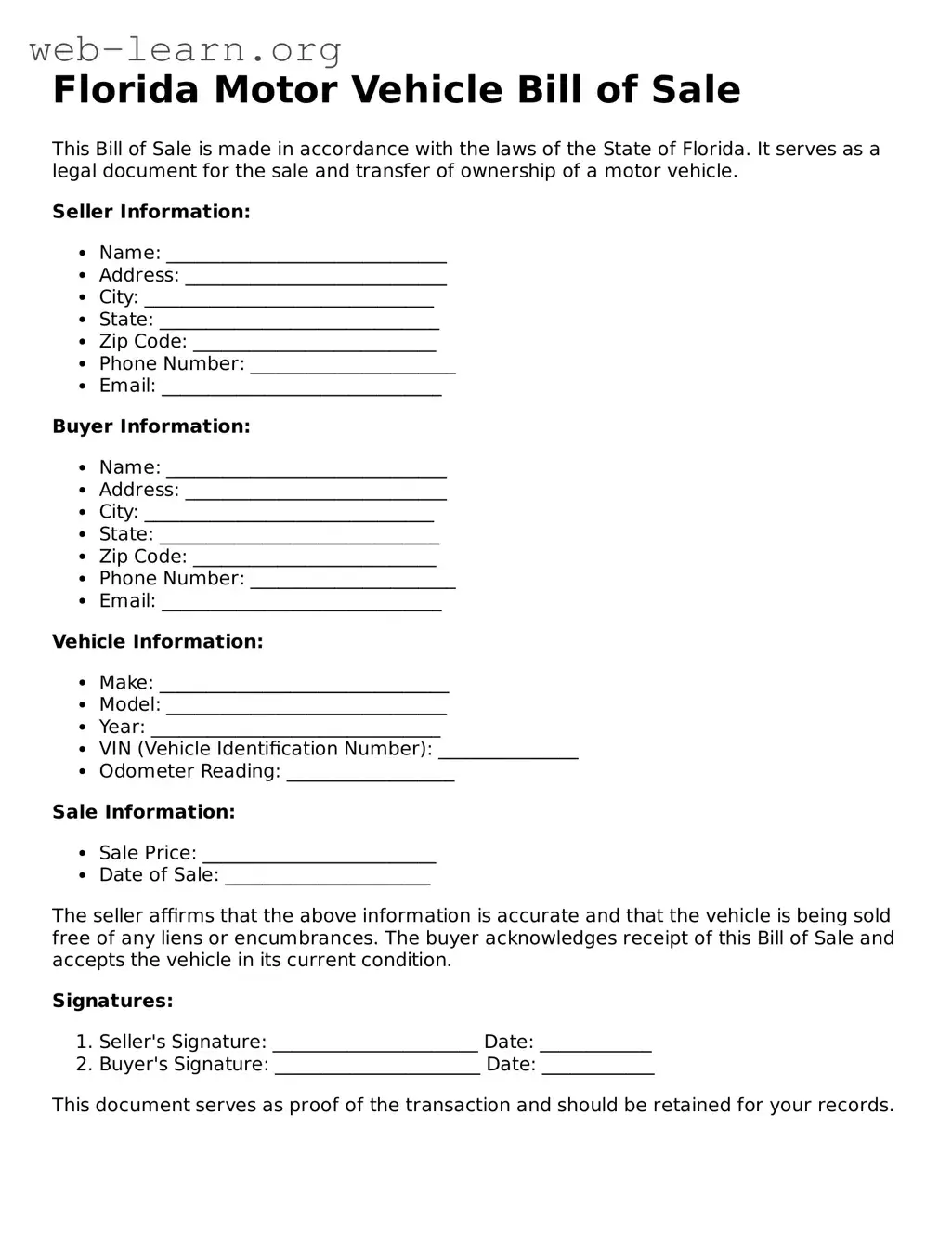
The Florida Motor Vehicle Bill of Sale form is an essential document for anyone involved in the buying or selling of a vehicle in the state of Florida. This form serves as a legal record of the transaction, providing crucial details such as the vehicle's make, model, year, and Vehicle Identification Number (VIN). It also includes information about the buyer and seller, ensuring that both parties are clearly identified. In addition to outlining the sale price, the form may address any warranties or conditions related to the vehicle's condition at the time of sale. By completing this form, both the seller and buyer can protect their interests and ensure a smooth transfer of ownership. Understanding the importance of this document can help prevent future disputes and simplify the registration process with the Florida Department of Highway Safety and Motor Vehicles. Whether you're a first-time buyer or an experienced seller, having a properly filled-out Bill of Sale is a vital step in the vehicle transaction process.
Florida Motor Vehicle Bill of Sale
This Bill of Sale is made in accordance with the laws of the State of Florida. It serves as a legal document for the sale and transfer of ownership of a motor vehicle.
Seller Information:
Buyer Information:
Vehicle Information:
Sale Information:
The seller affirms that the above information is accurate and that the vehicle is being sold free of any liens or encumbrances. The buyer acknowledges receipt of this Bill of Sale and accepts the vehicle in its current condition.
Signatures:
This document serves as proof of the transaction and should be retained for your records.
| Fact Name | Details |
|---|---|
| Purpose | The Florida Motor Vehicle Bill of Sale form is used to document the sale of a motor vehicle between a buyer and a seller. |
| Governing Law | This form is governed by Florida Statutes, specifically Chapter 319, which pertains to the sale and transfer of motor vehicles. |
| Required Information | Essential details include the vehicle's make, model, year, VIN, sale price, and the names and addresses of both the buyer and seller. |
| Notarization | While notarization is not mandatory, it is recommended to enhance the document's validity and provide additional proof of the transaction. |
Once you have the Florida Motor Vehicle Bill of Sale form, you’ll need to complete it accurately to ensure a smooth transaction. Follow these steps carefully to fill out the form correctly.
After completing the form, keep a copy for your records. The buyer will need this document for registration purposes. Make sure both parties understand their responsibilities regarding the vehicle transfer.
The Florida Motor Vehicle Bill of Sale is a legal document used to transfer ownership of a motor vehicle from one party to another. This form includes essential details such as the vehicle's make, model, year, Vehicle Identification Number (VIN), and the names and addresses of both the seller and buyer. It serves as proof of the transaction and can be important for registration and tax purposes.
While a Bill of Sale is not legally required for every vehicle sale in Florida, it is highly recommended. Having a Bill of Sale protects both the buyer and seller by documenting the terms of the sale. It can also be useful if there are disputes or if the buyer needs to register the vehicle with the Florida Department of Highway Safety and Motor Vehicles.
A comprehensive Bill of Sale should include the following information:
Including this information ensures clarity and can help prevent misunderstandings in the future.
Notarization is not a requirement for a Bill of Sale in Florida. However, having the document notarized can add an extra layer of authenticity and may be beneficial if there are any disputes later on. If you choose to have it notarized, both the buyer and seller should be present to sign the document in front of the notary.
When completing the Florida Motor Vehicle Bill of Sale form, individuals often overlook important details that can lead to complications down the line. One common mistake is failing to provide accurate vehicle information. This includes the Vehicle Identification Number (VIN), make, model, and year. If any of these details are incorrect, it can create confusion regarding ownership and registration.
Another frequent error involves the omission of the seller's and buyer's information. It’s crucial to include full names, addresses, and signatures. Without this information, the document may not be considered valid, which could lead to disputes over ownership. Always ensure that both parties are clearly identified to avoid any potential misunderstandings.
People sometimes neglect to indicate the sale price of the vehicle. This figure is not just a formality; it establishes the transaction's legitimacy. If the sale price is missing, it could raise questions during the registration process or when calculating taxes. Always double-check that the amount is clearly stated.
Additionally, some individuals forget to date the form. The date of the sale is essential for legal purposes, particularly when determining the timeline for ownership transfer and tax obligations. Without a date, it may be difficult to establish when the transaction took place, which can lead to complications later.
Another mistake involves not having the document notarized when required. While notarization isn’t mandatory for all sales, it can provide an extra layer of protection for both the buyer and seller. If the sale is significant or if either party is concerned about potential disputes, having a notary witness the signatures can be beneficial.
Finally, individuals may fail to keep a copy of the completed Bill of Sale. This document serves as proof of the transaction and is important for both parties. If any issues arise after the sale, having a copy can help clarify the terms and conditions agreed upon. Always make sure to retain a copy for your records.
When buying or selling a vehicle in Florida, several important documents accompany the Motor Vehicle Bill of Sale. These documents help ensure a smooth transaction and provide necessary information for both parties involved. Here are five commonly used forms and documents.
Having these documents prepared and properly filled out can help facilitate a successful vehicle transaction in Florida. Always keep copies of all paperwork for your records, as they may be needed for future reference or in case of disputes.
When filling out the Florida Motor Vehicle Bill of Sale form, it’s important to follow certain guidelines to ensure the process goes smoothly. Here’s a helpful list of things you should and shouldn’t do:
Following these tips will help ensure that your Bill of Sale is filled out correctly and efficiently.
Understanding the Florida Motor Vehicle Bill of Sale form is crucial for anyone buying or selling a vehicle in the state. However, several misconceptions can lead to confusion. Here’s a breakdown of six common misunderstandings:
Clarifying these misconceptions can help ensure a smooth transaction and protect your interests in the buying or selling process.
When filling out and using the Florida Motor Vehicle Bill of Sale form, consider the following key takeaways:
Idaho Bill of Sale Pdf - It may also include information about any included accessories or modifications to the vehicle.
Dmv Forms Colorado - The form can be obtained online or from local DMV offices to ensure compliance with state laws.
Ct Dmv Bill of Sale - It can also clarify the condition of the vehicle at the time of sale.