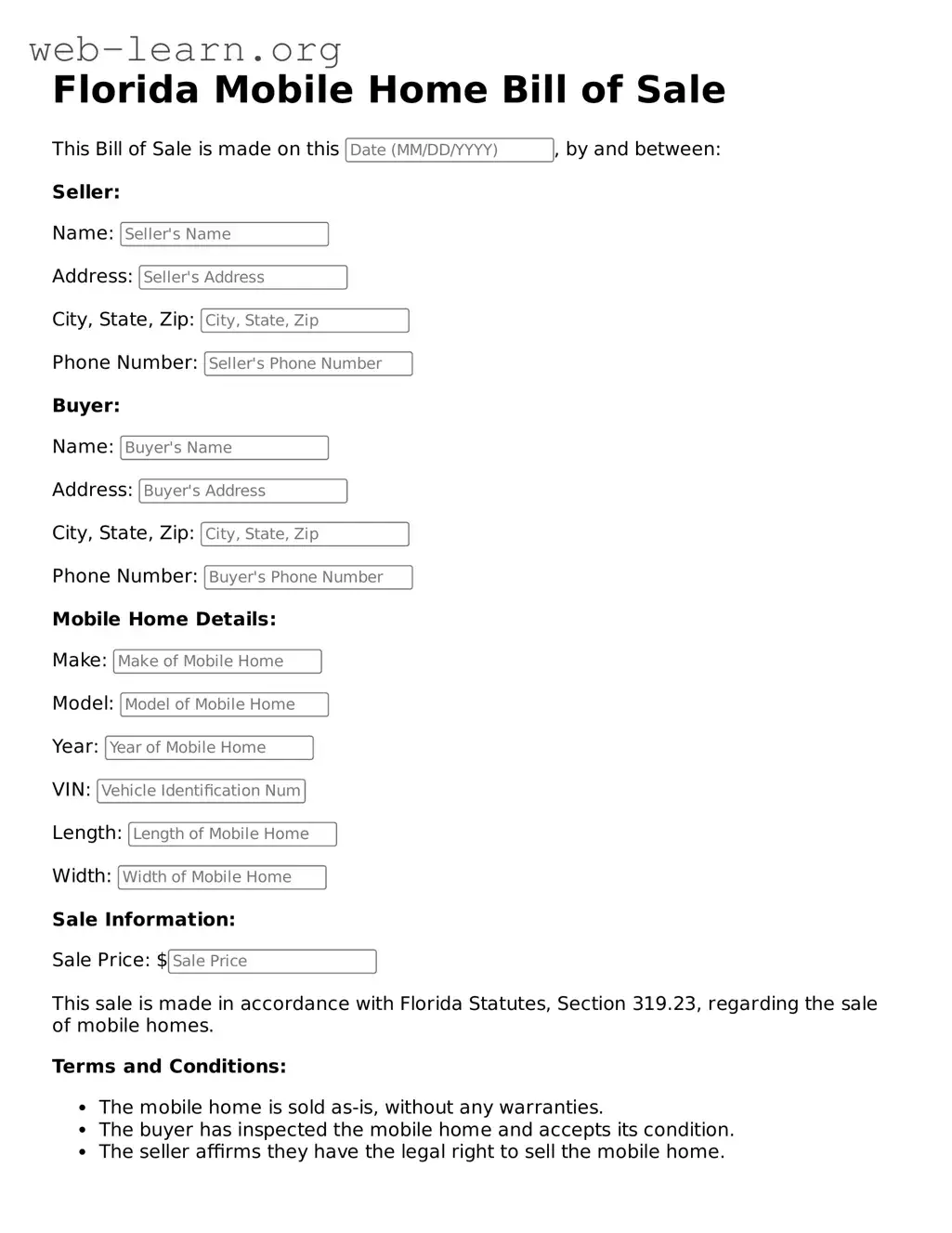
The Florida Mobile Home Bill of Sale form is a crucial document for anyone involved in the buying or selling of mobile homes in the state. This form serves as a legal record of the transaction, ensuring that both parties have a clear understanding of the sale terms. It typically includes essential details such as the names and addresses of the buyer and seller, a description of the mobile home being sold—including its make, model, and identification number—and the sale price. Additionally, the form may outline any warranties or conditions related to the sale, providing protection for both parties. By completing this document, sellers can transfer ownership legally, while buyers can secure their new investment with confidence. Understanding the components of this form is vital for a smooth transaction and helps prevent potential disputes down the line.
Florida Mobile Home Bill of Sale
This Bill of Sale is made on this , by and between:
Seller:
Name:
Address:
City, State, Zip:
Phone Number:
Buyer:
Name:
Address:
City, State, Zip:
Phone Number:
Mobile Home Details:
Make:
Model:
Year:
VIN:
Length:
Width:
Sale Information:
Sale Price: $
This sale is made in accordance with Florida Statutes, Section 319.23, regarding the sale of mobile homes.
Terms and Conditions:
Signatures:
Seller's Signature: ___________________________
Date:
Buyer's Signature: ___________________________
Date:
Both parties agree to the terms outlined in this Bill of Sale.
| Fact Name | Details |
|---|---|
| Purpose | The Florida Mobile Home Bill of Sale form is used to document the sale of a mobile home between a seller and a buyer. |
| Governing Law | This form is governed by Florida Statutes, specifically Chapter 319, which pertains to mobile homes and vehicle titles. |
| Identification | The form requires identification details of both the seller and the buyer, including names and addresses. |
| Mobile Home Description | A detailed description of the mobile home is necessary, including its make, model, year, and Vehicle Identification Number (VIN). |
| Purchase Price | The form must state the agreed-upon purchase price for the mobile home. |
| Signatures | Both the seller and the buyer must sign the form to validate the transaction. |
| Date of Sale | The date of the sale must be clearly indicated on the form to establish when the transaction took place. |
| Notarization | While notarization is not always required, it is recommended to enhance the legitimacy of the document. |
| Transfer of Title | The Bill of Sale is often used to facilitate the transfer of the title of the mobile home to the new owner. |
| Record Keeping | Both parties should keep a copy of the Bill of Sale for their records, which can be important for future reference. |
After obtaining the Florida Mobile Home Bill of Sale form, you will need to fill it out accurately to ensure a smooth transfer of ownership. This process is straightforward, and following the steps carefully will help you complete the form correctly.
Once you have completed the form, ensure that both parties keep a copy for their records. This document will serve as proof of the transaction and may be required for future reference.
What is a Florida Mobile Home Bill of Sale?
A Florida Mobile Home Bill of Sale is a legal document that records the transfer of ownership of a mobile home from one party to another. This form outlines important details about the transaction, such as the names of the buyer and seller, the mobile home’s identification details, and the sale price.
Why do I need a Bill of Sale for my mobile home?
A Bill of Sale serves as proof of the transaction. It protects both the buyer and seller by documenting the sale and ensuring that the buyer has clear ownership rights. This document can also be necessary for registration and titling purposes with the Florida Department of Highway Safety and Motor Vehicles.
What information is required on the Bill of Sale?
The following information is typically required:
Is the Bill of Sale required to be notarized?
While notarization is not strictly required for a Bill of Sale in Florida, having it notarized can provide an extra layer of protection. It verifies the identities of the parties involved and the authenticity of their signatures, which can be beneficial in case of disputes.
Can I use a generic Bill of Sale form?
While you can use a generic Bill of Sale form, it is advisable to use a form specifically designed for mobile homes in Florida. This ensures that all necessary information is included and complies with state laws, making the transfer process smoother.
Do I need to register the mobile home after the sale?
Yes, the new owner must register the mobile home with the Florida Department of Highway Safety and Motor Vehicles. This process typically requires the Bill of Sale, proof of identity, and possibly additional documentation, depending on the situation.
What if the mobile home is financed?
If the mobile home is financed, the lender may have specific requirements for the sale. It’s important to communicate with the lender to understand any obligations or restrictions that may apply before completing the sale.
Can I sell a mobile home without a title?
Selling a mobile home without a title can be complicated. In Florida, a title is usually required to prove ownership. If the title is lost, the seller must obtain a duplicate title from the Florida Department of Highway Safety and Motor Vehicles before proceeding with the sale.
What happens if there are issues after the sale?
If issues arise after the sale, such as undisclosed defects or disputes over ownership, the Bill of Sale can serve as evidence in resolving these matters. It is crucial to be honest and transparent during the sale to minimize potential conflicts.
Where can I obtain a Florida Mobile Home Bill of Sale form?
You can find a Florida Mobile Home Bill of Sale form online through various legal form websites, at local legal offices, or through the Florida Department of Highway Safety and Motor Vehicles. Ensure you choose a reliable source to get the most accurate and up-to-date form.
Filling out the Florida Mobile Home Bill of Sale form can seem straightforward, but many people stumble over common mistakes. One frequent error is not providing complete information about the mobile home. Buyers and sellers often forget to include the make, model, and year of the mobile home. This information is crucial for identifying the property and ensuring a smooth transaction.
Another common mistake involves the omission of the Vehicle Identification Number (VIN). The VIN serves as a unique identifier for the mobile home, much like a fingerprint. Without it, the sale may face complications, and future ownership disputes could arise.
People sometimes neglect to include the sale price. This figure is essential not only for the transaction but also for tax purposes. The absence of a clear sale price can lead to misunderstandings or legal issues down the line.
Additionally, signatures are often overlooked. Both the seller and the buyer must sign the form to validate the sale. Failing to obtain the necessary signatures can render the document ineffective, leaving both parties vulnerable.
Another mistake is not dating the form. A date indicates when the transaction took place, which is important for record-keeping and legal purposes. Without a date, it may be challenging to prove when the sale occurred, potentially complicating future transactions.
People also sometimes forget to provide their contact information. This oversight can create barriers if either party needs to reach the other after the sale. Including a phone number or email address is a simple way to ensure communication remains open.
Some individuals fail to check local regulations. Each county in Florida may have specific requirements regarding mobile home sales. Ignoring these regulations can lead to fines or complications that could have been easily avoided.
Finally, many people do not keep a copy of the completed Bill of Sale. Retaining a copy is essential for both parties as it serves as proof of the transaction. Without it, resolving any disputes that arise later can become significantly more challenging.
When transferring ownership of a mobile home in Florida, several forms and documents may accompany the Mobile Home Bill of Sale. Each document serves a specific purpose and helps ensure a smooth transaction. Below is a list of common forms that might be needed.
Having these documents prepared can facilitate a smoother transaction and help avoid potential complications during the sale of a mobile home in Florida. It's important to ensure that all paperwork is accurate and complete to protect the interests of both the buyer and the seller.
When filling out the Florida Mobile Home Bill of Sale form, it's essential to approach the task with care and attention to detail. Here’s a guide on what to do and what to avoid.
By following these guidelines, you can ensure a smooth and successful transaction when selling or purchasing a mobile home in Florida.
The Florida Mobile Home Bill of Sale form is an important document for anyone buying or selling a mobile home in the state. However, several misconceptions surround this form that can lead to confusion. Here are six common misunderstandings:
Understanding these misconceptions can help ensure a smoother transaction when dealing with mobile homes in Florida. Always seek accurate information to avoid pitfalls in the buying or selling process.
When filling out and using the Florida Mobile Home Bill of Sale form, it is essential to keep several key points in mind to ensure a smooth transaction.
By following these guidelines, you can help ensure that your mobile home transaction is conducted fairly and legally.
Bill of Sale Examples - Including a statement about the condition of the mobile home can protect the seller from future claims.
Selling a Car in Arkansas - It can also assist in verifying the legitimacy of the sale to third parties.
What Needs to Be on a Bill of Sale - This document can help protect both parties in the event of a legal issue.
Selling Car in Hawaii - The Mobile Home Bill of Sale can assist in tax assessments and valuations.