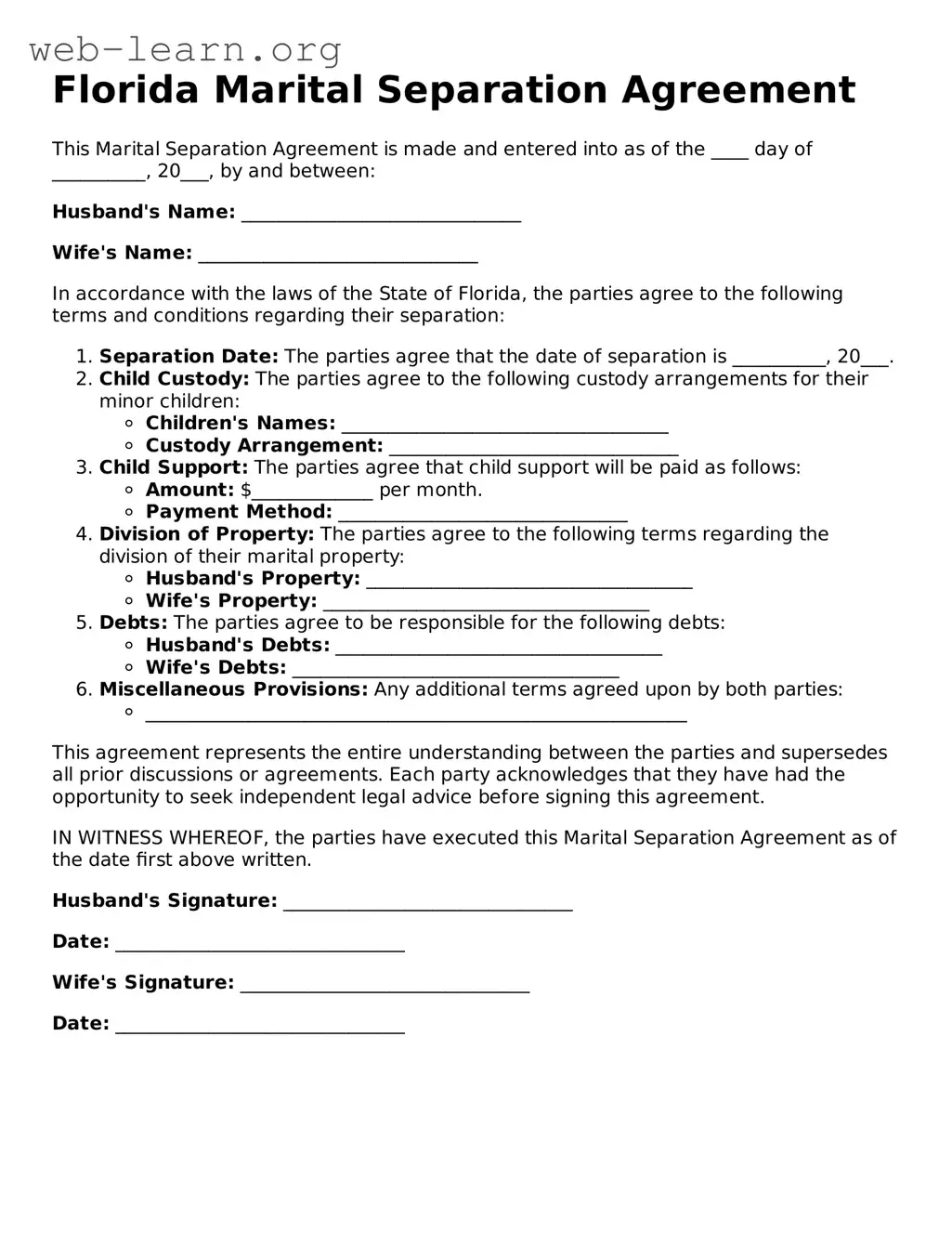
In the landscape of family law, the Florida Marital Separation Agreement form stands as a crucial document for couples contemplating a separation. This form serves as a comprehensive outline that addresses various aspects of a couple's life together, including the division of assets and debts, child custody arrangements, and spousal support obligations. It offers a framework for both parties to negotiate terms amicably, reducing the potential for conflict during what is often an emotionally charged time. By clearly delineating responsibilities and expectations, the agreement can help to ensure that both individuals have a mutual understanding of their rights and obligations moving forward. Additionally, this form can facilitate a smoother transition into divorce proceedings if the couple ultimately decides to take that step. Understanding the elements contained within the Marital Separation Agreement is essential for anyone navigating this process, as it lays the groundwork for future interactions and arrangements between the parties involved.
Florida Marital Separation Agreement
This Marital Separation Agreement is made and entered into as of the ____ day of __________, 20___, by and between:
Husband's Name: ______________________________
Wife's Name: ______________________________
In accordance with the laws of the State of Florida, the parties agree to the following terms and conditions regarding their separation:
This agreement represents the entire understanding between the parties and supersedes all prior discussions or agreements. Each party acknowledges that they have had the opportunity to seek independent legal advice before signing this agreement.
IN WITNESS WHEREOF, the parties have executed this Marital Separation Agreement as of the date first above written.
Husband's Signature: _______________________________
Date: _______________________________
Wife's Signature: _______________________________
Date: _______________________________
| Fact Name | Description |
|---|---|
| Definition | A Florida Marital Separation Agreement is a legal document that outlines the terms of separation between spouses. |
| Governing Law | The agreement is governed by Florida Statutes, specifically Chapter 61, which deals with dissolution of marriage and related matters. |
| Purpose | This agreement helps clarify the rights and responsibilities of each spouse during separation. |
| Property Division | It addresses how marital property and debts will be divided between the spouses. |
| Child Custody | If children are involved, the agreement outlines custody arrangements and visitation rights. |
| Spousal Support | The document may specify any alimony or spousal support payments that one spouse will make to the other. |
| Mutual Agreement | Both spouses must voluntarily agree to the terms outlined in the separation agreement. |
| Legal Enforceability | Once signed, the agreement can be enforced in court, making it a binding contract. |
| Modification | Changes to the agreement can be made, but both parties must consent to any modifications. |
| Consultation Recommended | It is advisable for each spouse to consult with a lawyer before signing the agreement to ensure their rights are protected. |
Completing the Florida Marital Separation Agreement form is an important step in the process of legally separating from a spouse. After filling out this form, both parties will have a clear understanding of their rights and responsibilities moving forward. It is advisable to review the completed agreement carefully and consider seeking legal advice to ensure all aspects are covered.
What is a Florida Marital Separation Agreement?
A Florida Marital Separation Agreement is a legal document that outlines the terms of a couple's separation. It addresses various aspects such as property division, child custody, visitation rights, and spousal support. This agreement is designed to clarify the responsibilities and rights of each party during the separation period.
Is a Marital Separation Agreement legally binding in Florida?
Yes, a Marital Separation Agreement is legally binding in Florida as long as both parties voluntarily sign the document. It is advisable for each party to seek independent legal counsel before signing to ensure that their rights are protected.
How does a Marital Separation Agreement differ from a divorce?
A Marital Separation Agreement is a temporary arrangement that allows couples to live separately while still legally married. In contrast, a divorce is the legal termination of a marriage. The separation agreement can be used to define terms until a divorce is finalized.
Can a Marital Separation Agreement be modified?
Yes, a Marital Separation Agreement can be modified if both parties agree to the changes. It is important to document any modifications in writing and have both parties sign the updated agreement to ensure it remains enforceable.
What should be included in a Marital Separation Agreement?
A comprehensive Marital Separation Agreement should include:
Do I need an attorney to create a Marital Separation Agreement?
While it is not legally required to have an attorney to create a Marital Separation Agreement, it is highly recommended. An attorney can help ensure that the agreement complies with Florida law and adequately protects your interests.
How is child custody determined in a Marital Separation Agreement?
Child custody arrangements in a Marital Separation Agreement are typically based on the best interests of the child. Parents should discuss and agree on custody and visitation schedules, taking into consideration the child's needs and the parents' work schedules.
What happens if one party violates the Marital Separation Agreement?
If one party violates the terms of the Marital Separation Agreement, the other party may seek legal recourse. This can include filing a motion in court to enforce the agreement or seeking damages for any losses incurred due to the violation.
Can a Marital Separation Agreement address future changes?
Yes, a Marital Separation Agreement can include provisions for future changes, such as adjustments to child support or custody arrangements as circumstances evolve. It is important to specify how these changes will be addressed in the agreement.
Is a Marital Separation Agreement necessary for all couples separating?
While not all couples are required to create a Marital Separation Agreement, it is highly beneficial. Having a clear agreement can help prevent misunderstandings and disputes, making the separation process smoother for both parties.
Filling out the Florida Marital Separation Agreement form can be a daunting task. Many individuals overlook critical details that can lead to complications down the line. One common mistake is failing to provide complete information about both parties. Each spouse’s full legal name, address, and other identifying details must be included. Omitting even one piece of information can create confusion and delay the process.
Another frequent error involves not clearly defining the terms of separation. Vague language can lead to misunderstandings regarding property division, child custody, and support obligations. It is essential to be specific about what each party is entitled to and responsible for. This clarity helps prevent disputes in the future.
People often neglect to consider the tax implications of their agreements. For instance, how alimony or child support is structured can significantly impact one’s tax situation. Consulting with a tax professional before finalizing the agreement can save both parties from unexpected financial burdens later.
Many individuals also fail to include a dispute resolution clause. Without this provision, any disagreements that arise after the agreement is signed may lead to costly and time-consuming litigation. Including a clear method for resolving disputes can provide a smoother path forward.
Another mistake is not updating the agreement after significant life changes. Events such as job loss, relocation, or changes in child custody arrangements can necessitate revisions. Regularly reviewing and updating the agreement ensures it remains relevant and effective.
Some people underestimate the importance of legal advice. While it may seem tempting to fill out the form without assistance, having a legal professional review the agreement can help identify potential issues and ensure that all legal requirements are met. This step can prevent future complications.
Additionally, individuals may overlook the need for both parties to sign the document. A Marital Separation Agreement is not legally binding unless both spouses have signed it. Failing to obtain both signatures can render the agreement invalid.
Lastly, many forget to keep copies of the signed agreement. Storing copies in a safe place is crucial. Both parties should have access to the document to avoid any confusion regarding the terms agreed upon.
A Florida Marital Separation Agreement is an important document for couples who decide to live apart while still legally married. Along with this agreement, several other forms and documents may be necessary to address various aspects of the separation. Below are some commonly used documents that often accompany the Marital Separation Agreement.
These documents help clarify expectations and responsibilities during a marital separation. Having them in place can lead to a smoother process and reduce potential conflicts in the future.
The Marital Separation Agreement form shares similarities with several other documents. Each of these documents serves to outline agreements and arrangements between parties, often in legal contexts. Below is a list of seven documents that are similar to the Marital Separation Agreement:
When completing the Florida Marital Separation Agreement form, it is essential to follow certain guidelines to ensure accuracy and completeness. Below are some important do's and don'ts to consider.
When considering a Florida Marital Separation Agreement, it is essential to address common misconceptions that may lead to confusion. Understanding the truth behind these misconceptions can help individuals make informed decisions during a challenging time.
This is not accurate. A marital separation agreement allows couples to live apart while remaining legally married. It outlines the terms of their separation, such as asset division and child custody, but it does not dissolve the marriage.
Many believe that these agreements lack legal enforceability. In reality, a properly drafted marital separation agreement can be enforceable in court, provided it meets specific legal standards.
Some individuals think that once an agreement is signed, it cannot be changed. However, couples can negotiate and amend their agreements as circumstances evolve, ensuring that the terms remain fair and relevant.
While a marital separation agreement can help manage responsibilities during separation, it does not replace the need for a divorce if one or both parties decide to end the marriage. A formal divorce process is still necessary to legally terminate the marriage.
Filling out and using the Florida Marital Separation Agreement form can be a crucial step for couples who are considering separation. Here are some key takeaways to keep in mind:
Taking these steps can help ensure that the separation process is smoother and more organized, allowing both parties to move forward with clarity and understanding.
How to File for Legal Separation in Louisiana - The agreement can help ensure that both parties are on the same page.
Arizona Legal Separation - It can specify visitation schedules and parenting responsibilities during the separation.
How to Legally Separate in Colorado - It serves as a formal record of the couple's decisions and intentions regarding their separation.
Grounds for Divorce in Idaho - It can also set guidelines for dating or new relationships during separation.