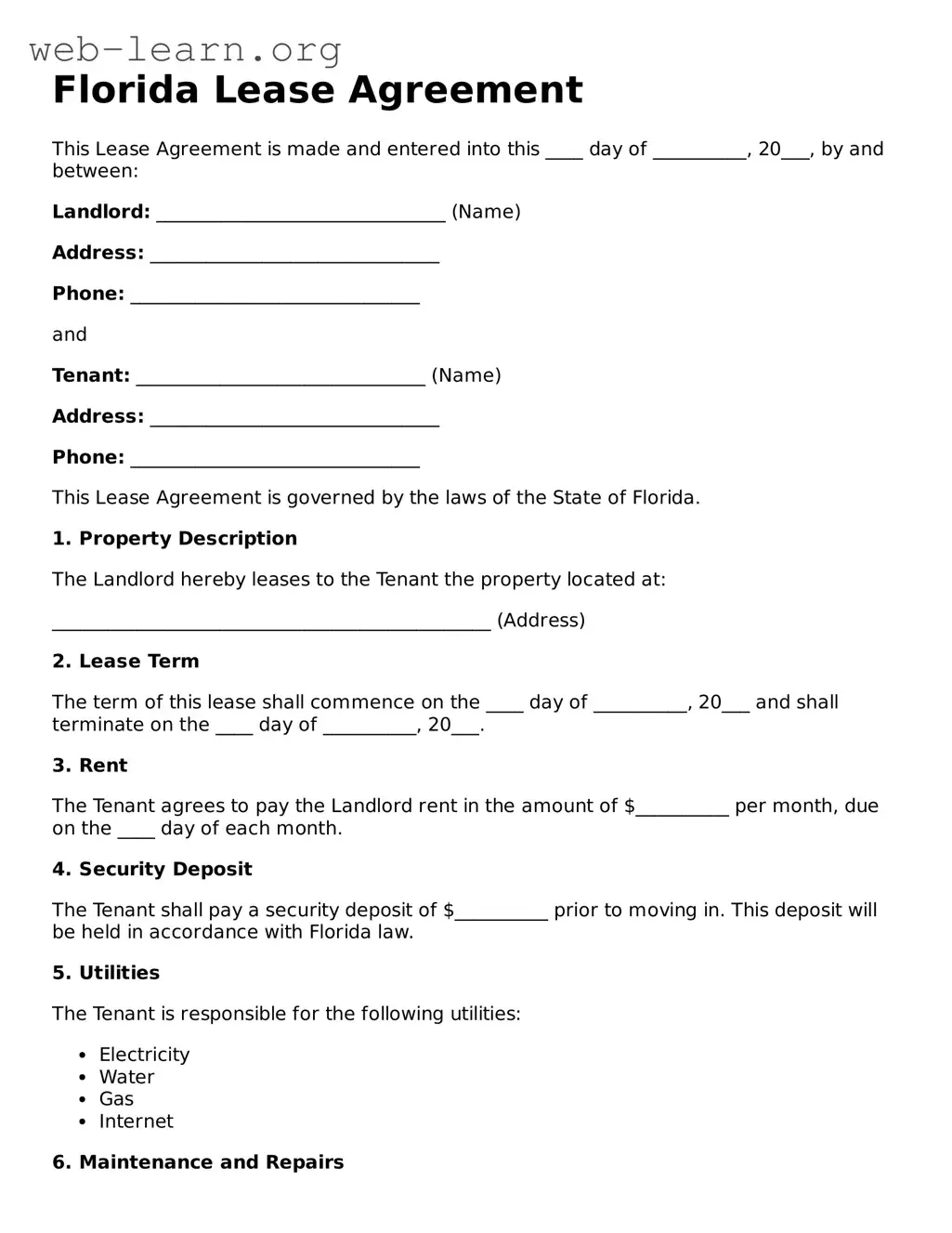
The Florida Lease Agreement form serves as a crucial document in the rental process, establishing the terms and conditions between landlords and tenants. This form outlines essential details such as the rental amount, duration of the lease, and the responsibilities of both parties. It typically includes provisions regarding security deposits, maintenance obligations, and rules for terminating the lease. Additionally, it may address specific issues like pet policies and utilities, ensuring that all parties have a clear understanding of their rights and obligations. By using this form, landlords can protect their property interests while tenants can secure their living arrangements with confidence. Understanding the intricacies of this agreement is vital for anyone involved in the rental market in Florida.
Florida Lease Agreement
This Lease Agreement is made and entered into this ____ day of __________, 20___, by and between:
Landlord: _______________________________ (Name)
Address: _______________________________
Phone: _______________________________
and
Tenant: _______________________________ (Name)
Address: _______________________________
Phone: _______________________________
This Lease Agreement is governed by the laws of the State of Florida.
1. Property Description
The Landlord hereby leases to the Tenant the property located at:
_______________________________________________ (Address)
2. Lease Term
The term of this lease shall commence on the ____ day of __________, 20___ and shall terminate on the ____ day of __________, 20___.
3. Rent
The Tenant agrees to pay the Landlord rent in the amount of $__________ per month, due on the ____ day of each month.
4. Security Deposit
The Tenant shall pay a security deposit of $__________ prior to moving in. This deposit will be held in accordance with Florida law.
5. Utilities
The Tenant is responsible for the following utilities:
6. Maintenance and Repairs
The Tenant agrees to keep the property clean and in good condition. The Landlord will be responsible for major repairs.
7. Governing Law
This Lease Agreement shall be governed by the laws of the State of Florida.
8. Signatures
By signing below, both parties agree to the terms outlined in this Lease Agreement.
______________________________ Landlord Signature
______________________________ Date
______________________________ Tenant Signature
______________________________ Date
| Fact Name | Description |
|---|---|
| Governing Law | The Florida Lease Agreement is governed by Florida Statutes, specifically Chapter 83, which covers landlord and tenant relationships. |
| Parties Involved | The agreement typically involves two parties: the landlord (or property owner) and the tenant (or renter). |
| Duration of Lease | Leases can vary in length, often ranging from month-to-month agreements to fixed-term leases lasting one year or more. |
| Security Deposit | Florida law allows landlords to collect a security deposit, which is usually equal to one month's rent, to cover potential damages or unpaid rent. |
| Notice Requirements | Both landlords and tenants must provide written notice to terminate the lease, with specific timeframes depending on the lease duration. |
| Maintenance Responsibilities | Landlords are generally responsible for maintaining the property in a habitable condition, while tenants must keep the premises clean and undamaged. |
| Late Fees | Landlords may charge late fees if rent is not paid on time, but these fees must be clearly outlined in the lease agreement. |
| Disclosures | Landlords must provide certain disclosures, such as information about lead-based paint in properties built before 1978. |
Filling out the Florida Lease Agreement form is an important step in establishing a rental relationship. Once you complete the form, both parties will have a clear understanding of their rights and responsibilities. Here’s how to fill it out step-by-step.
A Florida Lease Agreement is a legal document that outlines the terms and conditions between a landlord and a tenant for renting residential or commercial property in the state of Florida. This agreement specifies the rights and responsibilities of both parties, including the duration of the lease, rent amount, security deposit, maintenance obligations, and other important details.
Key components typically include:
Lease terms in Florida can vary widely. They may be:
It is important for both landlords and tenants to clearly define the lease term in the agreement.
Yes, a lease agreement can be modified after it is signed, but both parties must agree to the changes. Modifications should be documented in writing and signed by both the landlord and the tenant to ensure clarity and legal enforceability. Verbal agreements may not hold up in court.
If a tenant violates the lease agreement, the landlord may have several options, depending on the nature of the violation. Common actions include:
Landlords must follow Florida's legal procedures for addressing lease violations to ensure compliance with state laws.
Filling out a Florida Lease Agreement can be a straightforward process, but many people make common mistakes that can lead to confusion or legal issues. One significant error is failing to include all necessary parties in the agreement. If a tenant or landlord is not named, it can create complications regarding responsibilities and rights. Always ensure that all individuals involved in the lease are clearly identified.
Another frequent mistake is neglecting to specify the rental amount and payment terms. Without clear details on how much rent is due, when it is due, and acceptable payment methods, misunderstandings can arise. This lack of clarity can lead to disputes down the line. It’s crucial to outline these terms explicitly to avoid any potential issues.
People often overlook the importance of detailing the lease duration. Not specifying the start and end dates of the lease can result in uncertainty about when the agreement is valid. This oversight can complicate the relationship between landlords and tenants, especially if one party believes the lease has expired while the other does not.
Additionally, many individuals fail to include provisions for maintenance and repairs. A lease should clearly outline who is responsible for maintaining the property and how repairs will be handled. This can prevent disagreements later on regarding property upkeep and responsibilities.
Another common mistake is not addressing the issue of security deposits. Many tenants and landlords forget to include the amount of the security deposit, the conditions for its return, and any deductions that may apply. This lack of information can lead to disputes when the lease ends, making it essential to include these details in the agreement.
Lastly, people often neglect to review local laws and regulations that might affect the lease agreement. Florida has specific laws regarding tenant rights and landlord obligations. Failing to comply with these laws can render parts of the lease unenforceable. It is wise to familiarize oneself with these regulations to ensure that the lease agreement is both fair and legal.
A Florida Lease Agreement is an essential document for landlords and tenants. However, several other forms and documents are commonly used alongside it to ensure a smooth rental experience. Below is a list of these documents, each serving a specific purpose in the rental process.
Using these documents in conjunction with the Florida Lease Agreement helps create a clear understanding between landlords and tenants. Each form plays a vital role in protecting the rights and responsibilities of both parties involved in the rental relationship.
The Lease Agreement form shares similarities with several other documents commonly used in real estate and rental situations. Each document serves a specific purpose, but they all relate to the rights and responsibilities of the parties involved. Below are six documents that are similar to a Lease Agreement:
When filling out the Florida Lease Agreement form, it’s important to approach the task with care. Here’s a list of things you should and shouldn’t do to ensure a smooth process.
When it comes to the Florida Lease Agreement form, there are several misconceptions that can lead to confusion for both landlords and tenants. Understanding these myths can help ensure a smoother rental experience. Below are ten common misconceptions:
By addressing these misconceptions, both landlords and tenants can navigate the rental process with greater confidence and clarity.
When filling out and using the Florida Lease Agreement form, keep these key takeaways in mind:
Lease of Agreement - It can include information about parking and storage options.
Basic Lease Agreement Pdf - It often includes details about access to amenities like pools or gyms.
Free Printable Lease Agreement Template - Defines the rights and responsibilities of the landlord and tenant.
Free Idaho Rental Agreement Form - States the conditions for eviction procedures.