For families considering homeschooling in Florida, the Homeschool Letter of Intent form serves as a crucial first step in the process. This form notifies the local school district of your intent to educate your child at home, ensuring that you comply with state regulations. It requires basic information, including the names and ages of the children being homeschooled, as well as the educational curriculum you plan to follow. By submitting this form, parents affirm their commitment to providing a structured learning environment, while also gaining access to resources and support from the school district. Completing the Homeschool Letter of Intent is not just a legal requirement; it is an opportunity for parents to take an active role in their children's education and to set the foundation for a successful homeschooling experience.
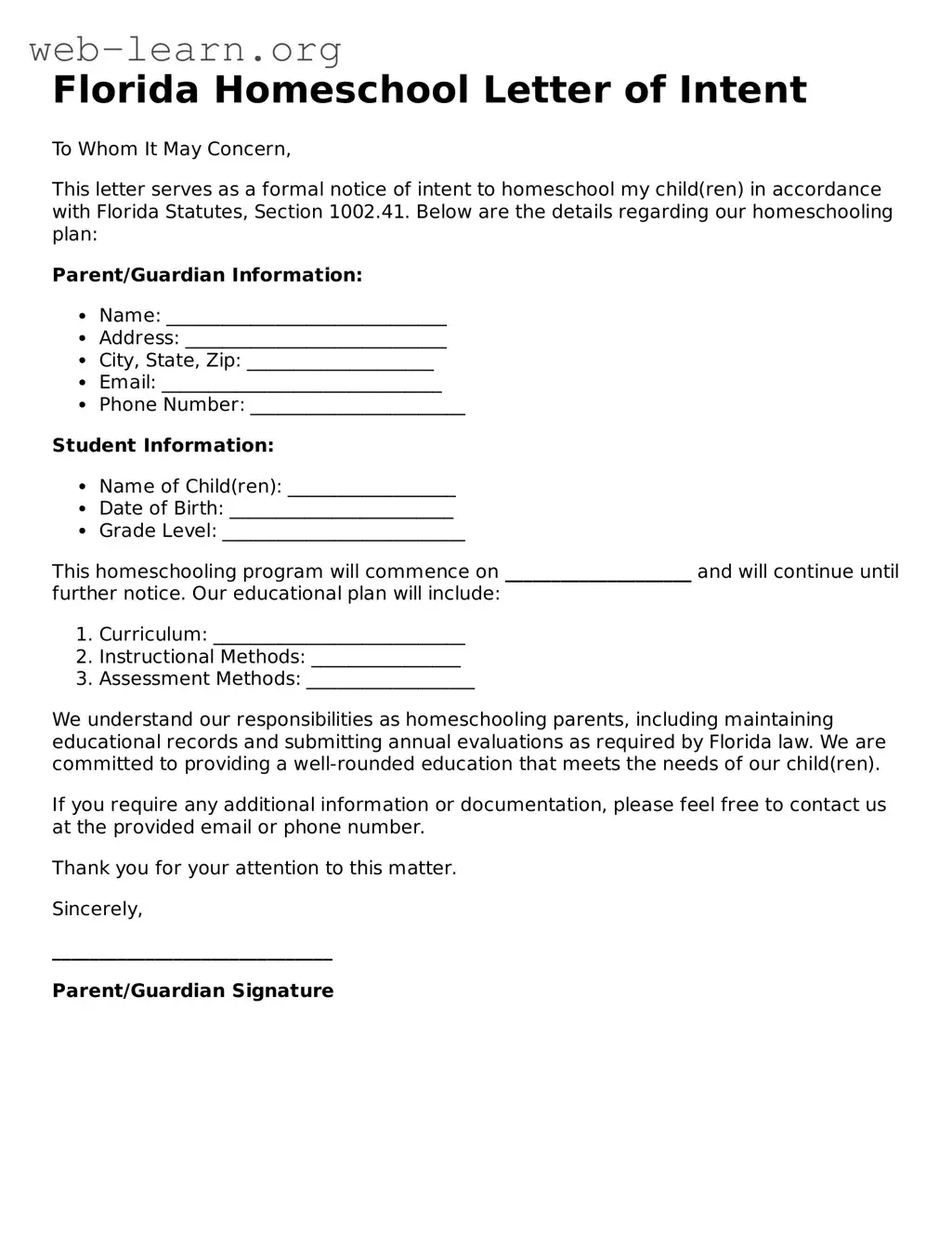
Florida Homeschool Letter of Intent
To Whom It May Concern,
This letter serves as a formal notice of intent to homeschool my child(ren) in accordance with Florida Statutes, Section 1002.41. Below are the details regarding our homeschooling plan:
Parent/Guardian Information:
Student Information:
This homeschooling program will commence on ____________________ and will continue until further notice. Our educational plan will include:
We understand our responsibilities as homeschooling parents, including maintaining educational records and submitting annual evaluations as required by Florida law. We are committed to providing a well-rounded education that meets the needs of our child(ren).
If you require any additional information or documentation, please feel free to contact us at the provided email or phone number.
Thank you for your attention to this matter.
Sincerely,
______________________________
Parent/Guardian Signature
| Fact Name | Description |
|---|---|
| Purpose of the Form | The Florida Homeschool Letter of Intent form is used by parents to formally notify the local school district of their intention to homeschool their child. |
| Governing Law | This form is governed by Florida Statutes, specifically Section 1002.41, which outlines the requirements for home education programs. |
| Submission Timeline | Parents must submit the Letter of Intent to the school district within 30 days of beginning their homeschooling journey. |
| Required Information | The form typically requires the child's name, age, and the address of the homeschooling location, along with the parent's contact information. |
Once you have decided to homeschool your child in Florida, the next step involves submitting a Homeschool Letter of Intent to your local school district. This form is a crucial part of the process, as it officially notifies the district of your intent to educate your child at home. After submitting the letter, you will receive further instructions from the district regarding your homeschooling journey.
What is the Florida Homeschool Letter of Intent?
The Florida Homeschool Letter of Intent is a document that parents or guardians must submit to their local school district when they choose to educate their child at home. This letter serves as a formal notification of the decision to homeschool and outlines the intent to provide educational instruction outside of the traditional school system.
Who needs to submit the Letter of Intent?
Any parent or guardian who decides to homeschool their child in Florida must submit the Letter of Intent. This requirement applies to children between the ages of 6 and 16, which is the compulsory education age in the state. If you are withdrawing your child from public school to begin homeschooling, you should also submit this letter.
What information is required in the Letter of Intent?
The Letter of Intent typically requires the following information:
Some districts may have specific forms or additional requirements, so it’s advisable to check with your local school district for any specific instructions.
When should the Letter of Intent be submitted?
The Letter of Intent should be submitted before you begin homeschooling your child. It is recommended to send the letter at least 15 days before the start of your homeschool program. This timeline helps ensure that the school district is aware of your plans and allows for a smooth transition.
Is there a specific format for the Letter of Intent?
There is no strict format mandated by the state of Florida for the Letter of Intent. However, it should be clear and concise. Many parents choose to write a simple letter that includes all required information. Some school districts may provide a template or form to simplify the process, so checking with your local district can be beneficial.
What happens after submitting the Letter of Intent?
Once the Letter of Intent is submitted, the local school district will acknowledge its receipt. After that, you are free to begin your homeschooling journey. However, it’s important to keep records of your educational activities and progress, as you may need to provide documentation in the future. Additionally, you should stay informed about any requirements or evaluations that may be needed as part of your homeschooling experience.
Filling out the Florida Homeschool Letter of Intent form can be a straightforward process, but mistakes can lead to delays or complications. One common error is failing to provide all required information. Each section of the form must be completed accurately, including the names and ages of the children being homeschooled. Omitting any details can result in the form being rejected.
Another frequent mistake is not signing the form. The signature is crucial as it indicates that the parent or guardian is officially declaring their intent to homeschool. Without this signature, the submission is incomplete, and the school district may not recognize the intent to homeschool.
Many individuals also overlook the deadline for submitting the letter of intent. Florida law requires that this form be submitted within 30 days of beginning the homeschooling process. Missing this deadline can lead to unnecessary complications and may require additional steps to rectify the situation.
Some parents make the mistake of not keeping a copy of the submitted letter. It is important to retain a copy for personal records. This can be useful for future reference or in case any questions arise regarding the homeschooling status.
Another error involves misunderstanding the requirements for educational plans. While the letter of intent itself does not require a detailed educational plan, it’s beneficial to have one prepared. This plan should outline the curriculum and educational goals for the year, ensuring compliance with state regulations.
Lastly, failing to inform the school district of any changes can lead to issues down the line. If a family moves or changes their homeschooling approach, updating the school district is essential. Keeping the lines of communication open ensures that all parties are informed and compliant with state laws.
When embarking on the journey of homeschooling in Florida, submitting the Homeschool Letter of Intent is just the first step. To ensure compliance with state regulations and to facilitate a smooth homeschooling experience, several other documents may be necessary. Below is a list of commonly used forms and documents that can accompany the Homeschool Letter of Intent.
By preparing and organizing these documents, homeschooling families can better navigate the requirements set forth by the state of Florida. This proactive approach not only ensures compliance but also enriches the educational experience for both students and parents.
When filling out the Florida Homeschool Letter of Intent form, it's important to follow specific guidelines to ensure a smooth process. Here are seven things you should and shouldn't do:
Many families considering homeschooling in Florida may have misunderstandings about the Homeschool Letter of Intent form. Below are some common misconceptions and clarifications regarding this important document.
Understanding these misconceptions can help families navigate the homeschooling process with greater confidence. It is essential to stay informed and seek guidance when needed.
Filling out the Florida Homeschool Letter of Intent form is an essential step for families choosing to homeschool their children. Here are ten key takeaways to keep in mind:
By following these key points, families can navigate the process of homeschooling in Florida more smoothly and confidently.
Kansas Home-schooling - Includes information about any previous schooling the child received.
Colorado Homeschool Testing Requirements - It can help ensure that your child receives an education that aligns with your family's values.
Best Homeschool Programs in Alabama - Useful for tracking educational progress over time.
Ghea Homeschool - A letter to inform the district of a homeschooling approach.