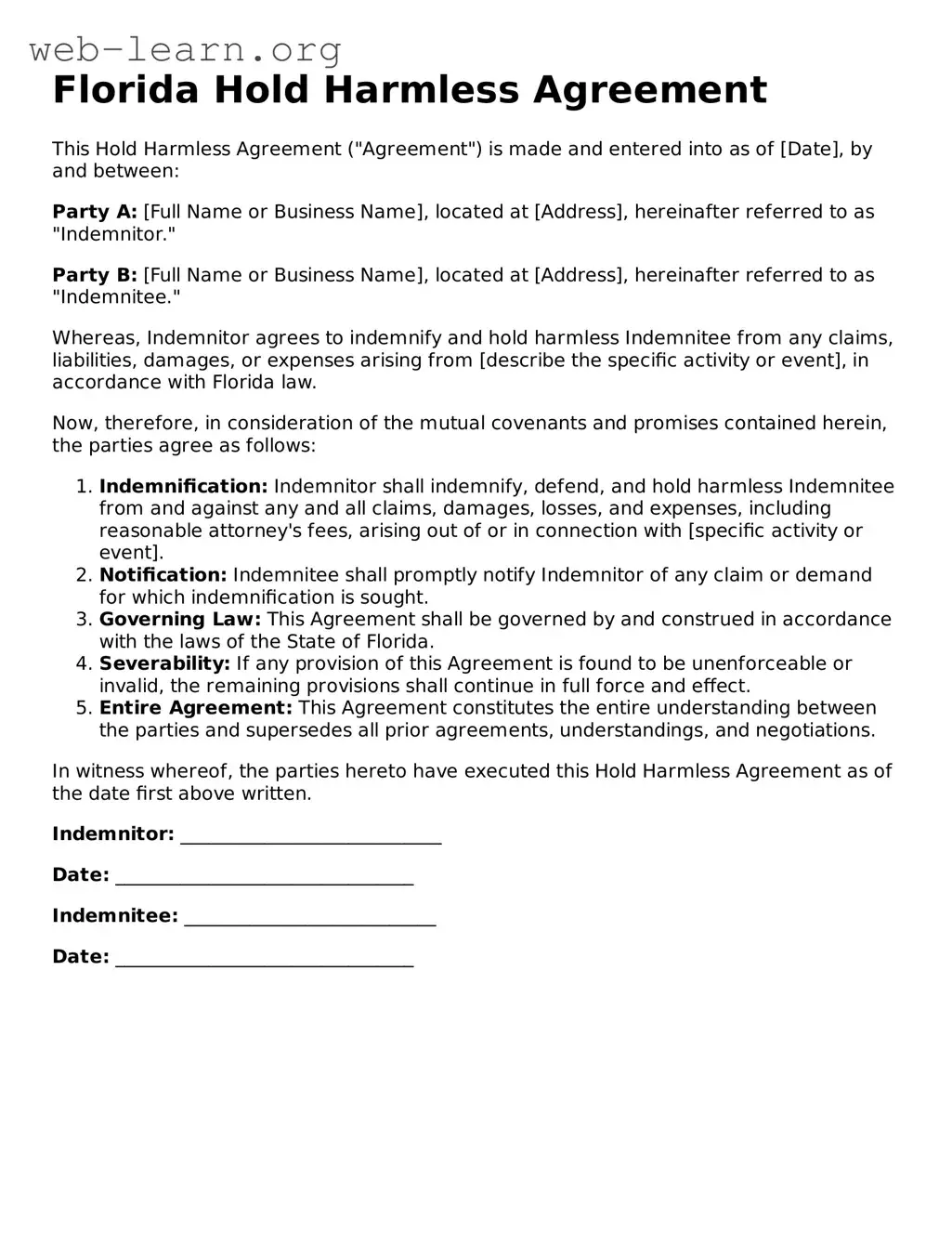
In the state of Florida, the Hold Harmless Agreement serves as a vital tool for individuals and organizations seeking to mitigate liability risks associated with various activities or events. This form outlines the responsibilities of the parties involved, ensuring that one party agrees to assume the risk of potential losses or damages that may arise from the actions of another. Typically used in contexts such as property rentals, events, or construction projects, the agreement emphasizes the importance of protecting one party from legal claims made by third parties. By clearly delineating the terms and conditions, the Hold Harmless Agreement fosters a sense of security for all parties involved, allowing them to engage in activities with a clearer understanding of their legal obligations. Additionally, the form often includes provisions for indemnification, which further strengthens the protective measures by requiring one party to compensate the other for any losses incurred. Understanding the nuances of this agreement is essential for anyone looking to navigate the complexities of liability in Florida.
Florida Hold Harmless Agreement
This Hold Harmless Agreement ("Agreement") is made and entered into as of [Date], by and between:
Party A: [Full Name or Business Name], located at [Address], hereinafter referred to as "Indemnitor."
Party B: [Full Name or Business Name], located at [Address], hereinafter referred to as "Indemnitee."
Whereas, Indemnitor agrees to indemnify and hold harmless Indemnitee from any claims, liabilities, damages, or expenses arising from [describe the specific activity or event], in accordance with Florida law.
Now, therefore, in consideration of the mutual covenants and promises contained herein, the parties agree as follows:
In witness whereof, the parties hereto have executed this Hold Harmless Agreement as of the date first above written.
Indemnitor: ____________________________
Date: ________________________________
Indemnitee: ___________________________
Date: ________________________________
| Fact Name | Details |
|---|---|
| Purpose | The Florida Hold Harmless Agreement is designed to protect one party from liability for certain actions or events. |
| Governing Law | This agreement is governed by Florida state law. |
| Parties Involved | Typically, the agreement involves two parties: the indemnitor (who assumes liability) and the indemnitee (who is protected). |
| Common Uses | These agreements are often used in rental agreements, construction contracts, and event planning. |
| Enforceability | The agreement must be clear and specific to be enforceable in Florida courts. |
| Limitations | Hold harmless agreements cannot protect against gross negligence or willful misconduct. |
Filling out the Florida Hold Harmless Agreement form requires careful attention to detail. Completing this form correctly is essential to ensure that all parties involved understand their responsibilities and liabilities. Once the form is filled out, it should be reviewed for accuracy and signed by the appropriate parties.
After completing these steps, ensure that all parties have a signed copy of the agreement. This will help in maintaining clarity and accountability moving forward.
What is a Florida Hold Harmless Agreement?
A Florida Hold Harmless Agreement is a legal document that protects one party from liability for certain actions or events. It is commonly used in various situations, such as construction projects, rental agreements, and events. By signing this agreement, one party agrees not to hold the other party responsible for any damages or injuries that may occur.
Why should I use a Hold Harmless Agreement?
Using a Hold Harmless Agreement can provide peace of mind. It clearly outlines the responsibilities and liabilities of each party involved. This can help prevent misunderstandings and disputes in the future. Whether you are a property owner, contractor, or event organizer, having this agreement in place can protect your interests.
Who should sign the Hold Harmless Agreement?
Typically, the agreement should be signed by all parties involved in the situation. This may include the property owner, contractors, or anyone else who might be affected by the activities being conducted. Each party should fully understand the terms before signing to ensure that everyone is on the same page.
Are there any limitations to a Hold Harmless Agreement?
Yes, there are limitations. A Hold Harmless Agreement cannot protect a party from gross negligence or willful misconduct. If someone acts recklessly or intentionally causes harm, the agreement may not hold up in court. It is important to understand these limitations and to consult with a legal professional if you have specific concerns.
When filling out the Florida Hold Harmless Agreement form, many individuals inadvertently make mistakes that can lead to complications later on. One common error is failing to read the entire document before signing. This oversight can result in misunderstandings about the responsibilities and liabilities being agreed upon. It is crucial to understand what you are signing to avoid unintended consequences.
Another frequent mistake is not providing accurate information. Whether it’s personal details or specifics about the event or activity, inaccuracies can render the agreement invalid. Double-checking all entries ensures that the document reflects true and complete information.
Many people also overlook the importance of including all necessary parties in the agreement. If the agreement involves multiple individuals or organizations, failing to list everyone can lead to disputes later. Each party should be clearly identified to ensure that all are bound by the terms of the agreement.
Additionally, some individuals neglect to consider the duration of the agreement. Not specifying how long the hold harmless clause applies can create ambiguity. It is essential to clarify the time frame to avoid future misunderstandings about liability.
Moreover, using vague language is another mistake that can undermine the effectiveness of the agreement. Clear and precise wording is necessary to ensure that all parties understand their obligations. Avoiding ambiguous terms helps to establish a solid understanding of the agreement.
People often forget to consult with a legal professional before finalizing the agreement. While it may seem unnecessary, having a lawyer review the document can prevent potential issues. Legal experts can provide insights that may not be apparent to someone unfamiliar with such agreements.
Lastly, many individuals fail to keep a copy of the signed agreement. After signing, it is important to retain a copy for personal records. This ensures that you have access to the terms agreed upon, should any questions or disputes arise in the future.
A Florida Hold Harmless Agreement is a useful document that helps protect one party from liability for certain actions or events. When using this agreement, you may find it helpful to have additional forms and documents to ensure comprehensive coverage and clarity. Below is a list of related documents that are often used in conjunction with the Hold Harmless Agreement.
Using these documents alongside the Florida Hold Harmless Agreement can help clarify responsibilities and protect all parties involved. Always consider consulting with a legal professional to ensure that your documents meet specific needs and requirements.
When filling out the Florida Hold Harmless Agreement form, it is essential to approach the task with care. Here are nine important dos and don’ts to keep in mind:
Many people have misunderstandings about the Florida Hold Harmless Agreement form. Here are four common misconceptions:
When dealing with a Florida Hold Harmless Agreement, there are several important considerations to keep in mind. This form is designed to protect one party from liability for certain risks associated with an activity or event. Below are key takeaways regarding its use and completion.
By keeping these points in mind, individuals can effectively utilize the Florida Hold Harmless Agreement to manage risks associated with various activities.
Are Hold Harmless Agreements Enforceable - They are a useful tool for managing expectations and responsibilities in various contexts.
Hold Harmless Waiver - A Hold Harmless Agreement can help ensure compliance with safety regulations.
Hold Harmless Agreement - The agreement can specify the duration of liability protection, if necessary.
What Is a Hold Harmless Agreement - It is advisable to include specific language regarding the scope of indemnity.