In Florida, the Durable Power of Attorney form serves as a crucial legal document that allows individuals to designate someone they trust to manage their financial and legal affairs in the event they become incapacitated. This form empowers the chosen agent to make decisions on behalf of the principal, covering a wide range of matters such as banking transactions, real estate decisions, and managing investments. One of the key features of this document is its durability; it remains effective even if the principal is unable to make decisions due to illness or injury. Additionally, the form can be tailored to fit specific needs, allowing for both broad authority or limited powers, depending on the principal’s preferences. Understanding the nuances of this form is essential for anyone looking to ensure their wishes are honored and their affairs are handled responsibly during challenging times. With the right preparation, individuals can secure peace of mind, knowing that their financial matters will be managed by someone they trust, even when they cannot do so themselves.
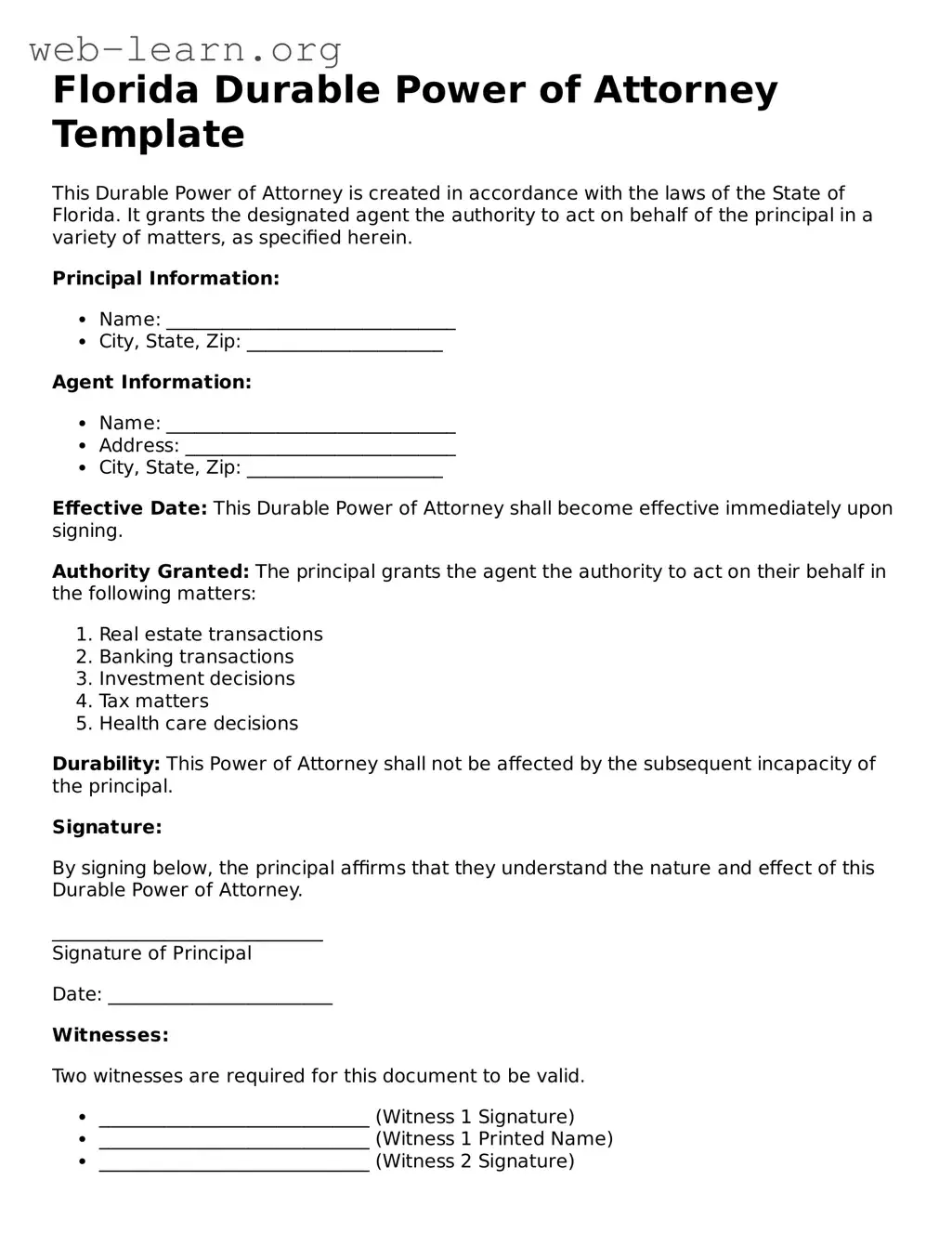
Florida Durable Power of Attorney Template
This Durable Power of Attorney is created in accordance with the laws of the State of Florida. It grants the designated agent the authority to act on behalf of the principal in a variety of matters, as specified herein.
Principal Information:
Agent Information:
Effective Date: This Durable Power of Attorney shall become effective immediately upon signing.
Authority Granted: The principal grants the agent the authority to act on their behalf in the following matters:
Durability: This Power of Attorney shall not be affected by the subsequent incapacity of the principal.
Signature:
By signing below, the principal affirms that they understand the nature and effect of this Durable Power of Attorney.
_____________________________
Signature of Principal
Date: ________________________
Witnesses:
Two witnesses are required for this document to be valid.
Notary Public:
State of Florida
County of _______________________
Sworn to (or affirmed) and subscribed before me this ____ day of ____________, 20__.
_____________________________
Notary Public Signature
My commission expires: ________________
| Fact Name | Details |
|---|---|
| Definition | A Florida Durable Power of Attorney is a legal document that allows an individual (the principal) to designate another person (the agent) to manage their financial affairs, even if they become incapacitated. |
| Governing Law | The Florida Durable Power of Attorney is governed by Florida Statutes, specifically Chapter 709. |
| Durability | This type of power of attorney remains effective even if the principal becomes mentally incapacitated, unlike a regular power of attorney which ceases to be valid in such circumstances. |
| Agent's Authority | The agent can perform a wide range of financial tasks, such as managing bank accounts, paying bills, and making investment decisions, depending on the powers granted in the document. |
| Execution Requirements | The document must be signed by the principal in the presence of two witnesses and a notary public to be valid. |
| Revocation | The principal can revoke the Durable Power of Attorney at any time, as long as they are mentally competent to do so. |
| Agent's Fiduciary Duty | The agent has a legal obligation to act in the best interests of the principal, putting the principal's needs ahead of their own. |
| Common Uses | People often use this document for estate planning, ensuring that someone they trust can handle their affairs if they are unable to do so themselves. |
Filling out the Florida Durable Power of Attorney form is an important step in ensuring that your financial and legal matters can be managed according to your wishes if you become unable to do so yourself. Once you have completed the form, you will need to sign it in the presence of a notary public or two witnesses, depending on your specific needs.
What is a Durable Power of Attorney in Florida?
A Durable Power of Attorney (DPOA) is a legal document that allows an individual (the principal) to designate another person (the agent) to make financial and legal decisions on their behalf. This document remains effective even if the principal becomes incapacitated.
Who can serve as an agent under a Durable Power of Attorney?
In Florida, any competent adult can serve as an agent. This includes family members, friends, or professionals. However, it is crucial to choose someone trustworthy, as they will have significant authority over your financial matters.
What powers can be granted to the agent?
The principal can grant a wide range of powers to the agent, including:
It is essential to specify the powers clearly in the document to avoid any confusion.
How does one create a Durable Power of Attorney in Florida?
To create a DPOA, the principal must complete a form that meets Florida's legal requirements. The form should be signed in the presence of a notary public and two witnesses. This ensures that the document is valid and enforceable.
Can a Durable Power of Attorney be revoked?
Yes, a principal can revoke a Durable Power of Attorney at any time, as long as they are competent. The revocation should be documented in writing and communicated to the agent and any institutions or individuals who may rely on the DPOA.
What happens if the principal becomes incapacitated?
Once the principal becomes incapacitated, the Durable Power of Attorney remains in effect. The agent can then act on behalf of the principal, managing their affairs according to the powers granted in the document.
Is a Durable Power of Attorney the same as a healthcare proxy?
No, a Durable Power of Attorney primarily addresses financial and legal matters. A healthcare proxy, or medical power of attorney, specifically grants authority to make medical decisions on behalf of the principal. Both documents can coexist but serve different purposes.
Are there any limitations to the powers granted in a Durable Power of Attorney?
Yes, there may be limitations based on the principal's specific wishes or legal restrictions. For example, the principal may choose to exclude certain powers, such as the ability to make gifts or change beneficiaries. It is important to clearly outline any limitations in the document.
Should legal advice be sought when creating a Durable Power of Attorney?
While it is possible to create a DPOA without legal assistance, seeking advice from an attorney can provide valuable guidance. An attorney can help ensure that the document meets all legal requirements and accurately reflects the principal's intentions.
Filling out a Florida Durable Power of Attorney form can be a crucial step in ensuring that your financial and legal matters are handled according to your wishes. However, many individuals make common mistakes that can lead to complications down the line. Here are ten mistakes to avoid.
One frequent error is not specifying the powers granted. The form allows you to designate specific powers to your agent, but many people leave this section vague. Clearly outlining the powers you wish to grant ensures that your agent knows exactly what decisions they can make on your behalf.
Another mistake is failing to date the document. A Durable Power of Attorney must be dated to be valid. Without a date, it may be challenging to determine when the powers were granted, which could lead to disputes or confusion in the future.
Many people also overlook the importance of not having witnesses or notarization. In Florida, the law requires that the document be signed in the presence of two witnesses and a notary. Skipping this step can invalidate the entire form.
Additionally, some individuals mistakenly assume that all agents are trustworthy. It’s essential to choose someone who is reliable and understands your wishes. Selecting an agent without careful consideration can lead to misuse of the powers granted.
Another common oversight is not updating the document when life circumstances change. Life events such as marriage, divorce, or the death of an agent can necessitate changes to your Durable Power of Attorney. Failing to keep the document current can create complications.
People often forget to communicate their wishes to their agent. It’s not enough to simply appoint someone; you must also discuss your preferences and expectations with them. Open communication can help prevent misunderstandings and ensure your wishes are honored.
Some individuals make the mistake of not reviewing the document regularly. Just like any important legal document, it should be reviewed periodically to ensure it still reflects your current wishes and circumstances.
Another issue arises when people use outdated forms. Laws can change, and using an old version of the Durable Power of Attorney form may not comply with current legal standards. Always ensure that you are using the most recent version available.
Moreover, many fail to consider alternate agents. Life is unpredictable, and your primary agent may not always be available. Designating alternate agents can ensure that your affairs are still managed if your first choice is unable to act.
Lastly, people sometimes overlook the importance of understanding the document. It’s vital to fully comprehend what you are signing. If you have questions, seek guidance from a legal professional to clarify any uncertainties before finalizing the document.
When creating a Florida Durable Power of Attorney, it is often beneficial to consider additional documents that can complement this important legal tool. These documents can help ensure that your wishes are respected and that your affairs are managed according to your preferences. Below is a list of forms and documents frequently used alongside the Durable Power of Attorney in Florida.
By considering these documents in conjunction with your Florida Durable Power of Attorney, you can create a more comprehensive plan for your future. Each document serves a unique purpose, and together they can provide clarity and peace of mind for you and your loved ones.
When filling out the Florida Durable Power of Attorney form, it’s important to follow certain guidelines to ensure everything is completed correctly. Here’s a list of things you should and shouldn’t do:
Understanding the Florida Durable Power of Attorney form is essential for anyone looking to manage their financial and legal affairs effectively. However, several misconceptions can lead to confusion. Here are seven common misconceptions about this important document:
Many people believe that a Durable Power of Attorney only activates when they are unable to make decisions. In reality, it can be effective immediately upon signing, allowing your agent to act on your behalf right away.
This is not true. The powers granted to your agent are limited to what you specify in the document. You can outline exactly what they can and cannot do.
While a Durable Power of Attorney is powerful for financial matters, it does not cover healthcare decisions. For that, you need a separate document, such as a Health Care Proxy or Living Will.
Many people think that once a Durable Power of Attorney is signed, it is set in stone. In fact, you can revoke or modify it at any time, as long as you are mentally competent.
This is a common misunderstanding. While having a lawyer as your agent can be beneficial, it is not a requirement. You can choose anyone you trust, such as a family member or friend.
Unlike some legal documents, a Durable Power of Attorney does not have an expiration date. It remains in effect until you revoke it, or until your death.
This misconception overlooks the fact that anyone can benefit from having a Durable Power of Attorney, regardless of age. Unexpected events can happen at any time, making this document valuable for all adults.
By understanding these misconceptions, you can make informed decisions about your Durable Power of Attorney and ensure that your wishes are respected in the future.
When filling out and using the Florida Durable Power of Attorney form, keep these key takeaways in mind:
Taking these steps can help ensure that your Durable Power of Attorney is effective and aligns with your intentions.
General Power of Attorney California - Choosing a reliable agent is essential for the effectiveness of this document.
Oregon Power of Attorney Form - It can be tailored to fit your specific needs and preferences.
Power of Attorney Arizona - This form allows you to choose someone who understands your values and preferences to act on your behalf.
Louisiana Durable Power of Attorney Pdf - This document can help streamline the management of your affairs.