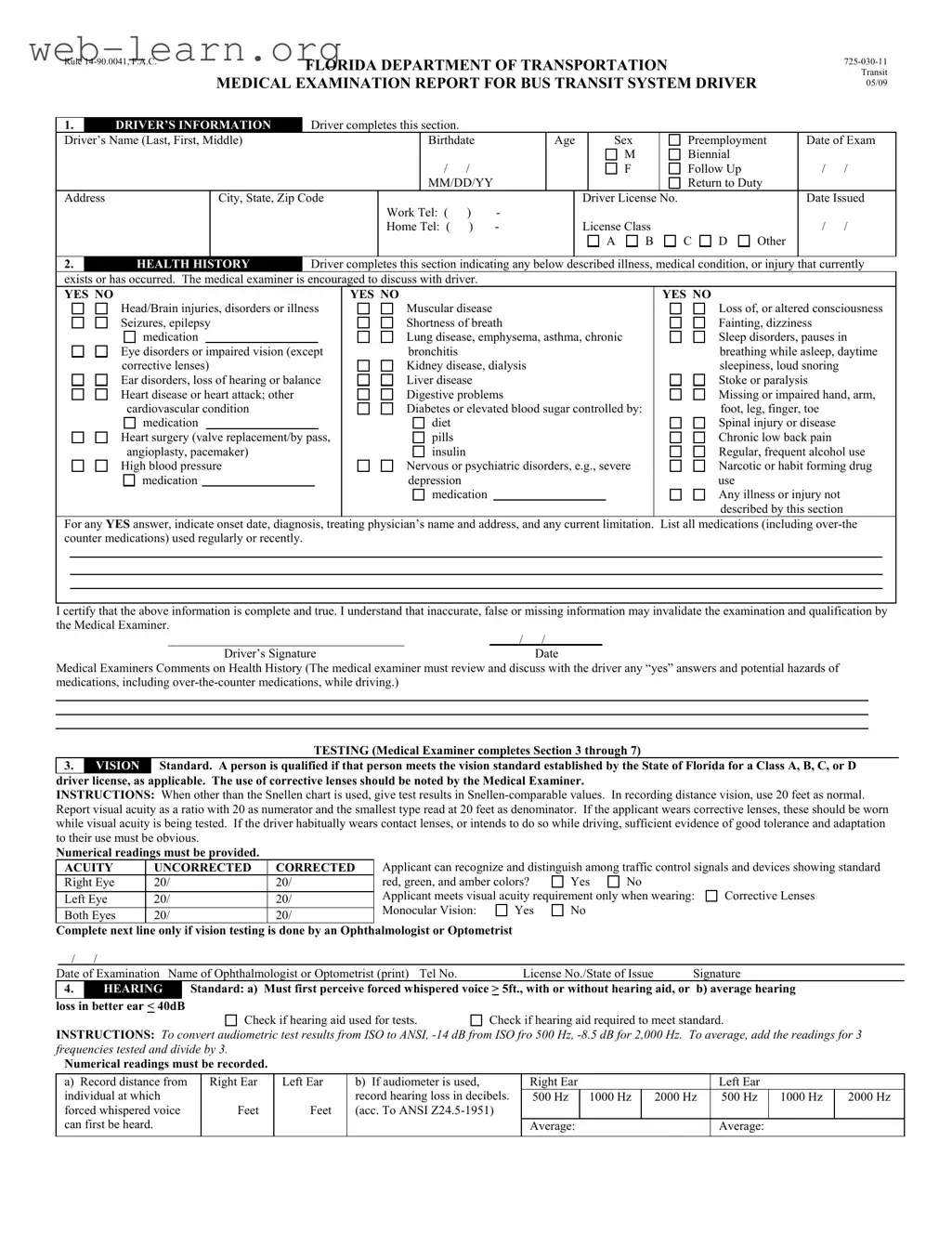
The Florida Department of Transportation (FDOT) Medical Examination Report is a critical document designed to assess the health and fitness of bus transit system drivers. This form is essential for ensuring that drivers meet the necessary physical qualifications to operate a bus safely. It requires the driver to provide personal information, including their name, date of birth, and driver’s license details. The form also includes a comprehensive health history section where drivers must disclose any past or present medical conditions, such as heart disease, respiratory issues, or neurological disorders. Medical examiners are tasked with evaluating this information and conducting tests on vision, hearing, blood pressure, and other health indicators. The results of these evaluations determine whether the driver meets the required standards for safe operation of a bus. Additionally, the form outlines the process for certifying drivers, including the duration of their medical clearance, which can vary based on their health status. Overall, the Florida DOT Medical form plays a vital role in maintaining safety on the roads by ensuring that only qualified individuals are behind the wheel of public transit vehicles.






| Fact Name | Details |
|---|---|
| Governing Law | Rule 14-90.0041, Florida Administrative Code (F.A.C.) |
| Form Purpose | This form assesses the medical fitness of drivers for bus transit systems in Florida. |
| Driver Information | Drivers must provide personal details including name, birthdate, and contact information. |
| Health History | Drivers indicate any existing or past medical conditions that may affect driving ability. |
| Vision Standards | Drivers must meet specific visual acuity requirements, with or without corrective lenses. |
| Hearing Standards | Drivers must perceive a whispered voice from at least 5 feet away or meet audiometric standards. |
| Blood Pressure Evaluation | Initial blood pressure readings must be recorded; specific thresholds determine qualification. |
| Certification Duration | Medical certificates are typically valid for two years unless otherwise specified by the examiner. |
Completing the Florida Department of Transportation (FDOT) Medical Examination Report for Bus Transit System Drivers is an essential step in ensuring that drivers meet the necessary health standards to operate a bus safely. The following steps will guide you through the process of filling out the form accurately and completely.
After completing the form, you will need to submit it to your medical examiner for their review and signature. This process ensures that all necessary health checks are conducted before you can continue your duties as a bus driver. Be sure to keep a copy of the completed form for your records.
What is the purpose of the Florida DOT Medical Form?
The Florida DOT Medical Form is designed to assess the physical qualifications of individuals applying to operate a bus. It ensures that drivers meet health and safety standards set by the Florida Department of Transportation. This evaluation includes a review of the driver’s medical history, vision, hearing, blood pressure, and overall physical condition.
Who is required to complete this form?
Any individual seeking to drive a bus in Florida must complete the Florida DOT Medical Form. This requirement applies to both new applicants and existing drivers who need to renew their medical certification. Regular medical evaluations are crucial to ensure that all drivers are fit to operate a bus safely.
What information must a driver provide on the form?
Drivers must provide personal information such as their name, birthdate, and contact details. They also need to disclose their medical history, including any past or current health conditions. Additionally, drivers must list any medications they are taking, as this information is vital for the medical examiner to assess their fitness to drive.
What happens if a driver answers "yes" to any health history questions?
If a driver answers "yes" to any questions regarding their health history, the medical examiner will review those responses in detail. This discussion may include the onset date, diagnosis, and any limitations the driver may have. It is essential for the medical examiner to understand the driver’s health to make an informed decision about their qualifications.
How often must drivers undergo medical examinations?
Drivers are required to undergo medical examinations every two years. However, if a driver has specific medical conditions that need closer monitoring, the medical examiner may issue a certificate valid for a shorter duration. Regular check-ups help ensure that any health issues are managed appropriately and do not compromise driving safety.
What are the vision requirements for bus drivers?
Bus drivers must meet specific vision standards set by the State of Florida. They should have a visual acuity of at least 20/40 in each eye, with or without corrective lenses. If corrective lenses are needed, this must be noted on the medical certificate. Drivers who do not meet these standards may need to seek further evaluation from an eye specialist.
What should a driver do if they have a medical condition?
Drivers with medical conditions should be open and honest when completing the Florida DOT Medical Form. It is crucial to disclose any health issues, as this information allows the medical examiner to evaluate their fitness to drive safely. If a condition is well-managed and does not pose a risk, the driver may still qualify. However, ongoing medical supervision may be necessary.
Filling out the Florida Department of Transportation Medical Examination Report can be a straightforward process, but several common mistakes can lead to complications or disqualification. One significant error is failing to provide complete and accurate health history. When answering questions about past medical conditions, it is crucial to be thorough. Omitting details or providing vague responses can raise red flags during the examination. It is essential to remember that the medical examiner relies on this information to assess the driver's fitness for duty.
Another common mistake is neglecting to disclose all medications currently being taken. This includes prescription medications as well as over-the-counter drugs. Drivers may underestimate the importance of this information, but certain medications can have side effects that impact driving ability. By failing to list these medications, drivers risk being deemed unqualified if the medical examiner discovers undisclosed information later. Transparency is key to ensuring safety on the road.
Additionally, many individuals misunderstand the vision and hearing requirements outlined in the form. It is vital to be aware of the standards for visual acuity and hearing ability. If corrective lenses or hearing aids are necessary, drivers must indicate this clearly on the form. Misunderstanding these requirements can lead to disqualification during the examination, even if the driver meets other health standards. Ensuring compliance with these specific requirements can help avoid unnecessary complications.
Lastly, many drivers overlook the importance of reviewing the form before submission. Taking the time to double-check all entries for accuracy can prevent issues down the line. Errors such as incorrect dates, miswritten names, or incomplete sections can lead to delays or the need for re-examination. By carefully reviewing the form, drivers can ensure that their application is processed smoothly and efficiently, allowing them to focus on their primary responsibilities.
The Florida DOT Medical form is a crucial document for bus transit system drivers, ensuring they meet health standards necessary for safe operation. Alongside this form, several other documents are often required to complete the medical examination and certification process. Here’s a list of commonly used forms and documents that complement the Florida DOT Medical form:
These documents work together to create a comprehensive view of a driver’s health, ensuring that they are fit for duty. Proper completion and submission of these forms not only uphold safety standards but also protect the well-being of both the driver and the passengers they serve.
When filling out the Florida DOT Medical form, it is essential to follow specific guidelines to ensure accuracy and compliance. Here are ten things to consider:
This form is required for both new applicants and existing drivers. Regular biennial examinations are mandatory to ensure ongoing fitness to drive.
Not all medical conditions lead to disqualification. Many drivers can still qualify if their conditions are well-managed and do not impair driving ability.
These tests are essential components of the medical examination. Drivers must meet specific standards for vision and hearing to ensure safety on the road.
All medications, including over-the-counter drugs, must be reported. Some medications can affect driving ability, and the medical examiner needs this information for a proper assessment.
Drivers have the right to seek a second opinion or appeal a disqualification. Communication with the medical examiner is encouraged to discuss concerns or seek clarification.
Filling out and using the Florida DOT Medical Form is an essential process for bus transit system drivers. Here are some key takeaways to keep in mind:
By understanding these key points, drivers can navigate the medical examination process with greater confidence and clarity.