In the state of Florida, the Do Not Resuscitate Order (DNRO) form serves as a crucial tool for individuals who wish to make their healthcare preferences known in the event of a medical emergency. This legally binding document allows patients to refuse cardiopulmonary resuscitation (CPR) and other life-saving measures if their heart stops or they stop breathing. It is essential for patients to understand that the DNRO form must be completed and signed by a physician, ensuring that their wishes are respected by medical personnel. The form is typically printed on bright yellow paper, making it easily identifiable in emergency situations. Additionally, it is important for individuals to discuss their decisions with family members and healthcare providers to ensure everyone is on the same page regarding their end-of-life wishes. By having a DNRO in place, patients can maintain control over their medical care and ensure that their preferences are honored when they may not be able to communicate them themselves.
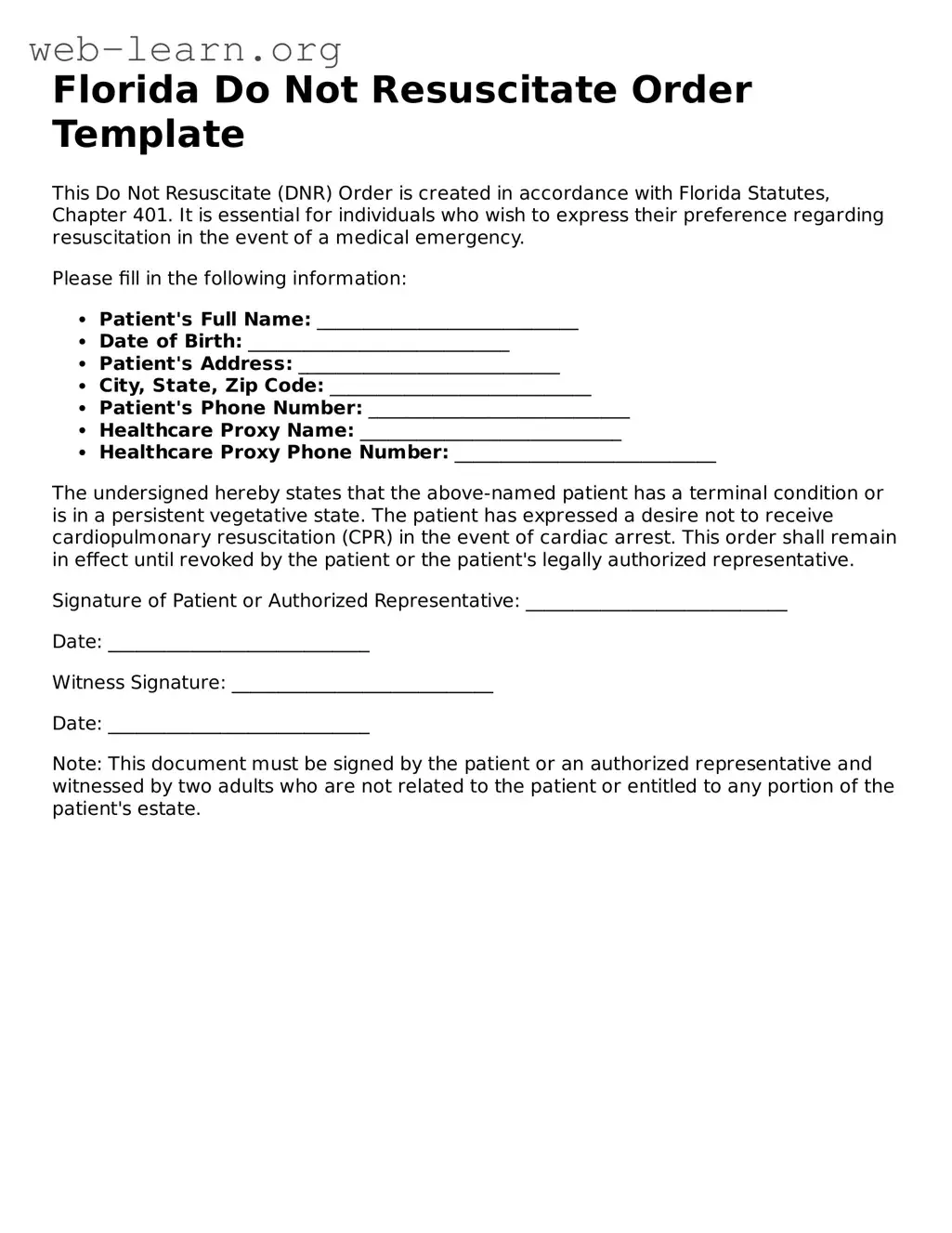
Florida Do Not Resuscitate Order Template
This Do Not Resuscitate (DNR) Order is created in accordance with Florida Statutes, Chapter 401. It is essential for individuals who wish to express their preference regarding resuscitation in the event of a medical emergency.
Please fill in the following information:
The undersigned hereby states that the above-named patient has a terminal condition or is in a persistent vegetative state. The patient has expressed a desire not to receive cardiopulmonary resuscitation (CPR) in the event of cardiac arrest. This order shall remain in effect until revoked by the patient or the patient's legally authorized representative.
Signature of Patient or Authorized Representative: ____________________________
Date: ____________________________
Witness Signature: ____________________________
Date: ____________________________
Note: This document must be signed by the patient or an authorized representative and witnessed by two adults who are not related to the patient or entitled to any portion of the patient's estate.
| Fact Name | Description |
|---|---|
| Definition | A Florida Do Not Resuscitate Order (DNRO) is a legal document that allows a person to refuse resuscitation in case of cardiac or respiratory arrest. |
| Governing Law | The DNRO is governed by Florida Statutes, specifically Chapter 401.45. |
| Eligibility | Any adult can create a DNRO, provided they are of sound mind and understand the implications of the order. |
| Signature Requirements | The form must be signed by the individual or their legal representative and witnessed by two adults who are not related. |
| Form Availability | The Florida DNRO form is available online and can be printed for use. |
| Healthcare Provider Role | Healthcare providers are required to honor a valid DNRO, ensuring the individual's wishes are respected. |
| Revocation | A DNRO can be revoked at any time by the individual, verbally or in writing. |
| Emergency Medical Services | Emergency medical services personnel must verify the DNRO before withholding resuscitation efforts. |
| Legal Protections | Individuals who complete a DNRO are protected from legal liability when their wishes are followed by medical personnel. |
Filling out the Florida Do Not Resuscitate Order form is a straightforward process. This document allows individuals to express their wishes regarding resuscitation efforts in case of a medical emergency. Follow these steps carefully to ensure the form is completed accurately.
After filling out the form, keep it in a safe but accessible place. Share it with your family and healthcare team to ensure your wishes are known and respected.
What is a Florida Do Not Resuscitate Order (DNRO)?
A Florida Do Not Resuscitate Order is a legal document that allows a person to refuse resuscitation efforts in the event of a medical emergency. This includes interventions such as cardiopulmonary resuscitation (CPR) and advanced cardiac life support (ACLS). The order is intended for individuals who are facing terminal illnesses or who wish to avoid aggressive medical interventions at the end of life.
Who can complete a DNRO in Florida?
In Florida, any adult who is of sound mind can complete a Do Not Resuscitate Order. This includes individuals who are dealing with serious health conditions or those who simply wish to express their end-of-life preferences. Additionally, a legal guardian or healthcare surrogate can also sign the DNRO on behalf of an individual who is unable to do so.
How do I obtain a DNRO form in Florida?
The DNRO form can be obtained from various sources, including:
Once you have the form, it is essential to fill it out accurately and completely to ensure that your wishes are respected.
What should I do with the completed DNRO form?
After completing the DNRO form, it is important to keep it in a location that is easily accessible. You should provide copies to your healthcare provider, family members, and anyone involved in your care. Additionally, consider placing a copy in your medical records. This ensures that your wishes are known and can be followed in a medical emergency.
Can I change or revoke my DNRO at any time?
Yes, you can change or revoke your Do Not Resuscitate Order at any time. If you decide to do so, it is crucial to inform your healthcare provider and anyone else who has a copy of the original form. To revoke the DNRO, you may simply destroy the existing document and communicate your new wishes clearly to your care team and family members.
Filling out the Florida Do Not Resuscitate (DNR) Order form is a significant step for individuals who wish to make their healthcare preferences known. However, many people make mistakes that can lead to confusion or even unintended consequences. One common error is failing to provide all required information. The form asks for specific details, including the patient’s name, date of birth, and signature. Omitting any of this critical information can render the document invalid.
Another mistake often seen is not having the form properly signed by the patient or their legal representative. A DNR order must be signed to be legally binding. If the document is unsigned, healthcare providers may not honor the wishes outlined in the form. It’s essential to ensure that the signature is present and that it matches the name on the form.
People also sometimes overlook the importance of discussing their DNR wishes with family members and healthcare providers. Without clear communication, loved ones may be unaware of the patient's intentions, leading to conflict during a medical emergency. It’s advisable to have open conversations about end-of-life preferences to ensure everyone is on the same page.
Finally, individuals might forget to review and update their DNR orders as their health status changes. A DNR order should reflect the current wishes of the patient. If a person’s condition improves or their preferences change, it’s crucial to revise the form accordingly. Regularly checking the document helps ensure that it aligns with the individual’s current desires.
The Florida Do Not Resuscitate Order (DNRO) form is an important document for individuals who wish to express their wishes regarding resuscitation efforts in case of a medical emergency. Alongside this form, there are several other documents that can help clarify medical preferences and ensure that healthcare providers understand a person's wishes. Here’s a list of some commonly used forms:
Having these documents in place can provide peace of mind for individuals and their families. They help ensure that medical wishes are respected and understood, making difficult situations a little easier to navigate.
The Do Not Resuscitate (DNR) Order form is an important document in healthcare that outlines a patient's wishes regarding resuscitation efforts in the event of cardiac arrest or respiratory failure. Several other documents serve similar purposes in expressing medical preferences or end-of-life care decisions. Here are six documents that share similarities with the DNR Order form:
Each of these documents plays a crucial role in ensuring that individuals' healthcare preferences are honored, especially during critical moments when they may not be able to voice their wishes.
When filling out the Florida Do Not Resuscitate Order (DNRO) form, it is crucial to approach the process with care and clarity. Here are six important dos and don'ts to consider:
Understanding the Florida Do Not Resuscitate (DNR) Order can be challenging, and several misconceptions often arise. Let's clarify some common misunderstandings surrounding this important document.
Being informed about these misconceptions can help you make better decisions regarding your healthcare preferences. Always consult with a healthcare professional when considering a DNR order or any other advance directive.
Understanding the Florida Do Not Resuscitate Order (DNRO) form is crucial for individuals wishing to express their healthcare preferences. Here are key takeaways to consider:
Being informed about the DNRO process ensures that your healthcare wishes are respected and followed. Take the time to understand and complete the form properly.
Dnr Hospital - Families should be aware of the existence of a DNR order to avoid confusion during medical emergencies.
How Old Do You Have to Be to Sign a Dnr - Healthcare providers are required to honor a valid DNR order when treating a patient in a medical emergency.
Do Not Resuscitate Form Indiana - Ultimately, a DNR order is about honoring a person's wishes regarding how they wish to approach the end of their life.
Can You Get a Dnr at Any Age - A DNR order should be discussed in advance, rather than during a medical crisis.