When it comes to buying or selling a boat in Florida, having the right documentation is crucial for a smooth transaction. One essential document in this process is the Florida Boat Bill of Sale form. This form serves as a written record of the sale, capturing vital information such as the buyer's and seller's details, the boat's specifications, and the sale price. It also outlines any terms and conditions agreed upon by both parties. By providing a clear and concise account of the transaction, the Boat Bill of Sale protects the interests of both the buyer and the seller, ensuring that ownership is properly transferred and that there are no misunderstandings down the line. Additionally, this form may be required for registration purposes and can help in proving ownership in case of disputes. Understanding the key components of this document can make the process of buying or selling a boat much more straightforward and efficient.
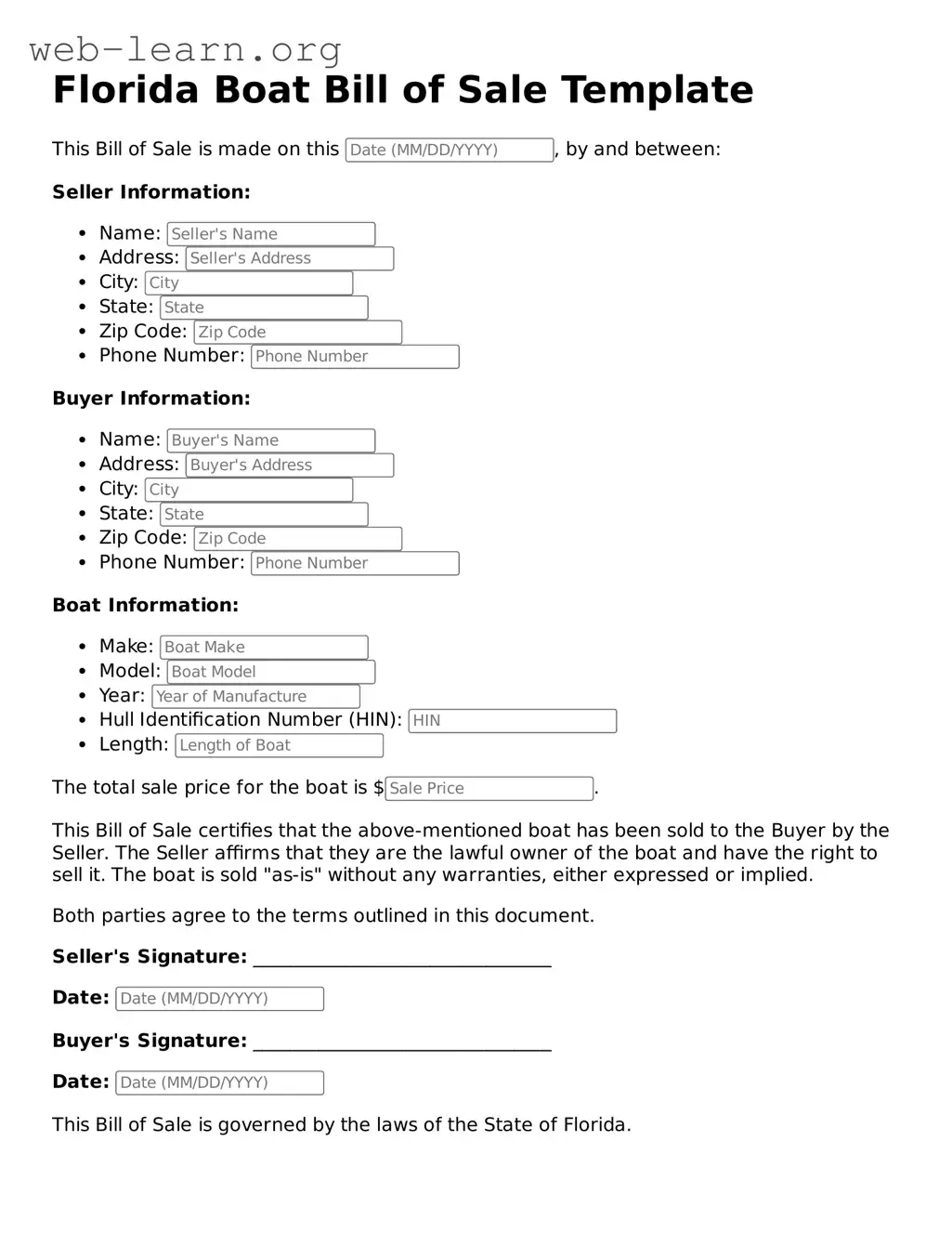
Florida Boat Bill of Sale Template
This Bill of Sale is made on this , by and between:
Seller Information:
Buyer Information:
Boat Information:
The total sale price for the boat is $.
This Bill of Sale certifies that the above-mentioned boat has been sold to the Buyer by the Seller. The Seller affirms that they are the lawful owner of the boat and have the right to sell it. The boat is sold "as-is" without any warranties, either expressed or implied.
Both parties agree to the terms outlined in this document.
Seller's Signature: ________________________________
Date:
Buyer's Signature: ________________________________
Date:
This Bill of Sale is governed by the laws of the State of Florida.
| Fact Name | Description |
|---|---|
| Purpose | The Florida Boat Bill of Sale form is used to document the sale and transfer of ownership of a boat between a seller and a buyer. |
| Governing Law | The form is governed by Florida Statutes, specifically Chapter 328, which covers vessels and the transfer of ownership. |
| Required Information | The form typically requires details such as the boat's make, model, year, hull identification number, and the purchase price. |
| Signatures | Both the seller and buyer must sign the form to validate the transaction and acknowledge the transfer of ownership. |
| Notarization | While notarization is not always required, having the document notarized can provide additional legal protection for both parties. |
| Record Keeping | It is advisable for both parties to keep a copy of the completed Bill of Sale for their records and future reference. |
Filling out the Florida Boat Bill of Sale form is an important step in transferring ownership of a boat. Once completed, this document serves as proof of the sale and is essential for registering the boat in the new owner's name. Below are the steps to guide you through the process of filling out the form accurately.
What is a Florida Boat Bill of Sale?
A Florida Boat Bill of Sale is a legal document that records the transfer of ownership of a boat from one person to another. This document provides essential details about the transaction, including the names of the buyer and seller, the boat's description, and the sale price. Having a Bill of Sale is crucial for both parties, as it serves as proof of the sale and can help prevent disputes in the future.
Is a Boat Bill of Sale required in Florida?
While a Boat Bill of Sale is not legally required in Florida, it is highly recommended. It provides a clear record of the transaction and protects both the buyer and seller. Additionally, if the boat is registered, the Florida Fish and Wildlife Conservation Commission may require proof of ownership when registering the boat.
What information should be included in the Bill of Sale?
A complete Florida Boat Bill of Sale should include:
Including all this information helps ensure that the document is comprehensive and legally binding.
Do I need to have the Bill of Sale notarized?
No, notarization is not required for a Florida Boat Bill of Sale. However, having the document notarized can add an extra layer of protection, confirming that both parties signed the document willingly and are who they claim to be. This can be particularly useful if any disputes arise later.
Can I use a generic Bill of Sale template?
Yes, you can use a generic Bill of Sale template as long as it includes all necessary information specific to the transaction. However, ensure that it complies with Florida laws and includes all relevant details about the boat and the sale. Tailoring the template to your specific situation is advisable for maximum clarity and protection.
What should I do after completing the Bill of Sale?
Once the Bill of Sale is completed and signed by both parties, the buyer should keep a copy for their records. The seller should also retain a copy as proof of the transaction. If the boat is registered, the buyer should take the Bill of Sale to the appropriate state agency to register the boat in their name.
What if there are issues after the sale?
If any issues arise after the sale, such as undisclosed defects or disputes over the sale price, the Bill of Sale can serve as a crucial piece of evidence. It is essential to address any concerns promptly and, if necessary, seek legal advice to resolve the matter. Having a well-documented Bill of Sale can significantly aid in any legal proceedings.
Filling out the Florida Boat Bill of Sale form can seem straightforward, but many people make common mistakes that can lead to complications down the line. One frequent error occurs when the seller and buyer fail to provide their full legal names. It's essential to include the complete names as they appear on government-issued identification. Omitting a middle name or using a nickname can create confusion and may complicate the transfer of ownership.
Another mistake involves not including accurate contact information. Both parties should provide their current addresses and phone numbers. If there are any issues or questions after the sale, having correct contact details is vital. Inaccurate information can lead to delays in registration or even disputes about ownership.
Many people also overlook the importance of including a detailed description of the boat. This description should encompass the make, model, year, and hull identification number (HIN). A vague description can lead to misunderstandings about what was sold. Buyers want to ensure they are getting the exact boat they believe they are purchasing.
Failing to indicate the sale price is another common oversight. The Bill of Sale must clearly state the purchase amount. This detail is not only important for the buyer and seller but also for tax purposes. If the price is left blank, it may raise red flags during the registration process.
Additionally, some individuals forget to date the form. A date is crucial as it marks the official transfer of ownership. Without a date, there may be disputes regarding when the sale took place, which could affect liability and insurance claims.
Not having the necessary signatures is a mistake that can easily be avoided. Both the seller and buyer must sign the document to validate the transaction. If either party neglects to sign, the Bill of Sale may be deemed invalid, leading to potential legal issues later on.
Finally, many people fail to keep a copy of the completed Bill of Sale. It's vital to retain a copy for personal records. This document serves as proof of the transaction and can be essential if any disputes arise in the future. Without a copy, one party may find themselves at a disadvantage if questions about the sale emerge.
When purchasing or selling a boat in Florida, the Boat Bill of Sale form is a crucial document. However, several other forms and documents are often used in conjunction with this bill of sale to ensure a smooth transaction. Each of these documents serves a specific purpose and can help protect both the buyer and seller.
Using these documents in conjunction with the Florida Boat Bill of Sale can help facilitate a clear and legally sound transaction. Ensuring that all necessary paperwork is completed and accurate will provide peace of mind for both parties involved in the sale.
When filling out the Florida Boat Bill of Sale form, it is important to follow specific guidelines to ensure the document is accurate and valid. Below are six essential dos and don'ts.
Following these guidelines will help ensure that the Bill of Sale is processed smoothly and serves its intended purpose.
The Florida Boat Bill of Sale form is an important document for anyone buying or selling a boat in Florida. However, several misconceptions surround this form. Below are ten common misunderstandings and clarifications regarding the Florida Boat Bill of Sale.
Many people believe that small boats do not require a Bill of Sale. In reality, a Bill of Sale is crucial for any boat transaction, regardless of size, to establish ownership and protect both parties.
Some individuals think that a verbal agreement between buyer and seller suffices. However, having a written Bill of Sale provides legal protection and clarity for both parties.
Even if a boat is not registered, a Bill of Sale is still important. It serves as proof of ownership and helps avoid disputes in the future.
While a handwritten Bill of Sale is acceptable, it must include specific information to be valid. Using a standard form ensures all necessary details are covered.
Many believe that sellers must offer a warranty on the boat. In fact, most Bill of Sale forms are sold "as-is," meaning the buyer accepts the boat's condition at the time of sale.
Some think that the Bill of Sale only benefits the buyer. In reality, it also protects the seller by documenting the transaction and confirming that the boat is no longer their responsibility.
Even if a boat is given as a gift, a Bill of Sale is still advisable. It provides a record of the transfer and can help avoid future disputes regarding ownership.
While notarization can add an extra layer of authenticity, it is not a requirement for the Bill of Sale in Florida. However, having it notarized can be beneficial for both parties.
Some believe that only private sales require a Bill of Sale. In fact, any transaction, including dealer sales, should include this document to ensure proper ownership transfer.
While signing the Bill of Sale is a crucial step, the transaction is not complete until all necessary documents, including title transfers, are finalized and submitted to the appropriate authorities.
Understanding these misconceptions can help buyers and sellers navigate the boat transaction process more effectively. A clear understanding of the Bill of Sale is essential for a smooth and legally sound transaction.
When filling out and using the Florida Boat Bill of Sale form, several key points should be considered to ensure a smooth transaction. Here are the main takeaways:
By following these guidelines, individuals can ensure a clear and effective transfer of ownership for their boat in Florida.
Do You Need a Bill of Sale in Idaho - The Boat Bill of Sale can also include information about any included accessories or equipment.
Oregon Marine Board Bill of Sale - Can help with future resale of the boat.
Registering a Boat in Kansas - The Boat Bill of Sale protects both the buyer and seller in the transaction.