When engaging in a transaction involving the sale of personal property in Florida, understanding the Bill of Sale form is essential. This document serves as a written record of the transfer of ownership from the seller to the buyer, ensuring that both parties are protected during the exchange. Typically, the form includes key details such as the names and addresses of both the seller and buyer, a description of the item being sold, and the sale price. Additionally, it may outline any warranties or guarantees provided by the seller, as well as the date of the transaction. By utilizing a Bill of Sale, individuals can avoid potential disputes in the future and establish clear terms for the sale. Whether you're selling a vehicle, a piece of furniture, or any other item, having this form completed accurately can provide peace of mind and legal clarity for both parties involved.
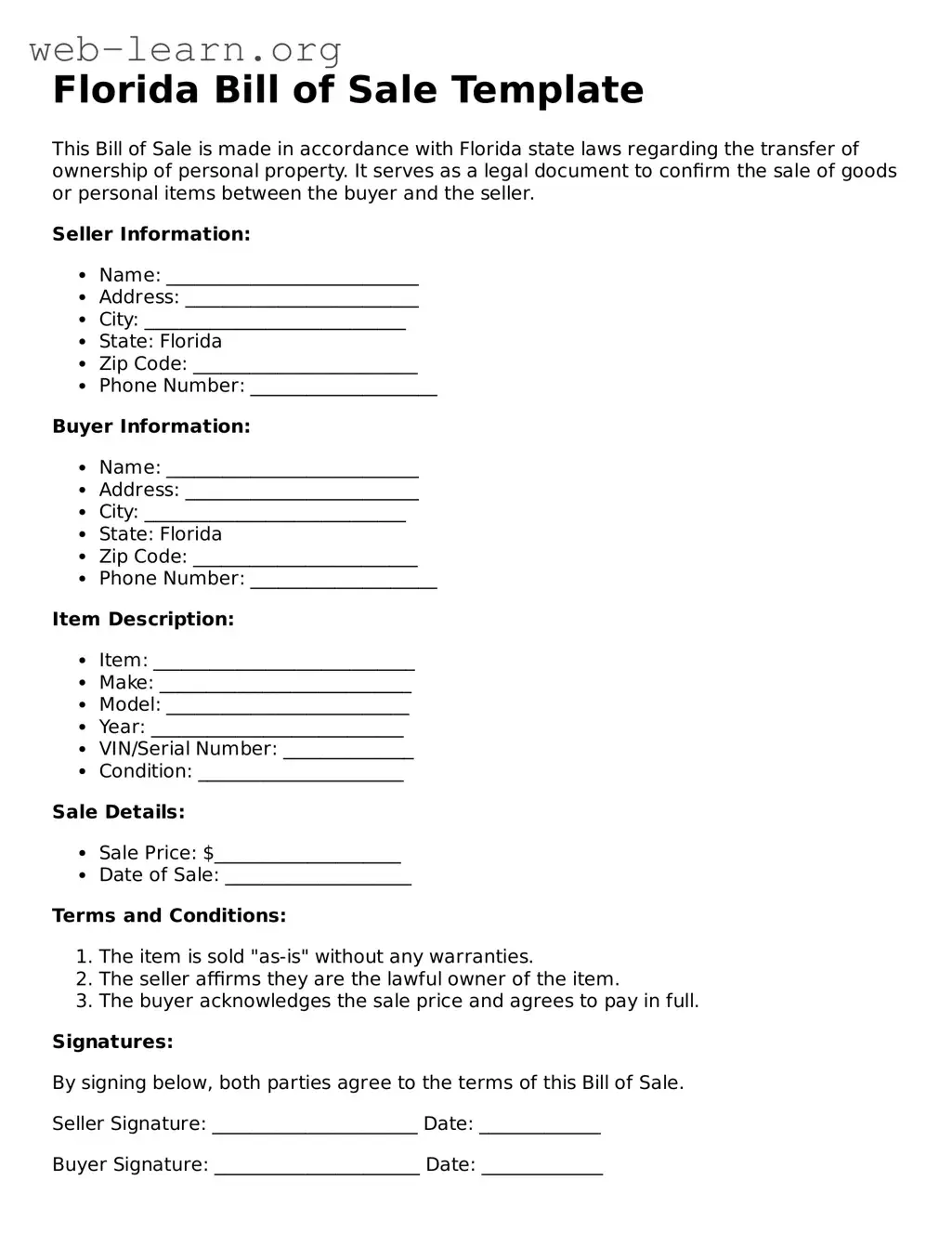
Florida Bill of Sale Template
This Bill of Sale is made in accordance with Florida state laws regarding the transfer of ownership of personal property. It serves as a legal document to confirm the sale of goods or personal items between the buyer and the seller.
Seller Information:
Buyer Information:
Item Description:
Sale Details:
Terms and Conditions:
Signatures:
By signing below, both parties agree to the terms of this Bill of Sale.
Seller Signature: ______________________ Date: _____________
Buyer Signature: ______________________ Date: _____________
This Bill of Sale is effective as of the date signed above.
| Fact Name | Description |
|---|---|
| Purpose | The Florida Bill of Sale form is used to document the sale of personal property between a buyer and a seller. |
| Governing Laws | The form is governed by Florida Statutes, particularly Chapter 679, which pertains to the Uniform Commercial Code (UCC). |
| Required Information | The form typically requires details such as the names and addresses of both parties, a description of the item being sold, and the sale price. |
| Notarization | Although notarization is not mandatory, having the Bill of Sale notarized can provide additional legal protection. |
| Usage | It is commonly used for transactions involving vehicles, boats, trailers, and other personal property. |
Completing the Florida Bill of Sale form is an important step in documenting the transfer of ownership for a vehicle or personal property. This form serves as a record for both the buyer and seller, ensuring that all necessary details are captured accurately. Following the steps below will help ensure that the form is filled out correctly.
Once the form is completed, it is advisable for both parties to keep a copy for their records. This documentation will be useful for future reference and may be required for registration or other legal purposes.
What is a Florida Bill of Sale?
A Florida Bill of Sale is a legal document that serves as proof of the transfer of ownership of personal property from one party to another. This form is commonly used for transactions involving vehicles, boats, and other valuable items. It outlines essential details such as the description of the item, the purchase price, and the names and addresses of both the buyer and seller.
Is a Bill of Sale required in Florida?
While a Bill of Sale is not legally required for all transactions in Florida, it is highly recommended. For vehicle sales, the Florida Department of Highway Safety and Motor Vehicles requires a Bill of Sale when registering the vehicle. This document provides protection for both the buyer and seller by documenting the transaction and can serve as evidence in case of disputes.
What information should be included in a Florida Bill of Sale?
A comprehensive Florida Bill of Sale should include the following information:
Including this information helps ensure clarity and can prevent misunderstandings later on.
Do I need to have the Bill of Sale notarized?
In Florida, notarization of a Bill of Sale is not required for most transactions. However, having the document notarized can add an extra layer of security and authenticity. If the transaction involves a vehicle or boat registration, it is wise to check with local authorities to see if notarization is necessary.
Can I create my own Bill of Sale in Florida?
Yes, you can create your own Bill of Sale in Florida. There are no specific state forms required, but it is essential to ensure that all necessary information is included. Many online resources and templates are available to help you draft a Bill of Sale that meets your needs. Just make sure it is clear, accurate, and signed by both parties to be effective.
When completing the Florida Bill of Sale form, individuals often make several common mistakes that can lead to complications later. One frequent error is providing incorrect or incomplete information about the buyer and seller. It is essential to include full names, addresses, and contact details. Missing any of these elements can create confusion and hinder the transfer of ownership.
Another common mistake involves the description of the item being sold. A vague or insufficient description can lead to disputes over what was actually sold. It is important to include specific details such as the make, model, year, and Vehicle Identification Number (VIN) for vehicles. For other items, including serial numbers or distinguishing features can help clarify the transaction.
People sometimes forget to include the sale price on the form. Leaving this field blank can create issues, especially if the transaction is later questioned by tax authorities. It is advisable to clearly state the agreed-upon price to ensure transparency and accuracy.
Additionally, failing to sign the form can render it invalid. Both the buyer and seller must sign the Bill of Sale to confirm the transaction. Without signatures, the document may not hold up in legal situations, such as disputes or claims of ownership.
Another mistake is neglecting to have a witness or notary present during the signing process. While not always required, having a witness can add an extra layer of credibility to the transaction. In some cases, a notary may be necessary to authenticate the signatures, particularly for high-value items.
Lastly, individuals often overlook the importance of keeping a copy of the completed Bill of Sale. Retaining a copy for personal records can be crucial for both the buyer and seller. It serves as proof of the transaction and can be useful for future reference, especially if questions arise about the sale.
The Florida Bill of Sale form is often accompanied by several other documents to ensure a smooth transaction. Below is a list of common forms and documents that may be used in conjunction with the Bill of Sale.
These documents play a crucial role in facilitating a clear and legally binding transaction. Ensuring all necessary forms are completed accurately can help prevent future disputes and complications.
When filling out the Florida Bill of Sale form, it’s important to ensure accuracy and clarity. Below is a list of things you should and shouldn't do to make the process smoother.
Things You Should Do:
Things You Shouldn't Do:
Understanding the Florida Bill of Sale form is important for anyone involved in buying or selling personal property. However, several misconceptions can lead to confusion. Here are six common myths:
Many people think this document is only required for cars, but that's not true. A Bill of Sale can be used for various personal property transactions, including boats, trailers, and even furniture.
This is a common misunderstanding. A properly completed Bill of Sale is a legal document that can protect both the buyer and the seller in a transaction.
While a receipt proves payment, a Bill of Sale provides additional details about the item, including its condition and any warranties. This can be crucial if disputes arise later.
In reality, both the buyer and seller should sign the document. This ensures that both parties agree to the terms of the sale.
Even if you’re giving an item as a gift, having a Bill of Sale can help clarify ownership and avoid potential disputes in the future.
It’s essential to include specific details like the item description, sale price, and date of transfer. Omitting this information can lead to misunderstandings.
By clearing up these misconceptions, you can ensure a smoother transaction process when using the Florida Bill of Sale form.
When it comes to transferring ownership of personal property in Florida, the Bill of Sale serves as a crucial document. Understanding how to fill out and utilize this form effectively can help ensure a smooth transaction. Here are some key takeaways to consider:
By following these guidelines, individuals can navigate the process of completing and utilizing a Florida Bill of Sale with greater confidence and clarity.
Vehicle Bill of Sale Indiana - This form helps establish the sale date and the condition of the item sold.
Bill of Sale in Alabama - A Bill of Sale can be used in conjunction with other legal documents for a complete transaction.
Vehicle Bill of Sale Kansas - This document is often required by state law for certain types of sales.