The Firearm Bill of Sale form is an essential document for anyone involved in the sale or transfer of firearms. This form serves to provide a clear and legal record of the transaction, ensuring that both the buyer and seller are protected under the law. It typically includes key information such as the names and addresses of both parties, a detailed description of the firearm being sold, including its make, model, and serial number, as well as the date of the transaction. Additionally, the form often requires signatures from both the buyer and seller, affirming their agreement to the terms of the sale. By using this form, individuals can help prevent misunderstandings and disputes that may arise after the transfer. Furthermore, it can serve as proof of ownership and compliance with state and federal regulations. Understanding the importance of this document is crucial for anyone looking to engage in the buying or selling of firearms, ensuring that the process is smooth, legal, and transparent.
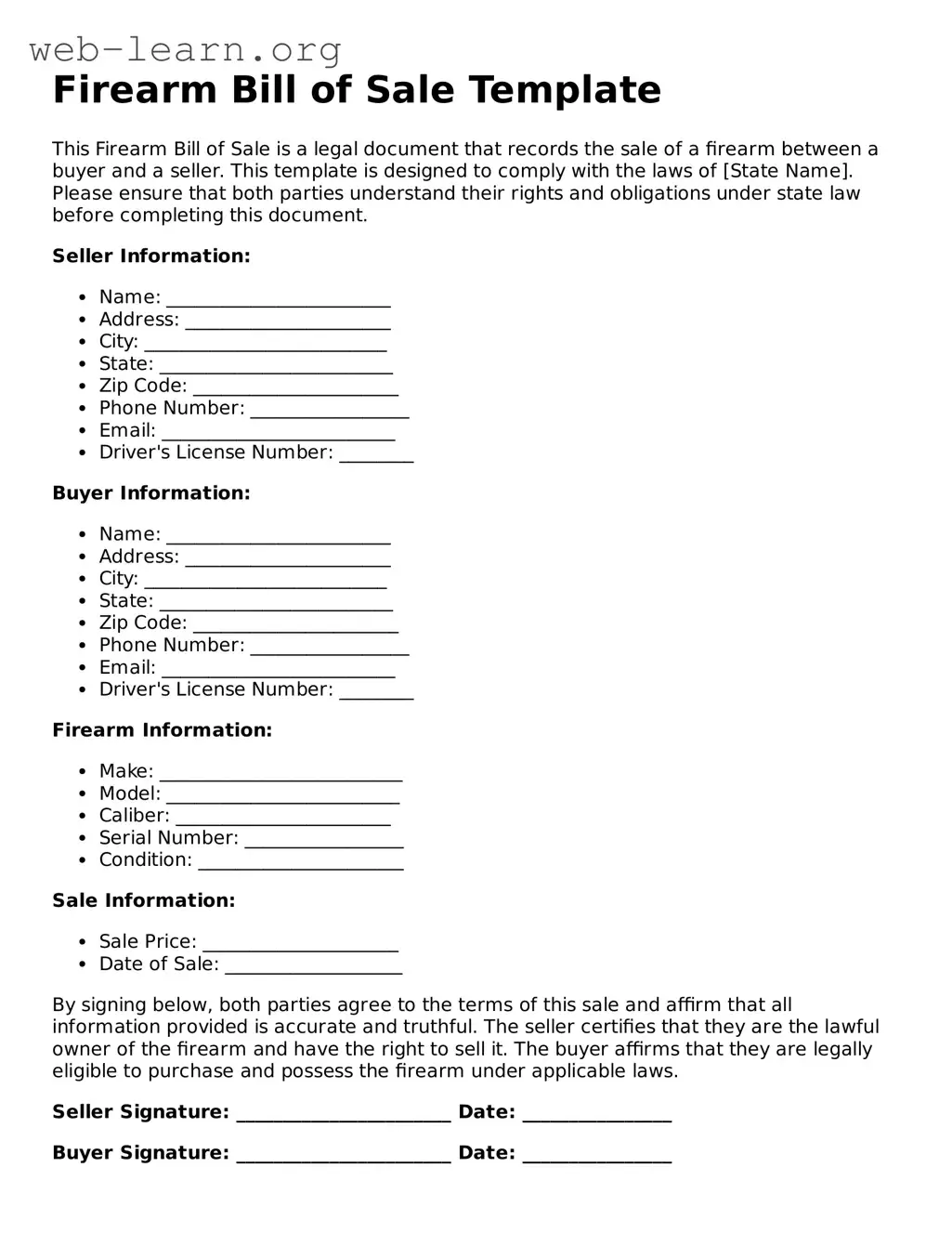
Firearm Bill of Sale Template
This Firearm Bill of Sale is a legal document that records the sale of a firearm between a buyer and a seller. This template is designed to comply with the laws of [State Name]. Please ensure that both parties understand their rights and obligations under state law before completing this document.
Seller Information:
Buyer Information:
Firearm Information:
Sale Information:
By signing below, both parties agree to the terms of this sale and affirm that all information provided is accurate and truthful. The seller certifies that they are the lawful owner of the firearm and have the right to sell it. The buyer affirms that they are legally eligible to purchase and possess the firearm under applicable laws.
Seller Signature: _______________________ Date: ________________
Buyer Signature: _______________________ Date: ________________
Witness Signature: _______________________ Date: ________________
| Fact Name | Description |
|---|---|
| Purpose | A Firearm Bill of Sale form serves as a legal document that records the sale or transfer of a firearm between parties. |
| Buyer and Seller Information | The form typically requires both the buyer's and seller's names, addresses, and contact information to ensure proper identification. |
| Firearm Details | Details about the firearm, including make, model, caliber, and serial number, must be included to accurately identify the item being sold. |
| State-Specific Laws | Each state has its own laws governing the sale of firearms. It's essential to reference the relevant state laws when completing the form. |
| Witness Signature | Some states may require a witness to sign the form, adding an extra layer of validity to the transaction. |
| Legal Age Requirement | Buyers must be of legal age to purchase a firearm, which varies by state. This should be confirmed before completing the sale. |
| Record Keeping | Both parties should keep a copy of the completed Bill of Sale for their records, as it may be needed for future reference or legal purposes. |
| Notarization | While not always required, notarizing the Bill of Sale can provide additional legal protection and verification of the transaction. |
After obtaining the Firearm Bill of Sale form, you will need to complete it carefully to ensure all necessary information is accurately provided. This form serves as a record of the sale and transfer of ownership of a firearm. Follow these steps to fill it out correctly.
Once you have filled out the form, both parties should keep a copy for their records. This documentation is important for future reference and ensures a clear record of the transaction.
What is a Firearm Bill of Sale?
A Firearm Bill of Sale is a legal document that records the sale or transfer of a firearm from one person to another. This form serves as proof of the transaction and includes essential details about the buyer, seller, and the firearm itself.
Why do I need a Firearm Bill of Sale?
Having a Firearm Bill of Sale is crucial for several reasons:
What information is included in the Firearm Bill of Sale?
The Firearm Bill of Sale typically includes:
Is a Firearm Bill of Sale required by law?
The requirement for a Firearm Bill of Sale varies by state. Some states mandate that a bill of sale be completed for all firearm transactions, while others do not. It's important to check your local laws to ensure compliance.
Can I create my own Firearm Bill of Sale?
Yes, you can create your own Firearm Bill of Sale. However, it is essential to ensure that it includes all necessary information and complies with your state’s laws. Many templates are available online, which can simplify the process.
What if the firearm has a defect or issue after the sale?
Generally, once the sale is complete and the Firearm Bill of Sale is signed, the seller is not responsible for any defects or issues that arise afterward. However, it’s a good practice to discuss the condition of the firearm before the sale to avoid misunderstandings.
Do I need to have the Firearm Bill of Sale notarized?
Notarization is not typically required for a Firearm Bill of Sale, but it can add an extra layer of authenticity. Some buyers and sellers choose to have the document notarized for peace of mind, especially in higher-value transactions.
What should I do with the Firearm Bill of Sale after the transaction?
Both the buyer and seller should keep a copy of the Firearm Bill of Sale for their records. This documentation can be important for future reference, especially if there are questions about ownership or legality later on.
Can I use a Firearm Bill of Sale for private sales?
Absolutely! A Firearm Bill of Sale is commonly used for private sales between individuals. It is a practical way to document the transaction and ensure that both parties have a record of the sale.
Filling out a Firearm Bill of Sale form can seem straightforward, but there are common pitfalls that many people encounter. One major mistake is failing to include all required information. Each section of the form is designed to capture specific details about the firearm and the transaction. Omitting even a small piece of information, such as the serial number or the buyer's address, can render the document incomplete and potentially problematic down the line.
Another frequent error is not having both parties sign the form. A Firearm Bill of Sale is a legal document that requires signatures from both the seller and the buyer. If one party neglects to sign, the document may not hold up in court or could be challenged later. Always double-check that all necessary signatures are present before finalizing the sale.
Many individuals also overlook the importance of dating the document. A date provides context for the transaction and can be crucial for legal reasons. Without a date, it may be difficult to establish when the sale took place, which can lead to confusion or disputes in the future.
Another common mistake is using vague language. It’s essential to be as specific as possible when describing the firearm being sold. Instead of simply stating "a gun," include details such as the make, model, caliber, and condition. This clarity helps prevent misunderstandings and protects both parties involved in the transaction.
People often fail to consider the local laws governing firearm sales. Each state has its own regulations regarding the sale and transfer of firearms. Ignoring these laws can lead to legal complications. It’s wise to familiarize yourself with your state’s requirements to ensure that your Bill of Sale complies with all applicable laws.
Lastly, many individuals neglect to keep a copy of the completed Bill of Sale. This document serves as proof of the transaction and can be vital for both the seller and the buyer. Without a copy, you may find yourself in a difficult position should any disputes arise in the future. Always make sure to retain a copy for your records.
The Firearm Bill of Sale form is an important document for the legal transfer of ownership of a firearm. Alongside this form, several other documents may be utilized to ensure compliance with state and federal laws. Below is a list of other forms and documents that are commonly used in conjunction with the Firearm Bill of Sale.
Each of these documents plays a crucial role in ensuring that the transfer of a firearm is conducted legally and responsibly. Proper documentation helps protect both the buyer and seller, providing clarity and security in the transaction process.
When filling out the Firearm Bill of Sale form, it is important to follow certain guidelines to ensure the process goes smoothly. Here are some key dos and don'ts:
By adhering to these guidelines, you can help ensure that the sale is conducted legally and efficiently.
Understanding the Firearm Bill of Sale form is essential for anyone involved in the sale or purchase of firearms. However, several misconceptions can lead to confusion. Here are six common misunderstandings:
While a Bill of Sale documents the transfer of ownership, it does not replace the need for a background check. Buyers must still undergo the necessary checks to ensure they are legally eligible to own a firearm.
Although private sales often require a Bill of Sale, it is also advisable for transactions through licensed dealers. This document provides a clear record of the sale for both parties.
Notarization is not a legal requirement for a Bill of Sale in many states. However, having it notarized can add an extra layer of security and authenticity to the document.
While verbal agreements can exist, they are difficult to enforce. A written Bill of Sale provides clear evidence of the transaction, protecting both the buyer and seller.
In reality, the Bill of Sale protects both parties. It establishes the terms of the sale and serves as proof of ownership transfer, which can be crucial in case of disputes.
While laws vary by state, many jurisdictions recommend or require a Bill of Sale for firearm transactions. It is important to check local regulations to ensure compliance.
When filling out and using the Firearm Bill of Sale form, keep these key takeaways in mind:
Bill of Sale for Dirt Bike - This form is often required by state authorities for registration purposes.