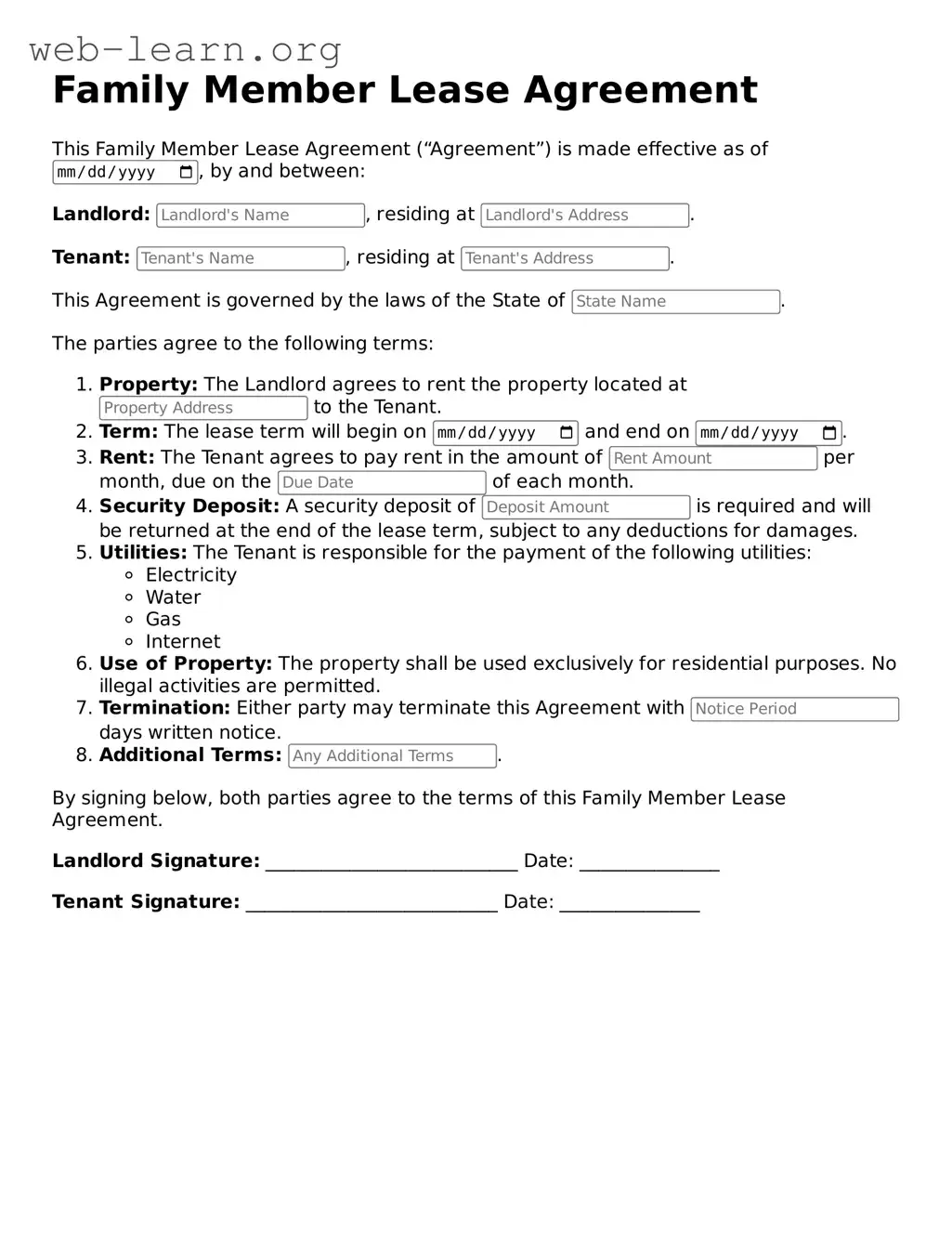
The Family Member Lease Agreement form serves as a crucial tool for families looking to formalize rental arrangements between relatives. This document outlines the terms and conditions under which a family member can rent a property, ensuring clarity and protection for both the landlord and tenant. Key aspects of the agreement include the rental amount, payment schedule, and duration of the lease. Additionally, it specifies responsibilities regarding maintenance, utilities, and any restrictions that may apply to the property. By addressing these elements, the form fosters transparency and helps prevent misunderstandings that could arise in informal arrangements. Importantly, it also includes provisions for resolving disputes, ensuring that family relationships remain intact even in the context of a landlord-tenant dynamic. Overall, the Family Member Lease Agreement form not only safeguards the interests of both parties but also promotes a respectful and cooperative living environment.
Family Member Lease Agreement
This Family Member Lease Agreement (“Agreement”) is made effective as of , by and between:
Landlord: , residing at .
Tenant: , residing at .
This Agreement is governed by the laws of the State of .
The parties agree to the following terms:
By signing below, both parties agree to the terms of this Family Member Lease Agreement.
Landlord Signature: ___________________________ Date: _______________
Tenant Signature: ___________________________ Date: _______________
| Fact Name | Description |
|---|---|
| Definition | A Family Member Lease Agreement is a contract between a landlord and a family member who is renting a property, outlining the terms of the rental arrangement. |
| Purpose | This agreement helps clarify expectations, responsibilities, and rights of both the landlord and the family member tenant. |
| State-Specific Forms | Different states may have specific requirements for Family Member Lease Agreements. It's important to check local laws to ensure compliance. |
| Governing Law | In states like California, the agreement is governed by the California Civil Code, while in Texas, it falls under the Texas Property Code. |
| Importance of Written Agreement | Having a written lease agreement can prevent misunderstandings and disputes, even among family members. |
After gathering the necessary information, you are ready to complete the Family Member Lease Agreement form. This form is essential for establishing a clear understanding between family members regarding leasing terms. Follow these steps to fill it out accurately.
Once you have completed the form, ensure that each party receives a copy for their records. This helps maintain clarity and accountability throughout the lease period.
What is a Family Member Lease Agreement?
A Family Member Lease Agreement is a legal document that outlines the terms under which a family member can rent a property from another family member. This agreement typically includes details such as the rental amount, duration of the lease, and responsibilities of both parties. It serves to formalize the arrangement, ensuring clarity and protection for both the landlord and tenant.
Why is a Family Member Lease Agreement important?
Having a Family Member Lease Agreement is crucial for several reasons. First, it helps prevent misunderstandings by clearly stating the expectations of both the landlord and the tenant. Second, it provides legal protection in case of disputes. Lastly, it can establish a fair market rental rate, which can be beneficial for tax purposes and maintaining family relationships.
What should be included in the Family Member Lease Agreement?
When drafting a Family Member Lease Agreement, consider including the following elements:
Including these details helps ensure that both parties have a clear understanding of their rights and obligations.
Can a Family Member Lease Agreement be modified?
Yes, a Family Member Lease Agreement can be modified, but any changes should be made in writing and signed by both parties. This ensures that both the landlord and tenant are in agreement about the new terms. It’s advisable to document any modifications to avoid confusion in the future.
What happens if one party does not follow the terms of the agreement?
If either party fails to adhere to the terms of the Family Member Lease Agreement, it can lead to disputes. The first step is often to communicate openly about the issue. If that does not resolve the situation, legal action may be considered. This could involve mediation or, in some cases, formal eviction proceedings if the tenant is not complying with the lease terms. It’s essential to refer back to the agreement to understand the rights and obligations of each party.
Filling out a Family Member Lease Agreement form can seem straightforward, but many people make common mistakes that can lead to complications later on. One frequent error is not providing accurate information about the parties involved. When names, addresses, or contact details are incorrect, it can create confusion and legal challenges down the line.
Another mistake occurs when individuals fail to specify the rental amount clearly. It's essential to state the rent amount explicitly, including how and when it should be paid. If this information is vague or missing, misunderstandings can arise, leading to disputes between family members.
People often overlook the importance of outlining the duration of the lease. Without a clear start and end date, it can be difficult to enforce the terms of the agreement. This lack of clarity can lead to assumptions and disagreements about when the lease is valid.
Additionally, many individuals neglect to address maintenance responsibilities. The lease should clearly state who is responsible for repairs and upkeep of the property. Failing to include this information can result in disputes over maintenance issues, which can strain family relationships.
Another common oversight is not including a clause for termination. A lease agreement should outline the conditions under which either party can terminate the lease. Without this clause, it may be challenging to end the arrangement amicably if circumstances change.
Some people also forget to discuss and include any restrictions on the property. For instance, if there are rules about pets, smoking, or guests, these should be clearly stated in the agreement. Not doing so can lead to frustration and disagreements later.
Moreover, individuals sometimes fail to sign and date the agreement. An unsigned lease may not hold up in a legal context. It's crucial for both parties to sign and date the document to ensure it is legally binding.
Lastly, many overlook the need for a witness or notarization. While not always required, having a witness can provide additional security and validity to the agreement. This step can help prevent potential disputes in the future.
A Family Member Lease Agreement is an essential document for outlining the terms of a rental arrangement between family members. However, several other forms and documents may accompany it to ensure clarity and legal compliance. Below is a list of these important documents.
Utilizing these documents alongside the Family Member Lease Agreement can help create a clear and fair rental relationship. Ensuring all parties understand their rights and responsibilities is crucial for a smooth leasing experience.
The Family Member Lease Agreement form is designed to outline the terms and conditions under which a family member can lease property. This document shares similarities with several other agreements and forms commonly used in property leasing and rental situations. Below is a list of nine documents that are similar to the Family Member Lease Agreement, along with explanations of their similarities:
When filling out a Family Member Lease Agreement form, it's important to approach the process with care. This document serves as a legal contract between family members, so clarity and accuracy are key. Here’s a list of things you should and shouldn’t do:
By following these guidelines, you can help ensure that the Family Member Lease Agreement is clear, comprehensive, and serves its intended purpose effectively.
The Family Member Lease Agreement form is a crucial document for families engaging in housing arrangements. However, several misconceptions can lead to misunderstandings about its purpose and use. Below are six common misconceptions, along with clarifications to help provide a clearer understanding.
This is not true. While the form is often used for relatives, it can also apply to any family member who is renting a space within a property, regardless of whether they reside in the same household.
Some people believe that verbal agreements are sufficient. However, having a written agreement protects both the landlord and the tenant by clearly outlining terms and expectations.
This is a common misunderstanding. Depending on the terms agreed upon, a security deposit may still be required to cover potential damages or unpaid rent.
While it may be uncomfortable, family members can indeed be evicted if they violate the terms of the lease. The agreement holds legal weight, just like any other lease.
Even short-term arrangements can benefit from a lease agreement. Having clear terms in writing helps prevent disputes, regardless of the duration of the lease.
In reality, the Family Member Lease Agreement is subject to the same laws and regulations as any other lease. It is essential to ensure compliance with local housing laws to avoid legal issues.
When filling out and using the Family Member Lease Agreement form, consider the following key takeaways:
Hunting Lease Agreement Pdf - The agreement can detail the process for terminating the lease early if needed.
Photobooth Rental Contract - Outlines any restrictions on the use of the photo booth during the event.