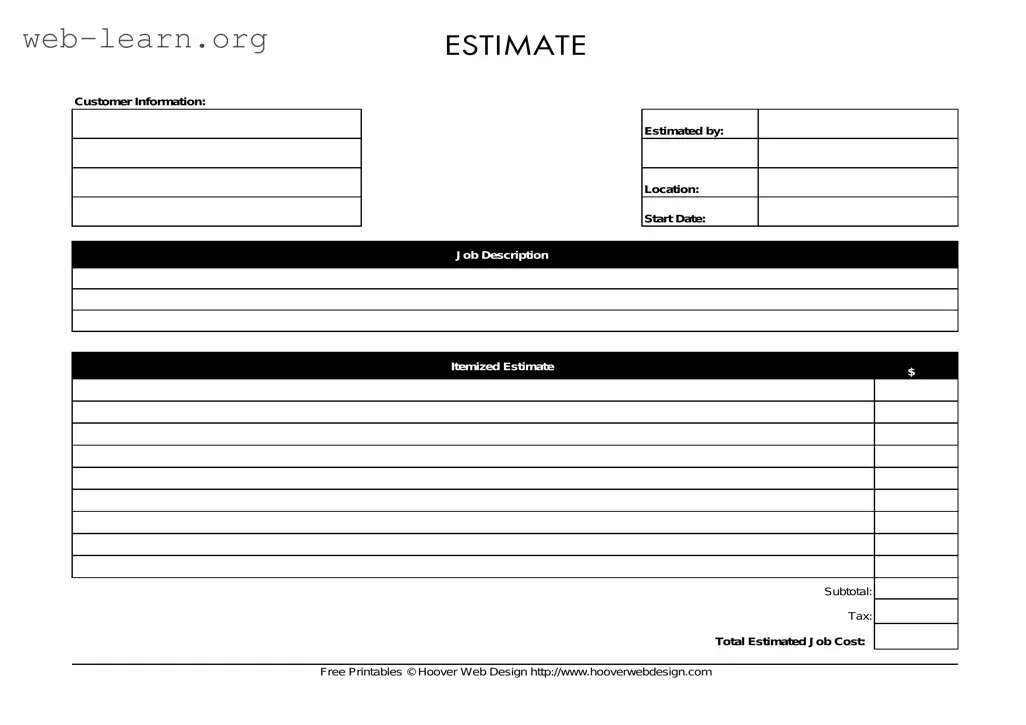
The Estimate form serves as a crucial tool for businesses and individuals alike, streamlining the process of providing cost projections for goods or services. Whether you are a contractor bidding on a home renovation project or a freelancer outlining the costs for a client, this form helps clarify expectations and fosters transparent communication. Key components typically include a detailed breakdown of materials, labor, and any additional expenses, ensuring that all parties have a clear understanding of the financial implications involved. Additionally, the form often allows for customization, accommodating unique project requirements or client specifications. By utilizing an Estimate form, you not only enhance professionalism but also create a record that can be referenced throughout the course of a project, helping to prevent misunderstandings and disputes down the line.
| Fact Name | Description |
|---|---|
| Purpose | The Estimate form is used to provide a preliminary calculation of costs for a project or service. |
| State-Specific Forms | Many states have their own versions of the Estimate form, tailored to local regulations and requirements. |
| Governing Law | Each state’s Estimate form is governed by its own set of laws, which may include procurement laws and construction regulations. |
| Submission Requirements | Some states require the Estimate form to be submitted with additional documentation, such as project plans or budgets. |
| Deadline | There is often a specific deadline for submitting the Estimate form, which varies by state and project type. |
| Review Process | After submission, the Estimate form typically undergoes a review process to ensure accuracy and compliance with state laws. |
| Amendments | If project details change, amendments to the Estimate form may be necessary to reflect updated costs. |
| Public Access | In many states, completed Estimate forms become public records, allowing for transparency in project funding. |
After you complete the Estimate form, the next steps involve submitting it to the appropriate department or individual for review. Make sure to double-check all entries for accuracy before sending it off. This will help ensure a smooth process moving forward.
What is the purpose of the Estimate form?
The Estimate form is designed to provide a clear and detailed breakdown of anticipated costs associated with a specific service or project. By filling out this form, you can receive an accurate estimate that helps you plan your budget effectively. This form ensures transparency and allows you to make informed decisions.
Who should fill out the Estimate form?
Anyone seeking a cost estimate for a service or project should complete the Estimate form. This includes individuals, businesses, and organizations looking to understand the financial implications of their plans. It is especially useful for those who want to compare costs before making a commitment.
What information is required to complete the Estimate form?
The Estimate form typically requires the following information:
Providing complete and accurate information will help ensure that you receive the most precise estimate possible.
How long does it take to receive an estimate after submitting the form?
Once you submit the Estimate form, you can expect to receive a response within a few business days. The exact timing may vary based on the complexity of your request and the volume of inquiries being processed. If you have urgent needs, it’s advisable to indicate this in your submission.
Can I make changes to my Estimate form after submission?
Yes, you can make changes. If you realize that you need to update any information after submitting your Estimate form, simply reach out through the provided contact methods. It’s important to communicate any changes as soon as possible to ensure that your estimate reflects your current needs.
Is there a fee for using the Estimate form?
No, there is typically no fee associated with filling out the Estimate form. The purpose of the form is to provide you with a cost estimate without any obligation. However, be sure to review any terms or conditions that may apply.
What should I do if I have questions while filling out the Estimate form?
If you have questions or need assistance while completing the Estimate form, don’t hesitate to reach out for help. Support is available to guide you through the process and ensure that you provide all necessary information. This can help avoid delays in receiving your estimate.
When filling out an estimate form, many individuals overlook critical details that can lead to misunderstandings or inaccuracies. One common mistake is failing to provide complete contact information. Without a valid phone number or email address, it becomes challenging for service providers to reach out for clarifications or updates. Always double-check that your contact details are accurate and current.
Another frequent error is neglecting to specify the scope of work clearly. Vague descriptions can result in misinterpretations and may lead to unexpected costs. Be as detailed as possible about the services you require. This ensures that the estimates you receive are based on a mutual understanding of the project.
People often forget to include essential deadlines. If a project is time-sensitive, clearly stating the timeline can help service providers prioritize their workload. Without this information, you might face delays or find that your project is not given the urgency it deserves.
Additionally, some individuals fail to consider their budget constraints. Providing a budget range can guide service providers in tailoring their estimates to fit your financial expectations. This not only saves time but also helps avoid any potential disappointments later on.
Another mistake is overlooking the inclusion of necessary permits or licenses. If your project requires specific permits, mentioning this in the estimate form is crucial. It allows service providers to factor in these costs and ensures compliance with local regulations.
Lastly, many people neglect to review the form before submission. Simple typos or omitted information can lead to confusion and miscommunication. Taking a moment to review your answers can prevent unnecessary back-and-forth and streamline the process.
When working with an Estimate form, several other documents and forms may be necessary to ensure a smooth process. Each of these documents serves a specific purpose and helps to provide clarity and structure to the project or transaction at hand. Below is a list of commonly used forms that complement the Estimate form.
Each of these documents plays a vital role in the overall process, ensuring that all parties have a clear understanding of their roles and responsibilities. By utilizing these forms alongside the Estimate form, individuals and businesses can enhance communication, reduce misunderstandings, and foster successful project outcomes.
The Estimate form serves a specific purpose in the realm of business transactions and project management. Several other documents share similarities with the Estimate form, each serving unique yet related functions. Below is a list of ten documents that are comparable to the Estimate form, along with brief explanations of their similarities.
When filling out an Estimate form, attention to detail is crucial. Here are some guidelines to help ensure accuracy and completeness.
Understanding the Estimate form can be tricky. Here are ten common misconceptions that people often have about it:
This is not true. An estimate is generally a proposal of costs, not a legally binding agreement. It serves as a guideline for potential expenses.
Estimates may not cover every possible expense. They often focus on the most likely costs but can leave out unforeseen expenses.
Estimates can change based on various factors, such as changes in project scope or unexpected challenges.
Estimates can vary significantly between different providers. It's essential to compare them carefully.
Even small projects can benefit from estimates. They help clarify costs and expectations, regardless of size.
The process of getting estimates is valuable. It allows for discussion and negotiation, which can lead to better outcomes.
Some providers may charge for detailed estimates, especially if they require significant time or resources to prepare.
Written estimates are generally more reliable. They provide a clear record of what was agreed upon.
Estimates can be used in various industries, including services, retail, and manufacturing. They help in budgeting and planning.
Negotiation is often possible. If an estimate doesn't fit your budget, discussing it with the provider can lead to adjustments.
By understanding these misconceptions, you can approach the Estimate form with greater confidence and clarity.
Filling out and utilizing the Estimate form is a critical process that can significantly impact project planning and budgeting. Here are some key takeaways to keep in mind:
By adhering to these guidelines, individuals can enhance the effectiveness of their Estimate forms and contribute to smoother project execution.