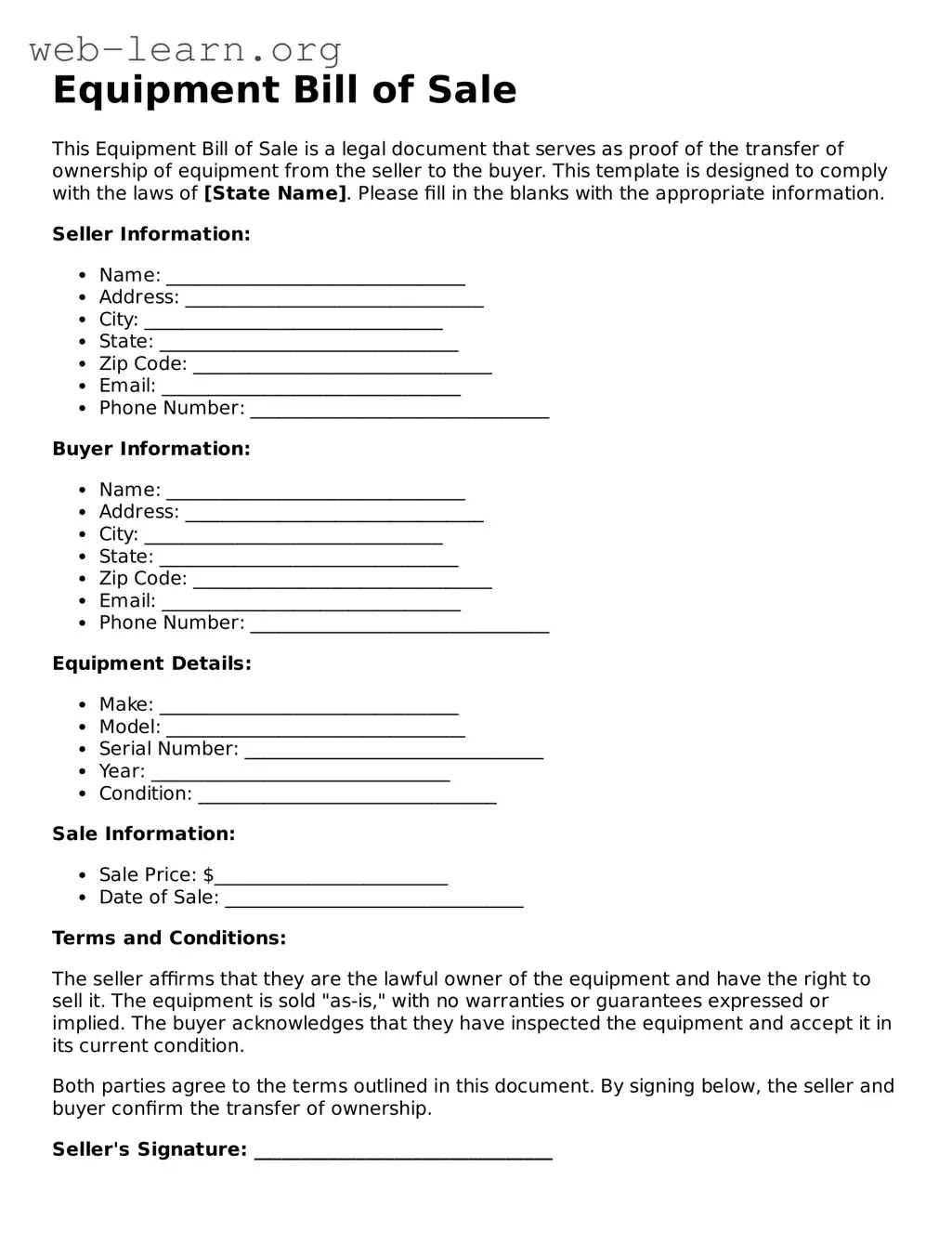
The Equipment Bill of Sale form serves as a crucial document in the transaction of equipment between a seller and a buyer. This form outlines essential details such as the identification of the equipment being sold, including its make, model, and serial number, ensuring both parties are clear about what is being exchanged. It also includes the sale price, payment terms, and the date of the transaction, which are vital for establishing the financial aspects of the deal. Additionally, the form typically contains a section for signatures, confirming that both parties agree to the terms laid out in the document. By providing a clear and concise record of the sale, this form helps protect the interests of both the buyer and the seller, minimizing potential disputes and misunderstandings in the future. Furthermore, having a properly completed Equipment Bill of Sale can assist in the transfer of ownership and may be required for registration or licensing purposes. Overall, this form is an essential tool in the equipment sales process, ensuring transparency and accountability for both parties involved.
Equipment Bill of Sale
This Equipment Bill of Sale is a legal document that serves as proof of the transfer of ownership of equipment from the seller to the buyer. This template is designed to comply with the laws of [State Name]. Please fill in the blanks with the appropriate information.
Seller Information:
Buyer Information:
Equipment Details:
Sale Information:
Terms and Conditions:
The seller affirms that they are the lawful owner of the equipment and have the right to sell it. The equipment is sold "as-is," with no warranties or guarantees expressed or implied. The buyer acknowledges that they have inspected the equipment and accept it in its current condition.
Both parties agree to the terms outlined in this document. By signing below, the seller and buyer confirm the transfer of ownership.
Seller's Signature: ________________________________
Date: ________________________________
Buyer's Signature: ________________________________
Date: ________________________________
| Fact Name | Description |
|---|---|
| Purpose | The Equipment Bill of Sale form is used to document the transfer of ownership of equipment from a seller to a buyer. |
| Parties Involved | The form includes details about the seller and the buyer, ensuring both parties are clearly identified. |
| Governing Law | The form is subject to state-specific laws. For example, in California, the Uniform Commercial Code (UCC) governs the sale of goods. |
| Equipment Description | A detailed description of the equipment being sold must be included, covering aspects like make, model, and serial number. |
| Consideration | The form specifies the purchase price or other consideration exchanged for the equipment. |
| Signatures | Both parties must sign the form to validate the transaction, making it legally binding. |
Once you have the Equipment Bill of Sale form ready, you will need to complete it accurately to ensure a smooth transaction. Follow these steps to fill out the form correctly.
After filling out the form, keep a copy for your records. Ensure both parties have signed it to finalize the agreement. This document serves as proof of the transaction.
An Equipment Bill of Sale is a legal document that records the transfer of ownership of equipment from one party to another. This form provides essential details about the transaction, including the description of the equipment, the purchase price, and the parties involved.
This document serves several important purposes. It provides proof of the sale, protects both the buyer and seller by detailing the terms of the transaction, and may be required for registration or financing purposes. Having a written record can help avoid disputes in the future.
An Equipment Bill of Sale usually includes:
Yes, once both parties sign the Equipment Bill of Sale, it becomes a legally binding contract. This means that both the buyer and seller are obligated to adhere to the terms outlined in the document.
While notarization is not always required, it can add an extra layer of authenticity to the document. If you anticipate any disputes or if the transaction involves a significant amount of money, having the form notarized is advisable.
While a generic Bill of Sale may be used, it is recommended to use a specific Equipment Bill of Sale. This ensures that all necessary details relevant to the equipment transaction are included, reducing the risk of misunderstandings.
If there are defects or issues with the equipment, these should be clearly stated in the Bill of Sale. Transparency is key. If the seller is providing any warranties or guarantees, these should also be documented in the form.
Once signed, modifications to the Equipment Bill of Sale should be approached with caution. Any changes should be documented in writing and signed by both parties to ensure clarity and agreement on the new terms.
It is important to keep the Equipment Bill of Sale in a safe place. Both the buyer and seller should retain a copy for their records. This document may be needed for future reference, especially for warranty claims or resale.
If the Equipment Bill of Sale is lost, it is advisable to create a duplicate. Both parties should agree on the contents of the original document and sign the new copy. This helps ensure that both parties still have a record of the transaction.
Filling out an Equipment Bill of Sale form can seem straightforward, but there are common mistakes that individuals often make, which can lead to complications down the road. One frequent error is failing to provide complete and accurate information about the equipment being sold. It is essential to include details such as the make, model, year, and serial number. Omitting any of these details can create confusion and may even result in disputes between the buyer and seller.
Another mistake involves neglecting to include the purchase price. This section is crucial, as it establishes the value of the transaction. Leaving it blank or entering an incorrect amount can lead to misunderstandings and potential legal issues. Both parties should agree on the price and ensure it is clearly stated on the form to avoid any future disagreements.
Additionally, many individuals overlook the importance of signatures. Both the buyer and seller must sign the Equipment Bill of Sale to validate the transaction. Without these signatures, the document may not hold up in court if a dispute arises. It is advisable to check that all necessary parties have signed before considering the transaction complete.
Lastly, failing to keep a copy of the completed Bill of Sale is a significant oversight. After the form has been filled out and signed, both parties should retain a copy for their records. This document serves as proof of the transaction and may be needed for future reference, such as for tax purposes or if any issues come up regarding ownership. Keeping a record ensures that both parties have access to the agreed-upon terms of the sale.
When engaging in the sale or purchase of equipment, several important documents often accompany the Equipment Bill of Sale. These documents help ensure that both parties are protected and that the transaction proceeds smoothly. Here are some commonly used forms and documents:
Having these documents in place can help streamline the process of buying or selling equipment. They provide clarity and security for both parties, ensuring that the transaction is well-documented and legally sound.
When filling out the Equipment Bill of Sale form, there are important things to keep in mind. Here’s a list of what to do and what to avoid.
Following these guidelines will help ensure that your Equipment Bill of Sale is completed correctly and protects both parties involved in the transaction.
When it comes to the Equipment Bill of Sale form, several misconceptions can lead to confusion. Understanding these can help ensure a smoother transaction for both buyers and sellers.
Being aware of these misconceptions can lead to better preparation and a smoother transaction process for everyone involved.
When filling out and using the Equipment Bill of Sale form, keep the following key points in mind:
Following these guidelines will help ensure a smooth transaction and protect both parties involved.
Bill of Sale for Mobile Home - It can help protect the buyer from any claims made by previous owners.
Atv Bill of Sale Printable - Facilitates the registration process with local authorities.
Bill of Sale Form - The Bill of Sale can be used as evidence in court if disputes arise later.