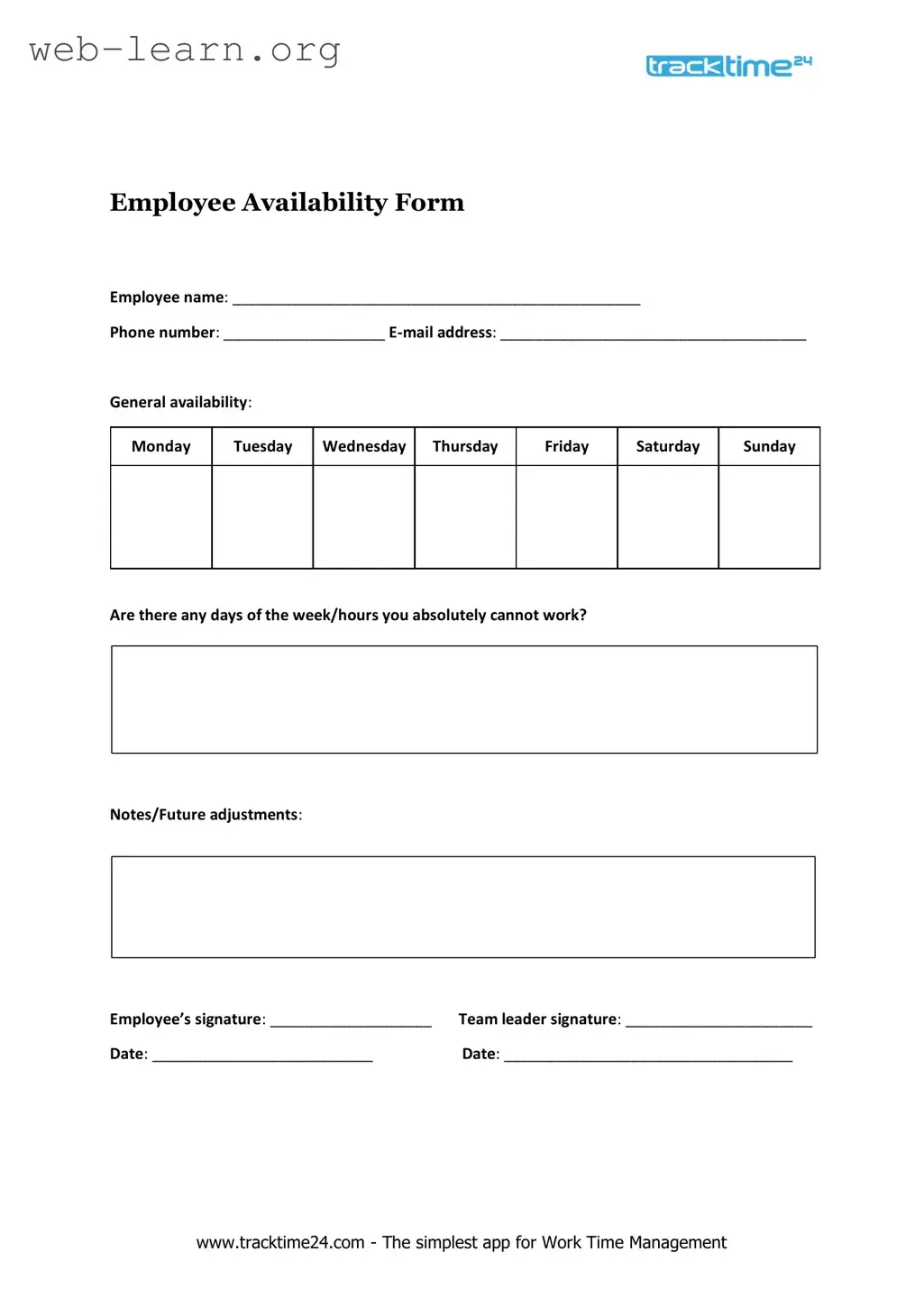
The Employee Availability form is an essential tool for both employees and employers, ensuring clear communication regarding work schedules. This form allows employees to specify their preferred working hours, availability for shifts, and any time off requests. By providing this information, employees can express their needs and preferences, while employers gain insight into scheduling possibilities. The form typically includes sections for listing available days and times, along with any constraints that may affect an employee's ability to work. This structured approach not only helps in managing workforce resources effectively but also fosters a collaborative environment where employees feel valued and heard. Ultimately, the Employee Availability form serves as a bridge between individual needs and organizational requirements, paving the way for smoother operations and improved job satisfaction.
| Fact Name | Description |
|---|---|
| Purpose | The Employee Availability form helps employers understand when an employee is available to work. |
| Importance | This form aids in scheduling shifts that align with employees' availability, promoting work-life balance. |
| Common Use | It is frequently used in industries with fluctuating hours, such as retail and hospitality. |
| State-Specific Forms | Some states require specific formats for this form; check local labor laws for details. |
| Governing Laws | In California, for example, the form must comply with the Fair Employment and Housing Act. |
| Employee Rights | Employees have the right to submit their availability without fear of retaliation. |
| Review Process | Employers should regularly review these forms to ensure schedules meet employee needs and preferences. |
Completing the Employee Availability form is an important step in ensuring that your work schedule aligns with your personal commitments. Once you have filled out the form, it will be reviewed by your supervisor to help create a schedule that works for everyone involved.
What is the purpose of the Employee Availability form?
The Employee Availability form is designed to collect information about when employees are available to work. This helps employers create schedules that accommodate the needs of both the business and its staff. By understanding each employee's availability, employers can ensure that shifts are filled efficiently and fairly.
Who needs to fill out the Employee Availability form?
All employees, whether part-time or full-time, should complete the Employee Availability form. This includes new hires and current employees who may want to update their availability. It's essential for everyone to provide accurate information to facilitate effective scheduling.
How often should I update my availability?
Employees should update their availability whenever there is a change in their schedule. This could be due to new commitments, such as classes or family obligations, or changes in work preferences. Regular updates help ensure that the scheduling process reflects current circumstances, which benefits both the employee and employer.
What happens if I don’t submit my availability?
If an employee does not submit their availability, it may lead to scheduling conflicts or missed shifts. Employers may have to make assumptions about an employee's availability, which could result in the employee being scheduled at inconvenient times. Therefore, it is crucial to submit the form on time to avoid any misunderstandings.
Where can I find the Employee Availability form?
The Employee Availability form is typically available through the company's internal portal or HR department. Employees can also request a copy from their supervisor or HR representative. If you have trouble locating it, don’t hesitate to ask for assistance.
Filling out an Employee Availability form can seem straightforward, but many people stumble along the way. One common mistake is failing to clearly indicate availability. When employees simply check boxes without providing specific times, it can lead to confusion. Employers rely on this information to create schedules, so clarity is essential.
Another frequent error is neglecting to update the form when circumstances change. Life is dynamic, and personal commitments can shift. If an employee’s availability changes but they don’t update the form, it can result in scheduling conflicts and frustration for both the employee and the employer.
Some individuals also overlook the importance of being realistic about their availability. It’s tempting to say “I’m available anytime,” but this can lead to overcommitment. Employees should consider their personal life and ensure they can genuinely meet the hours they indicate. Being honest helps maintain a healthy work-life balance.
Additionally, many people forget to communicate any special circumstances that might affect their availability. For instance, if someone has a recurring appointment or a family obligation, mentioning this on the form can help supervisors plan better. Transparency fosters a better understanding between employees and management.
Another mistake is not discussing availability with family or other commitments before submitting the form. Employees should have a clear understanding of their obligations outside of work. Failing to do this can lead to unintentional scheduling conflicts that affect both work performance and personal life.
Lastly, some individuals submit the form without double-checking for errors. Simple typos or unclear handwriting can create significant misunderstandings. Taking a moment to review the form before submission can save time and prevent potential issues down the line.
When managing employee schedules, several forms and documents are commonly used alongside the Employee Availability form. Each document serves a specific purpose, ensuring smooth communication and effective workforce management.
Utilizing these documents in conjunction with the Employee Availability form can streamline operations and enhance overall efficiency in workforce management. Proper documentation fosters clarity and accountability, benefiting both employees and employers.
The Employee Availability form is a crucial document that helps employers understand when their employees are available to work. It serves a specific purpose, but it shares similarities with several other documents commonly used in the workplace. Here are five documents that have comparable functions:
When filling out the Employee Availability form, it is essential to approach the task with care and attention to detail. Below are some guidelines to consider.
Understanding the Employee Availability form is crucial for both employees and employers. However, several misconceptions can lead to confusion about its purpose and use. Below are five common misconceptions, along with clarifications to help clarify the intent and functionality of this important document.
This is not true. The Employee Availability form can be used by both part-time and full-time employees. It helps employers understand the availability of all staff members, regardless of their employment status.
While the form provides information about an employee's availability, it does not guarantee that an employee will receive the shifts they desire. Scheduling decisions depend on various factors, including business needs and other employees' availability.
Many employees believe that once they submit the form, it remains valid indefinitely. However, changes in personal circumstances, such as new commitments or changes in availability, should prompt employees to update their form regularly.
Employers value the information provided in the Employee Availability form. It plays a significant role in scheduling, helping managers accommodate employee preferences whenever possible.
While some workplaces may not strictly enforce the submission of the form, it is generally advisable for employees to complete it. Providing accurate availability helps ensure smoother operations and better communication between staff and management.
When it comes to filling out and using the Employee Availability form, several important points should be kept in mind. These takeaways can help ensure that the process is smooth and effective for both employees and employers.