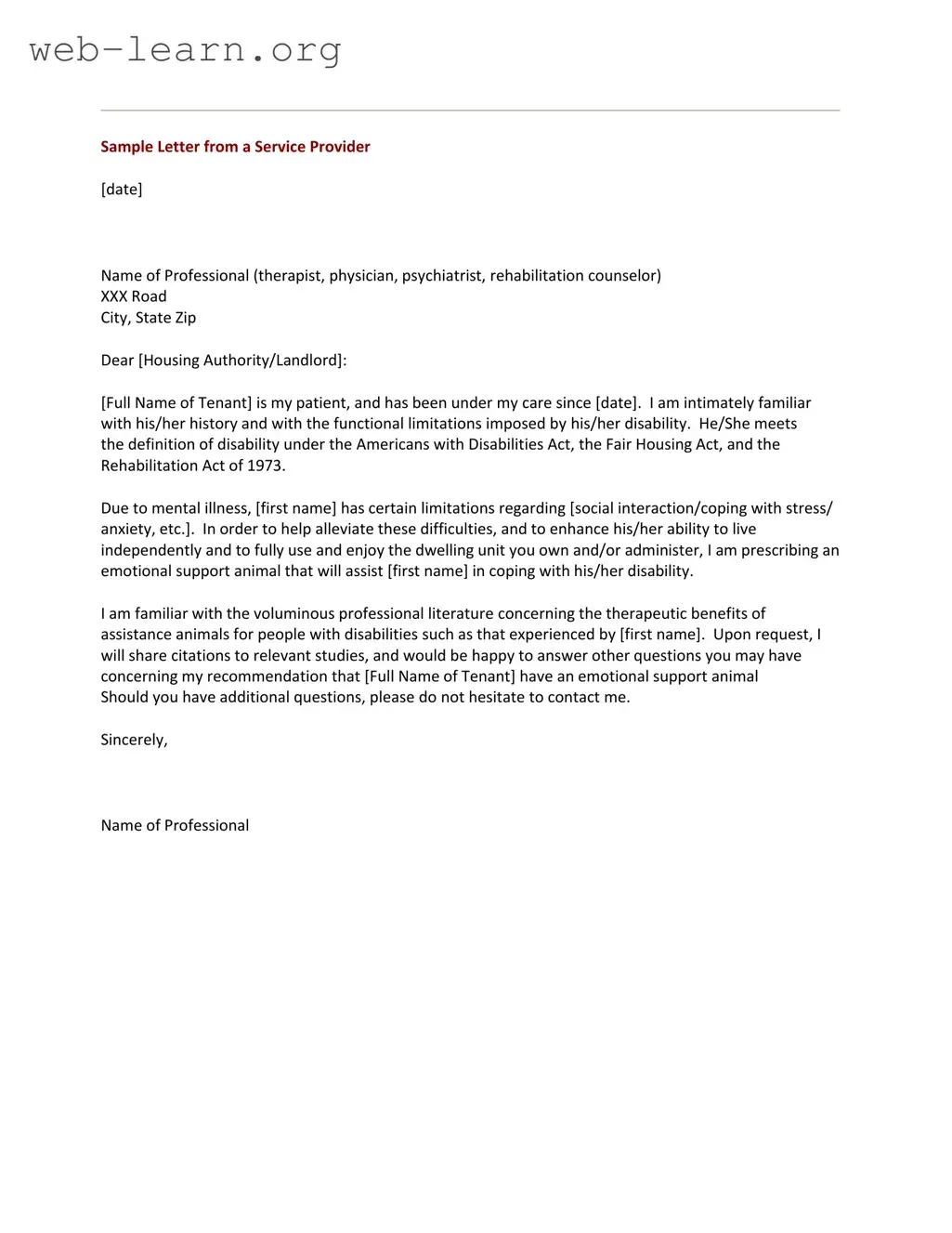
Emotional Support Animals (ESAs) play a vital role in providing comfort and support to individuals facing mental health challenges. To legally recognize the necessity of an ESA, an Emotional Support Animal Letter is often required. This letter serves as a formal document from a licensed mental health professional, affirming that an individual has a qualifying mental or emotional disability and that the presence of an animal is essential for their well-being. The letter typically includes the professional's details, such as their license number and contact information, ensuring its validity. It may also outline the specific ways in which the animal aids in alleviating the individual’s symptoms. This documentation is crucial for securing housing accommodations and accessing certain travel privileges, as it helps differentiate ESAs from regular pets. Understanding the components and significance of this letter can empower individuals to advocate for their rights and enhance their quality of life through the companionship of their emotional support animals.

| Fact Name | Description |
|---|---|
| Definition | An Emotional Support Animal (ESA) letter is a document from a licensed mental health professional that confirms an individual's need for an emotional support animal. |
| Legal Protection | ESAs are protected under the Fair Housing Act, allowing individuals to live with their animals in housing that may otherwise prohibit pets. |
| State Variations | Different states may have specific regulations regarding ESAs. Always check local laws to understand your rights. |
| Letter Requirements | The letter must include the mental health professional's license number, signature, and the date it was issued. |
| Validity Period | Typically, ESA letters are valid for one year. Renewal may be necessary to maintain legal protections. |
| Types of Professionals | Only licensed mental health professionals, such as psychologists or psychiatrists, can issue ESA letters. |
| Housing vs. Travel | ESAs have rights in housing situations but do not have the same access rights as service animals in public spaces. |
| Documentation | Landlords may request a copy of the ESA letter but cannot ask for extensive medical records or details about your condition. |
| Emotional Support vs. Service Animals | ESAs provide comfort but are not trained to perform specific tasks like service animals. |
| State-Specific Forms | Some states may require specific forms or additional documentation. For example, California has its own guidelines under the Unruh Civil Rights Act. |
Filling out the Emotional Support Animal Letter form is an important step in ensuring that your emotional support animal is recognized and can provide you with the support you need. After completing the form, you will be able to submit it to your landlord, housing provider, or airline, depending on your needs.
What is an Emotional Support Animal (ESA) Letter?
An Emotional Support Animal Letter is a document written by a licensed mental health professional. This letter confirms that an individual has a mental or emotional disability and that an ESA is a necessary part of their treatment. The letter serves to provide the individual with certain rights under housing laws and air travel regulations.
Who can write an ESA Letter?
Only licensed mental health professionals, such as psychologists, psychiatrists, or licensed clinical social workers, can write an ESA letter. It is essential that the professional has a relationship with the individual and understands their mental health needs.
What information should be included in an ESA Letter?
An effective ESA letter should include:
Is an ESA Letter required for housing?
While an ESA letter is not legally required, it is highly recommended. Many landlords and housing providers will request this letter to confirm the need for an emotional support animal. Having a letter can help avoid potential disputes and ensure compliance with fair housing laws.
Can I get an ESA Letter online?
Yes, there are online services that can connect you with licensed mental health professionals who can provide ESA letters. However, ensure that the service is reputable and that the professional is licensed in your state. Be cautious of scams that offer letters without a proper evaluation.
How long is an ESA Letter valid?
The validity of an ESA letter can vary. Typically, a letter is valid for one year. After that, a new evaluation may be necessary to determine if the individual still requires an emotional support animal.
Do I need to register my Emotional Support Animal?
Unlike service animals, emotional support animals do not require registration. However, having an ESA letter is crucial for demonstrating the need for your animal in housing or travel situations. Some websites may offer registration services, but these are not necessary or recognized by law.
What types of animals can be considered Emotional Support Animals?
While dogs and cats are the most common emotional support animals, other types of pets can also qualify. This includes birds, rabbits, and even miniature horses. The key factor is that the animal provides emotional support to the individual.
Can my landlord deny my Emotional Support Animal?
Under the Fair Housing Act, landlords cannot deny reasonable accommodations for emotional support animals. However, they may have specific rules regarding the type of animal or size. It’s essential to communicate openly with your landlord and provide the necessary ESA letter.
What should I do if my ESA Letter is questioned?
If someone questions your ESA letter, be prepared to show it and explain its purpose. It’s also helpful to have a conversation with your mental health professional about any concerns. They can provide further clarification if needed.
When filling out the Emotional Support Animal (ESA) Letter form, many individuals unintentionally make mistakes that can lead to delays or complications. One common error is not providing complete information. It’s essential to include all required details, such as your name, address, and the specifics about your emotional support animal. Omitting even one piece of information can result in the letter being deemed invalid.
Another mistake people often make is using vague language. It’s crucial to be clear and specific about the emotional support your animal provides. Instead of general statements, include detailed descriptions of how your ESA helps you manage your mental health. This clarity can significantly strengthen your case.
Some individuals fail to include a licensed mental health professional’s signature. An ESA letter must be signed by a qualified therapist or psychiatrist to be considered legitimate. Without this signature, the letter may not hold any legal weight, rendering it useless for housing or travel purposes.
Additionally, many people overlook the importance of the date on the letter. An ESA letter should be current and not outdated. If the letter is too old, it may not be accepted by landlords or airlines. Always ensure the date is recent to avoid any issues.
People sometimes forget to check for spelling and grammatical errors. A letter filled with mistakes can appear unprofessional and may raise questions about its authenticity. Taking the time to proofread can make a significant difference in how your letter is perceived.
Lastly, some individuals fail to understand the specific requirements of their housing provider or airline. Each organization may have different guidelines regarding ESA letters. It’s important to research and ensure that your letter meets their specific criteria. This diligence can save you time and frustration down the line.
When seeking an Emotional Support Animal (ESA) letter, you may encounter several other forms and documents that can support your request. Understanding these can help streamline the process and ensure you have everything you need.
Having these documents ready can make the process smoother. Each plays a role in demonstrating the need for your emotional support animal and ensuring you have the necessary support in your living or travel arrangements.
Emotional Support Animal (ESA) letters play a crucial role in helping individuals with emotional or psychological conditions gain access to housing and travel with their support animals. However, there are several other documents that share similarities with ESA letters. Here’s a look at eight such documents:
Understanding these documents can help individuals navigate their rights and ensure they receive the necessary support for their emotional well-being.
When filling out the Emotional Support Animal Letter form, it’s essential to approach the process thoughtfully. Below are five important dos and don’ts to keep in mind:
By adhering to these dos and don’ts, you can help ensure a smoother experience when obtaining your Emotional Support Animal Letter.
Many people have misunderstandings about the Emotional Support Animal (ESA) Letter form. Here are four common misconceptions:
When considering the use of an Emotional Support Animal (ESA) letter, it is essential to understand the implications and requirements associated with it. Here are some key takeaways regarding the filling out and usage of the ESA letter form: