Homepage Blank Edison Electricity Bill Form
Outline

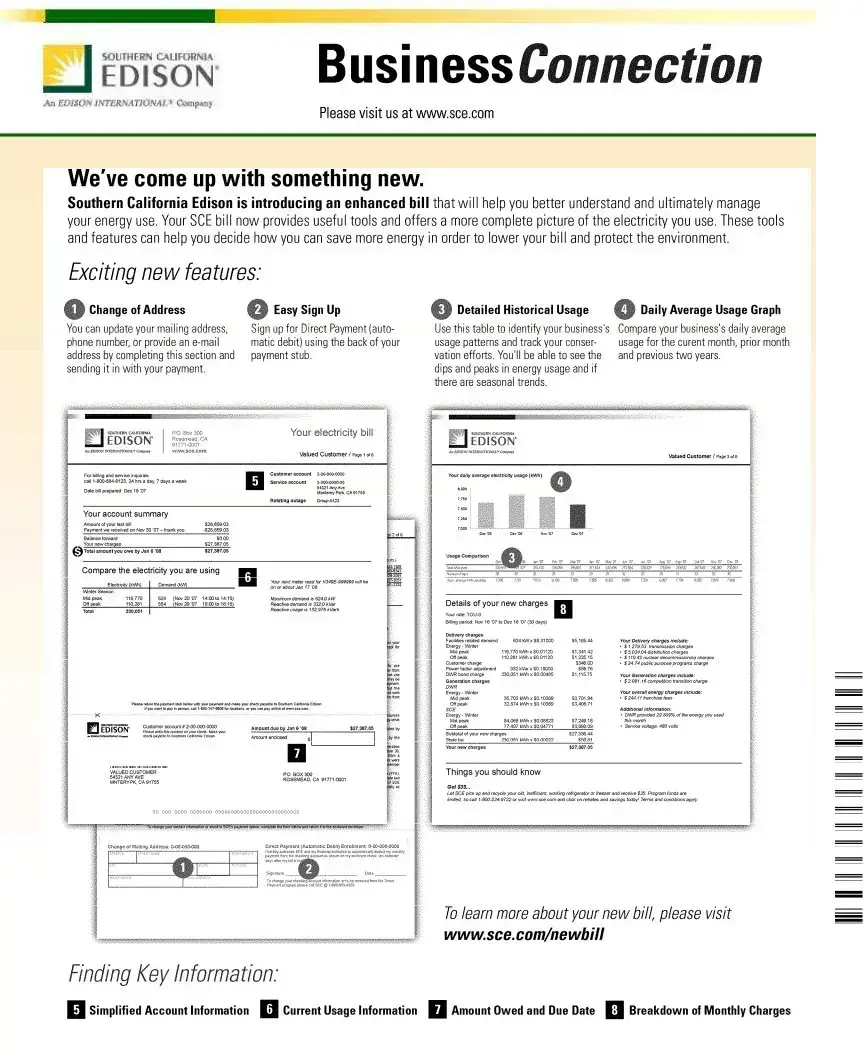
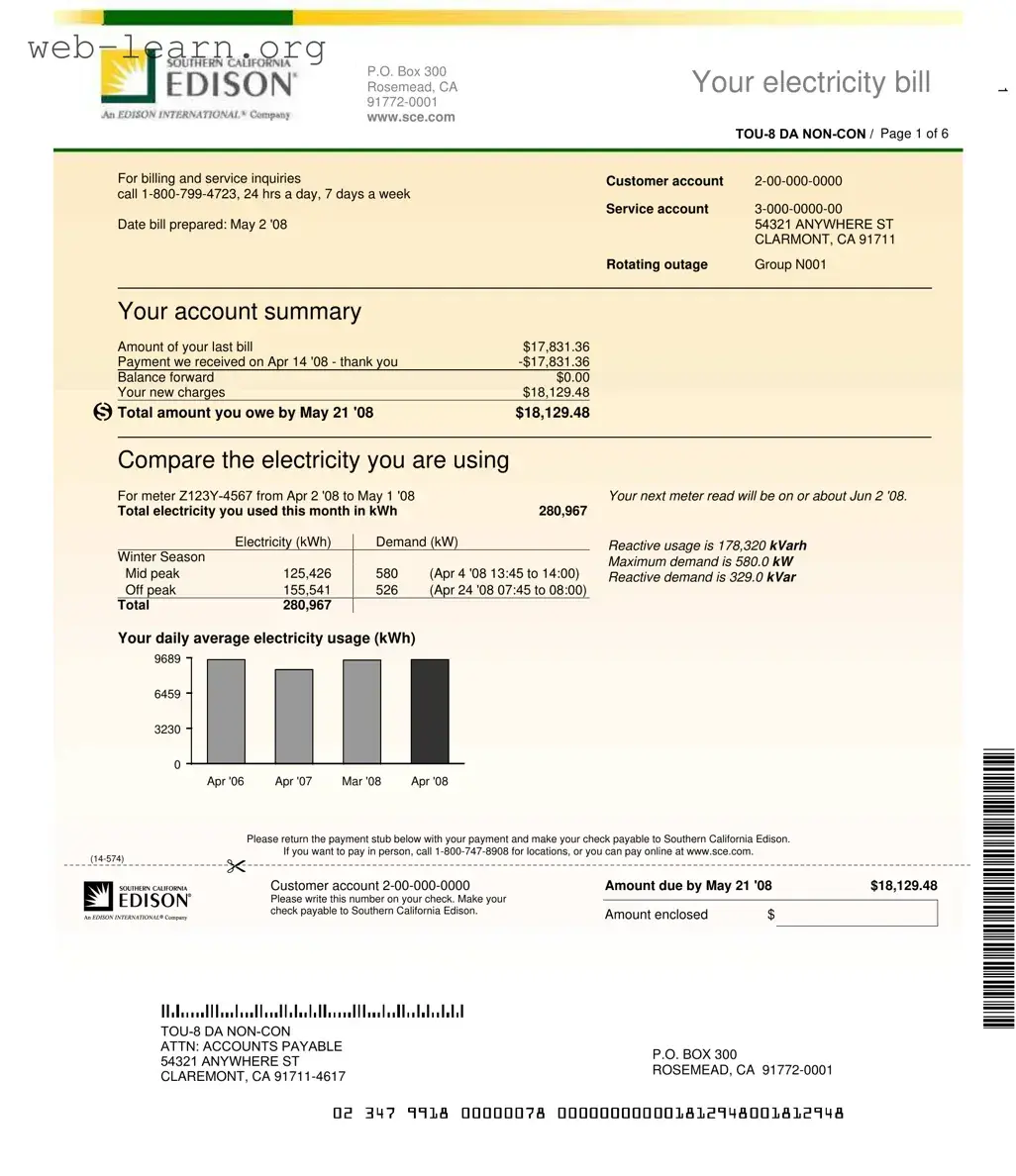
The Edison Electricity Bill form is an essential document that provides customers with a comprehensive overview of their electricity usage and charges. Each bill includes vital information such as the customer account number, service account number, and the billing period, which helps customers track their electricity consumption over time. The form outlines the total amount due, including new charges and any balance carried forward from previous bills. Customers can find a detailed breakdown of their electricity usage, categorized by peak and off-peak hours, allowing them to understand their consumption patterns better. The bill also highlights important notices, such as the potential for rotating outages, which may occur during emergency conditions to prevent widespread blackouts. Payment options are clearly stated, giving customers the flexibility to pay via mail, in person, by phone, or online. Additionally, the form addresses issues related to past-due bills and disputes, providing guidance on how to resolve any discrepancies. By presenting this information in a clear and organized manner, the Edison Electricity Bill form aims to facilitate transparency and enhance customer understanding of their electricity services.

Sample - Edison Electricity Bill Form

P.O. Box 300
Rosemead, CA
91772-0001
Customer account 2-00-000-0000
Amount enclosed $
TOU-8 DA NON-CON
ATTN: ACCOUNTS PAYABLE
54321 ANYWHERE ST
CLAREMONT, CA 91711-4617
P.O. BOX 300
ROSEMEAD, CA 91772-0001
call 1-800-799-4723, 24 hrs a day, 7 days a week
2-00-000-0000
3-000-0000-00
Date bill prepared: May 2 '08 54321 ANYWHERE ST
CLARMONT, CA 91711
Group N001
Amount of your last bill $17,831.36
Payment we received on Apr 14 '08 - thank you -$17,831.36
$0.00
Your new charges $18,129.48
For meter Z123Y-4567 from Apr 2 '08 to May 1 '08
Winter Season
Mid peak 125,426
Off peak 155,541
580 (Apr 4 '08 13:45 to 14:00)
526 (Apr 24 '08 07:45 to 08:00)
Page 1 of 6
1
Your electricity bill
Please write this number on your check. Make your
check payable to Southern California Edison.
(14-574)
0
3230
6459
9689
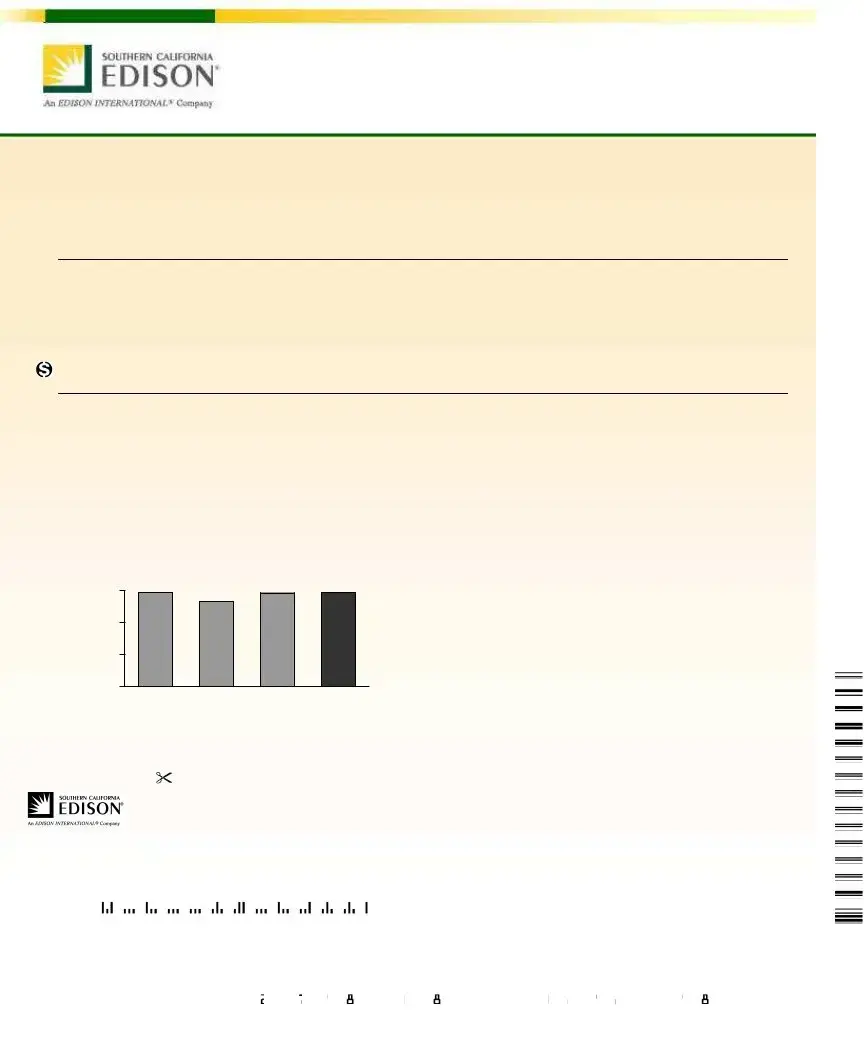
Apr '06 Apr '07 Mar '08 Apr '08
www.sce.com
TOU-8 DA NON-CON /
Amount due by May 21 '08 $18,129.48
Customer account
Service account
280,967
Total 280,967
Please return the payment stub below with your payment and make your check payable to Southern California Edison.
If you want to pay in person, call 1-800-747-8908 for locations, or you can pay online at www.sce.com.
Total amount you owe by May 21 '08 $18,129.48
Your next meter read will be on or about Jun 2 '08.
Reactive usage is 178,320
Maximum demand is 580.0
Reactive demand is 329.0
kVarh
kW
kVar
For billing and service inquiries
Rotating outage
Your account summary
Balance forward
Compare the electricity you are using
Total electricity you used this month in kWh
Electricity (kWh) Demand (kW)
Your daily average electricity usage (kWh)
·
·
·
·
Important information
Change of Mailing Address: 2-00-000-0000
Page 2 of 6
Direct Payment (Automatic Debit) Enrollment: 2-00-000-0000
A rotating outage is a controlled electric outage that lasts approximately one hour for
a group of circuits, which is used during electric system emergency conditions to
avoid widespread or uncontrolled blackouts. Each SCE customer is assigned a
rotating outage group, shown on the upper part of the SCE bill. If your rotating outage
group begins with the letters A, M, R, S, or X, you are subject to rotating outages. If it
begins with N or Exempt, you are not. Your rotating outage group may change at any
time. For more information, and to see which rotating outage groups are likely to be
called in the event of a system emergency, visit www.sce.com or call (800) 655-4555.
You can pay your bill by:
Mail
In person at an authorized payment location
By telephone
Online at www.sce.com
You may call us for electronic payment options, to make payment arrangements, or
for information on agencies to assist you in bill payment.
Your bill was prepared on May 2, 2008. Your bill is due when you receive it and
becomes past due 19 days after the date the bill was prepared. You will have 15 days
at your new address to pay a bill from a prior address before your service will be
terminated. SCE does not terminate residential service for non-payment of bills for
other classes of service. Termination of electric service requires a reconnection
charge. A field assignment charge may appear on your next bill if SCE visits your
premises because of non- payment. If you are a residential customer, and claim an
inability to pay and payment arrangements have not been extended to you by SCE
pursuant to SCE's filed tariffs, you may contact the California Public Utilities
Commission (CPUC).
If you think your bill is incorrect, call us and speak with a customer service
representative, or if necessary, with a manager. If you feel unsatisfied with the result
of such discussion(s), contact the CPUC, Consumer Affairs Branch by mail at: 505
Van Ness, Room 2003, San Francisco, CA 94102; or at: , (800)
649-7570, TTY: (800) 924-9599. Include a copy of your bill, why you believe SCE did
not follow its rules and rates, and a check or money order made out to the CPUC for
the disputed amount. You must pay the disputed amount, or send it to the CPUC,
before the past-due date to avoid disconnection. The CPUC accepts payment only for
matters relating directly to bill accuracy. While the CPUC is investigating your
complaint, you must pay any new SCE bills that become due.
SCE's rules and rates are available in full at www.sce.com or upon request.
A late payment charge of .9% will be applied to the total unpaid balance on your
account if full payment is not received by the due date on this bill (except for CARE
rate and state agency accounts).
When you provide a check as payment, you authorize us either to use information
from your check to make a one-time electronic fund transfer from your account or to
process the payment as a check transaction. When we use information from your
check to make an electronic fund transfer, funds may be withdrawn from your account
as soon as the same day we receive your payment. You will not receive your check
back from your financial institution, but the transaction will appear on your financial
institution statement. If you do not wish to authorize an electronic fund transfer,
please call the 800 number on the front of your bill.
I hereby authorize SCE and my financial institution to automatically deduct my
monthly payment from the checking account as shown on my enclosed check, ten
calendar days after my bill is mailed.
To change your checking account information or to be removed from the Direct
Payment program please call SCE @ 1-800-655-4555.
Signature _____________________________ Date _______________
STREET # STREET NAME APARTMENT #
CITY STATE ZIP CODE
TELEPHONE # E-MAIL ADDRES
TOU-8 DA NON-CON /
To change your contact information or enroll in SCE's payment option, complete the form below and return it in the enclosed envelope.
Rotating Outages
Options for Paying Your Bill
Past-Due Bills
Disputed Bills
Rules and Rates
Late Payment Charge (LPC)
Electronic Fund Transfers (EFT)
www.cpuc.ca.gov
Details of your new charges
21,625 x $0.00903
103,801 x $0.01009
26,817 x $0.00903
128,724 x $0.01009
329 x $0.18000
Your rate: TOU-8 (Direct Access)
Billing period: Apr 2 '08 to May 1 '08 (29 days)
Facilities rel demand 580 kW x $9.90000 x 5/29 days $990.00
Facilities rel demand 580 kW x $10.77000 x 24/29 days $5,169.60
Energy-Winter
Mid peak kWh $195.27
Mid peak kWh $1,047.35
Off peak kWh $242.16
Off peak kWh $1,298.83
Customer charge $71.55
Customer charge $379.07
Power factor adj kVar $59.22
DA CRS DWR bond 280,967 kWh x $0.00477 $1,340.21
PCIA 232,524 kWh x $0.00107 $248.80
PCIA 48,443 kWh x -$0.00391 -$189.41
DA CRS UC 48,443 kWh x $0.02001 $969.34
DA CRS UC 232,524 kWh x $0.01780 $4,138.93
CTC 48,443 kWh x $0.00613 $296.96
CTC 232,524 kWh x $0.00336 $781.28
Revenue cycle services credit -$15.46
Generation Municipal Surcharge $160.64
$17,184.34
Claremont UUT $17,184.34 x 5.50000 % $945.1
N Page 3 of 6
3
Apr '06 Apr '07 May '07 Jun '07 Jul '07 Aug '07 Sep '07 Oct '07 Nov '07 Dec '07 Jan '08 Feb '08 Mar '08 Apr '08
Total kWh used
Appx. average kWh
used/day
280,051 253,570 296,684 301,623 291,224 299,149 319,281 326,623 307,974 291,764 284,592 310,392 287,883 280,967
29 29 30 29 32 29 30 32 31 33 29 32 30 29
9,656 8,743 9,889 10,400 9,100 10,315 10,642 10,206 9,934 8,841 9,813 9,699 9,596 9,688
·
·
·
·
·
·
·
·
TOU-8 DA NON-CON/
$18,129.48
Additional information:
$1,209.91 transmission charges
$6,404.84 distribution charges
$165.29 nuclear decommissioning
charges
$1,605.58 public purpose programs
charge
$152.02 franchise fees
Percentage of energy provided by
DWR used to calculate GMS factor
this month: 26.513%
Service voltage: 480 volts
Generation Municipal Surcharge
(GMS) factor: 0.008930
Usage comparison
Number of days
Delivery charges
Direct Access cost responsibility surcharge
Other charges or credits
Subtotal of SCE charges
Your new charges
Your Delivery charges include:
Your overall energy charges include:
Page 4 of 6
Page 5 of 6
3
May 2008
Page 6 of 6

Form Information

Fact Name Fact Description
Billing Period The billing period for this invoice is from April 2, 2008, to May 1, 2008, covering 29 days.
Total Amount Due The total amount owed by May 21, 2008, is $18,129.48.
Rotating Outages Customers in specific rotating outage groups may experience controlled outages during emergencies. Group N001 indicates that this customer is subject to such outages.
Payment Options Payments can be made via mail, in person, by telephone, or online at www.sce.com.
Past-Due Policy The bill is due upon receipt and becomes past due 19 days after preparation. Failure to pay may result in service termination.

Detailed Guide for Filling Out Edison Electricity Bill

Filling out the Edison Electricity Bill form is straightforward. Follow these steps carefully to ensure your information is accurate and complete. Once the form is filled out, you can submit it along with your payment or use it to make necessary changes to your account.

  1. Locate your customer account number on the bill. Write this number on your check if you are paying by mail.
  2. Fill in the amount you are enclosing in the designated space on the payment stub.
  3. Make your check payable to Southern California Edison.
  4. If you are changing your mailing address, complete the "Change of Mailing Address" section. Include your new street address, apartment number (if applicable), city, state, zip code, telephone number, and email address.
  5. For Direct Payment enrollment, fill out the "Direct Payment (Automatic Debit) Enrollment" section. Provide your bank account details and sign the form.
  6. Review all the information you have entered for accuracy.
  7. Detach the payment stub from the bill and return it with your payment in the enclosed envelope.

Obtain Answers on Edison Electricity Bill

  1. What is the Edison Electricity Bill form?

    The Edison Electricity Bill form is a document that outlines the charges for electricity usage for a specific billing period. It includes details such as the amount due, past payments, and usage statistics. This form is essential for customers to understand their electricity consumption and billing.

  2. How can I pay my Edison electricity bill?

    You have several options for paying your bill:

    • By mail
    • In person at an authorized payment location
    • By telephone
    • Online at www.sce.com

    If you need assistance or want to set up payment arrangements, you can call customer service for help.

  3. What should I do if my bill is past due?

    Your bill becomes past due 19 days after the date it is prepared. If your bill is past due, it's important to make a payment as soon as possible to avoid service termination. Residential customers can contact the California Public Utilities Commission (CPUC) if they are unable to pay their bill and have not received payment arrangements from Edison.

  4. What are rotating outages?

    Rotating outages are controlled electric outages that last about one hour for specific groups of circuits. These outages help prevent widespread blackouts during emergency conditions. Your bill shows your rotating outage group, which indicates if you may be affected. For more details, visit www.sce.com or call 1-800-655-4555.

  5. What should I do if I believe my bill is incorrect?

    If you think there is an error on your bill, contact customer service to discuss your concerns. If you are not satisfied with the outcome, you can escalate the issue to the CPUC. Be sure to include a copy of your bill and a check or money order for the disputed amount when you contact them.

  6. Are there any late payment charges?

    Yes, a late payment charge of 0.9% will be added to your unpaid balance if full payment is not received by the due date. This charge applies to most accounts, with some exceptions for certain programs.

  7. How can I change my contact information or enroll in automatic payments?

    To change your mailing address or enroll in automatic payments, complete the form included with your bill and return it in the enclosed envelope. You can also call customer service for assistance with these changes.

Common mistakes

Filling out the Edison Electricity Bill form can seem straightforward, but many individuals make common mistakes that can lead to confusion or delays in processing. One prevalent error is neglecting to include the customer account number on the payment stub. This number is essential for ensuring that payments are correctly applied to the right account. Without it, there is a risk that payments could be misallocated, resulting in unnecessary late fees or service interruptions.

Another frequent oversight is failing to sign the payment stub. A signature is often required to validate the payment method, especially if a check is being used. Omitting a signature can lead to the payment being rejected, causing frustration for the customer and additional charges for late payments.

Many people also overlook the payment due date. The bill clearly states the date by which payment must be received to avoid penalties. Missing this deadline can lead to late fees or even service disconnection. It is crucial to mark this date on a calendar or set a reminder to ensure timely payment.

Additionally, some individuals do not double-check the amount enclosed before mailing their payment. It is easy to miscalculate or forget to include the full amount due, which can result in partial payments. Such discrepancies may lead to additional charges or complications with the account.

Another mistake involves using incorrect payment methods. The form provides specific instructions on how to pay, including options for online payments, mail, or in-person payments. Using a method not specified can delay processing and may incur additional fees.

People often forget to update their contact information when moving or changing phone numbers. This can lead to missed notifications regarding their account status or important updates from Edison. Keeping contact details current is essential for maintaining communication with the service provider.

Some customers also fail to read the fine print on the bill, which contains important information regarding late fees, service interruptions, and dispute processes. Ignoring these details can lead to misunderstandings about the terms of service and potential penalties.

Lastly, individuals may not take advantage of available assistance programs for those struggling to pay their bills. Edison offers various resources for customers facing financial hardships. Not inquiring about these options can result in unnecessary stress and potential service disconnection.

Documents used along the form

When managing your electricity account with Southern California Edison (SCE), several forms and documents may accompany the Edison Electricity Bill form. Each of these documents serves a specific purpose, helping customers navigate their billing, payment options, and service inquiries effectively. Understanding these documents can enhance your experience and ensure you stay informed about your electricity usage and charges.

  • Payment Stub: This is a detachable portion of your bill that you return with your payment. It includes important account details, such as your account number and the amount due, making it easier for SCE to process your payment accurately.
  • Change of Mailing Address Form: If you move, this form allows you to update your address with SCE. Providing your new address ensures that you continue to receive your bills and important notifications without interruption.
  • Direct Payment Enrollment Form: This document authorizes SCE to automatically deduct your monthly bill from your bank account. Enrolling in this program can simplify your payment process, ensuring your bill is paid on time each month.
  • Dispute Resolution Form: If you believe there is an error on your bill, this form helps you formally dispute the charges. It provides a structured way to communicate your concerns to SCE and initiate an investigation into the billing issue.
  • Payment Arrangement Request Form: For customers facing financial difficulties, this form allows you to request a payment plan. It can help you manage your bills more effectively by spreading payments over a longer period.
  • Energy Usage Comparison Chart: This chart provides a visual representation of your electricity usage over time. It helps you understand your consumption patterns, enabling you to make informed decisions about energy efficiency and usage reduction.

By familiarizing yourself with these accompanying documents, you can better manage your electricity account and ensure a smoother interaction with SCE. Each form plays a crucial role in maintaining clear communication and efficient service, ultimately benefiting your experience as a customer.

Similar forms

  • Utility Bill: Similar to the Edison Electricity Bill, a utility bill from a water or gas company provides details on consumption, charges, and payment options. Both documents inform customers about their usage and due amounts.
  • Credit Card Statement: Like the Edison bill, a credit card statement summarizes transactions over a billing period. It lists charges, payments received, and the total balance due, helping consumers manage their finances.
  • Bank Statement: A bank statement details all transactions in a customer's account, including deposits and withdrawals. It serves to inform account holders of their financial status, similar to how an electricity bill informs about energy usage and charges.
  • Insurance Bill: An insurance bill outlines premiums due for coverage, much like the Edison bill lists charges for electricity usage. Both documents provide due dates and payment methods to ensure continued service or coverage.
  • Phone Bill: A phone bill details usage, charges for calls, texts, and data. It is similar to the Edison bill in that it breaks down costs and informs customers about their payment obligations.
  • Property Tax Bill: This document shows the amount owed for property taxes, including any assessments or credits. Like the Edison bill, it specifies due dates and payment options, ensuring property owners stay informed about their financial responsibilities.
  • Subscription Invoice: A subscription invoice, such as for a streaming service, lists charges for the subscription period. It shares similarities with the Edison bill by detailing usage and costs while providing payment options to maintain access to the service.

Dos and Don'ts

When filling out the Edison Electricity Bill form, consider the following guidelines to ensure accuracy and efficiency:

  • Do double-check your customer account number before submitting your payment.
  • Do ensure that the payment amount matches the total due indicated on your bill.
  • Don't forget to sign your check if you are paying by mail.
  • Don't leave any sections of the form blank; provide all required information to avoid processing delays.

Misconceptions

  • Misconception 1: The Edison Electricity Bill is only for large businesses.
  • This is not true. The bill is designed for both residential and commercial customers. Any household using electricity will receive a bill based on their consumption, regardless of size.

  • Misconception 2: You must pay your bill immediately upon receipt.
  • While it’s important to pay your bill on time, you actually have a grace period. The bill becomes past due 19 days after it is prepared, giving you some time to arrange payment.

  • Misconception 3: Rotating outages will affect everyone.
  • This is misleading. Only customers assigned to specific rotating outage groups will experience outages. If your group starts with N or is marked as exempt, you will not be affected.

  • Misconception 4: You cannot dispute charges on your bill.
  • You absolutely can dispute charges. If you believe your bill is incorrect, you can call customer service or escalate the issue to the California Public Utilities Commission (CPUC) for further assistance.

  • Misconception 5: All payment methods are the same.
  • In reality, there are various options available for payment. You can pay by mail, in person, by phone, or online. Each method has its own benefits, so choose what works best for you.

  • Misconception 6: Late fees are automatically applied to all accounts.
  • Late payment charges are not applied to every account. They are typically waived for certain programs, like CARE rate and state agency accounts, so it’s essential to check your eligibility.

  • Misconception 7: You will always receive a paper bill in the mail.
  • While many customers do receive paper bills, you can opt for electronic billing. This option allows you to manage your account online, making it easier to track your usage and payments.

Key takeaways

  • Understand Your Account Information: Your customer and service account numbers are crucial for any inquiries or payments. Always keep them handy.
  • Check Your Billing Date: The bill is prepared on a specific date. Payments are due 19 days after this date, so mark your calendar.
  • Review Your Usage: Compare your electricity usage with previous months. This can help you identify any unusual spikes in your consumption.
  • Know Your Payment Options: You can pay your bill via mail, in person, by phone, or online. Choose the method that works best for you.
  • Watch for Rotating Outages: If your account is part of a rotating outage group, be aware that you may experience temporary power outages during emergencies.
  • Handle Disputed Bills Promptly: If you believe your bill is incorrect, contact customer service right away to resolve the issue.
  • Consider Automatic Payments: Enrolling in automatic debit can simplify your payment process and help avoid late fees.
  • Be Aware of Late Fees: If your payment isn’t received by the due date, a late payment charge may apply to your account.
  • Track Your New Charges: Carefully review the breakdown of your new charges to understand where your money is going.
  • Stay Informed: For the latest information on rates and service rules, visit the Southern California Edison website or contact customer service.