The Durable Power of Attorney (DPOA) form serves as a crucial legal document that empowers individuals to designate a trusted person to make decisions on their behalf, particularly in situations where they may become incapacitated. This form is designed to remain effective even if the principal, the person granting the authority, loses the ability to make decisions due to health issues or other circumstances. Key aspects of the DPOA include the ability to grant authority over financial matters, healthcare decisions, or both, depending on the specific needs of the individual. The principal can outline the extent of the agent's powers, ensuring that their preferences are respected. Additionally, the DPOA can be tailored to take effect immediately or only upon a specified event, such as the principal's incapacity. Understanding the nuances of this form is essential for anyone considering establishing a Durable Power of Attorney, as it provides peace of mind and a clear plan for managing personal affairs when one cannot do so themselves.
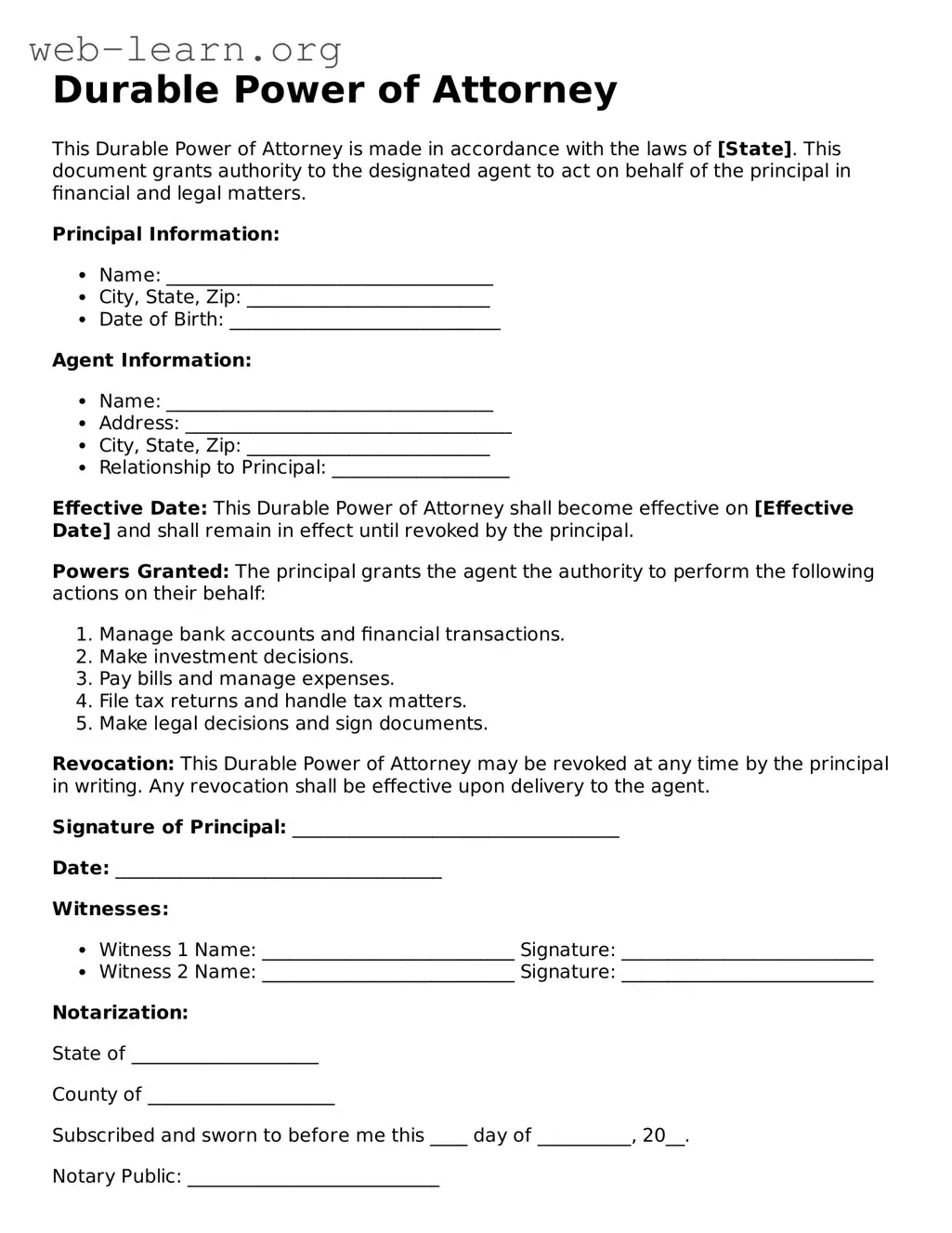
Durable Power of Attorney
This Durable Power of Attorney is made in accordance with the laws of [State]. This document grants authority to the designated agent to act on behalf of the principal in financial and legal matters.
Principal Information:
Agent Information:
Effective Date: This Durable Power of Attorney shall become effective on [Effective Date] and shall remain in effect until revoked by the principal.
Powers Granted: The principal grants the agent the authority to perform the following actions on their behalf:
Revocation: This Durable Power of Attorney may be revoked at any time by the principal in writing. Any revocation shall be effective upon delivery to the agent.
Signature of Principal: ___________________________________
Date: ___________________________________
Witnesses:
Notarization:
State of ____________________
County of ____________________
Subscribed and sworn to before me this ____ day of __________, 20__.
Notary Public: ___________________________
My commission expires: ____________________
| Fact Name | Description |
|---|---|
| Definition | A Durable Power of Attorney (DPOA) is a legal document that allows someone to make decisions on your behalf if you become incapacitated. |
| Durability | This type of power of attorney remains effective even if you become mentally or physically unable to make decisions. |
| Principal and Agent | The person who creates the DPOA is called the principal, while the person designated to act on their behalf is the agent or attorney-in-fact. |
| State-Specific Forms | Each state has its own requirements for a DPOA, so it's important to use the correct form based on where you live. |
| Governing Law | In the United States, the Uniform Power of Attorney Act provides a framework, but states like California and New York have their own specific laws governing DPOAs. |
| Scope of Authority | The DPOA can grant broad or limited powers, depending on what the principal specifies in the document. |
| Revocation | The principal can revoke the DPOA at any time as long as they are mentally competent to do so. |
| Witness Requirements | Most states require the DPOA to be signed in the presence of witnesses or notarized to be valid. |
| Importance of Choosing Wisely | Choosing the right agent is crucial, as they will have significant control over your financial and medical decisions. |
Filling out a Durable Power of Attorney form is an important step in designating someone to make decisions on your behalf. Once the form is completed, it should be signed and dated, and you may need to have it notarized or witnessed, depending on your state’s requirements. This ensures that the document is legally valid and recognized.
A Durable Power of Attorney (DPOA) is a legal document that allows one person to appoint another person to make decisions on their behalf. This authority remains effective even if the person who created the DPOA becomes incapacitated.
The person designated in the DPOA, known as the agent or attorney-in-fact, can make various decisions, including:
The main difference lies in the durability of the authority granted. A regular Power of Attorney may become invalid if the person who created it becomes incapacitated, while a Durable Power of Attorney remains in effect under such circumstances.
While it is not legally required to have a lawyer, consulting one is advisable. A lawyer can ensure that the document meets state laws and accurately reflects your wishes.
Yes, you can revoke a DPOA at any time, as long as you are mentally competent. To revoke it, you should create a written notice and inform your agent and any relevant institutions.
If you do not have a DPOA and become incapacitated, a court may appoint a guardian or conservator to make decisions for you. This process can be lengthy and may not reflect your preferences.
Yes, you can designate multiple agents. You can specify whether they must act together or if they can act independently. Clear instructions will help avoid confusion.
While a DPOA is recognized in most states, the specific requirements can vary. It is important to ensure that the document complies with the laws of the state where it will be used.
Filling out a Durable Power of Attorney (DPOA) form is an important step in planning for future health care and financial decisions. However, individuals often make several common mistakes that can lead to complications later on. Understanding these errors can help ensure that the document serves its intended purpose.
One common mistake is failing to specify the powers granted to the agent. A DPOA should clearly outline what decisions the agent can make on behalf of the principal. Without specific language, the agent may not have the authority to act in certain situations, leading to confusion and potential disputes.
Another frequent error is neglecting to sign and date the document properly. A DPOA typically requires the principal’s signature, and in some jurisdictions, witnesses or notarization may also be necessary. If these requirements are not met, the document may be deemed invalid.
People often overlook the importance of choosing the right agent. Selecting someone who is not trustworthy or lacks the ability to make sound decisions can result in misuse of power. It is crucial to choose an individual who understands the principal’s values and wishes.
Additionally, individuals sometimes forget to discuss their wishes with the appointed agent. Open communication can prevent misunderstandings and ensure that the agent knows how to act in accordance with the principal’s preferences.
Another mistake is failing to update the DPOA when circumstances change. Life events such as marriage, divorce, or the death of an agent may necessitate revisions to the document. Keeping the DPOA current is essential for it to remain effective.
Some people also neglect to consider the implications of state laws. DPOA requirements can vary significantly from one state to another. It is important to be aware of local regulations to ensure compliance and validity.
Moreover, individuals may make the mistake of not providing copies of the DPOA to relevant parties. Sharing the document with healthcare providers, financial institutions, and family members can facilitate smoother decision-making when the time comes.
Lastly, many fail to understand the difference between a Durable Power of Attorney and a regular Power of Attorney. A DPOA remains effective even if the principal becomes incapacitated, while a standard Power of Attorney does not. This distinction is vital for ensuring that the document serves its intended purpose.
A Durable Power of Attorney (DPOA) is an important legal document that allows someone to make decisions on your behalf if you become unable to do so. However, it often works best in conjunction with other documents that address various aspects of your personal and financial affairs. Here’s a list of forms and documents that are commonly used alongside a Durable Power of Attorney.
Each of these documents plays a vital role in ensuring that your wishes are respected and that your affairs are managed according to your preferences. It’s wise to consider them carefully as part of your overall planning strategy.
The Durable Power of Attorney (DPOA) is a significant legal document that allows one person to act on behalf of another in various matters, particularly financial and healthcare decisions. Several other documents serve similar purposes, providing authority and guidance in different contexts. Here are five documents that share similarities with the Durable Power of Attorney:
When filling out a Durable Power of Attorney form, it’s crucial to get it right. Here’s a list of things you should and shouldn’t do:
Understanding a Durable Power of Attorney (DPOA) is crucial for making informed decisions about your future. However, several misconceptions can lead to confusion. Here’s a list of common misunderstandings regarding this important legal document:
Being aware of these misconceptions can help individuals make better decisions regarding their Durable Power of Attorney. It’s essential to approach this document with clarity and understanding to ensure that your wishes are honored in the future.
Filling out and utilizing a Durable Power of Attorney (DPOA) form is an important step in planning for the future. Here are key takeaways to consider:
Taking the time to understand and properly execute a Durable Power of Attorney can provide peace of mind for you and your loved ones.
Poa Document - Essential for ensuring that real estate transactions proceed smoothly when the principal is unavailable.
Dmv Power of Attorney - It can be beneficial for individuals who frequently travel or relocate for work.
Temporary Power of Attorney for Child - It’s important for parents to choose someone they trust completely.