Homepage Blank Drug Screen Form
Outline

The Drug Screen form is a critical document in the process of drug testing, ensuring compliance with federal regulations and safeguarding the integrity of testing procedures. This form is divided into several key sections, each designed to capture essential information related to the testing process. Initially, the collector or employer representative must complete the identification details, including the employer's name and address, the Medical Review Officer's (MRO) contact information, and the donor's Social Security or employee identification number. The form also requires the specification of the testing authority, such as the Department of Transportation (DOT) or the Department of Health and Human Services (HHS), along with the reason for the test—be it pre-employment, random, or post-accident. Furthermore, it outlines the specific drugs to be tested, ranging from THC to PCP, and includes the collection site's details. As the process unfolds, the collector is responsible for ensuring the specimen's integrity, which includes measuring its temperature and recording any observations. The chain of custody is meticulously documented to guarantee that the specimen is handled properly from collection to analysis. Each step is vital, as it upholds the standards required by federal guidelines and ensures accurate reporting of results.
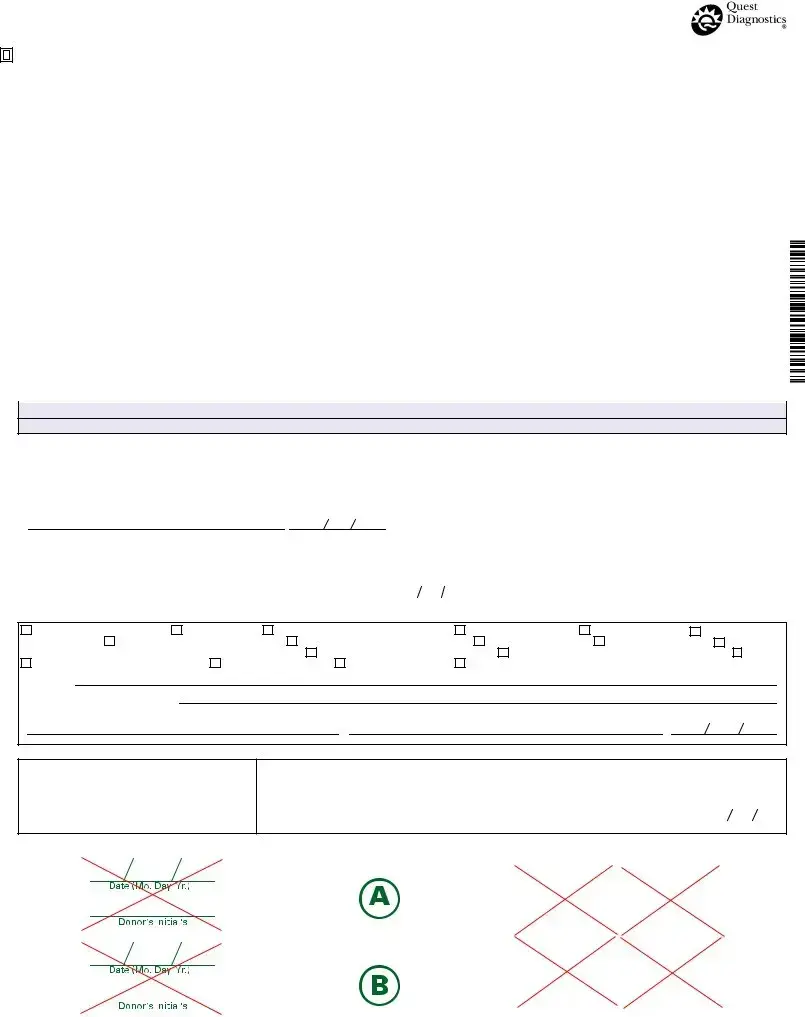
Sample - Drug Screen Form

C. Donor SSN or Employee I.D. No. _______________________________________________________________
D. Specify Testing Authority: HHS NRC DOT – Specify DOT Agency: FMCSA FAA FRA FTA PHMSA USCG
E. Reason for Test: Pre-employment Random Reasonable Suspicion Cause Post Accident Return to Duty Follow-up Other (specify) ____________________________
F. Drug Tests to be Performed: THC, COC, PCP, OPI, AMP THC & COC Only Other (specify) ________________________________________________
OMB No. 0930-0158
PRESS HARD - YOU ARE MAKING MULTIPLE COPIES
B. MRO Name, Address, Phone and Fax No.A. Employer Name, Address, I.D. No.
FEDERAL DRUG TESTING CUSTODY AND CONTROL FORM
LAB ACCESSION NO.
SPECIMEN ID NO.
STEP 5A: PRIMARY SPECIMEN REPORT - COMPLETED BY TEST FACILITY
MDMA
Methamphetamine6- Acetylmorphine
Marijuana Metabolite (U9-THCA)
POSITIVE for:NEGATIVE
REJECTED FOR TESTING ADULTERATED SUBSTITUTED INVALID RESULT
PCP Codeine
MDEA
Morphine Amphetamine
MDA
DILUTE
Cocaine Metabolite (BZE)
STEP 5b: COMPLETED BY SPLIT TESTING LABORATORY
X
(Print) Certifying Scientist's Name (First, MI, Last) Date (Mo./Day/Yr.)Signature of Certifying Scientist
Date (Mo./Day/Yr.)
X
(Print) Certifying Scientist's Name (First, MI, Last)Signature of Certifying Scientist
I certify that the specimen identified on this form was examined upon receipt, handled using chain of custody procedures, analyzed, and reported in accordance with applicable Federal requirements.
Primary Specimen
Bottle Seal Intact
RECEIVED AT LAB OR IITF:
Date (Mo./Day/Yr.)(Print) Collector's Name (First, MI, Last)
Date (Mo./Day/Yr.)
(Print) Accessioner’s Name (First, MI, Last)
X
Time of Collection
Signature of Collector
X
Signature of Accessioner
AM
PM
I certify that the specimen given to me by the donor identified in the certification section on Copy 2 of this form was
collected, labeled, sealed, and released to the Delivery Service noted in accordance with applicable Federal requirements.
REMARKS
Temperature between 90° and 100° F? Yes No, Enter Remark Collection: Split Single None Provided, Enter Remark
Observed, (Enter Remark)
REMARKS:
Test Facility (if different from above):
800-877-7484
SPECIMEN BOTTLE(S) RELEASED TO:
Name of Delivery Service
Quest, Quest Diagnostics, the associated logo and all associated Quest Diagnostics marks are the trademarks of Quest Diagnostics Incorporated. © Quest Diagnostics Incorporated. All rights reserved. QD20315-FED.
RReevviisseedd 1100//1100..
SC2K - 111192.
STEP 3: Collector affixes bottle seal(s) to bottle(s). Collector dates seal(s). Donor initials seal(s). Donor completes STEP 5 on Copy 2 (MRO Copy)
STEP 4: CHAIN OF CUSTODY - INITIATED BY COLLECTOR AND COMPLETED BY TEST FACILITY
STEP 2: COMPLETED BY COLLECTOR (make remarks when appropriate) Collector reads specimen temperature within 4 minutes.
STEP 1: COMPLETED BY COLLECTOR OR EMPLOYER REPRESENTATIVE
SPECIMEN BOTTLE(S) RELEASED TO:
Yes No
If No, Enter remarks
in Step 5A.
___________________________________________
Laboratory Name
___________________________________________
Laboratory Address
RECONFIRMED FAILED TO RECONFIRM - REASON ____________________________________________
I
certify that the split specimen identified on this form was examined upon receipt, handled using chain of custody
procedures, analyzed and reported in accordance with applicable Federal requirements.
Quest Diagnostics Courier
FedEx
Other
G. Collection Site Name: Collection Site Code:
Address:
City, State and Zip:
Collector Phone No.:
Collector Fax No.:

Form Information

Fact Name Description
Form Title The form is officially known as the Federal Drug Testing Custody and Control Form.
Contact Information For inquiries, individuals can reach Quest Diagnostics at 800-877-7484.
Specimen ID Each specimen is assigned a unique Specimen ID number for tracking purposes.
Testing Authorities The form allows for testing under various authorities, including HHS, NRC, and DOT.
Reason for Testing Testing can be conducted for several reasons, such as pre-employment, random, or post-accident.
Chain of Custody The form includes a chain of custody section to ensure the integrity of the specimen throughout the testing process.
Laboratory Reporting Results are reported by a certifying scientist, who certifies that the specimen was handled according to federal requirements.

Detailed Guide for Filling Out Drug Screen

After gathering the necessary information, you are ready to fill out the Drug Screen form. This process requires careful attention to detail to ensure that all sections are accurately completed. Follow the steps below to properly fill out the form.

  1. Begin with the section labeled "STEP 1." Here, enter the following information:
    • Employer Name, Address, and I.D. No.
    • MRO Name, Address, Phone, and Fax No.
    • Donor SSN or Employee I.D. No.
    • Specify Testing Authority: Choose from HHS, NRC, or DOT and specify the DOT Agency if applicable.
    • Reason for Test: Select from options such as Pre-employment, Random, Reasonable Suspicion, Post Accident, Return to Duty, Follow-up, or Other (specify).
    • Drug Tests to be Performed: Indicate the drugs to be tested, such as THC, COC, PCP, OPI, AMP, THC & COC Only, or Other (specify).
    • Collection Site Name, Collection Site Code, Address, Collector Phone No., City, State and Zip, and Collector Fax No.
  2. Proceed to "STEP 2." The collector will need to:
    • Read the specimen temperature within 4 minutes. Indicate if the temperature is between 90° and 100° F by selecting Yes or No.
    • Specify the type of collection: Split, Single, or None Provided. Enter remarks if necessary.
    • Note if the collection was observed and enter any relevant remarks.
  3. In "STEP 3," the collector will:
    • Affix bottle seals to the specimen bottles.
    • Date the seals and have the donor initial them.
    • Ensure the donor completes STEP 5 on Copy 2 (MRO Copy).
  4. Move on to "STEP 4." The collector will:
    • Certify that the specimen was collected, labeled, sealed, and released in accordance with Federal requirements.
    • Complete the section regarding the delivery service used and sign the form.
  5. In "STEP 5A," the test facility will:
    • Complete the primary specimen report, indicating whether the results are negative or positive for specific substances.
    • Provide remarks if necessary and have the certifying scientist sign and date the form.
  6. Finally, if split testing is required, "STEP 5B" must be completed by the split testing laboratory:
    • Indicate whether the split specimen was reconfirmed or failed to reconfirm, including reasons if applicable.
    • Have the certifying scientist sign and date this section as well.

Once all steps are completed, ensure that copies are made as necessary, as multiple copies will be produced when pressing hard on the form. This careful documentation is crucial for maintaining compliance and ensuring accurate results.

Obtain Answers on Drug Screen

  1. What is the purpose of the Drug Screen form?

    The Drug Screen form is essential for documenting the collection and testing of urine specimens for drug use. It ensures that all procedures are followed according to federal regulations. This form is used by employers, collectors, and testing facilities to maintain a clear chain of custody, which is crucial for the integrity of the test results.

  2. Who completes the Drug Screen form?

    Various parties are involved in completing the Drug Screen form. Initially, the collector or employer representative fills out the first section, providing details such as the employer's name, the reason for testing, and the type of drug tests to be performed. The collector also records observations about the specimen's temperature and collection method. Finally, the testing facility completes the form after analyzing the specimen, ensuring that all steps are documented accurately.

  3. What information is required on the form?

    The Drug Screen form requires several key pieces of information:

    • Employer name and address
    • Collector's name and contact information
    • Donor's Social Security Number or Employee ID
    • Testing authority and reason for the test
    • Specific drugs to be tested
    • Collection site details

    Providing complete and accurate information is vital for ensuring compliance and the validity of test results.

  4. What happens if a specimen is rejected for testing?

    If a specimen is rejected for testing, the form will indicate the reason, such as being adulterated, substituted, or invalid. This is documented in the remarks section of the primary specimen report. In such cases, the donor may need to provide another specimen to ensure accurate testing results. It’s important to address any issues promptly to avoid delays in the testing process.

  5. How is confidentiality maintained during the drug screening process?

    Confidentiality is a top priority in the drug screening process. The Drug Screen form includes sections that restrict access to sensitive information. Only authorized personnel, such as collectors and testing facility staff, are allowed to handle the form and the specimen. Additionally, the chain of custody procedures are designed to protect the integrity of the specimen and the privacy of the donor throughout the testing process.

Common mistakes

Filling out the Drug Screen form can be straightforward, but many people make common mistakes that can lead to delays or complications. One frequent error is failing to provide the donor's Social Security Number or Employee ID. This information is crucial for proper identification and processing. Without it, the form may be incomplete, causing unnecessary setbacks.

Another mistake is neglecting to specify the testing authority. The form requires you to indicate whether the test is under HHS, NRC, or DOT regulations. If this section is left blank, it could result in confusion about which guidelines to follow. Make sure to check this box carefully.

Additionally, many individuals forget to indicate the reason for the test. Whether it’s for pre-employment, random selection, or post-accident, this detail is essential. Leaving it unspecified can lead to complications in interpreting the test results.

Inaccurate information about the drug tests to be performed is another common error. Ensure that you select the correct drugs or specify any additional tests needed. Miscommunication here could lead to testing for the wrong substances, which may affect the outcome.

Another frequent oversight involves the collector's remarks. If there are any unusual circumstances during the collection process, these should be documented. Failing to make appropriate remarks can create confusion later in the process.

It’s also important to remember to initial the seals on the specimen bottles. This step confirms that the donor has acknowledged the seals and the collection process. Missing initials can raise questions about the integrity of the sample.

Lastly, many people overlook the signature of the collector. This signature is a vital part of the chain of custody. Without it, the entire process may be called into question. Double-check that all required signatures are present before submitting the form.

Documents used along the form

The Drug Screen form is a crucial document used in various testing scenarios, particularly in employment settings. However, several other forms and documents often accompany it to ensure compliance and proper documentation throughout the drug testing process. Below is a list of related forms and documents that may be necessary.

  • Chain of Custody Form: This document tracks the handling of the specimen from the time it is collected until it is tested. It ensures that the sample remains uncontaminated and that its integrity is maintained throughout the testing process.
  • Consent Form: Before testing, individuals must provide consent for their sample to be collected and analyzed. This form outlines the purpose of the test and the rights of the individual regarding the testing process.
  • Testing Authority Notification: This document informs the relevant testing authority (e.g., DOT, HHS) about the upcoming drug test. It ensures that the testing is conducted under the appropriate regulations and guidelines.
  • Results Report: After testing is completed, this report details the findings. It indicates whether the test results are negative or positive and may include specific substances detected in the sample.
  • Employee Handbook or Policy Manual: This document outlines the organization’s drug testing policy, including procedures, consequences for positive results, and employee rights. It serves as a reference for employees regarding expectations and protocols.
  • Follow-Up Testing Form: If an employee tests positive or is subject to ongoing monitoring, this form is used to document subsequent tests. It helps track compliance with follow-up testing requirements.

These documents work together to create a comprehensive framework for drug testing, ensuring that all legal and procedural requirements are met. Proper documentation is essential for maintaining the integrity of the testing process and protecting the rights of all parties involved.

Similar forms

The Drug Screen form shares similarities with several other documents used in various testing and compliance processes. Here are seven documents that are comparable:

  • Chain of Custody Form: Like the Drug Screen form, this document tracks the handling of a specimen from collection to analysis, ensuring integrity and preventing tampering.
  • Medical Release Form: This form authorizes the release of medical information, similar to how the Drug Screen form collects personal information for testing purposes.
  • Consent Form: Both documents require the donor's consent for testing. The Drug Screen form specifies the testing authority, while a consent form typically outlines the purpose and scope of the testing.
  • Employment Application: An employment application collects personal and employment history, akin to how the Drug Screen form gathers donor information for pre-employment testing.
  • Incident Report Form: This document records details of workplace incidents, similar to how the Drug Screen form captures reasons for testing, such as post-accident scenarios.
  • Laboratory Analysis Report: Both documents communicate test results. The Drug Screen form indicates the testing process, while the analysis report details the findings from the laboratory.
  • Policy Acknowledgment Form: This form ensures that employees understand company policies, similar to how the Drug Screen form outlines the procedures and requirements for drug testing.

Dos and Don'ts

When filling out the Drug Screen form, consider the following guidelines:

  • Double-check all entries for accuracy before submission.
  • Use clear and legible handwriting if filling out the form by hand.
  • Ensure all required fields are completed, including the donor's SSN or Employee ID.
  • Verify the reason for the test is accurately selected from the provided options.
  • Keep a copy of the completed form for your records.
  • Submit the form promptly to avoid delays in processing.

Conversely, avoid these common mistakes:

  • Do not leave any mandatory fields blank.
  • Avoid using correction fluid or tape on the form.
  • Do not alter any information once it has been written.
  • Refrain from submitting the form without proper signatures.
  • Do not forget to check the specimen temperature if applicable.
  • Do not submit the form without ensuring all seals are intact.

Misconceptions

Misconceptions about the Drug Screen form can lead to confusion and misunderstandings. Here are six common misconceptions clarified:

  • The Drug Screen form is only for pre-employment testing. Many people believe this form is exclusively used for pre-employment drug tests. In reality, it serves multiple purposes, including random testing, reasonable suspicion testing, post-accident testing, and follow-up testing.
  • Only certain employers use the Drug Screen form. Some think that only specific industries, like transportation, utilize this form. However, various employers across different sectors may require drug testing and thus use the Drug Screen form.
  • The form is the same for all types of tests. There is a misconception that the Drug Screen form is uniform for every situation. In fact, the form can vary based on the testing authority (HHS, NRC, DOT) and the specific drugs being tested.
  • Temperature readings are irrelevant. Some individuals might underestimate the importance of temperature readings during the collection process. These readings are crucial for ensuring the integrity of the specimen and confirming it has not been tampered with.
  • A positive result always means drug use. Many believe that a positive result on the Drug Screen form indicates illicit drug use. However, certain substances can yield false positives or be present due to legitimate medical prescriptions.
  • The chain of custody is not important. There is a misconception that the chain of custody is a mere formality. In reality, maintaining a proper chain of custody is essential for the validity of the test results and for legal purposes.

Key takeaways

Understanding how to properly fill out and utilize the Drug Screen form is essential for ensuring compliance with federal regulations and maintaining the integrity of the testing process. Below are key takeaways to consider:

  • Accurate Information: Ensure that all sections of the form are filled out with precise and correct information, including the employer's details and the donor's identification.
  • Testing Authority: Clearly specify the testing authority, whether it is HHS, NRC, or DOT, and provide the appropriate agency if applicable.
  • Reason for Testing: Indicate the reason for the test. This could include pre-employment, random testing, or other specified reasons.
  • Drug Tests to be Performed: Select the specific drugs that will be tested. This ensures clarity on what substances are being screened.
  • Temperature Check: The collector must read the specimen's temperature within four minutes of collection to ensure it is within the acceptable range.
  • Chain of Custody: Maintain a clear chain of custody throughout the process. This includes proper labeling, sealing, and documenting the transfer of the specimen.
  • Remarks Section: Utilize the remarks section to document any observations or anomalies that occur during the collection or testing process.
  • Certification: The certifying scientist must sign and date the form, confirming that the specimen was handled and analyzed according to federal requirements.

By adhering to these guidelines, individuals can help ensure that the drug screening process is effective, transparent, and compliant with legal standards.