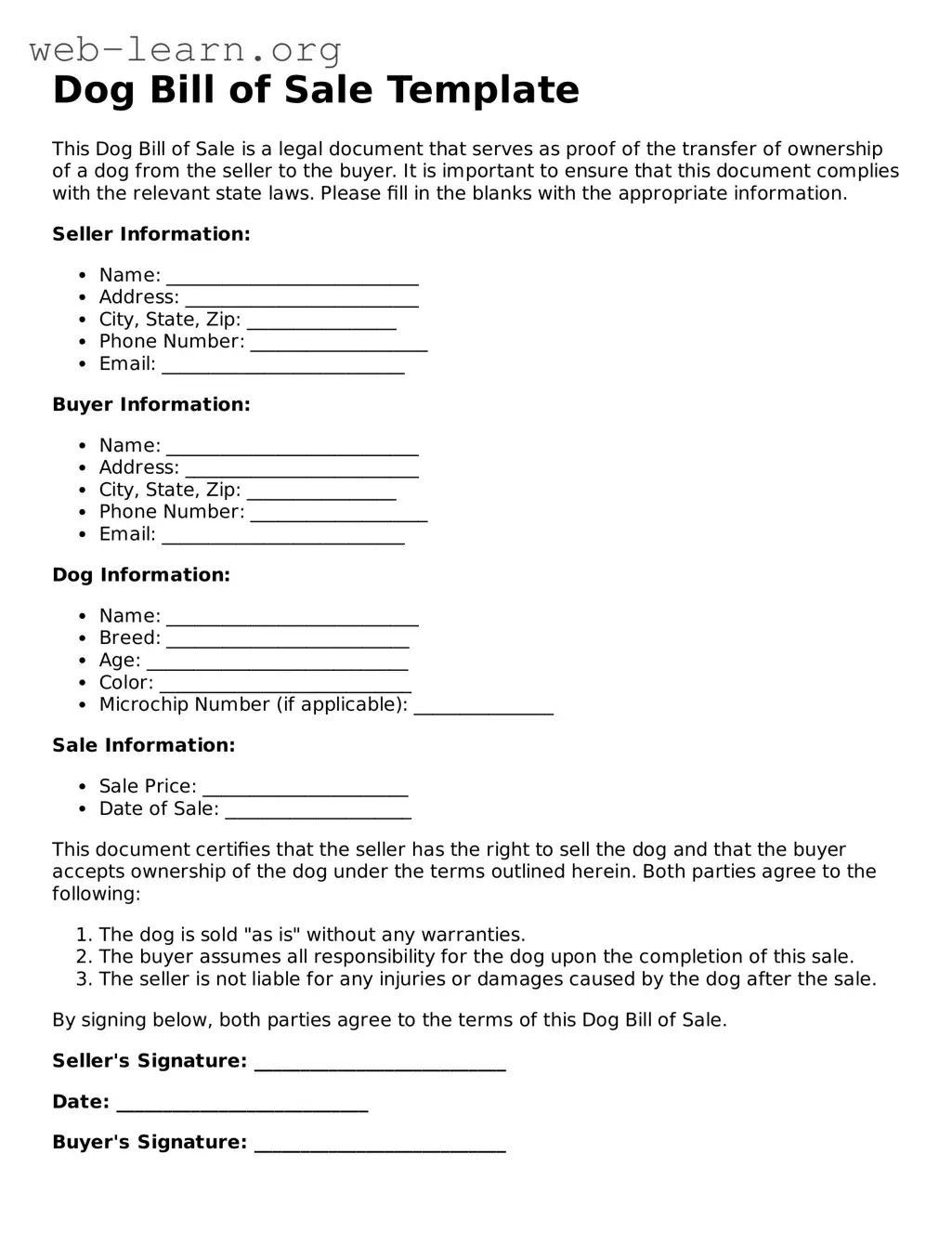
The Dog Bill of Sale form serves as a crucial document in the process of transferring ownership of a dog from one individual to another. This form not only provides a legal record of the transaction but also outlines essential details that protect both the buyer and the seller. Key components typically included in the form are the names and contact information of both parties, a description of the dog—such as breed, age, and color—and any health records or guarantees regarding the dog's condition. Additionally, the form may specify the purchase price and payment method, ensuring clarity in the financial aspects of the sale. By documenting these elements, the Dog Bill of Sale form helps prevent disputes and misunderstandings that could arise post-sale. Furthermore, it often includes a statement regarding the seller's representation of the dog’s health and behavior, which can be vital for the buyer's peace of mind. Overall, this form not only formalizes the exchange but also fosters transparency and trust in the transaction, making it an indispensable tool for responsible dog ownership and sales.
Dog Bill of Sale Template
This Dog Bill of Sale is a legal document that serves as proof of the transfer of ownership of a dog from the seller to the buyer. It is important to ensure that this document complies with the relevant state laws. Please fill in the blanks with the appropriate information.
Seller Information:
Buyer Information:
Dog Information:
Sale Information:
This document certifies that the seller has the right to sell the dog and that the buyer accepts ownership of the dog under the terms outlined herein. Both parties agree to the following:
By signing below, both parties agree to the terms of this Dog Bill of Sale.
Seller's Signature: ___________________________
Date: ___________________________
Buyer's Signature: ___________________________
Date: ___________________________
| Fact Name | Description |
|---|---|
| Purpose | A Dog Bill of Sale form serves as a legal document that records the transfer of ownership of a dog from one party to another. |
| Seller Information | The form requires the seller's name, address, and contact details to ensure clear identification of the person transferring ownership. |
| Buyer Information | It also collects the buyer's name, address, and contact information to establish the new owner’s identity. |
| Dog Description | A detailed description of the dog, including breed, age, color, and any identifying marks, must be included for clarity. |
| Purchase Price | The form should specify the purchase price agreed upon by both parties, ensuring transparency in the transaction. |
| Governing Laws | Each state may have specific laws governing pet sales. For example, California requires adherence to the Animal Welfare Act. |
| Signatures | Both the seller and buyer must sign the form to validate the transaction and acknowledge the transfer of ownership. |
Filling out the Dog Bill of Sale form is a straightforward process. This document serves as a record of the sale and transfer of ownership of a dog. Once completed, both the seller and buyer should keep a copy for their records.
What is a Dog Bill of Sale?
A Dog Bill of Sale is a legal document that records the transfer of ownership of a dog from one party to another. It serves as proof that the buyer has purchased the dog and outlines the terms of the sale, including any warranties or guarantees regarding the dog's health and behavior.
Why do I need a Dog Bill of Sale?
This document is important for several reasons. First, it protects both the buyer and the seller by clearly stating the terms of the sale. Second, it can help resolve any disputes that may arise after the sale. Lastly, it provides a record of ownership, which can be useful for registration and veterinary purposes.
What information should be included in a Dog Bill of Sale?
A comprehensive Dog Bill of Sale should include the following details:
Is a Dog Bill of Sale required by law?
While not always legally required, having a Dog Bill of Sale is highly recommended. Some states may have specific laws regarding pet sales, so it’s wise to check local regulations. Having this document can help prevent misunderstandings and protect your rights as a buyer or seller.
Can I create my own Dog Bill of Sale?
Yes, you can create your own Dog Bill of Sale. There are many templates available online that you can customize to fit your needs. Just ensure that all necessary information is included and that both parties sign the document. This will help ensure that the sale is legally recognized.
What if the dog has health issues after the sale?
If the Dog Bill of Sale includes a health guarantee, the seller may be obligated to address any health issues that arise within a specified time frame. If no guarantee is included, it may be more challenging to seek recourse. Always discuss health concerns openly before finalizing the sale.
Can I use a Dog Bill of Sale for adopting a dog from a shelter?
Yes, many shelters provide a Bill of Sale or similar document when you adopt a dog. This document serves a similar purpose, documenting the transfer of ownership and outlining any adoption fees or requirements. Always read the document carefully before signing.
What happens if I lose my Dog Bill of Sale?
If you lose your Dog Bill of Sale, it may be difficult to prove ownership. However, you can often recreate the document by contacting the seller for a copy or by providing other evidence of the sale, such as payment receipts or emails. Keeping a digital copy can also help prevent loss.
Is a Dog Bill of Sale valid in all states?
Generally, a Dog Bill of Sale is valid in all states, but specific requirements can vary. Some states may have additional regulations regarding pet sales or transfers. It's a good idea to familiarize yourself with local laws to ensure compliance.
When filling out a Dog Bill of Sale form, many people make common mistakes that can lead to confusion or disputes later. One frequent error is failing to provide accurate information about the dog. This includes the breed, age, and any identifying features. Incomplete or incorrect details can complicate ownership verification.
Another mistake is neglecting to include the seller's and buyer's contact information. Without proper contact details, reaching out for future questions or issues becomes difficult. Both parties should ensure their names, addresses, and phone numbers are clearly stated.
Many people overlook the importance of including the sale price. The form should clearly state how much the buyer is paying for the dog. This not only establishes a record of the transaction but also serves as a reference in case of disputes.
Some individuals forget to note any warranties or guarantees regarding the dog's health. If there are any promises made about the dog's condition, they should be documented in the form. This protects both the seller and the buyer by clarifying expectations.
Another common error is not signing the form. Both the seller and the buyer must sign the Dog Bill of Sale to validate the transaction. A missing signature can render the document ineffective.
People often fail to keep a copy of the completed form. After signing, both parties should retain a copy for their records. This helps in future reference and can be important if any issues arise.
Some individuals do not check local laws regarding dog sales. Regulations can vary by state or municipality, and being unaware of these can lead to legal complications. It is essential to be informed about any specific requirements.
Additionally, many forget to include information about the dog's microchip, if applicable. If the dog is microchipped, the form should note this and provide the registration details. This is crucial for identifying the dog in case it gets lost.
Lastly, people sometimes rush through the process without reviewing the completed form. Taking the time to double-check all entries ensures that everything is accurate and complete. This simple step can prevent many potential issues down the line.
When engaging in the sale or transfer of a dog, several important documents accompany the Dog Bill of Sale form. These documents help ensure that both the seller and the buyer are protected and that the transaction is clear and legally binding. Here are some of the commonly used forms:
Having these documents in place not only facilitates a smooth transaction but also provides peace of mind for both the buyer and the seller. By ensuring that all necessary paperwork is completed, you contribute to a responsible and transparent process in dog ownership transfer.
When filling out a Dog Bill of Sale form, it’s important to ensure accuracy and clarity. Here are some essential dos and don’ts to consider:
When it comes to the Dog Bill of Sale form, several misconceptions can lead to confusion for both buyers and sellers. Understanding these myths can help ensure a smooth transaction. Here are nine common misconceptions:
By debunking these misconceptions, buyers and sellers can engage in transactions with greater confidence and clarity. Always consider using a Dog Bill of Sale to safeguard your interests in any dog sale.
When it comes to transferring ownership of a dog, a Dog Bill of Sale form can be an essential document. Here are some key takeaways to keep in mind when filling out and using this form:
Using a Dog Bill of Sale form not only protects both parties but also serves as a record of the transaction. Keeping a copy for your records is a good practice, ensuring you have documentation of the sale if questions arise in the future.
How to Sell Your Cat - By documenting the sale, both parties can enjoy peace of mind during the transaction.
Firearm Bill of Sale Pdf - This document can help resolve disputes regarding firearm ownership.
Bill of Sale Form - The document must be signed by both the buyer and the seller to be valid.