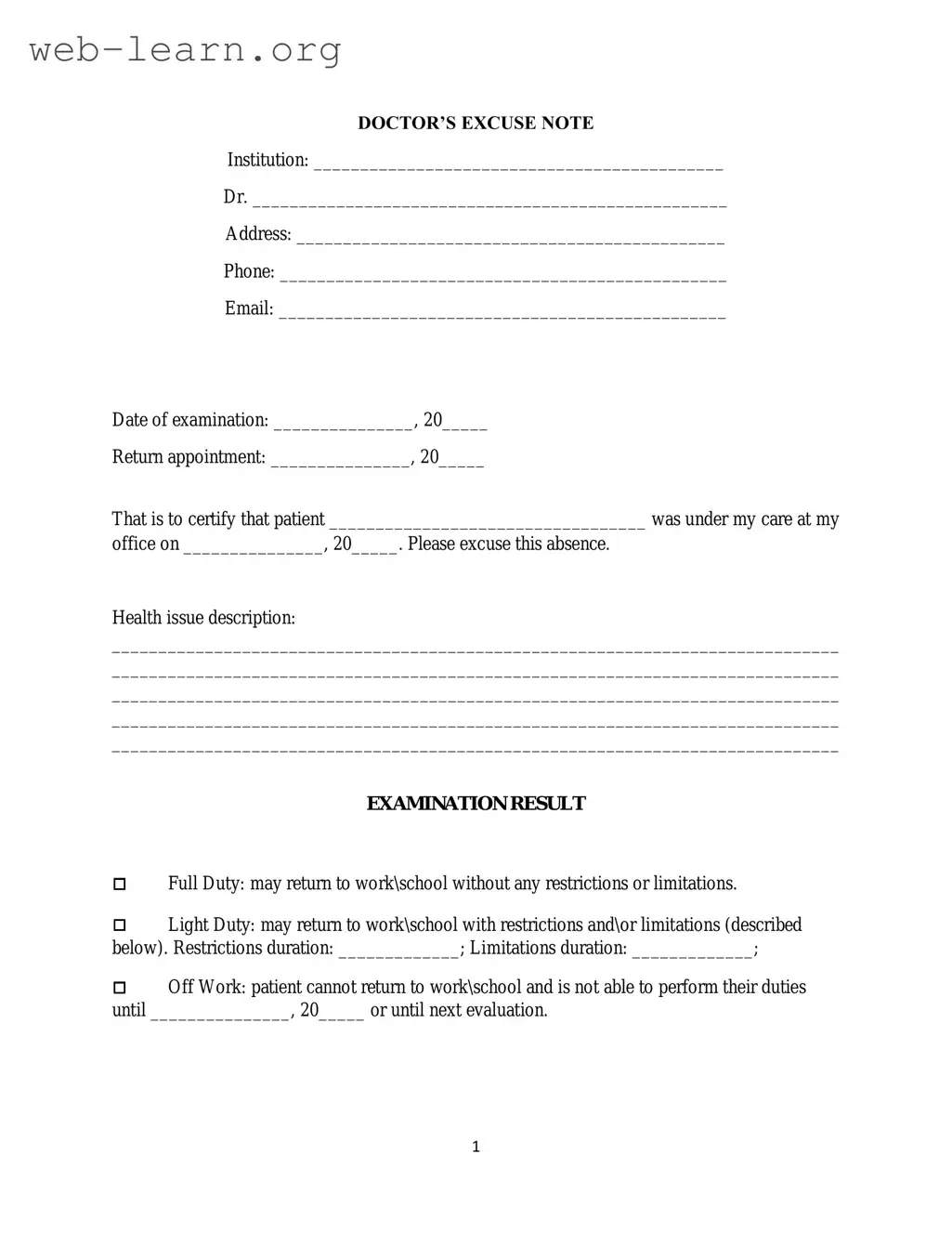
When individuals need to take time off from work or school due to health issues, a Doctor's Excuse Note serves as an essential document. This form typically includes important information such as the patient's name, the date of the visit, and the specific medical condition being addressed. It also outlines the recommended duration of absence and any necessary accommodations for the patient’s return. Healthcare providers use this note to validate the patient's need for leave, ensuring that employers and educational institutions understand the importance of health in maintaining productivity and well-being. By providing clear and concise details, the Doctor's Excuse Note not only supports the patient's request for time off but also fosters a collaborative relationship between healthcare professionals, employers, and educational institutions. Understanding the significance of this form can help individuals navigate their responsibilities while prioritizing their health.


| Fact Name | Description |
|---|---|
| Purpose | A Doctor's Excuse Note is used to provide proof of a medical condition that prevents an individual from attending work or school. |
| Required Information | The note typically includes the patient's name, date of the visit, diagnosis, and the doctor's signature. |
| State Variations | Each state may have different requirements for what must be included in a doctor's excuse note. |
| Governing Laws | In some states, laws such as the Family and Medical Leave Act (FMLA) govern the use of medical notes for work absence. |
| Duration | Excuse notes usually specify the duration of the absence, which can vary depending on the medical condition. |
| Confidentiality | Patient information in the note is protected by privacy laws, ensuring confidentiality is maintained. |
| Submission | Individuals may need to submit the note to their employer or school administration as proof of their absence. |
When you need to provide a doctor's excuse note, it's important to fill out the form accurately. Completing this form correctly ensures that all necessary information is conveyed clearly. Follow these steps to ensure you fill out the form properly.
Once you have completed the form, make sure to provide it to the necessary parties, such as your employer or school administration, as required. This will help ensure that your absence is properly documented and understood.
What is a Doctor's Excuse Note?
A Doctor's Excuse Note is a document provided by a healthcare professional that verifies an individual's medical condition. This note typically explains the reason for the individual's absence from work or school and may include recommendations for rest or further treatment.
When do I need a Doctor's Excuse Note?
Individuals may need a Doctor's Excuse Note in various situations, including:
Employers and educational institutions often have specific policies regarding the submission of these notes, so it is advisable to check those guidelines.
How do I obtain a Doctor's Excuse Note?
To obtain a Doctor's Excuse Note, individuals should schedule an appointment with their healthcare provider. During this visit, the provider will assess the individual's condition and determine whether a note is appropriate. If warranted, the provider will issue the note, which should include details about the individual's condition and any recommendations for time off.
What information is typically included in a Doctor's Excuse Note?
A Doctor's Excuse Note usually contains the following information:
This information helps validate the absence and ensures that it meets any requirements set by employers or schools.
Can a Doctor's Excuse Note be used for multiple absences?
In some cases, a Doctor's Excuse Note may cover multiple absences, especially if the medical condition is ongoing. However, it is essential to clarify this with the healthcare provider and to understand the policies of the employer or school. Some institutions may require a new note for each absence, while others may accept a single note for a series of related absences.
What should I do if I lose my Doctor's Excuse Note?
If a Doctor's Excuse Note is lost, individuals should contact their healthcare provider as soon as possible. Many providers can issue a duplicate note or provide a new one if the original cannot be retrieved. It is crucial to act quickly, as employers or schools may have deadlines for submitting documentation.
When filling out a Doctor's Excuse Note form, many people unintentionally make mistakes that can lead to complications. One common error is not providing complete and accurate information. This includes failing to include the patient's full name, date of birth, or the dates of the medical visit. Omitting these details can cause delays in processing the note or even result in it being rejected.
Another frequent mistake is neglecting to specify the reason for the visit. A vague description can leave employers or schools confused about the legitimacy of the absence. It's essential to be clear and concise about the medical issue while maintaining privacy. This clarity helps ensure that the note serves its purpose effectively.
Some individuals forget to include the doctor's contact information. This can be a significant oversight. If the employer or school needs to verify the note, having the doctor's contact details readily available makes the process smoother. Always double-check that this information is included and accurate.
Additionally, people often skip the signature of the doctor. A note without a signature may not be considered valid. It’s crucial to ensure that the doctor has signed the note before submitting it. This signature is a confirmation of the visit and the medical advice provided.
Another common mistake is not checking for spelling and grammatical errors. While this might seem minor, a poorly written note can raise questions about its authenticity. Taking a moment to proofread can make a big difference in how the note is perceived.
Some individuals also forget to mention any follow-up appointments or ongoing treatment plans. Including this information can be helpful for employers or schools to understand the context of the absence. It shows that the patient is actively managing their health and not just taking a day off.
Lastly, people sometimes fail to keep a copy of the note for their records. Having a copy can be beneficial if any issues arise later. It serves as proof that the note was submitted and can help clarify any misunderstandings down the line. Always remember to retain a copy for your own reference.
When you need to provide a doctor's excuse note, there are often other forms and documents that may be required or helpful. These documents can support your case, clarify your situation, or fulfill specific requirements set by employers or schools. Below is a list of some commonly used forms and documents that accompany a doctor's excuse note.
Having these documents prepared can streamline communication with employers, schools, and healthcare providers. They ensure that all parties have the necessary information and can help avoid misunderstandings about medical absences.
The Doctor's Excuse Note form serves a specific purpose in documenting a patient's medical condition and justifying their absence from work or school. Several other documents share similarities with this form, often providing similar information or serving related functions. Here are ten documents that are comparable to the Doctor's Excuse Note:
Each of these documents plays a vital role in communicating health-related information and ensuring that individuals receive the appropriate support in their personal and professional lives.
When filling out a Doctor's Excuse Note form, it's essential to get it right. This document can be crucial for your employer or school. Here’s a list of things you should and shouldn't do to ensure your form is completed correctly.
By following these guidelines, you can ensure that your Doctor's Excuse Note is effective and accepted without any issues. Take the time to review your form before submission. It could save you from unnecessary complications later on.
Misconceptions about the Doctors Excuse Note form can lead to confusion and misunderstandings. Here are seven common misconceptions, along with explanations to clarify the truth.
Many people believe that these notes are only necessary for serious health conditions. In reality, they can be used for a variety of reasons, including minor illnesses, mental health days, or recovery from a procedure.
Not all healthcare providers issue the same format or level of detail in their notes. Some may include specific recommendations for time off, while others might simply state that a patient was seen.
While employers generally accept doctor’s notes, they can ask for clarification if the note is vague or seems inconsistent with company policies. It’s important for the note to clearly state the reason for absence.
In some cases, employers may require additional documentation, especially if the absence extends beyond a few days. It’s wise to check company policies regarding medical leave.
While licensed physicians are commonly associated with these notes, other qualified healthcare providers, such as nurse practitioners and physician assistants, can also issue valid excuses.
Backdating an excuse note can raise ethical and legal issues. It’s best to ensure that the date on the note reflects the actual visit to avoid complications.
Patients are not obligated to share specific medical information with their employer. The note should suffice in explaining the need for absence without disclosing sensitive health details.
When it comes to filling out and using a Doctor's Excuse Note form, there are several important points to keep in mind. These notes serve as official documentation for absences due to medical reasons, and understanding their proper use can make a significant difference. Here are some key takeaways:
By following these guidelines, you can ensure that your Doctor's Excuse Note serves its intended purpose effectively and efficiently.