
The Dungeons & Dragons (D&D) Character Sheet is an essential tool for players, serving as a comprehensive record of a character’s abilities, background, and progression throughout the game. This form captures vital information such as a character's race, class, and alignment, which play a crucial role in shaping their identity within the fantasy world. Players will find sections dedicated to attributes like strength, dexterity, and intelligence, which directly influence gameplay mechanics and interactions. The character sheet also includes spaces for hit points, armor class, and various skills, allowing players to track their character's combat effectiveness and overall capabilities. Additionally, players can document spells, equipment, and inventory, ensuring they have all necessary details at their fingertips during adventures. With its structured layout, the D&D Character Sheet not only organizes important information but also enhances the storytelling experience, allowing players to immerse themselves fully in their characters' journeys.
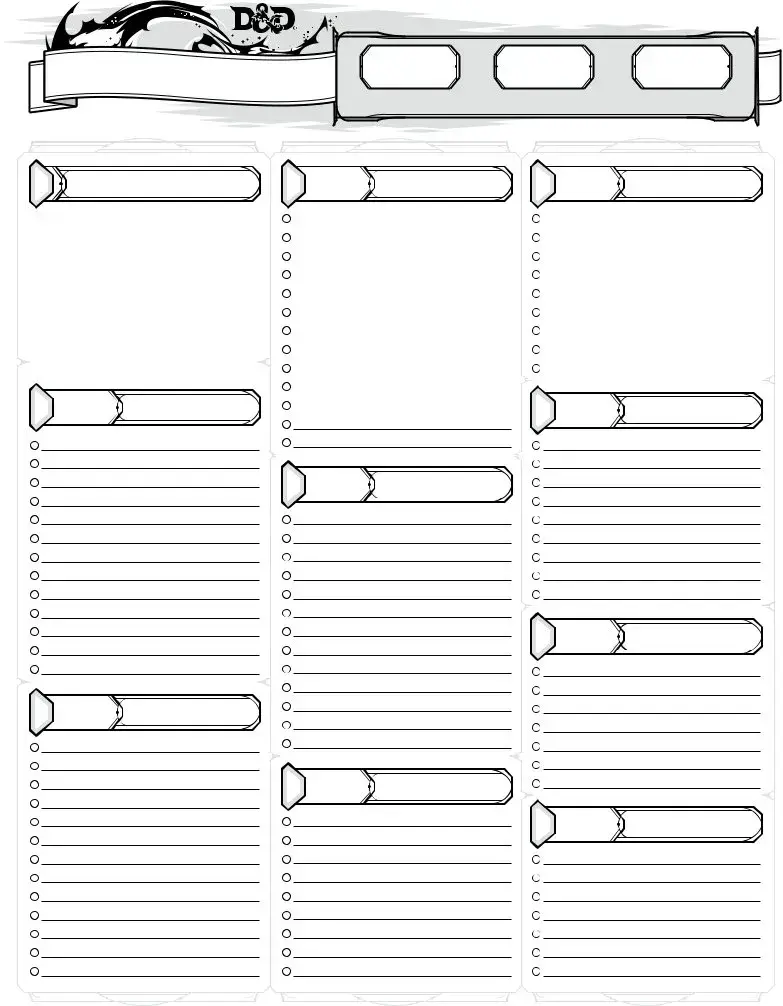
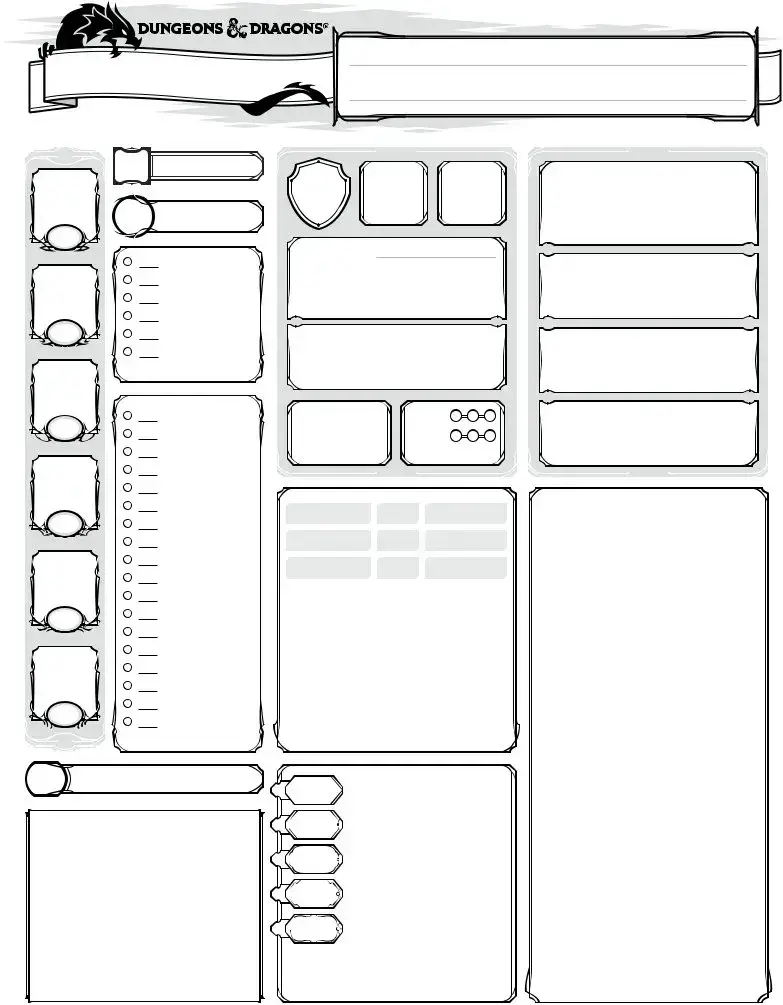
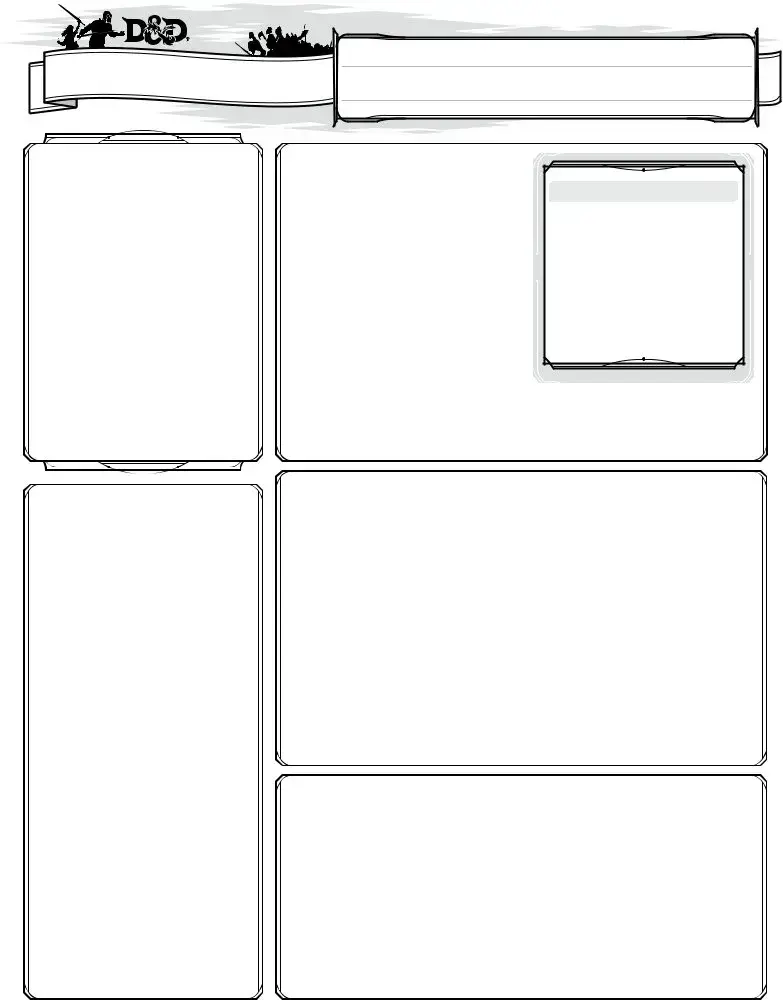
| Fact Name | Description |
|---|---|
| Character Basics | The character sheet includes basic information such as name, race, class, and background. |
| Ability Scores | Players must record their ability scores, which affect their character's skills and actions. |
| Skills and Proficiencies | The sheet lists various skills and proficiencies, helping players understand their character's strengths. |
| Equipment | Players note their character's equipment, including weapons, armor, and other items. |
| Hit Points | Hit points are tracked on the sheet, indicating how much damage a character can take before falling. |
| Spells and Abilities | For spellcasting characters, the sheet includes a section for spells and special abilities. |
Filling out the Dungeons & Dragons (D&D) Character Sheet is an essential step in creating your character. This process allows you to define your character's abilities, background, and personality traits. Follow these steps to ensure you complete the form accurately and efficiently.
What is a D&D Character Sheet?
A D&D Character Sheet is a document that players use to record the details of their character in the game. It includes important information such as the character's name, race, class, abilities, skills, and equipment. This sheet serves as a quick reference during gameplay, helping players track their character's progress and capabilities.
How do I fill out the Character Sheet?
To fill out the Character Sheet, start by entering your character's name at the top. Next, choose a race and class that fit your character concept. Then, allocate points to your abilities, which include Strength, Dexterity, Constitution, Intelligence, Wisdom, and Charisma. Don’t forget to fill in your skills, equipment, and any special features your character may have. It’s important to refer to the D&D rulebook for guidance on how to properly allocate points and select features.
What if I make a mistake on the sheet?
Mistakes happen, and that’s perfectly okay. If you make an error, simply cross out the incorrect information and write the correct details next to it. Alternatively, you can use a new sheet to ensure clarity. Keeping a clean and accurate record is essential for gameplay, so don’t hesitate to make corrections as needed.
Can I use a digital version of the Character Sheet?
Yes, many players prefer using digital versions of the Character Sheet. These can be filled out on a computer or tablet, allowing for easy updates and changes. Digital sheets may also include features like automatic calculations for abilities and modifiers, which can enhance your gaming experience.
What should I do if I want to change my character later?
Character development is a natural part of D&D. If you want to change your character, discuss it with your Dungeon Master (DM). Depending on the campaign, the DM may allow you to make adjustments to your character’s abilities, skills, or even change classes. Be sure to document any changes on your Character Sheet to keep everything up to date.
Is it necessary to have a Character Sheet for every session?
Yes, it is highly recommended to have your Character Sheet for every session. This document is essential for tracking your character’s health, abilities, and progress throughout the game. Having your sheet handy ensures you can make informed decisions during gameplay and helps the session run smoothly.
Where can I find resources to help me create my character?
There are many resources available to assist you in creating your character. The official D&D website offers character creation guides and tools. Additionally, there are numerous online forums and communities where experienced players share tips and advice. You can also consult the D&D Player’s Handbook for comprehensive information on character creation.
Filling out a Dungeons & Dragons (D&D) character sheet can be an exciting part of the gaming experience. However, many players make common mistakes that can hinder their gameplay. Understanding these pitfalls can help ensure a smoother and more enjoyable adventure.
One frequent error is neglecting to read the instructions carefully. The character sheet contains specific sections for abilities, skills, and equipment. Skipping over these details can lead to incomplete or inaccurate character information. Players should take the time to familiarize themselves with each section to avoid confusion during gameplay.
Another mistake is not calculating ability scores correctly. Ability scores determine a character's strengths and weaknesses. Players often misinterpret how to derive these scores from their character's race and class. It is essential to follow the guidelines provided in the Player's Handbook to ensure that scores reflect the character's intended abilities.
Many players also forget to include important details such as proficiency bonuses and saving throws. These elements can significantly impact a character's effectiveness in various situations. Keeping track of these bonuses is crucial for both combat and skill checks, so players should double-check that they have been applied accurately.
Additionally, some individuals overlook the importance of character backstory. While the character sheet focuses on statistics, the backstory adds depth and context. A well-thought-out backstory can enhance role-playing opportunities and help players connect with their characters on a deeper level.
Another common oversight is failing to update the character sheet as the game progresses. Characters evolve, gaining new skills, items, and abilities. Players should regularly review and revise their sheets to reflect these changes. This practice ensures that they have an accurate representation of their character at all times.
Lastly, players sometimes ignore the importance of collaboration with their Dungeon Master (DM). The DM can provide valuable insights into how a character fits into the overall story. Engaging with the DM can lead to a more cohesive and rewarding gaming experience, as well as help clarify any questions about the character sheet.
In the world of tabletop role-playing games like Dungeons & Dragons (D&D), players often use a variety of forms and documents to enhance their gaming experience. Each of these documents serves a unique purpose, helping players keep track of their characters, abilities, and the unfolding story. Below is a list of common forms that complement the D&D Character Sheet.
Using these documents alongside the D&D Character Sheet can greatly enhance the gaming experience. They provide structure, facilitate communication, and ensure that everyone at the table is on the same page, ready to embark on their next adventure.
When filling out a Dungeons & Dragons (D&D) character sheet, certain practices can enhance your experience and ensure clarity. Here’s a list of what you should and shouldn't do:
Many players new to Dungeons & Dragons (D&D) may have misconceptions about the character sheet. Understanding these can enhance the gaming experience. Here are five common misconceptions:
Addressing these misconceptions can lead to a better understanding of the character sheet's role in D&D, ultimately enriching the gaming experience.
Filling out a Dungeons & Dragons (D&D) character sheet can be an exciting part of the game. It helps players bring their characters to life and keeps track of important details. Here are some key takeaways to consider when using the character sheet: