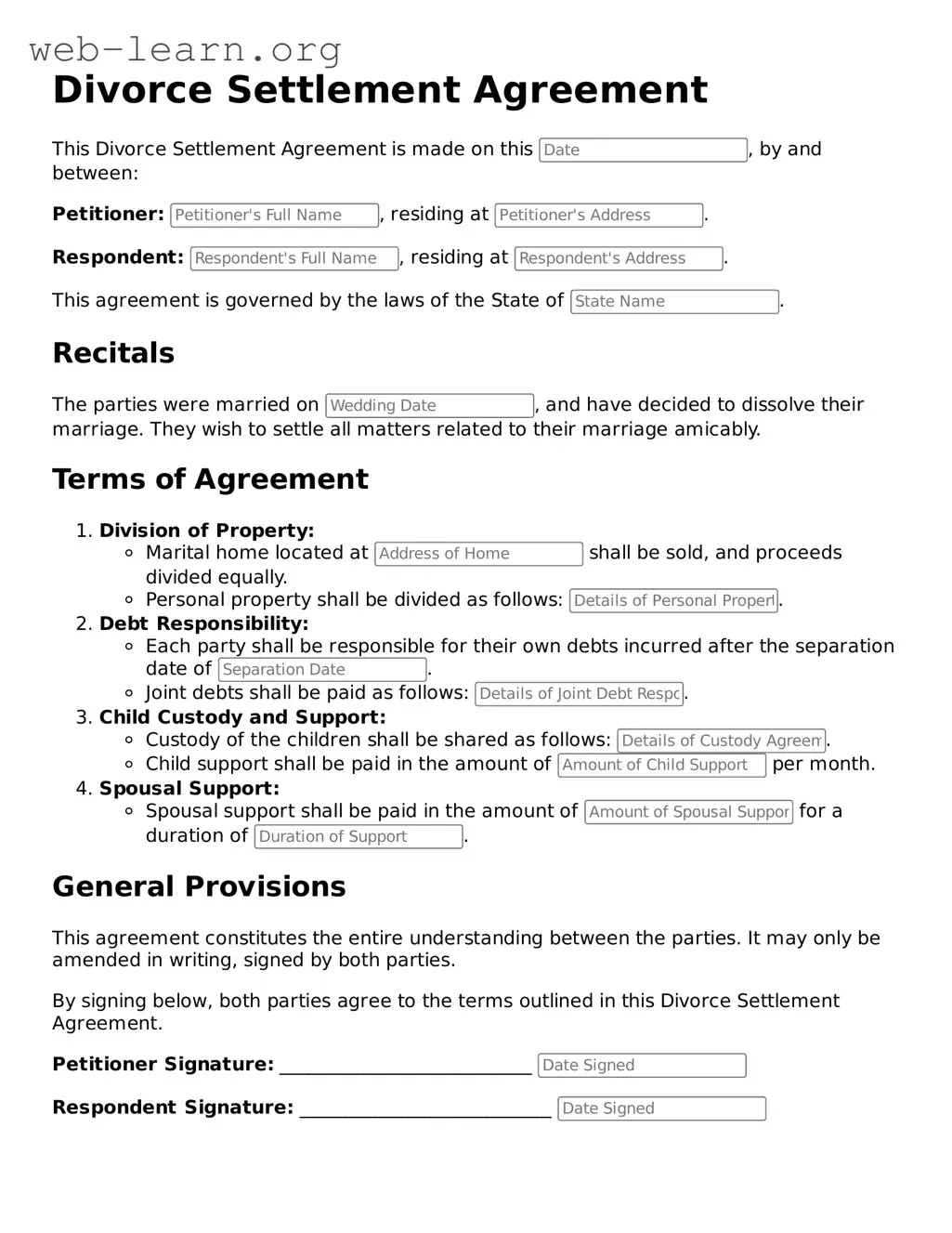
When navigating the complexities of divorce, a Divorce Settlement Agreement form plays a crucial role in outlining the terms agreed upon by both parties. This document serves as a roadmap for the divorce process, detailing important aspects such as the division of assets and debts, child custody arrangements, and spousal support obligations. It addresses how property will be divided, whether any debts will be shared, and how child-related expenses will be managed. Additionally, the form typically includes provisions for visitation rights and decision-making responsibilities regarding the children. By clearly articulating these terms, the Divorce Settlement Agreement aims to minimize conflict and provide a clear framework for both individuals moving forward in their separate lives. Understanding this form is essential for anyone going through a divorce, as it not only reflects the negotiations between the parties but also has legal implications that can affect future interactions and responsibilities.
Divorce Settlement Agreement
This Divorce Settlement Agreement is made on this , by and between:
Petitioner: , residing at .
Respondent: , residing at .
This agreement is governed by the laws of the State of .
Recitals
The parties were married on , and have decided to dissolve their marriage. They wish to settle all matters related to their marriage amicably.
Terms of Agreement
General Provisions
This agreement constitutes the entire understanding between the parties. It may only be amended in writing, signed by both parties.
By signing below, both parties agree to the terms outlined in this Divorce Settlement Agreement.
Petitioner Signature: ___________________________
Respondent Signature: ___________________________
| Fact Name | Description |
|---|---|
| Purpose | The Divorce Settlement Agreement form outlines the terms agreed upon by both parties regarding asset division, alimony, child custody, and support. |
| State-Specific Forms | Each state may have its own version of the Divorce Settlement Agreement form, tailored to comply with local laws and regulations. |
| Governing Laws | The governing laws for divorce settlements vary by state. For example, in California, the Family Code governs these agreements, while in Texas, the Texas Family Code applies. |
| Legal Binding | Once signed by both parties and approved by the court, the agreement becomes legally binding, ensuring that both parties adhere to the terms outlined. |
After obtaining the Divorce Settlement Agreement form, you will need to complete it accurately. This form will require information about both parties and the terms of the settlement. Follow the steps below to ensure all necessary sections are filled out correctly.
Once the form is completed and signed, it can be submitted to the court for approval. Ensure you keep a copy for your records.
What is a Divorce Settlement Agreement?
A Divorce Settlement Agreement is a legally binding document that outlines the terms of a divorce between two parties. It addresses various aspects such as property division, child custody, child support, and alimony. This agreement serves to ensure that both parties are on the same page and helps to avoid future disputes.
Why is a Divorce Settlement Agreement important?
This agreement is crucial because it provides clarity and structure to the divorce process. By detailing the rights and responsibilities of each party, it minimizes misunderstandings and conflict. Moreover, having a written agreement can simplify court proceedings and provide a reference point for future issues that may arise.
How do I create a Divorce Settlement Agreement?
Creating a Divorce Settlement Agreement involves several steps:
Can a Divorce Settlement Agreement be modified?
Yes, a Divorce Settlement Agreement can be modified, but it typically requires both parties to agree to the changes. If circumstances change significantly—such as a job loss, relocation, or changes in the needs of children—either party can request a modification through the court. Documentation supporting the need for changes will likely be necessary.
What happens if one party does not follow the Divorce Settlement Agreement?
If one party fails to adhere to the terms of the agreement, the other party has legal recourse. They can file a motion with the court to enforce the agreement. The court may hold the non-compliant party in contempt, which could lead to penalties, including fines or changes to custody and support arrangements. It is essential to keep a record of any violations to support your case.
Filling out a Divorce Settlement Agreement form can be a challenging task. Many individuals make mistakes that can lead to complications down the road. One common error is failing to provide accurate financial information. This includes income, expenses, assets, and debts. Inaccurate figures can affect the division of property and spousal support. It is crucial to gather all relevant financial documents before completing the form.
Another frequent mistake is overlooking the importance of clear language. Ambiguities in the agreement can lead to misunderstandings and disputes later. Each party should strive to use precise terms and definitions. For example, instead of stating "the house," specify the address and any relevant details. Clarity fosters better communication and reduces the potential for conflict.
People often neglect to consider the long-term implications of their agreements. Decisions made in the heat of the moment may not reflect what is best for the future. For instance, agreeing to a specific custody arrangement without considering the children's needs can lead to regret. It is essential to think through the consequences of each decision and how they will impact everyone involved.
Additionally, many individuals fail to seek legal advice or professional guidance. While it may seem tempting to handle everything independently, having a legal expert review the agreement can provide valuable insights. They can help identify potential pitfalls and ensure that the agreement complies with state laws. This step can save time, money, and emotional distress in the long run.
Finally, some people rush through the process without fully understanding the terms they are agreeing to. Each clause in the Divorce Settlement Agreement is significant. Taking the time to read and comprehend every section is essential. If something is unclear, asking questions or requesting clarification is vital. A well-informed decision leads to a more satisfactory outcome for all parties involved.
A Divorce Settlement Agreement is an important document that outlines the terms of a divorce. Along with this agreement, several other forms and documents may be necessary to ensure a smooth process. Below is a list of commonly used documents that often accompany a Divorce Settlement Agreement.
These documents work together to create a comprehensive framework for the divorce process. Ensuring that all necessary forms are completed and submitted can help facilitate a smoother resolution for all parties involved.
When filling out a Divorce Settlement Agreement form, attention to detail is crucial. Here are seven important dos and don’ts to keep in mind:
Following these guidelines can help ensure a smoother process as you navigate this challenging time.
Many people have misunderstandings about the Divorce Settlement Agreement form. Here are six common misconceptions:
This is not true. The Divorce Settlement Agreement outlines the terms of the divorce, such as asset division and child custody, while the divorce decree is the official court order that finalizes the divorce.
This misconception is misleading. While the agreement is binding, parties can negotiate changes if both agree and the court approves the modifications.
This is incorrect. Even without children, a Divorce Settlement Agreement is important for dividing assets and debts fairly.
While some may choose to handle it independently, having legal representation can help ensure that the agreement is fair and meets legal requirements.
This is a misconception. Certain terms, especially regarding child support and custody, can be modified in the future if circumstances change.
This is not always necessary. While it should be submitted during the divorce process, the timing can vary depending on local laws and court procedures.
Filling out and using a Divorce Settlement Agreement form can be a complex process. Here are some key takeaways to consider: