Homepage Blank Divorce Decree Hawaii Form
Outline

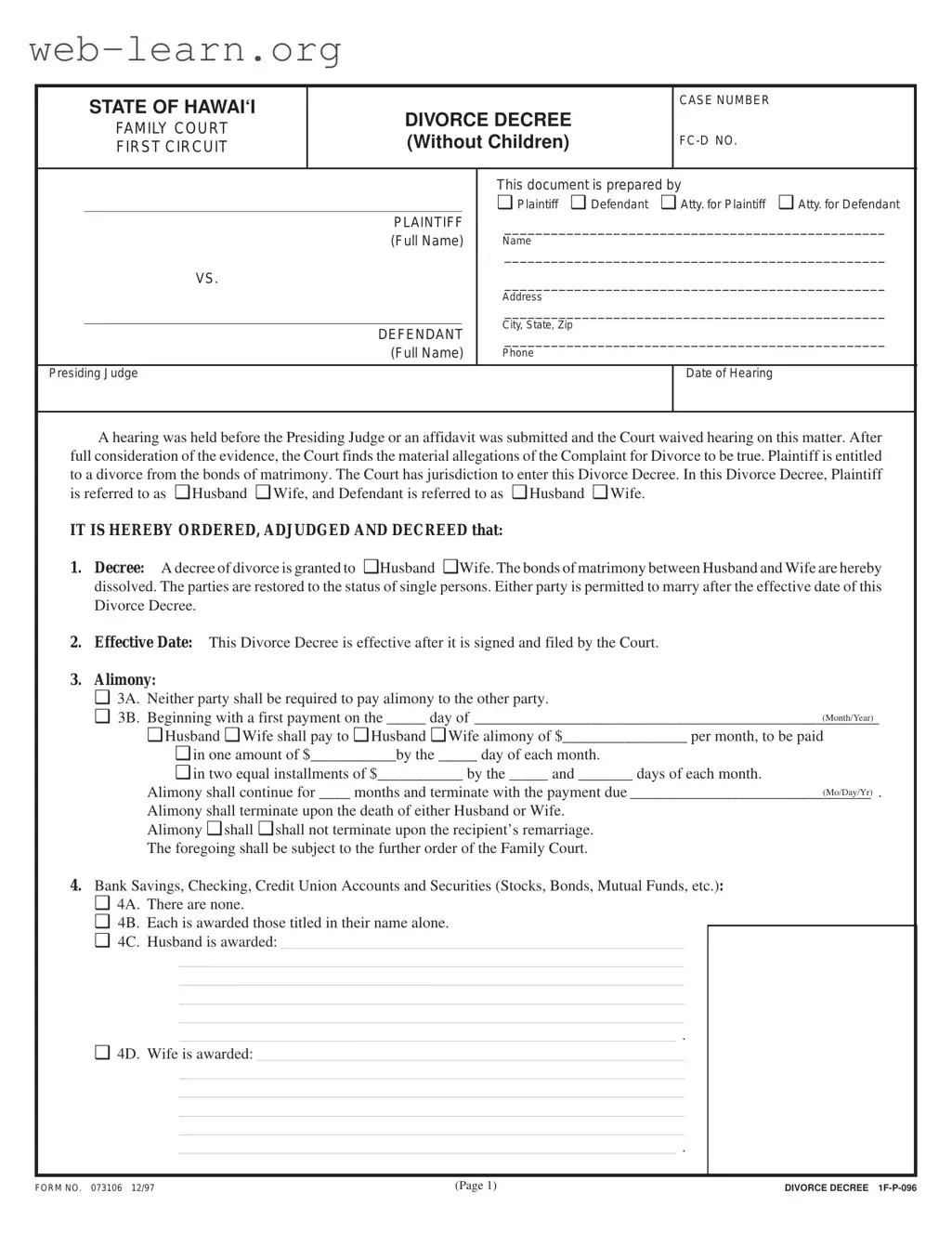
The Divorce Decree Hawaii form is a crucial document in the divorce process, specifically designed for cases without children. It outlines the legal dissolution of marriage between the parties involved. This form includes essential details such as the names and addresses of both the plaintiff and defendant, along with the case number and presiding judge's information. It confirms that a hearing has taken place or that an affidavit has been submitted, allowing the court to grant the divorce. The decree specifies the effective date of the divorce, the terms of alimony, and the division of assets and debts. Furthermore, it addresses issues like vehicle ownership, real property, life insurance, retirement accounts, and personal belongings. The form also includes provisions for name changes for either party and requires signatures from both parties and their attorneys, ensuring that all aspects of the divorce are legally recognized and enforceable.


Sample - Divorce Decree Hawaii Form

A hearing was held before the Presiding Judge or an affidavit was submitted and the Court waived hearing on this matter. After
full consideration of the evidence, the Court finds the material allegations of the Complaint for Divorce to be true. Plaintiff is entitled
to a divorce from the bonds of matrimony. The Court has jurisdiction to enter this Divorce Decree. In this Divorce Decree, Plaintiff
is referred to as Husband Wife, and Defendant is referred to as Husband Wife.
IT IS HEREBY ORDERED, ADJUDGED AND DECREED that:
1. Decree: A decree of divorce is granted to Husband Wife. The bonds of matrimony between Husband and Wife are hereby
dissolved. The parties are restored to the status of single persons. Either party is permitted to marry after the effective date of this
Divorce Decree.
2. Effective Date: This Divorce Decree is effective after it is signed and filed by the Court.
3. Alimony:
3A. Neither party shall be required to pay alimony to the other party.
3B. Beginning with a first payment on the _____ day of ____________________________________________________
Husband Wife shall pay to Husband Wife alimony of $________________ per month, to be paid
in one amount of $___________by the _____ day of each month.
in two equal installments of $___________ by the _____ and _______ days of each month.
Alimony shall continue for ____ months and terminate with the payment due _______________________________ .
Alimony shall terminate upon the death of either Husband or Wife.
Alimony shall shall not terminate upon the recipient’s remarriage.
The foregoing shall be subject to the further order of the Family Court.
4. Bank Savings, Checking, Credit Union Accounts and Securities (Stocks, Bonds, Mutual Funds, etc.):
4A. There are none.
4B. Each is awarded those titled in their name alone.
4C. Husband is awarded: ____________________________________________________
_________________________________________________________________
_________________________________________________________________
_________________________________________________________________
_________________________________________________________________
________________________________________________________________ .
4D. Wife is awarded: _______________________________________________________
_________________________________________________________________
_________________________________________________________________
_________________________________________________________________
_________________________________________________________________
________________________________________________________________
.
(Page 1)
DIVORCE DECREE
(Without Children)
CASE NUMBER
FC-D NO.
STATE OF HAWAI‘I
FAMILY COURT
FIRST CIRCUIT
PLAINTIFF
(Full Name)
VS.
DEFENDANT
(Full Name)
This document is prepared by
Plaintiff Defendant Atty. for Plaintiff Atty. for Defendant
_________________________________________________
Name
_________________________________________________
_________________________________________________
Address
_________________________________________________
City, State, Zip
_________________________________________________
Phone
FORM NO. 073106 12/97 DIVORCE DECREE 1F-P-096
(Month/Year)
(Mo/Day/Yr)
Presiding Judge Date of Hearing
5.Vehicles (Autos, Trucks, Motorcycles, Trailers, Campers, Boats, etc.):
5A.There are none.
5B.Each party is awarded the vehicles titled in their name alone.
5C.Husband is awarded:_____________________________________________________________________________
_____________________________________________________________________________________________
_____________________________________________________________________________________________
____________________________________________________________________________________________.
5D.Wife is awarded:________________________________________________________________________________
_____________________________________________________________________________________________
_____________________________________________________________________________________________
____________________________________________________________________________________________.
Necessary transfer documents shall be signed no later than ten days following the filing of this Divorce Decree. If either
party fails to do so, then the Director of Finance of the City and County of Honolulu is authorized and directed to transfer
the ownership of vehicle(s) if requested to do so.
6.Real Property:
6A.Neither party owns any interest of any kind in any real property.
6B.The real property shall be divided as follows:_________________________________________________________
_____________________________________________________________________________________________
_____________________________________________________________________________________________
_____________________________________________________________________________________________
_____________________________________________________________________________________________
_____________________________________________________________________________________________
_____________________________________________________________________________________________
____________________________________________________________________________________________.
7.Life Insurance:
7A.There is none.
7B.Each party is awarded the life insurance policy(ies) now held on their life, together with any cash value therein and subject
to any debt thereon.
7C.The life insurance shall be divided as follows:_________________________________________________________
_____________________________________________________________________________________________
____________________________________________________________________________________________.
8.Retirement Accounts:
8A.There are none.
8B.Each party shall keep their own.
8C.The retirement accounts of the parties shall be divided as follows:_________________________________________
_____________________________________________________________________________________________
_____________________________________________________________________________________________
_____________________________________________________________________________________________
_____________________________________________________________________________________________
_____________________________________________________________________________________________
____________________________________________________________________________________________.
9.All Other Assets (Personal Belongings, Furniture, Household Effects, Art, Stamps, Coins, Tools, Equipment, Jewelry, Accounts
Receivable, Investment Assets, Business Assets, Cemetary Plots or Niches, Tax Refunds Due, etc.):
9A.Each party is awarded the personal belongings and the household effects in their possession.
9B.Husband is awarded:_____________________________________________________________________________
_____________________________________________________________________________________________
_____________________________________________________________________________________________
____________________________________________________________________________________________
.
9C.Wife is awarded:________________________________________________________________________________
_____________________________________________________________________________________________
_____________________________________________________________________________________________
____________________________________________________________________________________________.
(Page 2)
FORM NO. 0731064/98 DIVORCE DECREE1F-P-096
10.All Outstanding Debts:
10A.Each party shall pay all of the credit card and other debt, if any, now in their name alone.
10B.There are no joint debts.
10C.Husband shall pay:______________________________________________________________________________
_____________________________________________________________________________________________
____________________________________________________________________________________________.
10D.Wife shall pay:_________________________________________________________________________________
_____________________________________________________________________________________________
____________________________________________________________________________________________.
11.Name Change:
11A.Wife shall resume the use of her birth surname former married name and shall be known hereafter as
____________________________________________________________________________________________.
11B.Husband shall resume the use of his birth surname former married name and shall be known hereafter as
____________________________________________________________________________________________.
12.Other:
(Page 3)
FORM NO. 0731064/98 DIVORCE DECREE1F-P-096
Date Judge
APPROVED AS TO FORM AND CONTENT:
X __________________________________________ X__________________________________________
Signature of Plaintiff Signature of Defendant
SS#:______________________________________ SS#______________________________________
Address:___________________________________ Address:__________________________________
__________________________________________ __________________________________________
Date Plaintiff Signed Decree:___________________ Date Defendant Signed Decree:________________
APPROVED AS TO FORM:
X __________________________________________ X__________________________________________
Signature of Attorney for Plaintiff Signature of Attorney for Defendant
Name:_____________________________________ Name:____________________________________
(first, middle, last name)

Form Information

Fact Name Description
Form Title The official title of the form is "Divorce Decree (Without Children)" and is designated as form number 1F-P-096.
Governing Law This form is governed by the laws of the State of Hawaii, specifically under family law statutes.
Effective Date The Divorce Decree becomes effective once it is signed and filed by the court.
Alimony Provisions The form includes options for alimony, detailing whether payments are required and the terms of such payments.
Asset Division The form addresses the division of various assets, including bank accounts, vehicles, and real property, specifying how each party's assets will be awarded.

Detailed Guide for Filling Out Divorce Decree Hawaii

After completing the Divorce Decree form for Hawaii, you will need to file it with the Family Court. Make sure all sections are filled out accurately, as this document is crucial for finalizing your divorce. Below are the steps to help you fill out the form correctly.

  1. At the top of the form, enter the date in the format (Mo/Day/Yr).
  2. Fill in the case number in the space labeled "CASE NUMBER FC-D NO."
  3. Indicate who is preparing the document by checking the appropriate box: Plaintiff, Defendant, Attorney for Plaintiff, or Attorney for Defendant.
  4. In the "PLAINTIFF" section, write the full name of the Plaintiff.
  5. Provide the Plaintiff's address, including city, state, and zip code.
  6. In the "DEFENDANT" section, write the full name of the Defendant.
  7. Provide the Defendant's phone number.
  8. Fill in the name of the Presiding Judge and the date of the hearing.
  9. Indicate whether a hearing was held or if an affidavit was submitted by checking the appropriate box.
  10. Choose whether the Plaintiff is referred to as Husband or Wife and do the same for the Defendant.
  11. In the "Decree" section, check the appropriate box to grant the divorce to either Husband or Wife.
  12. Fill in the effective date of the Divorce Decree, which is when it is signed and filed by the Court.
  13. For alimony, check the appropriate box and fill in the required details, including payment amounts and terms.
  14. In the section for Bank Savings, Checking, and Securities, indicate if there are any and fill in the necessary details.
  15. For vehicles, indicate ownership and provide details as needed.
  16. In the "Real Property" section, state ownership interests or how the property will be divided.
  17. Address life insurance policies, retirement accounts, and any other assets or debts, filling in the required information.
  18. If applicable, indicate name changes for either party and provide the new names.
  19. Finally, both parties should sign the document and include their social security numbers and addresses in the designated areas.

Obtain Answers on Divorce Decree Hawaii

  1. What is a Divorce Decree in Hawaii?

    A Divorce Decree is a legal document issued by the court that officially ends a marriage. In Hawaii, this document outlines the terms of the divorce, including the division of assets, alimony, and any other relevant details. Once signed and filed by the court, it restores both parties to single status, allowing them to remarry if they choose.

  2. Who can prepare the Divorce Decree form?

    The Divorce Decree form can be prepared by either the plaintiff (the person filing for divorce), the defendant (the other spouse), or their attorneys. It is important that the form is completed accurately to ensure that all necessary information is included and that the decree is enforceable.

  3. What happens during the hearing for the Divorce Decree?

    During the hearing, the presiding judge reviews the evidence and arguments presented by both parties. If both parties agree on the terms, the judge may grant the divorce without a hearing based on an affidavit. If there are disputes, the judge will make a ruling based on the evidence provided.

  4. What is the effective date of the Divorce Decree?

    The Divorce Decree becomes effective once it is signed and filed by the court. This means that the terms outlined in the decree, such as the dissolution of marriage and any financial obligations, take effect immediately upon filing.

  5. How is alimony determined in the Divorce Decree?

    Alimony, or spousal support, is addressed in the Divorce Decree and can vary based on the couple's circumstances. The decree will specify whether alimony is to be paid, the amount, and the duration. If neither party is required to pay alimony, this will also be noted in the decree.

  6. What happens to assets and debts in the Divorce Decree?

    The Divorce Decree outlines how assets and debts will be divided between the parties. Each party is typically awarded items titled in their name, and any joint debts must be addressed. It’s crucial to ensure that all assets and debts are accurately represented to avoid future disputes.

  7. Can I change my name after the divorce?

    Yes, the Divorce Decree allows for a name change. If the wife wishes to revert to her maiden name or former married name, this can be specified in the decree. Similarly, the husband can also request a name change if desired.

  8. What if I have questions after the Divorce Decree is issued?

    If questions arise after the Divorce Decree is issued, it is advisable to consult with an attorney who specializes in family law. They can provide guidance on the terms of the decree and help resolve any issues that may come up in the future.

Common mistakes

Filling out the Divorce Decree Hawaii form can be a daunting task, and mistakes can lead to delays or complications. One common mistake is failing to provide complete names and addresses for both parties. Incomplete information can create confusion and may result in the court rejecting the form. It’s essential to ensure that all names are spelled correctly and that addresses include all necessary details, such as city, state, and zip code.

Another frequent error involves the selection of the correct titles for each party. People often overlook the importance of clearly indicating whether the Plaintiff is the Husband or Wife. This oversight can cause issues in the processing of the decree, as the court relies on these designations to establish legal standing. Careful attention to this detail can prevent unnecessary complications.

Many individuals also make the mistake of not specifying the effective date of the divorce. The form requires that the effective date is clearly marked, as this date is crucial for understanding when the divorce becomes official. Without this information, the decree may lack clarity, leading to potential disputes in the future.

When addressing alimony, individuals frequently misinterpret the options available. It’s important to select the appropriate choice regarding alimony payments, whether it is to be paid or not. Additionally, if payments are to be made, specifying the amount and the payment schedule is critical. Failure to do so can lead to confusion and disagreements later.

Another mistake involves the section on property division. Parties often neglect to accurately list all assets or debts. Omitting significant assets or debts can result in legal issues down the line. It’s crucial to thoroughly review and disclose all financial interests to ensure a fair division.

People sometimes forget to sign the form in the required places. Both parties must sign the decree, and missing signatures can halt the process. Ensuring that all necessary signatures are present can save time and prevent additional court appearances.

Finally, individuals may fail to keep copies of the completed form. After submission, it’s vital to retain a copy for personal records. This practice ensures that both parties have access to the agreed terms and can refer back to them if needed. Keeping a record can help avoid misunderstandings in the future.

Documents used along the form

When navigating a divorce in Hawaii, several important documents accompany the Divorce Decree. Each of these forms serves a specific purpose in the process, ensuring that all aspects of the divorce are addressed properly. Below are key forms that individuals may need to consider.

  • Complaint for Divorce: This document initiates the divorce process. It outlines the reasons for the divorce and sets the stage for the court proceedings.
  • Summons: The Summons notifies the other spouse that a divorce action has been filed. It informs them of their rights and responsibilities during the divorce process.
  • Financial Disclosure Statement: This form requires both parties to disclose their financial information. It is crucial for determining asset division, alimony, and child support, if applicable.
  • Separation Agreement: This document details the terms agreed upon by both parties regarding property division, alimony, and other relevant matters. It can help streamline the divorce process.
  • Child Custody Agreement: If children are involved, this agreement outlines custody arrangements, visitation schedules, and child support obligations. It is essential for ensuring the well-being of the children.
  • Notice of Entry of Divorce Decree: This form officially informs both parties that the Divorce Decree has been finalized and filed with the court. It serves as a record of the divorce's completion.

Understanding these forms and their functions can significantly impact the divorce experience. Proper documentation helps protect rights and facilitates a smoother transition into post-divorce life.

Similar forms

The Divorce Decree in Hawaii serves as an essential legal document that finalizes the dissolution of marriage. It shares similarities with several other legal documents that also address personal and familial matters. Here is a list of seven documents that are similar to the Divorce Decree:

  • Separation Agreement: This document outlines the terms under which a couple agrees to live apart. It can include provisions for property division, alimony, and child custody, similar to how the Divorce Decree addresses these matters after a marriage is dissolved.
  • Child Custody Agreement: This agreement specifies the arrangements for the care and custody of children after a divorce. Like the Divorce Decree, it is legally binding and aims to ensure the well-being of the children involved.
  • Property Settlement Agreement: This document details how a couple’s assets and debts will be divided upon separation or divorce. It serves a similar purpose as the property division section of the Divorce Decree.
  • Alimony Agreement: This outlines the terms under which one spouse will provide financial support to the other after separation. It parallels the alimony provisions found in the Divorce Decree, which may specify payment amounts and duration.
  • Marriage Certificate: While this document initiates a marriage, it is often referenced in the Divorce Decree. Both documents are vital in establishing the legal status of the parties involved.
  • Name Change Order: This document allows an individual to legally change their name, often following a divorce. The Divorce Decree may include provisions for name changes, linking them to the legal process of dissolution.
  • Final Judgment of Divorce: Similar to the Divorce Decree, this document is issued by the court to formally conclude the divorce process. It includes the court's decisions on various matters, much like the Divorce Decree.

Understanding these documents can provide clarity on the legal processes surrounding divorce and separation. Each document plays a role in ensuring that the rights and responsibilities of all parties are clearly defined and upheld.

Dos and Don'ts

When filling out the Divorce Decree Hawaii form, there are important things to keep in mind. Here’s a list of what you should and shouldn’t do:

  • Do ensure all names are spelled correctly. This includes both the plaintiff and defendant.
  • Do provide accurate contact information. Include the correct address and phone number for both parties.
  • Do read each section carefully before making a selection. Understand what each option means.
  • Do sign and date the document in the appropriate places. Both parties must sign.
  • Don't leave any sections blank. Fill in all required information to avoid delays.
  • Don't use abbreviations or nicknames. Use full legal names as they appear on official documents.

Misconceptions

  • Misconception 1: The Divorce Decree is only for couples with children.
  • This is not true. The Divorce Decree Hawaii form can be used by couples without children. It specifically addresses the dissolution of marriage, regardless of whether children are involved.

  • Misconception 2: Once the Divorce Decree is signed, it cannot be changed.
  • While the Divorce Decree is a legal document, certain terms can be modified later if both parties agree and the court approves. Changes may be necessary due to changing circumstances.

  • Misconception 3: A Divorce Decree automatically divides all assets and debts.
  • The Divorce Decree outlines how assets and debts are to be divided, but it requires both parties to disclose their financial situations fully. If one party fails to disclose assets, it may lead to complications later.

  • Misconception 4: You cannot remarry until a year after the Divorce Decree.
  • This is incorrect. In Hawaii, you can remarry as soon as the Divorce Decree is signed and filed by the court. The decree restores both parties to single status immediately.

  • Misconception 5: The Divorce Decree can be finalized without a hearing.
  • In some cases, a hearing may be waived if both parties agree and submit the necessary affidavits. However, a hearing is typically held to ensure all legal requirements are met.

  • Misconception 6: Alimony is guaranteed in every Divorce Decree.
  • This is not the case. Alimony is not automatically awarded and depends on various factors, including the length of the marriage and each party's financial situation. The Divorce Decree specifies whether alimony will be paid.

  • Misconception 7: A Divorce Decree is the final step in the divorce process.
  • While the Divorce Decree is a significant milestone, it may not be the final step. Issues like property transfers or ongoing alimony payments may still require further action and compliance from both parties.

Key takeaways

When filling out and using the Divorce Decree Hawaii form, there are several important points to keep in mind:

  • Complete All Sections: Ensure that all sections of the form are filled out completely and accurately. Missing information can delay the process.
  • Effective Date: The Divorce Decree becomes effective once it is signed and filed by the Court. Keep this in mind for any future plans.
  • Alimony Details: Clearly specify any alimony arrangements, including amounts and payment schedules. This section is crucial for financial planning.
  • Asset Distribution: Be thorough when detailing the division of assets and debts. This includes vehicles, real property, and personal belongings.
  • Name Changes: If either party wishes to change their name, this must be clearly indicated on the form. Make sure to specify if it’s a birth surname or former married name.