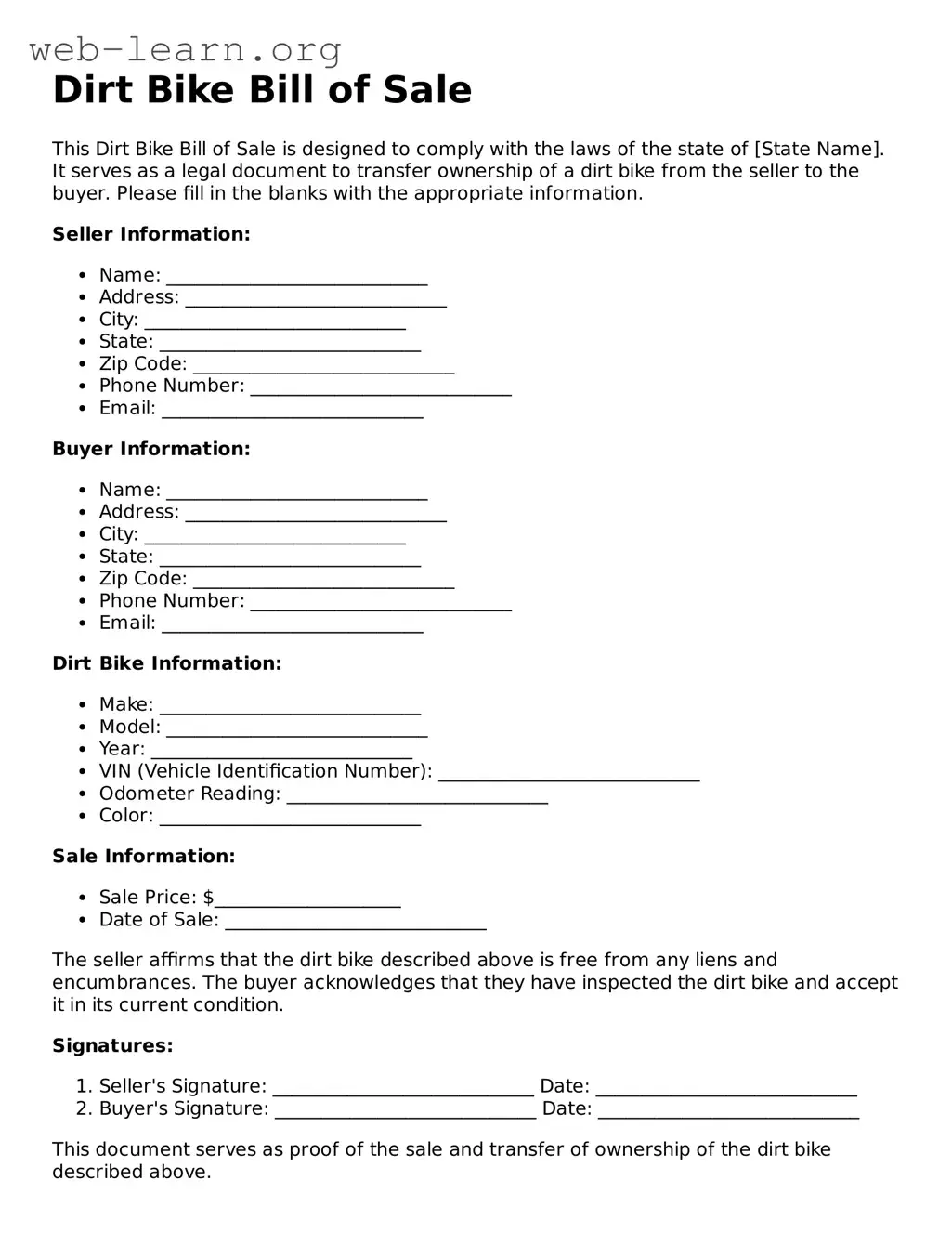
The Dirt Bike Bill of Sale form serves as a crucial document in the transaction of dirt bikes, ensuring that both buyers and sellers are protected during the sale process. This form typically includes essential details such as the names and addresses of both parties involved, the make and model of the dirt bike, its Vehicle Identification Number (VIN), and the sale price. By clearly outlining these specifics, the form helps to prevent misunderstandings and disputes that may arise after the sale is completed. Additionally, it often includes sections for the seller to disclose any known issues with the bike, which can be vital for the buyer's decision-making process. The presence of signatures from both parties at the end of the document signifies mutual agreement to the terms laid out, making the transaction legally binding. Overall, the Dirt Bike Bill of Sale is not just a simple receipt; it plays a fundamental role in establishing ownership and protecting the rights of both the buyer and the seller in the dirt bike market.
Dirt Bike Bill of Sale
This Dirt Bike Bill of Sale is designed to comply with the laws of the state of [State Name]. It serves as a legal document to transfer ownership of a dirt bike from the seller to the buyer. Please fill in the blanks with the appropriate information.
Seller Information:
Buyer Information:
Dirt Bike Information:
Sale Information:
The seller affirms that the dirt bike described above is free from any liens and encumbrances. The buyer acknowledges that they have inspected the dirt bike and accept it in its current condition.
Signatures:
This document serves as proof of the sale and transfer of ownership of the dirt bike described above.
| Fact Name | Description |
|---|---|
| Purpose | A Dirt Bike Bill of Sale serves as a legal document to transfer ownership of a dirt bike from one person to another. |
| Required Information | The form typically includes details such as the buyer's and seller's names, addresses, and signatures, as well as the bike's make, model, year, and VIN. |
| State-Specific Forms | Each state may have its own version of the bill of sale, which must comply with local laws regarding vehicle sales. |
| Governing Laws | In many states, the sale of motor vehicles, including dirt bikes, is governed by the Uniform Commercial Code (UCC) and state-specific vehicle codes. |
| Notarization | Some states require the bill of sale to be notarized to be considered valid, adding an extra layer of authenticity. |
| Record Keeping | Both the buyer and seller should keep a copy of the bill of sale for their records, as it can be useful for future reference. |
| Tax Implications | Sales tax may apply to the purchase of a dirt bike, and the bill of sale can be used to calculate this tax during registration. |
| Liability Protection | The document can protect both parties by clearly stating the terms of the sale and any warranties or guarantees provided. |
Filling out a Dirt Bike Bill of Sale form is an important step in the process of buying or selling a dirt bike. This document serves as proof of the transaction and outlines key details about the bike and the parties involved. Once you have completed the form, both the buyer and seller should retain a copy for their records.
What is a Dirt Bike Bill of Sale?
A Dirt Bike Bill of Sale is a legal document that records the sale of a dirt bike from one party to another. This form serves as proof of the transaction and includes important details such as the buyer's and seller's names, the bike's make, model, and Vehicle Identification Number (VIN), as well as the sale price. It helps protect both the buyer and the seller by providing a written record of the agreement.
Why do I need a Bill of Sale for my dirt bike?
Having a Bill of Sale is crucial for several reasons. Firstly, it acts as proof of ownership, which is essential when registering the bike with the Department of Motor Vehicles (DMV) or transferring ownership. Secondly, it protects both parties in case of disputes regarding the sale. If any issues arise, the Bill of Sale serves as a reference point to clarify the terms of the agreement.
What information should be included in the Bill of Sale?
To ensure the Bill of Sale is comprehensive, it should include the following details:
Including this information helps to prevent misunderstandings and provides clarity for both parties.
Is a Bill of Sale required by law?
While a Bill of Sale is not universally required by law for the sale of a dirt bike, it is highly recommended. Some states may require a Bill of Sale for registration or titling purposes. Always check your local regulations to ensure compliance. Having this document is a best practice that can save you time and trouble in the future.
Can I create my own Bill of Sale?
Yes, you can create your own Bill of Sale. There are many templates available online that can guide you in drafting a document that meets your needs. However, ensure that it includes all the necessary information and complies with your state’s requirements. Alternatively, you may choose to use a pre-made form to simplify the process. Regardless of the method, the key is to have a clear and signed agreement between both parties.
Filling out a Dirt Bike Bill of Sale form can seem straightforward, but many people make common mistakes that can lead to complications later on. One frequent error is failing to include all necessary information. Buyers and sellers should ensure that details like the make, model, year, and Vehicle Identification Number (VIN) are accurately recorded. Omitting this information can create confusion about ownership.
Another mistake involves incorrect dates. It is essential to write the correct date of the sale. If the date is wrong, it may lead to disputes about when the transaction took place, which can affect registration and insurance.
People often forget to sign the document. Both the buyer and the seller need to sign the Bill of Sale for it to be valid. Without signatures, the document may not hold up if there are any legal questions in the future.
In some cases, individuals do not provide a clear description of the dirt bike. It is important to include details such as color, condition, and any modifications. A vague description can lead to misunderstandings about what was sold.
Another common issue is not including the purchase price. This detail is crucial for both parties. It not only establishes the value of the transaction but also has implications for taxes and registration.
People sometimes neglect to keep a copy of the Bill of Sale. After completing the form, both parties should retain a copy for their records. This can be useful if questions arise later about the sale.
Some individuals may not check local laws regarding the Bill of Sale. Different states have different requirements for what needs to be included in the document. Failing to adhere to these regulations can lead to legal issues.
Lastly, a common mistake is not ensuring that the information matches the title of the dirt bike. Any discrepancies between the Bill of Sale and the title can create problems when transferring ownership. It is essential to verify that all details align correctly.
When buying or selling a dirt bike, several documents accompany the Dirt Bike Bill of Sale to ensure a smooth transaction. Each of these forms serves a specific purpose, helping both parties protect their interests and comply with local regulations. Here’s a list of commonly used documents in conjunction with the bill of sale:
Having these documents ready can simplify the buying or selling process. Each form plays a vital role in ensuring that both parties are protected and that the transaction complies with local laws. Being prepared will lead to a smoother experience for everyone involved.
When filling out the Dirt Bike Bill of Sale form, it's important to be careful and thorough. Here are some key dos and don'ts to keep in mind:
Understanding the Dirt Bike Bill of Sale form is essential for both buyers and sellers. However, several misconceptions can lead to confusion. Here are six common misconceptions explained:
By clarifying these misconceptions, both buyers and sellers can navigate the process more confidently.
When it comes to buying or selling a dirt bike, having a properly filled out Bill of Sale is essential. Here are some key takeaways to keep in mind:
By following these guidelines, both buyers and sellers can navigate the process with confidence and clarity.
Equipment Bill of Sale Free - Documents condition and specifications of the equipment.
How to Sell Your Cat - For sellers, providing a Cat Bill of Sale can enhance professionalism and credibility.
Camper Bill of Sale - Should be kept in a safe place after signing.