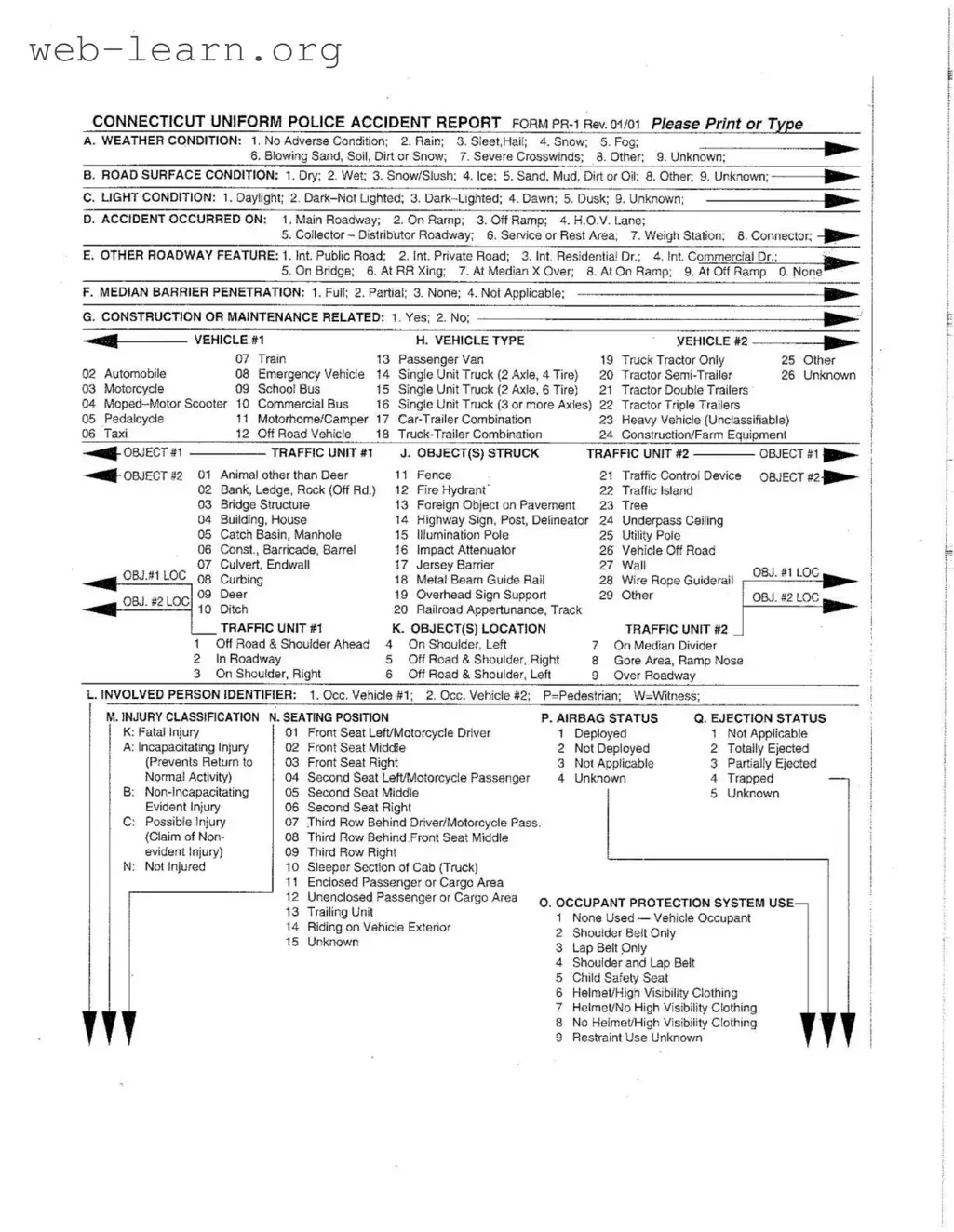
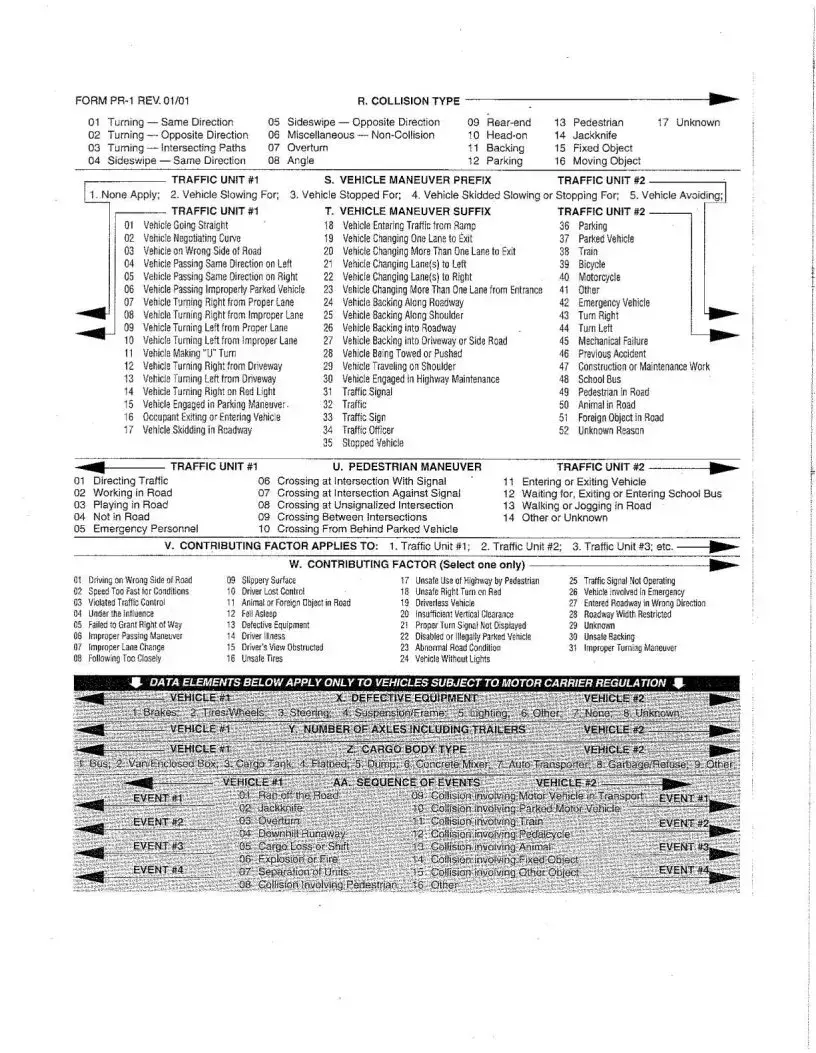
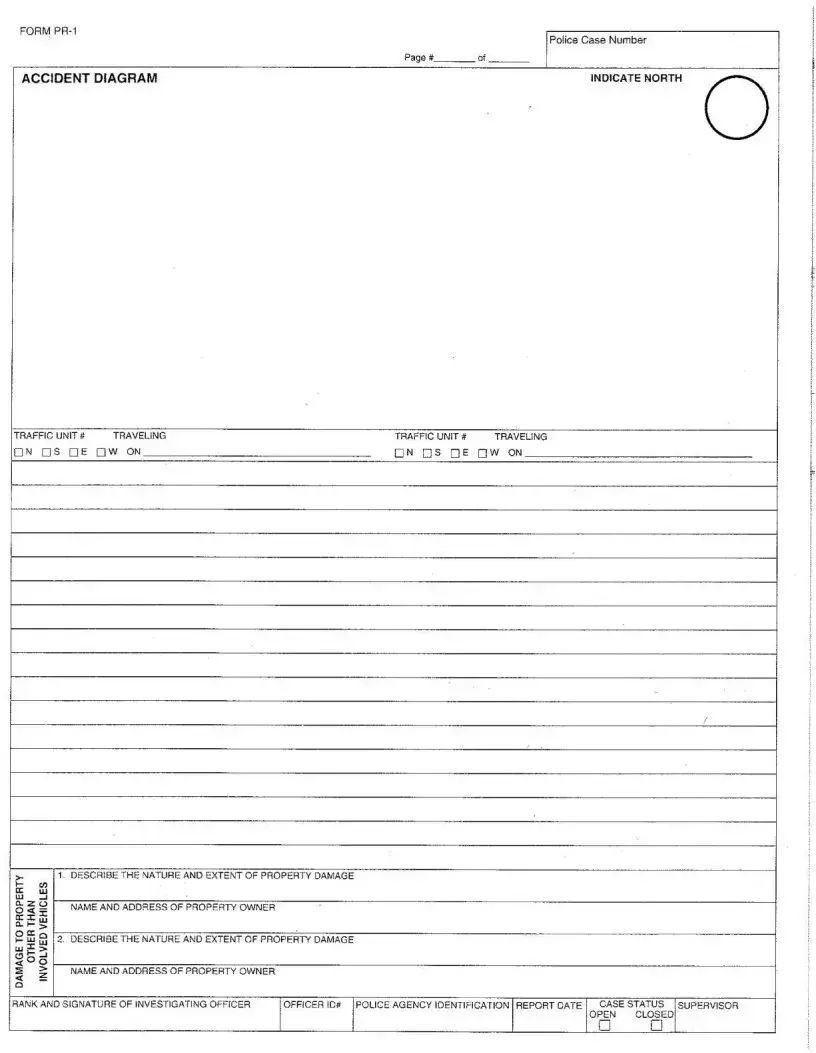
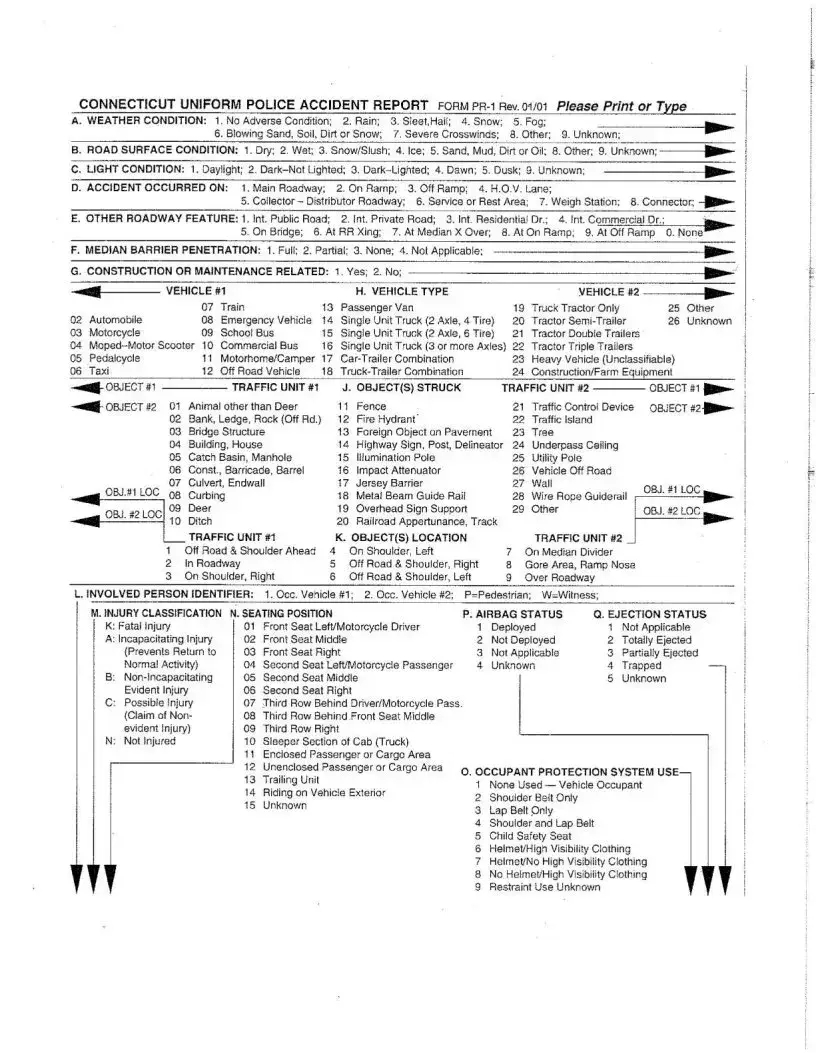
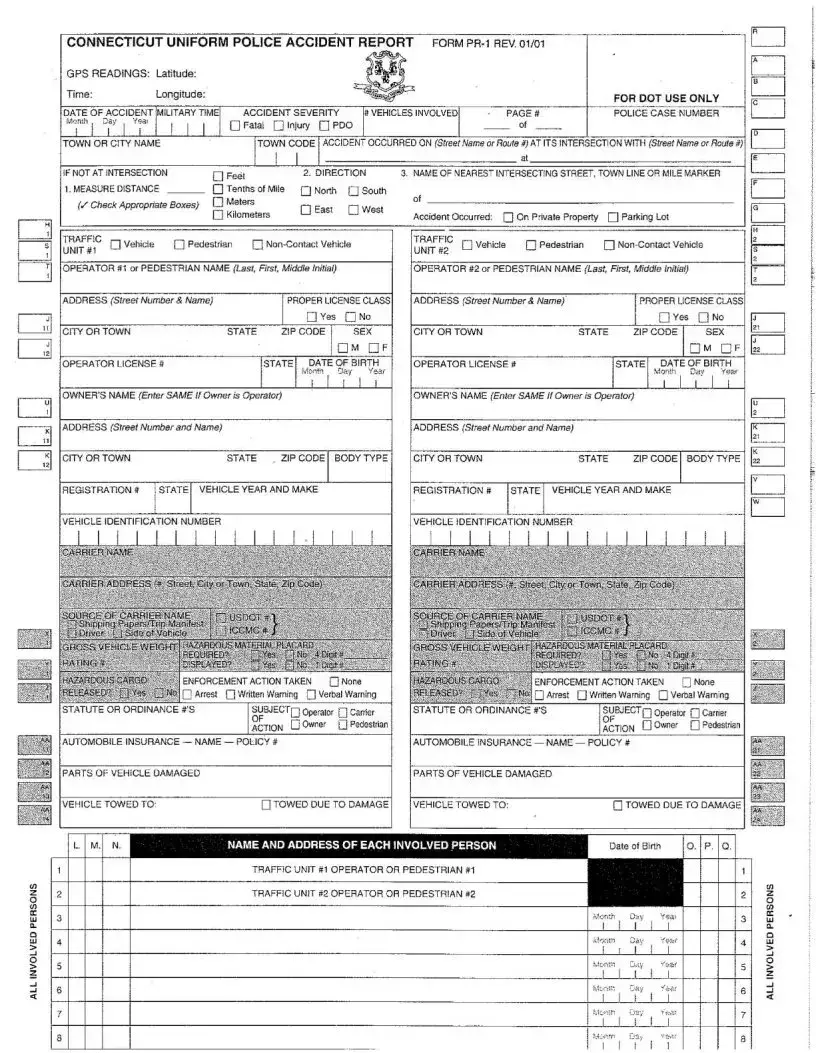
The Connecticut Uniform Police Accident Report form is a crucial tool designed to capture essential details about traffic accidents in the state. This standardized form helps law enforcement officers document various aspects of an accident, ensuring that all relevant information is collected systematically. It includes sections for weather and road surface conditions, which can provide insight into factors that may have contributed to the incident. Additionally, the form categorizes light conditions at the time of the accident, helping to establish visibility factors. Officers also indicate the location of the accident, whether it occurred on a main roadway, ramp, or other specific areas. The form allows for the identification of vehicles involved, their types, and the nature of any objects struck during the incident. Importantly, it also covers injury classifications and occupant protection system use, providing a comprehensive overview of the accident's impact on individuals involved. By capturing these critical details, the form plays a vital role in accident analysis, insurance claims, and legal proceedings, making it an indispensable part of traffic safety and law enforcement in Connecticut.
| Fact Name | Details |
|---|---|
| Form Title | Connecticut Uniform Police Accident Report Form PR-1 |
| Revision Date | Revised in January 2001 |
| Purpose | This form is used to document details of vehicle accidents in Connecticut. |
| Governing Law | Connecticut General Statutes § 14-108a |
| Weather Conditions | Includes options like rain, snow, fog, and more for accurate reporting. |
| Vehicle Types | Lists various vehicle types such as passenger vans, motorcycles, and trucks. |
Completing the Connecticut Uniform Police Accident Report form is essential for documenting the details of an accident. This form collects important information about the incident, including weather conditions, road surface, and vehicle details. Follow these steps carefully to ensure that all necessary information is accurately recorded.
Once you have completed the form, review it for accuracy and ensure that all necessary signatures are obtained. Properly submitting this report is crucial for insurance claims and any potential legal matters that may arise from the accident.
The Connecticut Uniform Police Accident Report form, also known as form PR-1, is a standardized document used by law enforcement to record details about traffic accidents in Connecticut. This form captures essential information regarding the accident, including weather conditions, road surface conditions, involved vehicles, and injuries.
This form is typically completed by police officers who respond to the scene of a traffic accident. However, it may also be necessary for involved parties to provide information to the police to ensure accurate reporting.
The form requires details such as:
The weather condition section includes several options to select from, such as:
If an individual is injured in the accident, the report should classify the injury using specified categories. These include classifications such as fatal injury, incapacitating injury, and non-incapacitating injury. Accurate classification is important for insurance and legal purposes.
The form can be filled out by hand or typed. While the official form is typically printed, some law enforcement agencies may have electronic systems that allow for digital completion and submission.
The accident report serves multiple purposes. It provides a detailed account of the accident for law enforcement, helps insurance companies assess claims, and can be used in legal proceedings if necessary.
Insurance companies use the information on the accident report to determine liability and evaluate claims. The details regarding the accident, such as the conditions and the actions of the involved parties, help insurers assess the situation accurately.
If discrepancies arise, they may be addressed during investigations or legal proceedings. Involved parties can provide additional evidence or statements to clarify any inconsistencies noted in the report.
Copies of the accident report can typically be requested from the law enforcement agency that responded to the accident. There may be a fee associated with obtaining a copy, and specific procedures may vary by agency.
When filling out the Connecticut Uniform Police Accident Report form, many individuals make common mistakes that can lead to delays or complications in processing their reports. Understanding these pitfalls can help ensure that the form is completed accurately and efficiently.
One frequent error is failing to provide complete information in the Weather Condition section. This section requires the selection of one option that best describes the weather at the time of the accident. Selecting "Unknown" without a valid reason can raise questions about the accuracy of the report. Always choose the most appropriate option based on the conditions observed.
Another mistake occurs in the Road Surface Condition section. Many people either skip this section or select "Unknown" without considering the actual road conditions. It is crucial to accurately reflect whether the road was dry, wet, icy, or had any other surface issues. This information is vital for understanding the accident context.
In the Vehicle Type section, individuals often neglect to identify the correct vehicle type involved in the accident. Misclassifying a vehicle can lead to complications in liability determinations and insurance claims. Take the time to review the options and select the appropriate vehicle type for each involved vehicle.
Another common oversight is in the Injury Classification section. Some people either do not classify injuries at all or inaccurately classify them. This section is essential for understanding the severity of injuries sustained during the accident. Always ensure that the classification reflects the actual injuries reported.
Many individuals also fail to provide clear information in the Object(s) Struck section. This area requires detailing any objects that were hit during the accident. Leaving this section blank or marking it as "None" when objects were involved can result in incomplete reports. Be thorough in identifying all relevant objects.
Finally, errors in the Occupant Protection System Use section are common. People often overlook this section or fail to provide accurate details about seat belt usage or child safety seat installation. This information is important for assessing compliance with safety regulations and can impact insurance claims.
By avoiding these mistakes, individuals can ensure that the Connecticut Uniform Police Accident Report form is filled out correctly. Accurate reporting not only aids in the investigation process but also facilitates smoother interactions with insurance companies and legal authorities.
The Connecticut Uniform Police Accident Report form is a critical document used by law enforcement to record details of motor vehicle accidents. However, it is often accompanied by various other forms and documents that provide additional context and information. Below is a list of these related documents, each serving a unique purpose in the accident reporting process.
Each of these documents plays a vital role in the aftermath of a motor vehicle accident, ensuring that all relevant information is accurately captured and processed. Together, they help facilitate a clearer understanding of the incident and support the resolution of claims and legal matters.
The Connecticut Uniform Police Accident Report form is a crucial document for recording details of vehicle accidents. It shares similarities with several other important documents used in various contexts. Here’s a look at eight documents that are comparable to this report, highlighting how they are alike:
These documents, while serving different purposes, share a common goal: to provide a clear and comprehensive account of vehicle accidents. Understanding their similarities can help individuals navigate the complexities of accident reporting and insurance claims.
When filling out the Connecticut Uniform Police Accident Report form, it's important to be thorough and accurate. Here are some key dos and don’ts to keep in mind:
By following these guidelines, you can help ensure that the report is completed correctly, which is crucial for any subsequent legal or insurance processes.
Many believe that the Connecticut Uniform Police Accident Report is only necessary for severe accidents. In reality, it is important for documenting all accidents, regardless of severity, to ensure accurate records and data collection.
Some think that only law enforcement can complete this form. However, while police typically fill it out at the scene, individuals involved in the accident can provide necessary information and details.
There is a belief that the report holds no value for insurance purposes. In fact, insurance companies often rely on this official documentation to assess claims and determine liability.
Some individuals feel pressured to fill out every section of the report. While it is best to provide as much information as possible, certain sections can be marked as "unknown" or "not applicable" if the information is not available.
Many assume that the report is exclusively for car accidents. However, it covers a variety of incidents, including those involving pedestrians, bicycles, and other objects. This broad scope helps capture a complete picture of roadway safety.