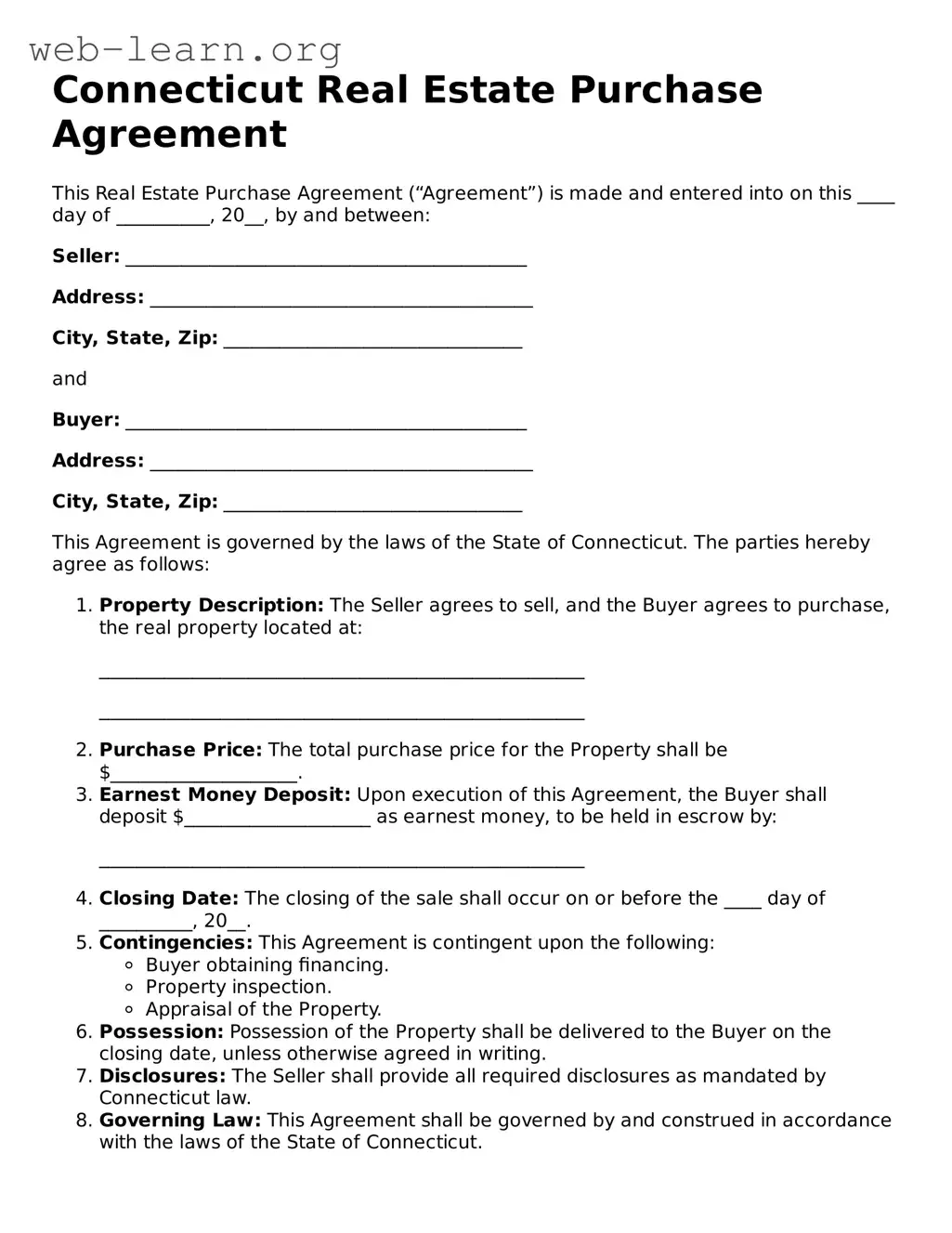
When navigating the process of buying or selling property in Connecticut, the Real Estate Purchase Agreement form plays a crucial role in ensuring a smooth transaction. This document outlines the terms and conditions agreed upon by both the buyer and the seller, providing clarity and structure to the real estate deal. Key aspects of the form include the purchase price, financing details, and contingencies, which protect the interests of both parties. Additionally, it specifies important dates, such as the closing date and any deadlines for inspections or disclosures. By clearly defining the responsibilities and expectations of each party, the agreement helps to minimize misunderstandings and disputes. Understanding this form is essential for anyone involved in a real estate transaction, as it serves as the foundation for a successful sale or purchase.
Connecticut Real Estate Purchase Agreement
This Real Estate Purchase Agreement (“Agreement”) is made and entered into on this ____ day of __________, 20__, by and between:
Seller: ___________________________________________
Address: _________________________________________
City, State, Zip: ________________________________
and
Buyer: ___________________________________________
Address: _________________________________________
City, State, Zip: ________________________________
This Agreement is governed by the laws of the State of Connecticut. The parties hereby agree as follows:
____________________________________________________
____________________________________________________
____________________________________________________
IN WITNESS WHEREOF, the parties hereto have executed this Agreement as of the day and year first above written.
Seller Signature: ________________________________
Date: ________________________________________
Buyer Signature: ________________________________
Date: ________________________________________
| Fact Name | Details |
|---|---|
| Governing Law | The Connecticut Real Estate Purchase Agreement is governed by Connecticut state law. |
| Purpose | This form is used to outline the terms of a real estate transaction between a buyer and a seller. |
| Offer and Acceptance | The agreement serves as an offer from the buyer, which the seller can accept or reject. |
| Contingencies | Common contingencies may include financing, inspections, and the sale of the buyer's current home. |
| Earnest Money | Typically, the buyer submits earnest money to demonstrate commitment to the purchase. |
| Closing Date | The agreement specifies a closing date, which is the date when the property transfer is finalized. |
| Disclosures | Sellers are required to provide disclosures about the property's condition and any known issues. |
| Default Provisions | The agreement includes provisions outlining the consequences of default by either party. |
| Modification | Any modifications to the agreement must be made in writing and signed by both parties. |
Filling out the Connecticut Real Estate Purchase Agreement form is an important step in the process of buying or selling property. Once you complete the form, you can move forward with negotiations and finalize the sale.
After completing the form, review it carefully to ensure all information is accurate. Then, share it with the relevant parties to proceed with the transaction.
The Connecticut Real Estate Purchase Agreement is a legal document that outlines the terms and conditions of a real estate transaction between a buyer and a seller. This agreement serves as a binding contract once both parties sign it, detailing the sale price, property description, and any contingencies that may apply.
A comprehensive Real Estate Purchase Agreement typically includes the following elements:
Yes, contingencies are an important part of the agreement. Common contingencies include:
Earnest money is a deposit made by the buyer to show their serious intent to purchase the property. Typically, this amount is held in escrow until the closing of the sale. If the transaction proceeds as planned, the earnest money is applied to the purchase price. However, if the buyer backs out without a valid reason outlined in the contingencies, they may forfeit this deposit.
If either party wishes to withdraw from the agreement, they must refer to the terms outlined in the contract. If the withdrawal is due to unmet contingencies, the buyer can typically do so without penalty. However, if a party backs out without a valid reason, they may face legal consequences or financial penalties, depending on the terms of the agreement.
While it is not legally required to have a lawyer review the Connecticut Real Estate Purchase Agreement, it is highly advisable. A legal professional can help ensure that the terms are fair, compliant with state laws, and protect your interests. Their expertise can be invaluable, especially in complex transactions.
Filling out the Connecticut Real Estate Purchase Agreement can be a complex process, and mistakes are common. One frequent error is failing to provide accurate property details. Buyers and sellers must ensure that the property address, lot number, and any relevant descriptions are correct. Inaccuracies can lead to misunderstandings and complications later on.
Another common mistake is neglecting to include all necessary parties in the agreement. Both buyers and sellers should be clearly identified, including any co-owners or representatives. Omitting a party can create legal issues and affect the enforceability of the agreement.
Many people overlook the importance of specifying the purchase price. While it may seem straightforward, failing to clearly state the amount can lead to disputes. It’s essential to write the price in both numbers and words to avoid any confusion.
Additionally, buyers often forget to include contingencies. These are conditions that must be met for the sale to proceed, such as financing or home inspections. Without these, buyers may find themselves in a difficult position if something goes wrong.
Another mistake is not paying attention to the closing date. This date should be realistic and agreed upon by both parties. If it’s left blank or filled in incorrectly, it can delay the transaction significantly.
People sometimes fail to understand the importance of earnest money. This deposit shows the buyer's commitment and should be clearly outlined in the agreement. Not specifying the amount or the terms regarding its return can lead to confusion and disputes.
Buyers and sellers may also neglect to address the inclusion of personal property. Items like appliances, fixtures, or furniture should be explicitly mentioned in the agreement. If not, there could be disagreements about what is included in the sale.
Another common oversight is not reading the entire agreement thoroughly. It’s crucial to review all terms and conditions before signing. Some individuals may rush through this process, missing important clauses that could affect their rights.
People sometimes forget to consult with a real estate professional or attorney. Having someone knowledgeable review the agreement can help catch mistakes and ensure that everything is in order. This step can save time and prevent potential legal issues.
Finally, failing to sign and date the agreement correctly can invalidate it. All parties must ensure that their signatures are present and that the document is dated appropriately. A missing signature can lead to complications in enforcing the agreement.
When engaging in a real estate transaction in Connecticut, several forms and documents accompany the Real Estate Purchase Agreement. Each of these documents plays a crucial role in ensuring a smooth process and protecting the interests of all parties involved. Below is a list of commonly used forms that you may encounter.
Understanding these documents is essential for anyone involved in a real estate transaction. Each form serves a specific purpose and contributes to the overall integrity of the process. It is advisable to review these documents carefully and seek professional guidance when necessary.
Lease Agreement: A lease agreement outlines the terms under which a landlord allows a tenant to occupy a property. Like a purchase agreement, it specifies the duration, payment terms, and responsibilities of both parties.
Sale Agreement: A sale agreement is similar to a real estate purchase agreement but can apply to various types of property. It details the sale conditions, including price, payment methods, and contingencies, ensuring both parties understand their obligations.
Option to Purchase Agreement: This document gives a potential buyer the right to purchase a property at a later date. It includes terms and conditions similar to a purchase agreement, allowing the buyer to lock in a price while they decide.
Exclusive Listing Agreement: This agreement is between a property owner and a real estate agent. It grants the agent exclusive rights to sell the property, outlining commission rates and duration, akin to the way a purchase agreement outlines the sale terms.
Joint Venture Agreement: In real estate, this document is used when two or more parties collaborate on a property investment. It details each party's contributions and responsibilities, similar to how a purchase agreement defines the roles of buyer and seller.
When filling out the Connecticut Real Estate Purchase Agreement form, it’s essential to follow best practices to ensure accuracy and clarity. Here’s a list of things to do and avoid:
Following these guidelines can help ensure a smoother transaction process.
There are several misconceptions about the Connecticut Real Estate Purchase Agreement form that can lead to confusion for buyers and sellers. Here are seven common misunderstandings:
While signing the agreement indicates intent, it may not be fully binding until all parties have agreed to all terms, including any contingencies.
While many terms can be negotiated, certain aspects, such as state laws and regulations, must be adhered to and cannot be changed.
Each purchase agreement can be tailored to the specifics of the transaction, including property type and buyer/seller needs.
Amendments can be made to the agreement as long as all parties agree to the changes and sign off on them.
Repair responsibilities can vary. Buyers and sellers should clearly outline who will handle repairs in the agreement.
The form can also be used for commercial real estate transactions, depending on the circumstances and parties involved.
While it is possible to complete a transaction without a lawyer, having legal representation can help ensure that all terms are understood and properly executed.
When filling out and using the Connecticut Real Estate Purchase Agreement form, consider the following key takeaways:
How to Write a Purchase Agreement - Specifies the condition in which the property will be delivered to the buyer.
Residential Purchase Agreement - Real estate agents may assist in preparing the agreement.
Contract of Sale Real Estate - It can specify whether the sale is contingent on the buyer securing financing.
Real Estate Contract Kansas - Having a clear and detailed agreement can reduce the likelihood of disputes later.