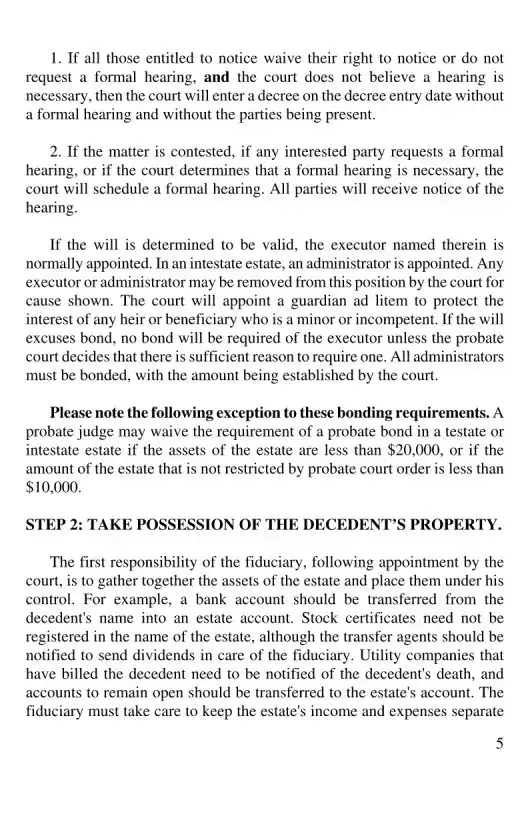
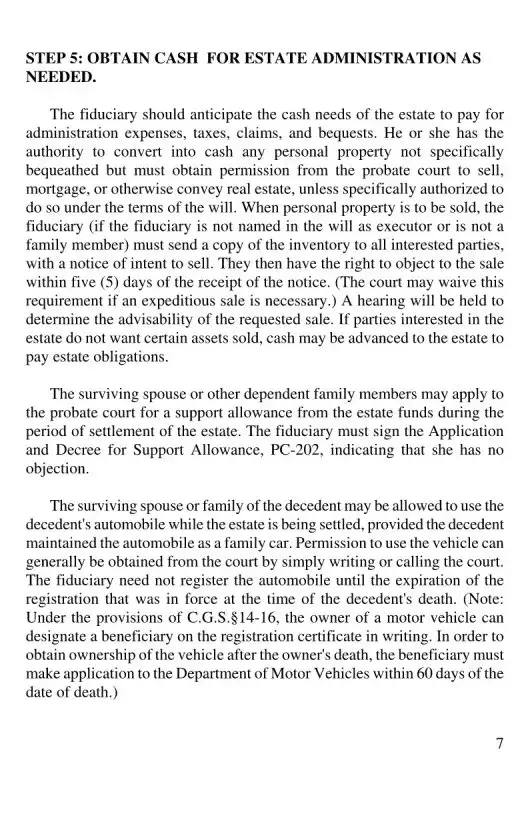
The Connecticut Probate form serves as a critical tool in the administration of decedents' estates, guiding fiduciaries through the complex processes involved in settling an estate. This form outlines essential steps that must be taken following a person's death, including the requirement to file an estate tax return within six months. It emphasizes the importance of timely payment of probate charges, which are calculated based on the estate's value, and details the consequences of delayed filings. The probate court plays a pivotal role in overseeing the distribution of assets, ensuring that debts, funeral expenses, and taxes are settled before beneficiaries receive their inheritances. For those managing estates, the form highlights the responsibilities of fiduciaries, who must act with care and impartiality while navigating the legal landscape. Additionally, it notes that professional assistance may be advisable, particularly for larger or more complex estates. For smaller estates, a simplified procedure may be available, streamlining the process for those with limited assets. Overall, the Connecticut Probate form is designed to facilitate the efficient and fair administration of estates, reflecting the legal obligations and rights of all parties involved.
| Fact Name | Details |
|---|---|
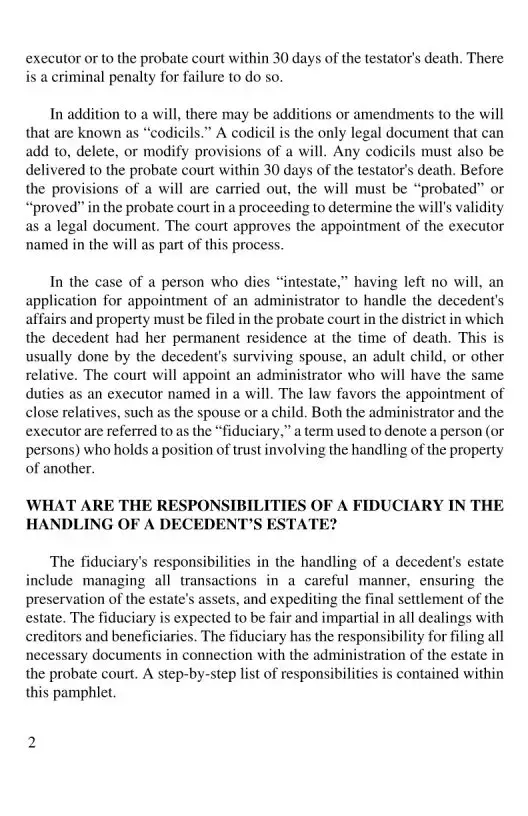
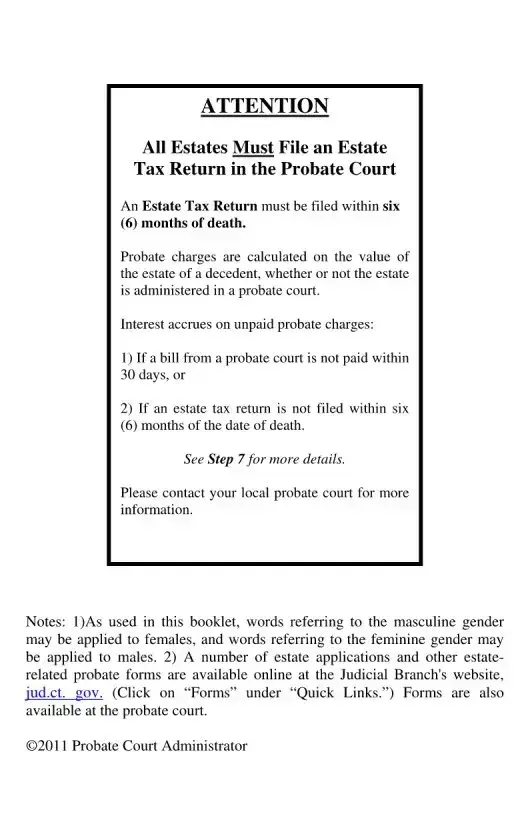
| Estate Tax Return Requirement | All estates in Connecticut must file an Estate Tax Return within six months of the decedent's death. |
| Probate Charges | Probate charges are based on the value of the estate, regardless of whether it is administered in probate court. |
| Interest on Unpaid Charges | Interest begins to accrue on unpaid probate charges if not paid within 30 days or if the estate tax return is not filed within six months of death. |
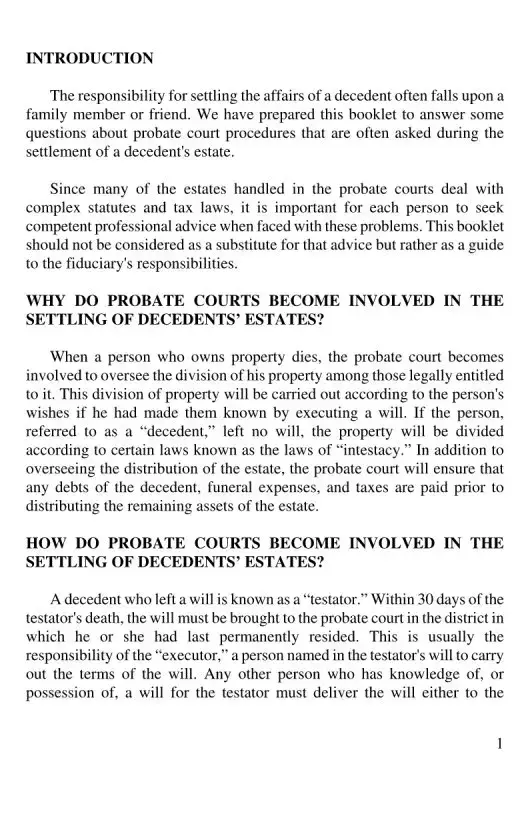
| Executor's Responsibilities | The executor must bring the will to the probate court within 30 days of the testator's death. |
| Intestacy Laws | If a decedent dies without a will, the estate is divided according to intestacy laws. |
| Fiduciary Definition | The term "fiduciary" refers to individuals such as executors and administrators who manage the estate's assets. |
| Professional Assistance | Fiduciaries are encouraged to seek professional help, especially for large or complex estates. |
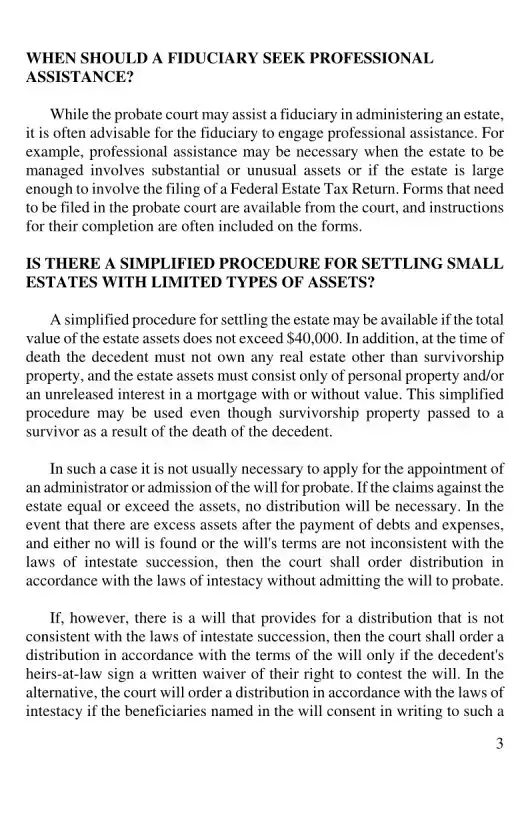
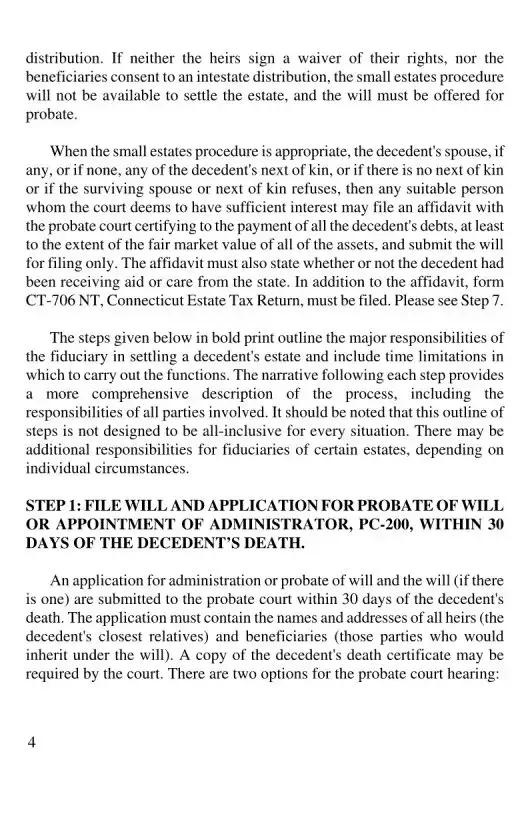
| Simplified Procedure for Small Estates | A simplified procedure is available for estates valued under $40,000, provided certain conditions are met. |
Filling out the Connecticut Probate form is an important step in managing a decedent's estate. Once the form is completed, it will need to be submitted to the appropriate probate court for processing. The following steps will guide you through the process of filling out the form accurately and efficiently.
What is the purpose of the Connecticut Probate form?
The Connecticut Probate form is used to initiate the process of settling a decedent's estate. When someone passes away, their property and assets need to be distributed according to their wishes, if a will exists, or according to state laws if there is no will. The probate court oversees this process to ensure that all debts, taxes, and funeral expenses are paid before distributing the remaining assets to beneficiaries.
Who is responsible for filing the probate form?
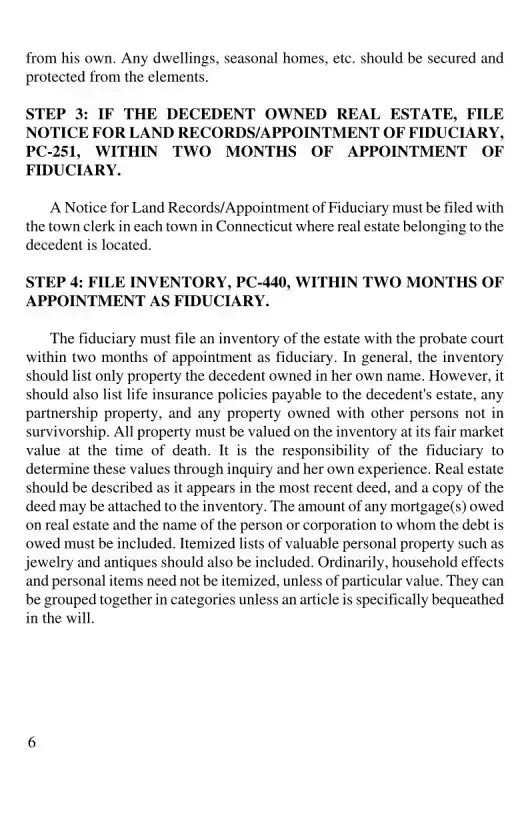
The responsibility typically falls to the executor named in the decedent's will. If there is no will, a close relative, such as a spouse or adult child, may apply to be appointed as the administrator. This person will handle the estate's affairs and is often referred to as a fiduciary.
What happens if the probate form is not filed on time?
If the probate form is not filed within 30 days of the decedent's death, there can be penalties. Additionally, any unpaid probate charges will start to accrue interest if not settled within 30 days of receiving a bill from the probate court. It is crucial to meet these deadlines to avoid complications.
Is there a simplified process for small estates?
Yes, there is a simplified procedure available for estates valued at $40,000 or less. This option is applicable only if the decedent did not own real estate other than survivorship property. If eligible, the process can be less complex, and it may not require the appointment of an administrator or the admission of a will for probate.
When should a fiduciary seek professional help?
A fiduciary should consider seeking professional assistance if the estate involves substantial assets, complex tax issues, or if a Federal Estate Tax Return needs to be filed. Professional guidance can help navigate these complexities and ensure compliance with all legal requirements.
Filling out the Connecticut Probate form is an important step in managing a decedent's estate. However, many people make common mistakes that can lead to delays and complications. One frequent error is failing to file the Estate Tax Return within the required six months of the decedent's death. This oversight can result in penalties and interest accruing on unpaid probate charges.
Another mistake involves not bringing the will to the probate court within 30 days of the testator's death. If the will is not submitted on time, it can complicate the probate process and may even lead to legal penalties for the person responsible for delivering it. Additionally, individuals sometimes forget to include any codicils that may modify the original will. Codicils must also be filed within the same 30-day period, or they may not be considered valid.
Some people fail to properly identify the decedent's permanent residence when filing the application for probate. This can lead to jurisdictional issues and delays in the appointment of an administrator. Furthermore, individuals often overlook the need to list all assets and debts accurately. Incomplete or inaccurate listings can create complications during the estate settlement process.
Another common error is neglecting to seek professional assistance when needed. While it may seem manageable, complex estates or those involving significant assets often require expert guidance. Failing to engage a professional can result in missteps that complicate the probate process.
People sometimes confuse the roles of executor and administrator, leading to improper filings. It is crucial to understand that an executor is named in a will, while an administrator is appointed when there is no will. Misidentifying these roles can lead to incorrect applications being submitted to the court.
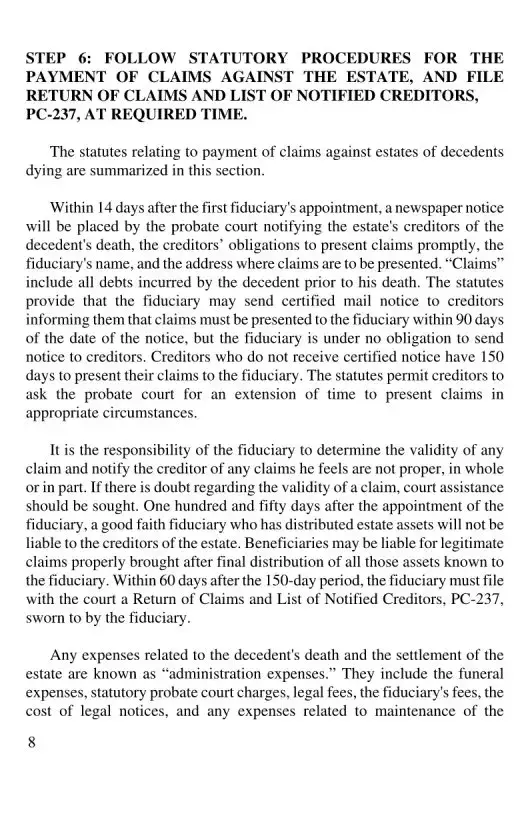
Additionally, some individuals may ignore the requirement to pay any outstanding debts and funeral expenses before distributing the estate's assets. This can create legal issues for the fiduciary and may lead to personal liability for unpaid debts.
Lastly, many people fail to keep accurate records of all transactions related to the estate. This lack of documentation can lead to disputes among beneficiaries and complicate the final settlement process. Maintaining clear and organized records is essential for a smooth probate experience.
When navigating the complexities of probate in Connecticut, several forms and documents accompany the Connecticut Probate form. These documents play essential roles in ensuring the proper administration of a decedent's estate. Understanding each of these forms can help facilitate a smoother process during what can often be a challenging time for families and friends.
Each of these documents serves a distinct purpose in the probate process, contributing to the orderly administration of a decedent's estate. Familiarity with these forms can empower fiduciaries and beneficiaries alike, ensuring that the decedent's wishes are honored and that all legal obligations are met efficiently.
When filling out the Connecticut Probate form, there are several important practices to follow. Here’s a list of things you should and shouldn’t do:
By following these guidelines, you can navigate the probate process more effectively and help ensure that the decedent's estate is handled properly.
Key Takeaways for Filling Out and Using the Connecticut Probate Form:
Contact your local probate court for further guidance and ensure compliance with all requirements.