The Connecticut Notice to Quit form is an essential legal document used in the eviction process. This form serves as a formal notification from a landlord to a tenant, indicating that the tenant must vacate the rental property within a specified timeframe. Typically, this notice is issued when a tenant has failed to pay rent or has violated terms of the lease agreement. The form must include specific information, such as the date of the notice, the reason for eviction, and the deadline for the tenant to leave the premises. It is crucial for landlords to follow the proper procedures when issuing this notice to ensure compliance with state laws and to protect their rights. Tenants, on the other hand, should understand their rights and responsibilities upon receiving this notice, as it can significantly impact their housing situation. By grasping the key aspects of the Notice to Quit form, both landlords and tenants can navigate the eviction process more effectively and with greater clarity.
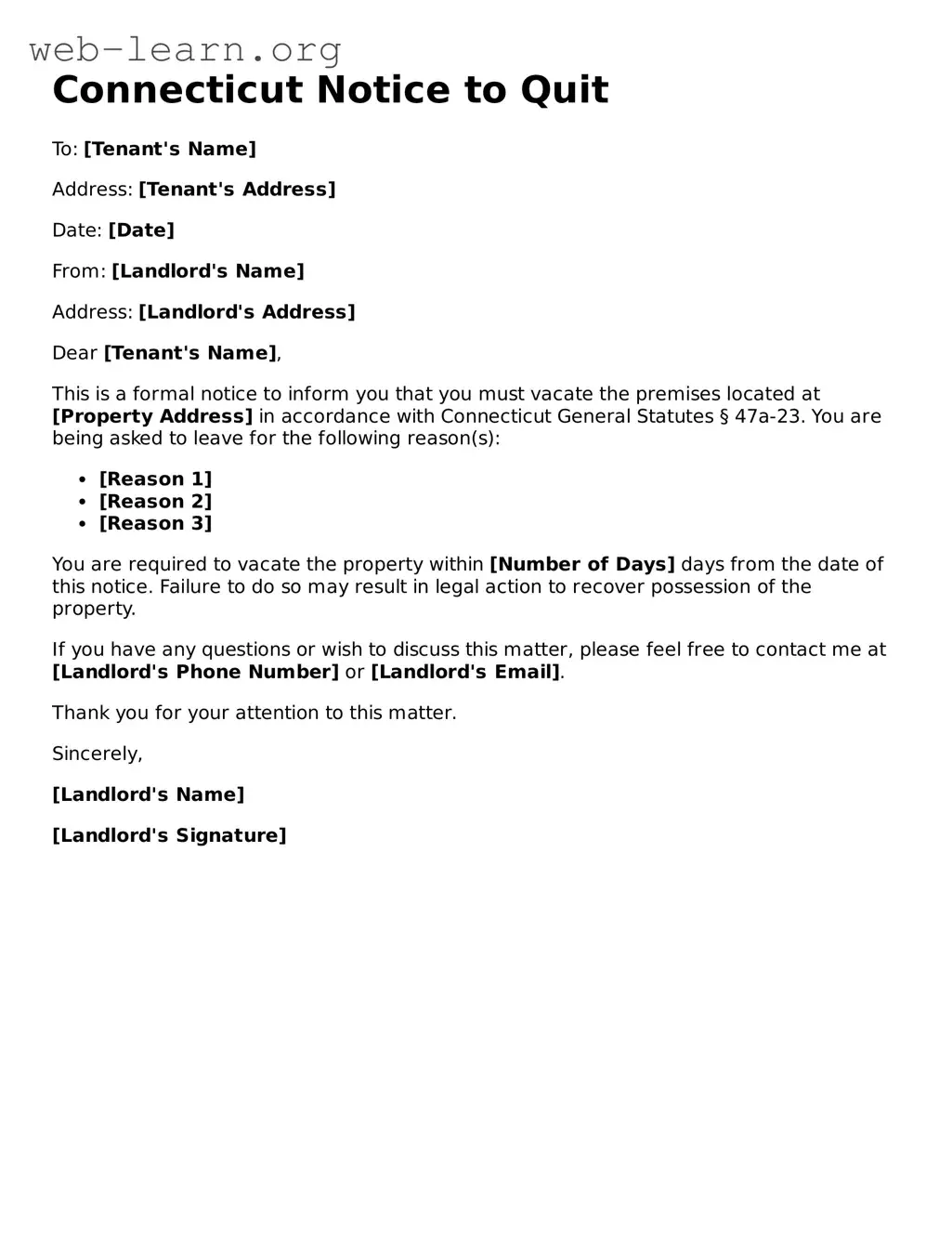
Connecticut Notice to Quit
To: [Tenant's Name]
Address: [Tenant's Address]
Date: [Date]
From: [Landlord's Name]
Address: [Landlord's Address]
Dear [Tenant's Name],
This is a formal notice to inform you that you must vacate the premises located at [Property Address] in accordance with Connecticut General Statutes § 47a-23. You are being asked to leave for the following reason(s):
You are required to vacate the property within [Number of Days] days from the date of this notice. Failure to do so may result in legal action to recover possession of the property.
If you have any questions or wish to discuss this matter, please feel free to contact me at [Landlord's Phone Number] or [Landlord's Email].
Thank you for your attention to this matter.
Sincerely,
[Landlord's Name]
[Landlord's Signature]
| Fact Name | Description |
|---|---|
| Purpose | The Connecticut Notice to Quit form is used by landlords to inform tenants that they must vacate the rental property. |
| Governing Law | This form is governed by Connecticut General Statutes § 47a-23. |
| Delivery Methods | The notice can be delivered in person, by mail, or by leaving it at the tenant's residence. |
| Timeframe | Tenants are typically given a minimum of 3 days to vacate the premises after receiving the notice. |
| Required Information | The form must include the date, the landlord's name, the tenant's name, and the address of the rental property. |
| Legal Consequences | If the tenant does not comply with the notice, the landlord may initiate eviction proceedings in court. |
Once you have the Connecticut Notice to Quit form, it is important to fill it out accurately. After completing the form, the next steps will involve serving it to the tenant and preparing for any potential legal proceedings if the tenant does not respond appropriately.
What is a Notice to Quit in Connecticut?
A Notice to Quit is a legal document that a landlord uses to inform a tenant that they must vacate the rental property. This notice is typically the first step in the eviction process. In Connecticut, landlords must provide a Notice to Quit before filing an eviction lawsuit. The notice must specify the reason for termination, whether it is for non-payment of rent or other lease violations.
How much notice must be given in a Notice to Quit?
The amount of notice required depends on the reason for the eviction. For non-payment of rent, the landlord must give the tenant a 5-day notice. If the eviction is due to a lease violation, the tenant must receive a 15-day notice. In cases of lease termination without cause, a 30-day notice is typically required. It’s important for landlords to adhere to these time frames to ensure compliance with Connecticut law.
What should be included in a Notice to Quit?
A proper Notice to Quit should include the following elements:
Clarity is key. Ensure that all information is accurate to avoid complications later in the eviction process.
What happens after a Notice to Quit is served?
Once a Notice to Quit is served, the tenant has the specified time to vacate the property. If the tenant does not leave by the deadline, the landlord can file an eviction lawsuit in court. The court will then schedule a hearing, where both parties can present their case. If the court rules in favor of the landlord, a judgment for possession will be issued, allowing the landlord to proceed with the eviction.
Filling out the Connecticut Notice to Quit form can be a daunting task, especially for those unfamiliar with the legal process. One common mistake is failing to provide the correct address of the tenant. This detail is crucial, as it ensures that the notice reaches the intended recipient. Without an accurate address, the notice may be deemed ineffective, prolonging the eviction process and causing unnecessary frustration.
Another frequent error is neglecting to specify the reason for the eviction. In Connecticut, landlords must clearly state the grounds for the Notice to Quit, whether it’s for non-payment of rent or a lease violation. Omitting this information can lead to confusion and may even result in the notice being challenged in court. Clarity and specificity are essential in these documents.
Many people also overlook the importance of including the correct date on the Notice to Quit. This date marks when the tenant is expected to vacate the premises. If the date is incorrect, it can lead to complications, such as tenants believing they have more time than they actually do. Keeping track of dates and ensuring they align with state laws can help avoid unnecessary disputes.
Additionally, some individuals forget to sign the form. A signature is not just a formality; it validates the notice and signifies the landlord’s intention to proceed with the eviction process. Without a signature, the Notice to Quit may not hold up in court, rendering all previous efforts futile.
Another mistake occurs when landlords do not provide a copy of the notice to the tenant in the proper manner. Connecticut law requires that the notice be delivered in a specific way, such as through certified mail or personal delivery. Failing to adhere to these delivery methods can jeopardize the entire eviction process, leaving landlords in a precarious position.
Lastly, some landlords may rush through the process without seeking legal advice. While it may seem straightforward, the nuances of eviction laws can be complex. Consulting with a legal professional can provide invaluable insights and help avoid common pitfalls. Taking the time to understand the process can save both time and stress in the long run.
When dealing with tenancy issues in Connecticut, the Notice to Quit form is often accompanied by other important documents. Each of these documents serves a specific purpose in the process of managing rental agreements and addressing disputes. Below are four commonly used forms that may be relevant.
Understanding these documents is crucial for both landlords and tenants. They help clarify the rights and responsibilities of each party throughout the rental process and ensure that legal procedures are followed correctly.
Eviction Notice: Similar to a Notice to Quit, an eviction notice informs a tenant that they must vacate the property. It typically specifies the reason for eviction and provides a timeline for moving out.
Lease Termination Letter: This document serves to terminate a lease agreement. It outlines the end date of the lease and any necessary actions for both the tenant and landlord.
Demand for Rent: A demand for rent is issued when a tenant fails to pay rent. It notifies the tenant of their overdue payment and may lead to further actions, including eviction.
Notice of Non-Renewal: This notice informs tenants that their lease will not be renewed. It provides the tenant with information about when they need to vacate the premises.
Notice of Lease Violation: This document is issued when a tenant violates the terms of their lease. It details the specific violation and may require the tenant to remedy the situation or face eviction.
Notice to Cure: A notice to cure is given when a tenant has breached a lease agreement. It allows the tenant a chance to fix the issue before further action is taken.
When filling out the Connecticut Notice to Quit form, it’s important to approach the process with care. This form is a crucial step in the eviction process, and getting it right can help ensure that everything goes smoothly. Here’s a list of things you should and shouldn’t do.
Things You Should Do:
Things You Shouldn't Do:
By following these guidelines, you can help ensure that your Notice to Quit form is completed correctly and effectively. This can make a significant difference in the eviction process.
When it comes to the Connecticut Notice to Quit form, there are several misconceptions that can lead to confusion for landlords and tenants alike. Understanding the facts can help clarify the process and ensure that everyone is on the same page. Here are eight common misconceptions:
Many people believe that a Notice to Quit is the same as an eviction notice. In reality, it is simply a formal request for a tenant to leave the property, not a court-ordered eviction.
Not all tenants are treated equally under this form. The reason for the notice and the time frame for compliance can vary based on the specific circumstances, such as lease violations or non-payment of rent.
While personal delivery is one option, the Notice to Quit can also be sent via certified mail or posted on the property. Different methods can be used to ensure that the tenant receives it.
Tenants do not have an indefinite amount of time to respond. The Notice typically specifies a deadline by which the tenant must vacate the property, which can be as short as a few days, depending on the situation.
This is not accurate. A Notice to Quit must be based on specific legal grounds, such as lease violations or failure to pay rent. Personal grievances do not qualify as valid reasons.
On the contrary, if the tenant does not comply with the Notice to Quit, the landlord may proceed with legal action to initiate eviction proceedings through the court system.
Ignoring the Notice is not advisable. Tenants should take it seriously and respond appropriately, as failing to do so can lead to legal consequences and potential eviction.
Not all Notices to Quit are identical. Different forms may be used depending on the circumstances, and they must comply with local laws and regulations.
By clearing up these misconceptions, both landlords and tenants can navigate the rental process more effectively and with greater understanding.
Filling out and using the Connecticut Notice to Quit form is an important step for landlords seeking to terminate a lease agreement. Understanding the key components of this process can help ensure that it is done correctly and effectively. Here are some essential takeaways:
By following these key takeaways, landlords can navigate the eviction process more smoothly and ensure that they are adhering to Connecticut's legal requirements.
Arizona Eviction Process for Non Payment of Rent - Tenants should review their lease agreement when receiving this notice.
3 Day Notice to Pay or Quit California 2023 - Can be a proactive measure to manage rental properties effectively.
Printable Indiana Eviction Notice Form - A Notice to Quit can also address issues of property damage.