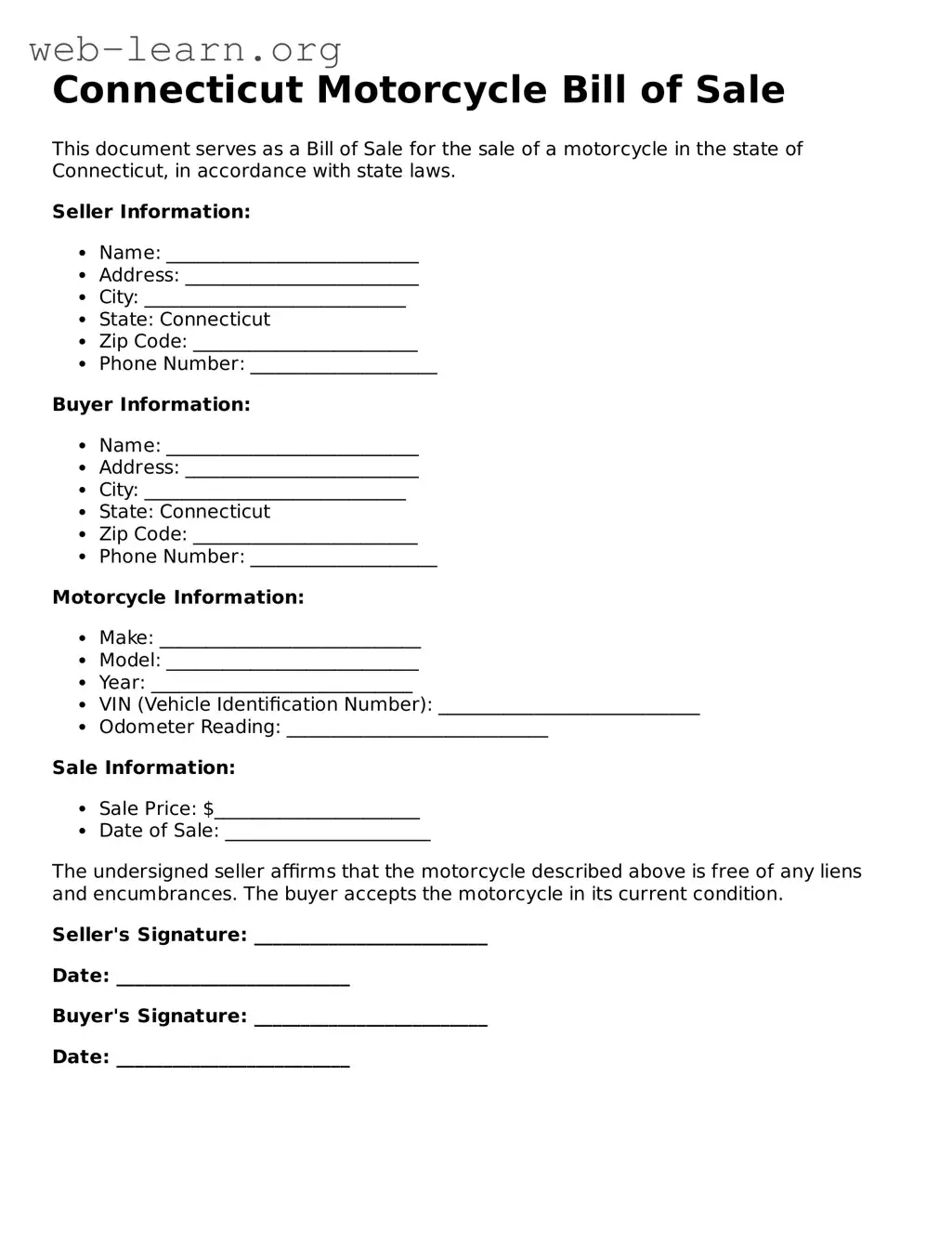
When buying or selling a motorcycle in Connecticut, having the right documentation is essential to ensure a smooth transaction. One of the most important documents involved in this process is the Motorcycle Bill of Sale form. This form serves as a record of the transfer of ownership from the seller to the buyer, providing vital details such as the names and addresses of both parties, the motorcycle's make, model, year, and Vehicle Identification Number (VIN). Additionally, it outlines the sale price and any terms agreed upon by both the buyer and seller. This document not only protects the interests of both parties but also plays a crucial role in the registration process with the Connecticut Department of Motor Vehicles (DMV). Understanding the key components of the Motorcycle Bill of Sale form can help ensure that you complete your motorcycle transaction without any complications or legal issues down the road.
Connecticut Motorcycle Bill of Sale
This document serves as a Bill of Sale for the sale of a motorcycle in the state of Connecticut, in accordance with state laws.
Seller Information:
Buyer Information:
Motorcycle Information:
Sale Information:
The undersigned seller affirms that the motorcycle described above is free of any liens and encumbrances. The buyer accepts the motorcycle in its current condition.
Seller's Signature: _________________________
Date: _________________________
Buyer's Signature: _________________________
Date: _________________________
| Fact Name | Details |
|---|---|
| Purpose | The Connecticut Motorcycle Bill of Sale form serves as a legal document to record the sale and transfer of ownership of a motorcycle. |
| Governing Law | This form is governed by Connecticut General Statutes, specifically Section 14-187. |
| Parties Involved | The form requires information from both the seller and the buyer, including names and addresses. |
| Motorcycle Details | Details about the motorcycle, such as make, model, year, and VIN (Vehicle Identification Number), must be included. |
| Sale Price | The agreed sale price must be clearly stated in the document to ensure transparency. |
| Signatures | Both the seller and buyer must sign the form to validate the transaction. |
| Record Keeping | It is recommended that both parties keep a copy of the signed Bill of Sale for their records. |
Once you have the Connecticut Motorcycle Bill of Sale form in hand, you are ready to provide the necessary information. This document serves as a record of the transaction between the buyer and the seller. Completing it accurately ensures that both parties have a clear understanding of the sale.
What is a Motorcycle Bill of Sale?
A Motorcycle Bill of Sale is a legal document that records the sale of a motorcycle between a buyer and a seller. It includes important details about the transaction, such as the motorcycle's make, model, year, Vehicle Identification Number (VIN), and the sale price. This document serves as proof of ownership transfer and can be essential for registration purposes.
Why do I need a Motorcycle Bill of Sale in Connecticut?
In Connecticut, a Motorcycle Bill of Sale is important for several reasons. It provides a clear record of the transaction, which can help protect both the buyer and the seller. This document can be used to prove ownership when registering the motorcycle with the Department of Motor Vehicles (DMV). Additionally, it can serve as evidence in case of any disputes regarding the sale.
What information should be included in the Motorcycle Bill of Sale?
The Motorcycle Bill of Sale should include the following information:
Including this information helps ensure that the document is complete and legally binding.
Do I need to have the Motorcycle Bill of Sale notarized?
In Connecticut, notarization is not required for a Motorcycle Bill of Sale. However, having the document notarized can add an extra layer of security and authenticity. It can be beneficial in case of disputes or if you need to prove the transaction took place.
Can I use a generic Bill of Sale template?
While you can use a generic Bill of Sale template, it is advisable to use a specific Motorcycle Bill of Sale form for Connecticut. This ensures that all necessary details are included and that the document complies with state requirements. Using a tailored form can make the process smoother and more reliable.
What if the motorcycle has a lien on it?
If the motorcycle has a lien, the seller must disclose this information to the buyer. The lien must be satisfied before the sale can be completed. It is important for the buyer to ensure that the lien is cleared, as it can affect ownership rights. The Bill of Sale should reflect any agreements made regarding the lien.
How do I register my motorcycle after purchasing it?
After purchasing a motorcycle, the buyer must register it with the Connecticut DMV. To do this, bring the Motorcycle Bill of Sale, proof of identity, and any other required documents to the DMV. Registration fees will apply. It is essential to complete this process promptly to avoid penalties.
What should I do if I lose my Motorcycle Bill of Sale?
If you lose your Motorcycle Bill of Sale, it can be challenging to prove ownership. You may need to contact the seller to request a duplicate. If that is not possible, consider reaching out to your local DMV for guidance on how to establish ownership through other means.
Filling out the Connecticut Motorcycle Bill of Sale form can be straightforward, but many people make common mistakes that can lead to complications. One frequent error is failing to include all required information. This form requires specific details about both the buyer and the seller, including full names, addresses, and contact information. Omitting any of these details can result in delays or issues with the registration process.
Another mistake often made is not accurately describing the motorcycle. The form asks for crucial information such as the make, model, year, and Vehicle Identification Number (VIN). Providing incorrect or incomplete descriptions can create confusion and may hinder the buyer's ability to register the motorcycle properly. It is essential to double-check this information to ensure accuracy.
Additionally, some individuals overlook the importance of signatures. Both the seller and the buyer must sign the document for it to be valid. Failing to obtain the necessary signatures can render the bill of sale ineffective, leading to potential disputes in the future. It is advisable to have both parties present when signing to avoid this common pitfall.
Lastly, neglecting to keep a copy of the completed bill of sale is a mistake that can have significant consequences. After the form is filled out and signed, both parties should retain a copy for their records. This document serves as proof of the transaction and can be crucial if any disputes arise later. Keeping a copy ensures that both parties have access to the agreement made during the sale.
When buying or selling a motorcycle in Connecticut, several important documents accompany the Motorcycle Bill of Sale. These documents help ensure a smooth transaction and provide necessary information for both parties involved. Here’s a list of commonly used forms and documents:
Having these documents prepared and organized can make the process of buying or selling a motorcycle much easier. Each form plays a crucial role in ensuring that the transaction is legal, transparent, and protects the interests of both the buyer and the seller.
The Motorcycle Bill of Sale form is an important document for transferring ownership of a motorcycle. It shares similarities with several other documents used in various transactions. Here’s a list of eight documents that are similar to the Motorcycle Bill of Sale, along with a brief explanation of each:
When filling out the Connecticut Motorcycle Bill of Sale form, it is important to follow certain guidelines to ensure accuracy and compliance. Here are five things you should and shouldn't do:
When dealing with the Connecticut Motorcycle Bill of Sale form, several misconceptions may arise. Understanding the facts behind these myths can help ensure a smoother transaction for both buyers and sellers. Below is a list of common misconceptions:
Being aware of these misconceptions can help facilitate a successful motorcycle sale in Connecticut. Properly completing the Bill of Sale ensures that both parties are protected and that the transaction is legally recognized.
When completing the Connecticut Motorcycle Bill of Sale form, keep these key points in mind:
Following these steps ensures a smooth transaction and helps protect the interests of both the buyer and the seller.
Bill of Sale for a Motor Vehicle - The Motorcycle Bill of Sale can help resolve disputes that may arise after the sale.
Trailer Bill of Sale Louisiana - The form can help ensure that all necessary information is captured during the sale.
Bill of Sale Kansas - The form can be a critical document for ensuring a smooth and transparent transaction between parties.
California Bill of Sale - The document can also specify if any accessories or parts are included in the sale.