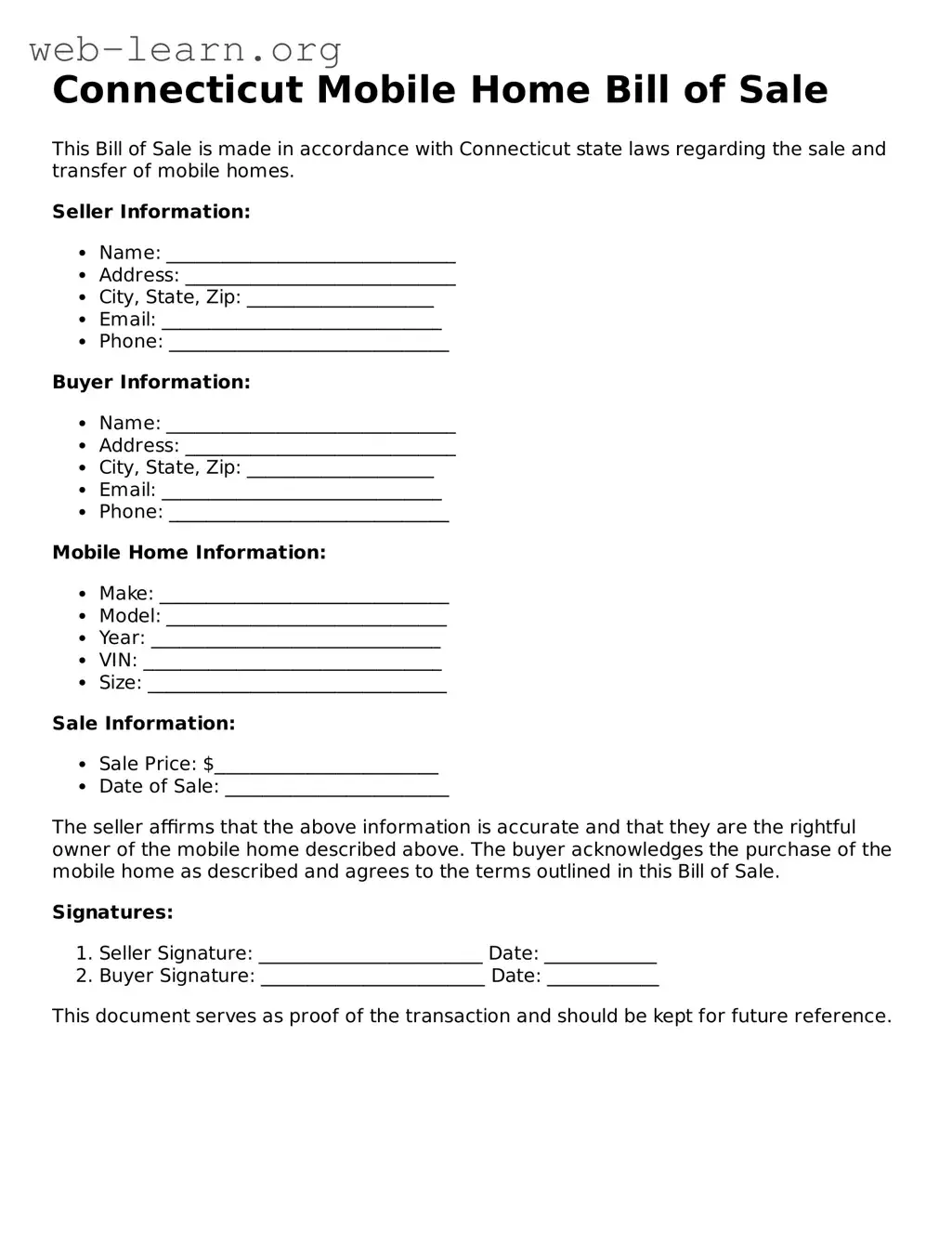
In the realm of mobile home transactions, the Connecticut Mobile Home Bill of Sale form serves as a crucial document, facilitating the transfer of ownership between sellers and buyers. This form encapsulates essential details, such as the names and addresses of both parties involved, a description of the mobile home—including its make, model, year, and vehicle identification number (VIN)—and the agreed-upon purchase price. Furthermore, it often includes provisions regarding warranties and any conditions of sale, ensuring that both parties are aware of their rights and obligations. By providing a structured framework for the transaction, this form not only protects the interests of both the seller and buyer but also helps to streamline the process of registering the mobile home with the state. Understanding the nuances of this document can empower individuals to navigate the complexities of mobile home ownership with confidence and clarity.
Connecticut Mobile Home Bill of Sale
This Bill of Sale is made in accordance with Connecticut state laws regarding the sale and transfer of mobile homes.
Seller Information:
Buyer Information:
Mobile Home Information:
Sale Information:
The seller affirms that the above information is accurate and that they are the rightful owner of the mobile home described above. The buyer acknowledges the purchase of the mobile home as described and agrees to the terms outlined in this Bill of Sale.
Signatures:
This document serves as proof of the transaction and should be kept for future reference.
| Fact Name | Description |
|---|---|
| Definition | The Connecticut Mobile Home Bill of Sale form is a legal document used to transfer ownership of a mobile home from one party to another. |
| Governing Law | This form is governed by Connecticut General Statutes, specifically Chapter 452, which pertains to mobile homes. |
| Parties Involved | The form requires the names and addresses of both the seller and the buyer to ensure clear identification of the parties involved in the transaction. |
| Mobile Home Description | A detailed description of the mobile home is necessary, including the make, model, year, and Vehicle Identification Number (VIN). |
| Purchase Price | The agreed-upon purchase price must be clearly stated in the form to avoid any confusion regarding the transaction. |
| Payment Terms | Details about payment methods and any financing arrangements should be included to clarify how the buyer will pay the seller. |
| Signatures Required | Both the seller and the buyer must sign the form to validate the transfer of ownership legally. |
| Notarization | While notarization is not always required, it is recommended to enhance the document's credibility and prevent disputes. |
| Record Keeping | Once completed, both parties should keep a copy of the Bill of Sale for their records, as it serves as proof of the transaction. |
| Transfer of Title | The Bill of Sale is often used in conjunction with the application for a new title to officially transfer ownership with the state. |
After obtaining the Connecticut Mobile Home Bill of Sale form, you will need to fill it out accurately. This document is essential for transferring ownership of a mobile home. Ensure you have all necessary information ready before you begin.
What is a Mobile Home Bill of Sale in Connecticut?
A Mobile Home Bill of Sale is a legal document used to transfer ownership of a mobile home from one party to another in Connecticut. This form serves as proof of the transaction and outlines the details of the sale, including the names of the buyer and seller, the description of the mobile home, and the sale price.
What information is required to complete the Mobile Home Bill of Sale?
To complete the Mobile Home Bill of Sale, you will need to provide:
Is the Mobile Home Bill of Sale required for all mobile home transactions?
While it is not legally required to have a Mobile Home Bill of Sale for every transaction, it is highly recommended. This document provides a clear record of the sale, protecting both the buyer and seller in case of disputes. Additionally, some local authorities or mobile home parks may require this document for registration purposes.
How do I file the Mobile Home Bill of Sale after completing it?
After completing the Mobile Home Bill of Sale, the buyer should keep the original document for their records. It is advisable to provide a copy to the seller as well. If the mobile home is registered with the state, the buyer may need to take the bill of sale to the local Department of Motor Vehicles (DMV) or other relevant agency to officially transfer ownership.
What should I do if there are errors on the Mobile Home Bill of Sale?
If you discover any errors on the Mobile Home Bill of Sale after it has been completed, it is important to correct them promptly. Both parties should agree on the necessary changes, and then initial or sign next to the corrections. This ensures that both the buyer and seller acknowledge the amendments and maintain a clear record of the transaction.
When filling out the Connecticut Mobile Home Bill of Sale form, individuals often encounter several common pitfalls. These mistakes can lead to delays or complications in the sale process. Understanding these errors can help ensure a smooth transaction.
One frequent mistake is the omission of essential information. Sellers must provide complete details about the mobile home, including the make, model, year, and Vehicle Identification Number (VIN). Leaving out any of this information can create confusion and may even invalidate the sale.
Another common error involves incorrect dates. It is crucial to ensure that the date of the sale is accurately recorded. An incorrect date can lead to disputes regarding ownership and responsibility for the mobile home.
Many people also fail to include the correct names of both the buyer and the seller. Full legal names should be used, as nicknames or abbreviations can lead to complications in the future. This ensures that the transaction is legally binding and recognized by the state.
Additionally, some individuals neglect to sign the form. Both parties must sign the Mobile Home Bill of Sale to validate the agreement. Without signatures, the document lacks the necessary legal weight, making it difficult to enforce the sale.
Another mistake is not providing the correct sale price. The price should reflect the agreed-upon amount for the mobile home. Discrepancies in the sale price can lead to issues with taxes and registration.
People sometimes forget to include any warranties or guarantees associated with the mobile home. If there are any, these should be clearly stated in the bill of sale. This protects both the buyer and seller from future misunderstandings regarding the condition of the mobile home.
Failure to check for liens or other claims against the mobile home is another significant error. Before completing the sale, it is essential to verify that the mobile home is free of any encumbrances. This ensures that the buyer is not taking on any hidden debts.
Some individuals overlook the importance of providing a copy of the bill of sale to both parties. Once the form is completed and signed, each party should retain a copy for their records. This serves as proof of the transaction and can be useful in case of future disputes.
Lastly, many people do not familiarize themselves with local regulations regarding mobile home sales. Each state may have specific requirements for the bill of sale. Ignoring these can lead to complications down the line, so it is advisable to review the relevant laws before completing the form.
When completing a transaction involving a mobile home in Connecticut, several additional forms and documents may be necessary to ensure a smooth process. Each of these documents serves a specific purpose and helps protect the interests of both the buyer and the seller. Below is a list of commonly used forms that accompany the Connecticut Mobile Home Bill of Sale.
Gathering and completing these forms can help facilitate a successful mobile home transaction in Connecticut. Each document plays a critical role in ensuring that both the buyer and seller are protected throughout the process.
The Mobile Home Bill of Sale form serves a specific purpose in transferring ownership of a mobile home. However, several other documents share similarities with it in terms of their function and structure. Here’s a list of ten documents that are comparable to the Mobile Home Bill of Sale:
Each of these documents plays a crucial role in ensuring that ownership is clearly established and legally recognized, just like the Mobile Home Bill of Sale.
When filling out the Connecticut Mobile Home Bill of Sale form, it’s important to follow specific guidelines to ensure accuracy and legality. Here’s a list of what you should and shouldn’t do:
Following these guidelines will help ensure a smooth transaction when selling or buying a mobile home in Connecticut.
When it comes to the Connecticut Mobile Home Bill of Sale form, several misconceptions can lead to confusion. Here are six common misunderstandings and clarifications for each:
This form can also be used for transactions involving dealerships or other businesses. It’s not limited to private sales.
While notarization is not always necessary, having the document notarized can provide additional legal protection and verification of the signatures.
The form can be used for both new and used mobile homes, regardless of their age. The key is that it documents the sale.
While it’s important to register the sale, there is typically a grace period. Sellers and buyers should check the latest regulations for specific timelines.
Each sale can have unique elements. Buyers and sellers may need to customize the form to reflect specific terms of their agreement.
While the form is legally binding once signed, parties can agree to modifications. Any changes should be documented in writing to avoid disputes.
Understanding these points can help ensure a smoother transaction process when dealing with mobile homes in Connecticut.
When dealing with the Connecticut Mobile Home Bill of Sale form, it is important to understand its key aspects to ensure a smooth transaction. Here are four essential takeaways:
Understanding these points can help facilitate a successful transaction and ensure compliance with Connecticut laws regarding mobile home sales.
Bill of Sale for a Mobile Home - The Mobile Home Bill of Sale can be a simple yet effective tool for mobile home transactions.
Bill of Sale for a Mobile Home - It is often recommended to consult local regulations regarding mobile home sales.